

Originally published by Gerald Blondel – CMSA
What KRBN really holds
KRBN tracks the S&P Global Carbon Credit Index, which is built on five major compliance cap‑and‑trade systems
- European Union Emissions Trading System (EU ETS) – EU Allowances (EUA)
- California Cap‑and‑Trade (CCA) – California Carbon Allowances
- Regional Greenhouse Gas Initiative (RGGI) – northeastern US power‑sector allowances
- UK Emissions Trading System – UK Allowances (UKA)
- Washington Cap‑and‑Invest (WCA) – Washington State carbon allowances
At the index level, the target base weights are:
- EU ETS: 60%
- CCA: 25%
- RGGI: 5%
- UKA: 5%
- WCA: 5%
Do not be confused by the official KRBN composition per the documentation. There is its economic exposure (which carbon markets it tracks – the above description) and its physical holdings (what assets it actually holds to maintain that exposure).
Because KRBN primarily uses Futures contracts to gain exposure to carbon markets, its physical holdings are largely composed of safe, liquid collateral (such as cash and short-term bonds), while performance is driven by carbon futures. Therefore, you will find Short-Duration Bond ETFs, often held in the KraneShares Sustainable Ultra Short Duration index ETF, Money Market Funds, Cash & other currencies to settle the Futures contract.
Who are the real buyers?
Broadly, you can split large emitters into:
- Compliance buyers – regulated entities that must buy allowances (KRBN’s world).
- Voluntary buyers – corporates/NGOs buying offsets for branding or ESG reasons (not what KRBN owns).
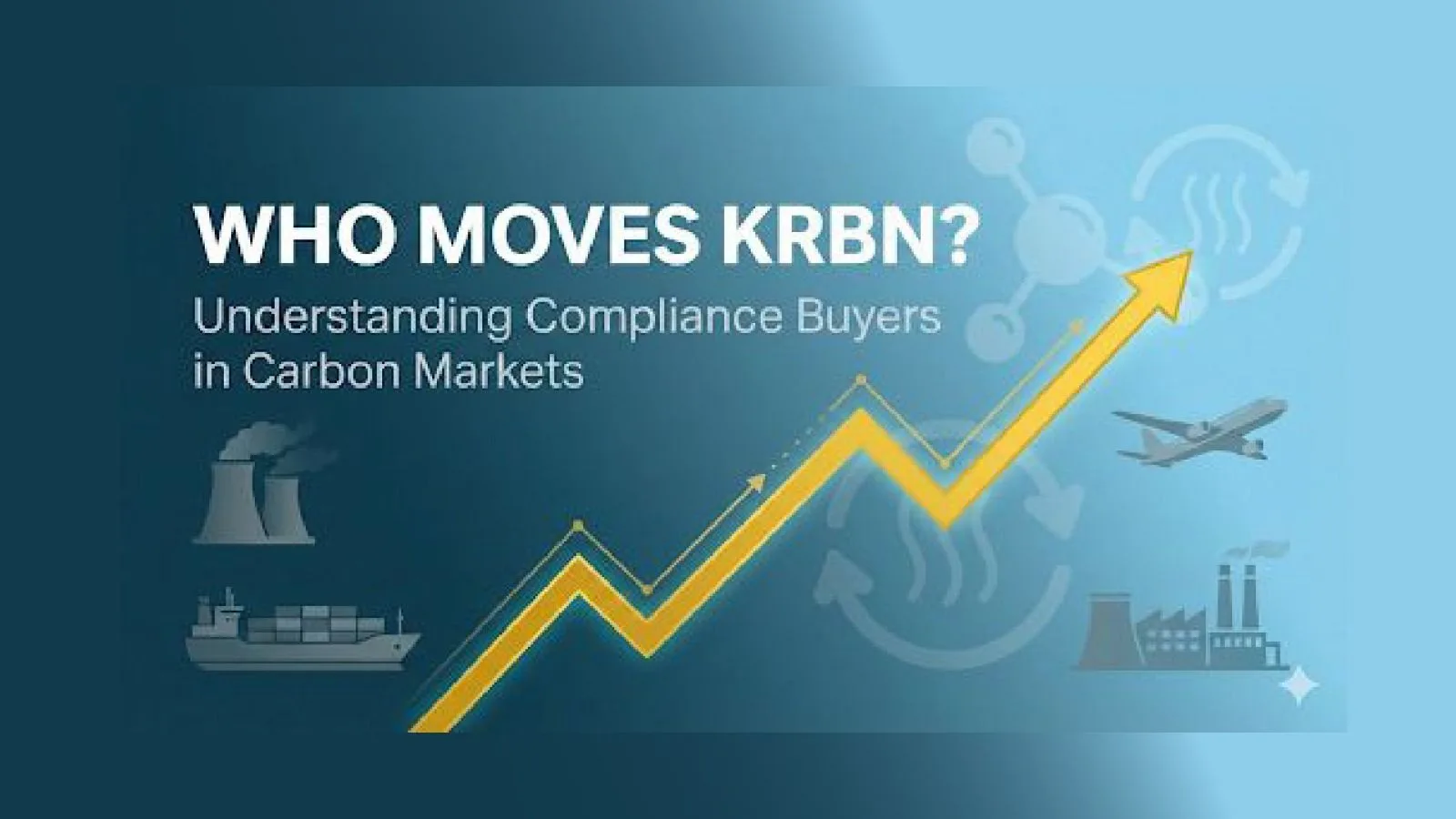
KRBN tracks the compliance side of the market: the allowances that power plants, refineries, airlines, and industrials must surrender to avoid fines.
Sectors that really move the KRBN basket include:
- Power generation (coal & gas)
- Transport fuels (especially in California)
- Energy‑intensive manufacturing & construction (steel, cement, etc.)
- Aviation (intra‑European)
- Maritime shipping (phased into the EU ETS)
- Oil & gas extraction and refining
These are the industries that ultimately drive EUA, CCA, RGGI, UKA, and WCA demand—and therefore KRBN’s underlying futures curve.
The Top 10 Polluters & Their Buyer Status

How to “trade the polluters” via KRBN
Below is a tightened, trader‑focused version of the sector breakdown:
1. Power Generation (coal & gas) – Major compliance buyer
- Trader takeaway: This is the single largest structural buyer across EU ETS, RGGI, and other systems. Cold winters, heatwaves, gas‑price shocks, and nuclear outages all translate into higher thermal burn and stronger allowance demand.
- Think of carbon here as a policy‑driven fuel spread: power producers pass part of the cost on, but must still source allowances in size.
2. Transport fuels (road & trucking) – Major compliance buyer in CCA, expanding in EU
- In California, fuel distributors are covered under the cap‑and‑trade program and must surrender allowances for the emissions embedded in the fuels they sell.
- In Europe, a separate “ETS 2” is being rolled out to cover road transport and buildings, progressively expanding the carbon budget to fuels.
- Trader takeaway: Macro moves in fuel demand, refinery runs, and policy on road fuels can feed directly into CCA and (over time) ETS‑linked demand.
3. Manufacturing & construction (steel, cement, heavy industry) – Major compliance buyer
- Energy‑intensive industrial plants fall squarely within the EU ETS and other schemes. Many historically received free allocations, but those are being reduced over time.
- Trader takeaway: As free allocations phase out, industrials become more price‑sensitive, which can turn carbon into a levered bet on industrial activity plus regulation rather than just on power demand.
4. Aviation – Major compliance buyer for intra‑European flights
- EU ETS has covered emissions from intra‑EEA flights since 2012, with discussions on broader coverage. Airlines must obtain allowances for the covered part of their emissions.
- Trader takeaway: Airline traffic recovery, fuel efficiency rules, and policy on long‑haul coverage all matter. Rising traffic under a tightening cap is structurally bullish for allowances.
5. Maritime shipping – New and growing compliance buyer
- From 2024, maritime shipping is being phased into the EU ETS, with required coverage rising to 100% of emissions on EU‑EU voyages by 2027.
- Trader takeaway: This is a new structural demand leg for EUA, effectively adding a sizeable
6. Oil & gas extraction and refining – Major compliance buyer
- Refineries, gas processing plants, and certain upstream facilities are covered both in EU ETS and California’s cap‑and‑trade program.
- Trader takeaway: Regulatory tightening, methane rules, and refinery margins can all influence allowance demand from this sector.
The “alpha” insight for traders
Most retail investors still conflate “carbon credits” with “planting trees.” In reality, that is the voluntary offset market, where prices are low, and many credits have been hit by quality scandals.
KRBN gives exposure to the compliance market instead:
- Voluntary offsets: Cheap (often a few dollars per ton) and under pressure from reputational and integrity issues.
- Compliance allowances (KRBN): Higher‑priced, government‑mandated instruments from systems like EU ETS and CCA, where covered entities face real financial penalties if they do not surrender enough allowances.
KRBN holds the futures that power plants, steel mills, cement kilns, airlines, refineries, and shipping fleets must buy to stay legal. This regulatory obligation is what creates a credible floor under the market: demand is not purely cyclical or narrative‑driven; it is written into law.
How to trade this
Example 1: Seasonal compliance run-up strategy
Accumulate KRBN during off-peak seasons (August lull) and ahead of Q4 compliance deadlines. Power plants, industrial emitters, and now maritime players face real surrender deadlines in early November for EU ETS (Phase 1). Set predefined risk limits at key support levels and rotate positions as compliance events pass. This is not a buy-and-hold play; it is positioning ahead of predictable structural demand.
Example 2: Policy catalyst and regulatory tightening
Monitor EU ETS rebalancing data, announcements on carbon floor prices, and shipping-sector compliance start dates. Carbon prices embed political and regulatory risk in ways crude oil or equities do not. Track policy calendars (compliance runs, phase-outs of free allocations, new sector inclusions, such as maritime post-2026) as tactical entry/exit signals.
Example 3: Cross-asset relative value
For macro traders and commodities funds: use carbon as an uncorrelated diversifier in a sleeve that also includes energy, grains, and metals. Carbon tends to move on policy shifts and thermal demand shocks rather than broad macro cycles. Consider it a hedge against energy price inflation and a levered bet on climate policy tightening—two forces often hidden in utility and energy stocks.
The bottom line
Understanding who buys KRBN—and when—is the key to trading it. The compliance-driven demand from power plants, shipping fleets, airlines, and industrial emitters is structural, not cyclical. For traders on ADX, this means KRBN is no longer just an ESG play; it is a tradeable macro asset with “predictable” patterns, regulatory catalysts, and portfolio diversification properties. The question is no longer whether to trade carbon, but how to size it and when to scale in and out. Now the next move is yours.