
Many investors believe diversification simply means owning more investments. In reality, effective diversification depends less on the number of holdings and more on how those holdings behave relative to one another. This relationship is measured by correlation, one of the most important concepts in portfolio construction.
Academic research has long shown that diversification benefits increase rapidly at first but eventually plateau. A landmark study by Edwin Elton and Martin Gruber found that most company-specific risk can be diversified away with roughly 20 to 30 stocks, while later studies suggested that 50 or more stocks may be needed to achieve broad diversification across sectors and market environments. However, owning dozens of stocks does not guarantee a well-diversified portfolio. An investor who owns 50 technology stocks may still be highly exposed to the same economic drivers, resulting in significant losses when that sector declines
ETFs have become one of the most powerful tools for achieving what can be described as double diversification. First, each ETF often contains dozens, hundreds, or even thousands of underlying securities, providing diversification within an asset class. Second, investors can combine multiple ETFs representing different asset classes, sectors, regions, and investment strategies to create diversification across asset classes.
ETFs, if used thoughtfully, can help investors build solid long-term portfolios
What is Correlation?
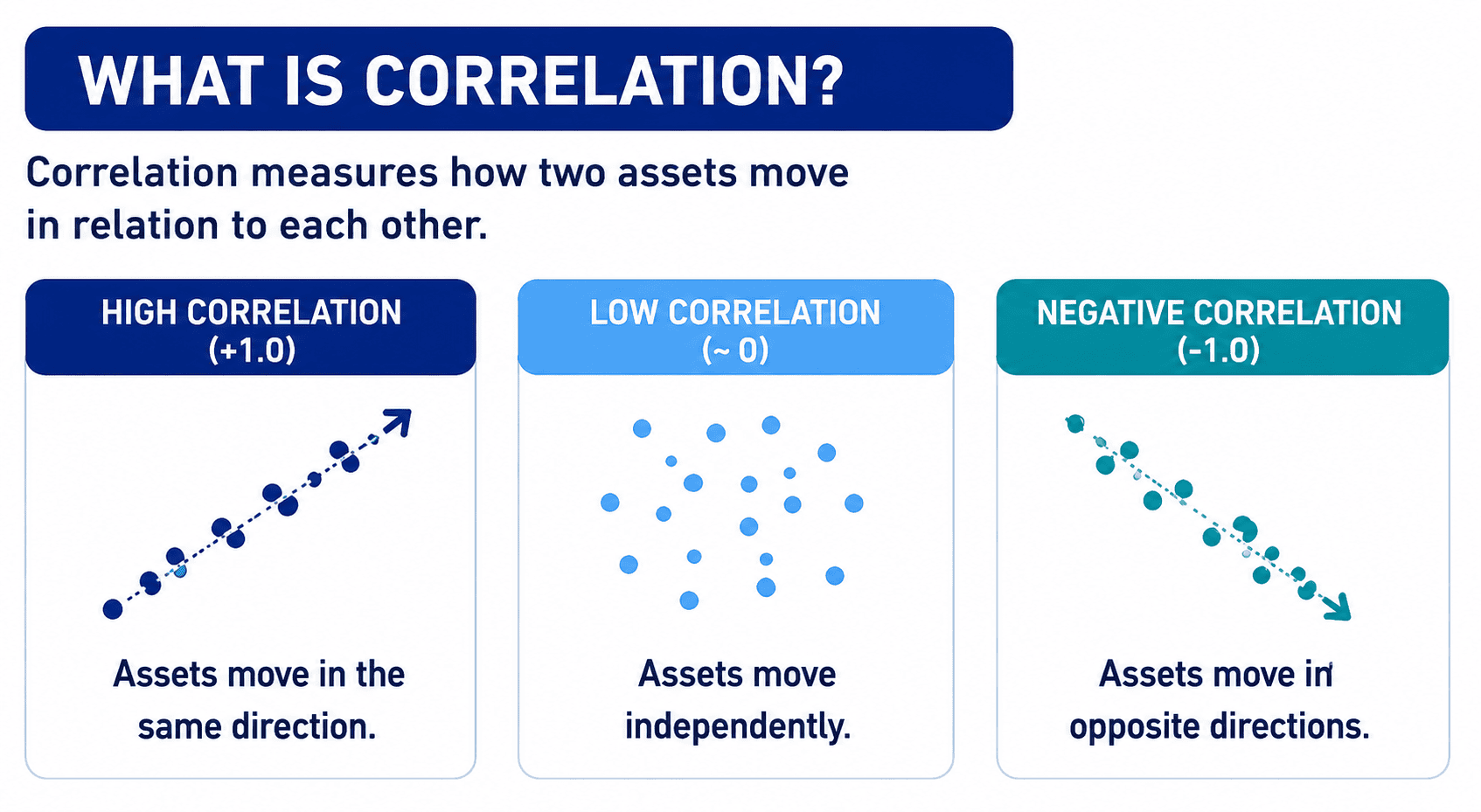
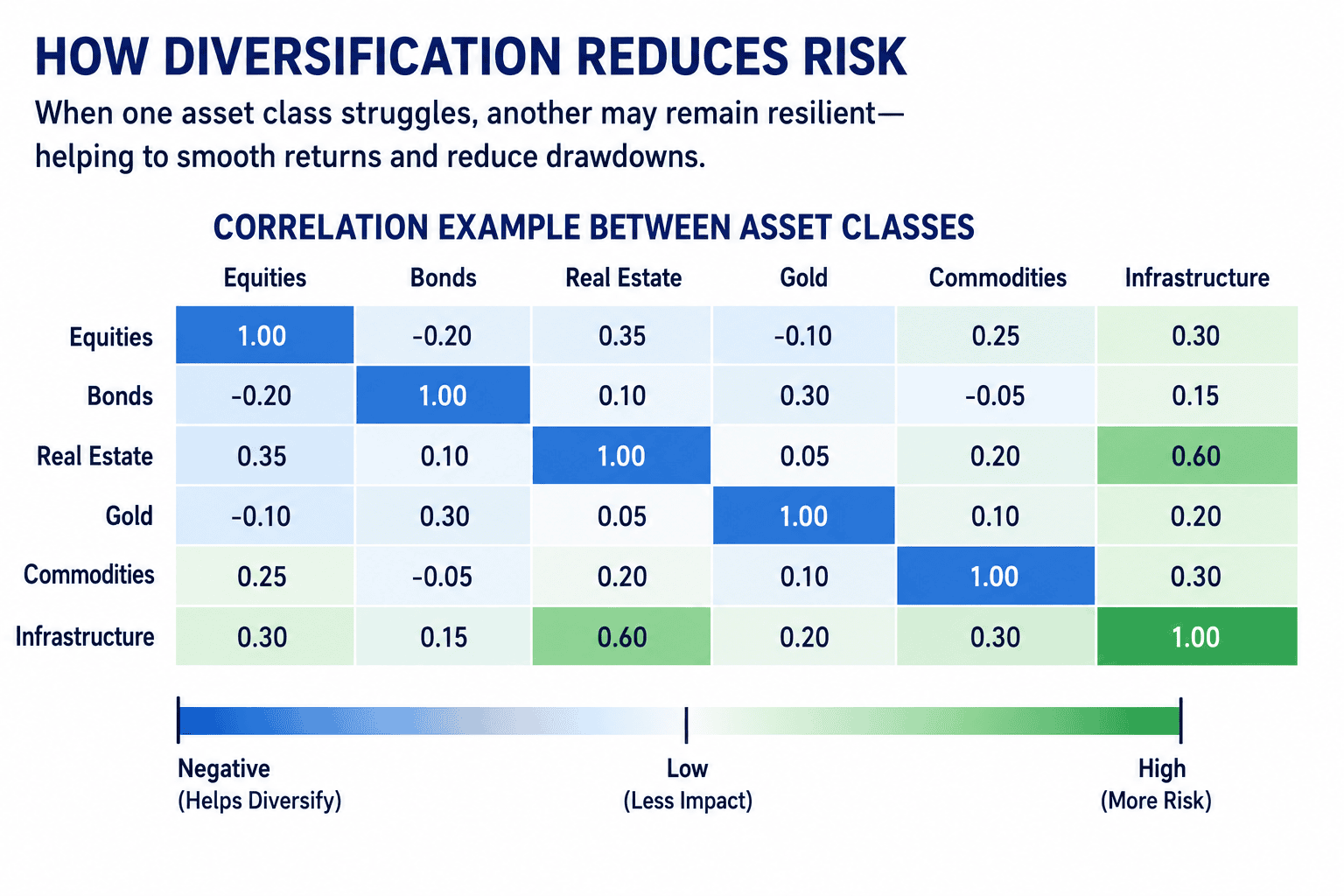
Correlation measures the degree to which two assets move together. Assets with a correlation of +1 tend to rise and fall in unison, while assets with low or negative correlations often move independently or even in opposite directions. For example, suppose an investor holds the S&P 500, U.S. Treasuries, and U.S. technology stocks. If the S&P 500 rises by 1%, U.S. Treasuries decline by 0.2%, and technology stocks gain 0.8%, the relationship between the S&P 500 and Treasuries is negative, while the relationship between the S&P 500 and technology stocks is strongly positive.
Negative correlations can help cushion portfolios during market downturns, whereas highly correlated assets may amplify losses when markets decline. By combining assets with lower correlations, investors can reduce overall portfolio volatility and drawdowns without necessarily sacrificing long-term returns.
ETFs and Correlation-Based Diversification
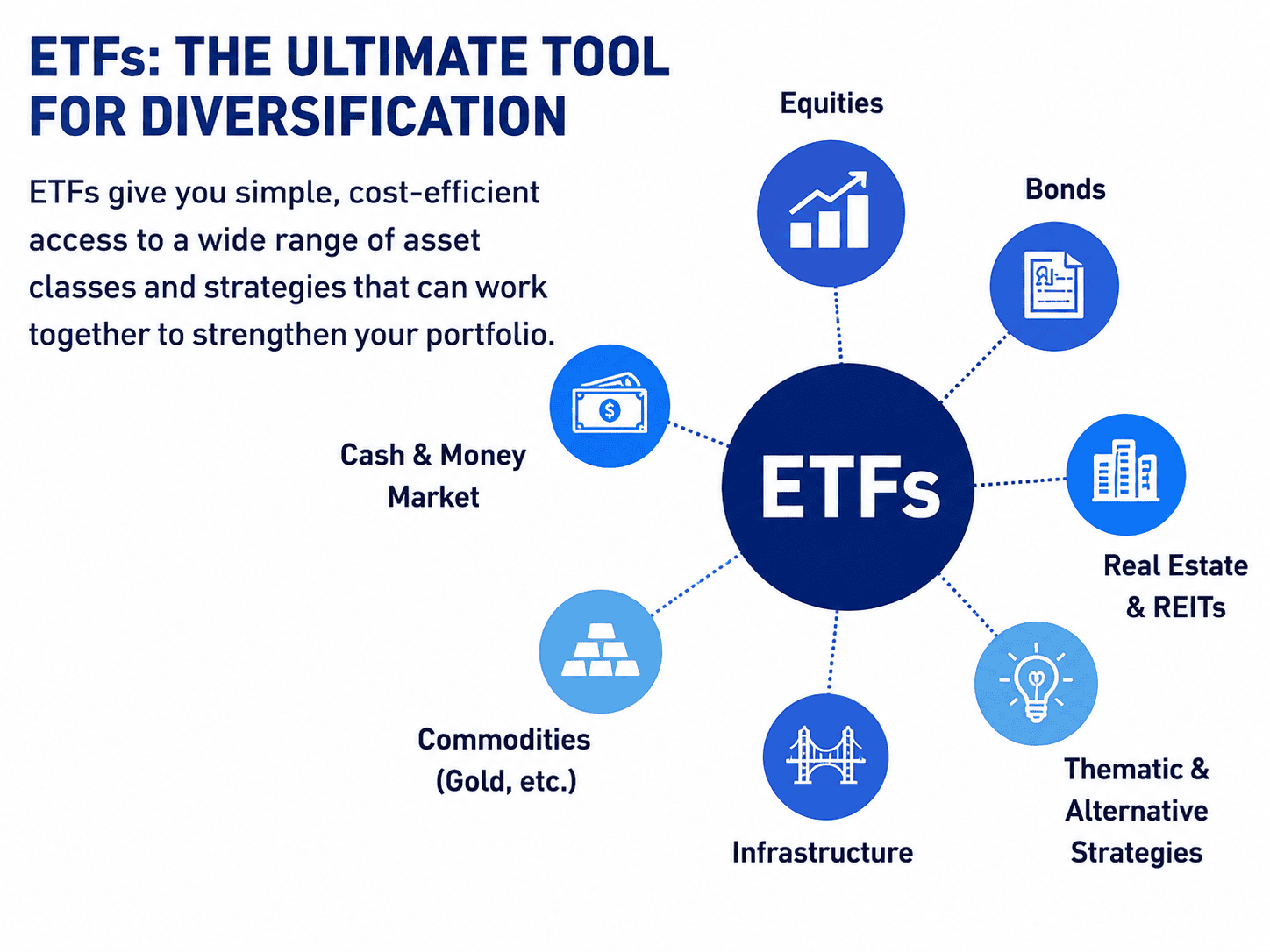
ETFs have become one of the most effective tools for implementing correlation-based diversification. Investors can gain exposure to a wide range of asset classes including equities, bonds, commodities, real estate, infrastructure, gold, carbon credits, and alternative income strategies through a relatively small number of funds. This allows investors to build portfolios that are diversified not only across thousands of underlying securities but also across different economic drivers and market cycles.
The real power of ETFs lies in their ability to combine assets with varying correlations. For example, equities often thrive during periods of economic expansion, while government bonds may provide stability during market stress. Gold has historically served as a hedge during periods of uncertainty, while infrastructure and real estate can offer income and inflation protection. More recently, asset classes such as carbon credits and alternative income strategies have provided additional sources of return that are not always tied to traditional stock and bond markets. When thoughtfully combined, these exposures can reduce portfolio volatility, soften drawdowns during market downturns, and improve the consistency of returns over time.
This diversification benefit becomes particularly valuable during periods of heightened market uncertainty. While no portfolio is immune to losses, a portfolio constructed using assets with lower correlations can help investors stay invested through market cycles and avoid emotionally driven decisions. By providing low-cost access to a broad spectrum of asset classes and investment themes, ETFs have made institutional-quality diversification available to investors of all sizes, helping them pursue stronger long-term risk-adjusted returns.
Correlation Works, Most of the time.
History has repeatedly shown that diversified portfolios tend to deliver superior risk-adjusted returns compared to concentrated portfolios. During periods when one asset class struggles, another may remain resilient, helping to reduce drawdowns and improve consistency. For example, during the 2000–2002 technology bust, bonds significantly outperformed equities, while during the 2022 inflation shock, commodities and energy-related investments held up better than traditional stock and bond portfolios. Similarly, gold has often provided protection during periods of geopolitical uncertainty and financial stress.
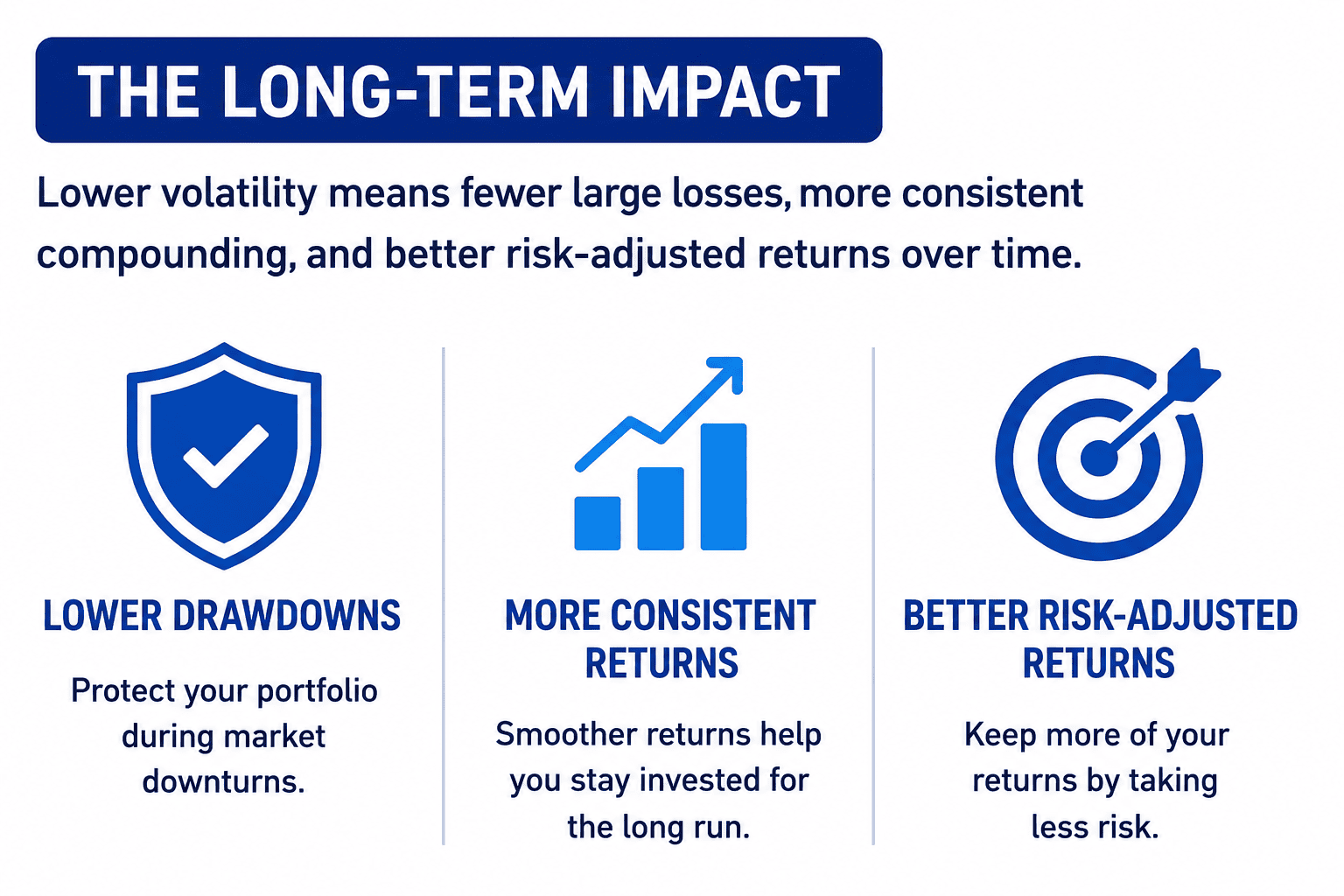
Research by leading institutions such as Vanguard, BlackRock, and Morningstar has consistently found that asset allocation is one of the primary drivers of long-term portfolio outcomes. A portfolio diversified across equities, fixed income, real assets, and alternative strategies has historically produced a smoother return profile than portfolios concentrated in a single asset class.
While diversification may occasionally lag the best-performing asset in any given year, it reduces the risk of being heavily exposed to the worst-performing one. By reducing the magnitude of drawdowns, diversification helps investors preserve capital and remain invested through market cycles. Over long investment horizons, avoiding large losses and compounding returns steadily can be just as important as capturing market gains, making diversification one of the most powerful drivers of long-term wealth creation.
Building Long Term Portfolios
For long-term investors, the goal should not be to predict which asset class will perform best each year. Instead, it is to build a portfolio of ETFs with complementary risk and return characteristics. By focusing on correlation and diversification, investors can create more stable portfolios that are better positioned to navigate changing market environments while compounding wealth over time.
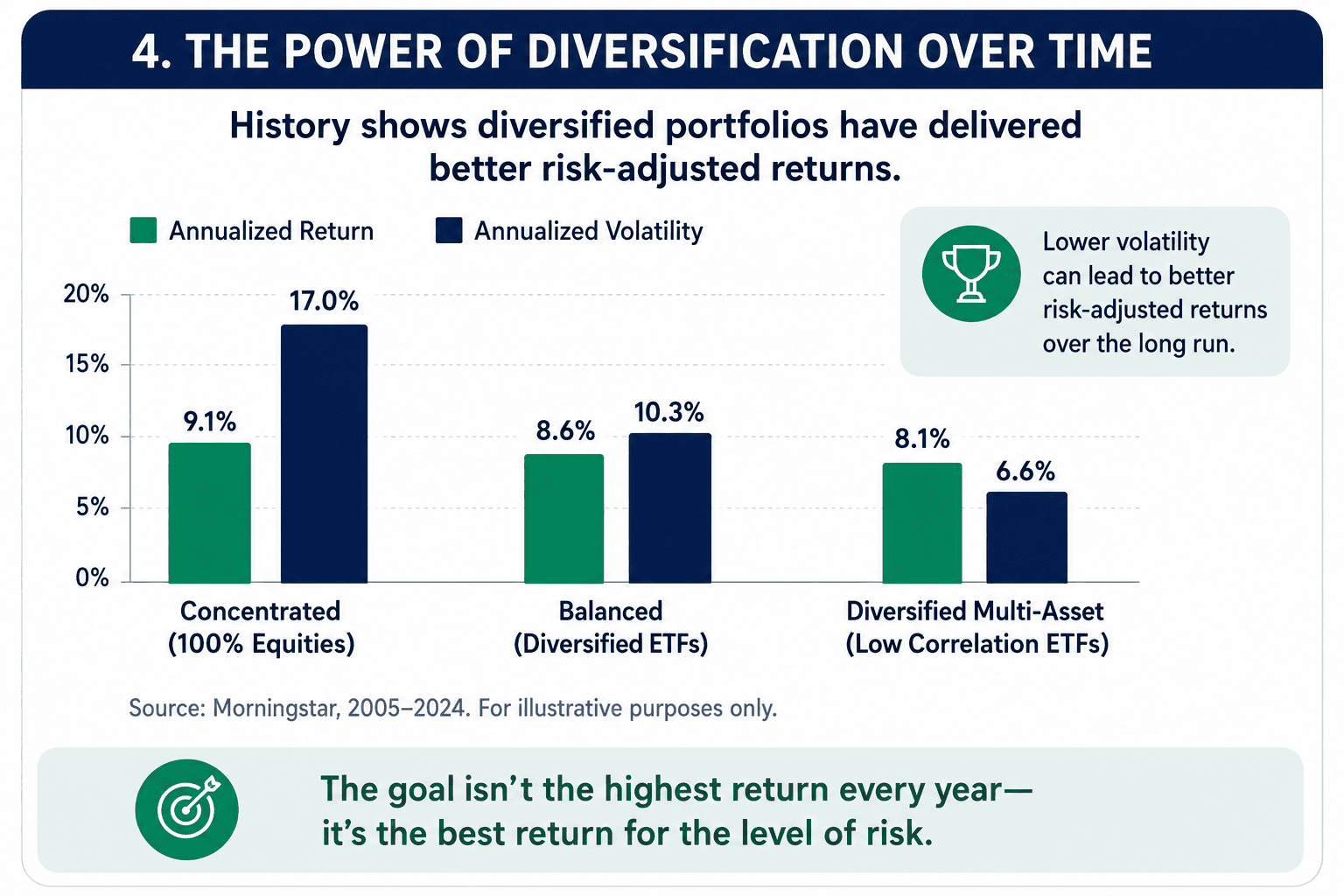
The result is a portfolio that is designed not only to capture long-term growth but also to reduce drawdowns and improve consistency of returns. History has shown that investors who focus on combining assets with complementary return drivers often achieve better risk-adjusted outcomes than those who simply concentrate on the highest-returning asset class.
In the long run, successful investing is not about owning the most investments, it is about owning the right mix of investments that work together. ETFs make this process simpler, more cost-effective, and more accessible than ever before.