

Exchange-traded funds (ETFs) have become one of the most popular investment vehicles for retail investors because they offer diversification, transparency, and relatively low costs. Over the past two decades, they have evolved from tools used mainly by institutions into mainstream products, with global ETF assets now exceeding USD 20 trillion.
For investors in the UAE, ETFs provide a simple way to access a broad range of markets and themes, including U.S. equities, global technology, artificial intelligence, China internet stocks, carbon markets, commodities, fixed income, and Shariah-compliant strategies. Instead of buying many individual securities, investors can gain diversified exposure through a single trade.
Buying an ETF in the UAE is broadly similar to buying a listed stock. However, first-time investors may find the account setup, investor registration, and broker selection process confusing. A clear understanding of the steps can make it easier to start investing with confidence.
The basic process is:
· Obtain your ADX investor number (NIN)
· Open a brokerage account
· Fund the account
· Search for the ETF
· Enter the order
· Review your portfolio holdings
Step 1: Obtain an Investor Number (NIN)
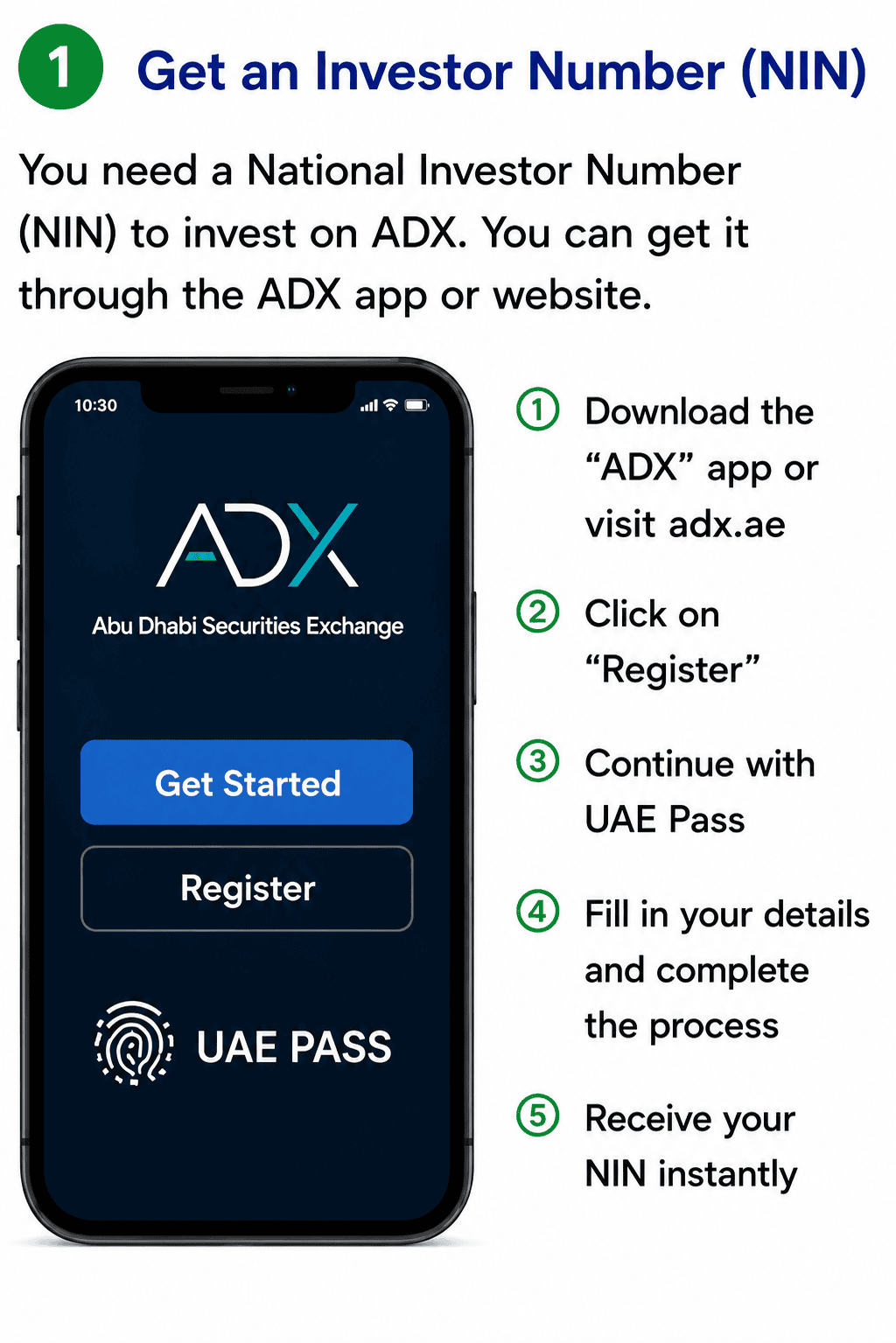
The first step to buying ETFs on the Abu Dhabi Securities Exchange (ADX) is obtaining an investor number, commonly referred to as a NIN. This number is your identifier for trading, clearing, and settlement on the exchange. According to the official ADX investor guidance, investors can obtain a NIN through the ADX mobile app with UAE Pass, the ADX website, accredited brokerage firms, or ADX customer service offices.
Step 2: Open a Brokerage Account
Once your NIN has been issued, you can open a brokerage account with a licensed broker that provides access to ADX. Many UAE banks and brokerage firms offer trading services through online platforms and mobile apps, giving investors access to stocks, ETFs, and other listed securities.
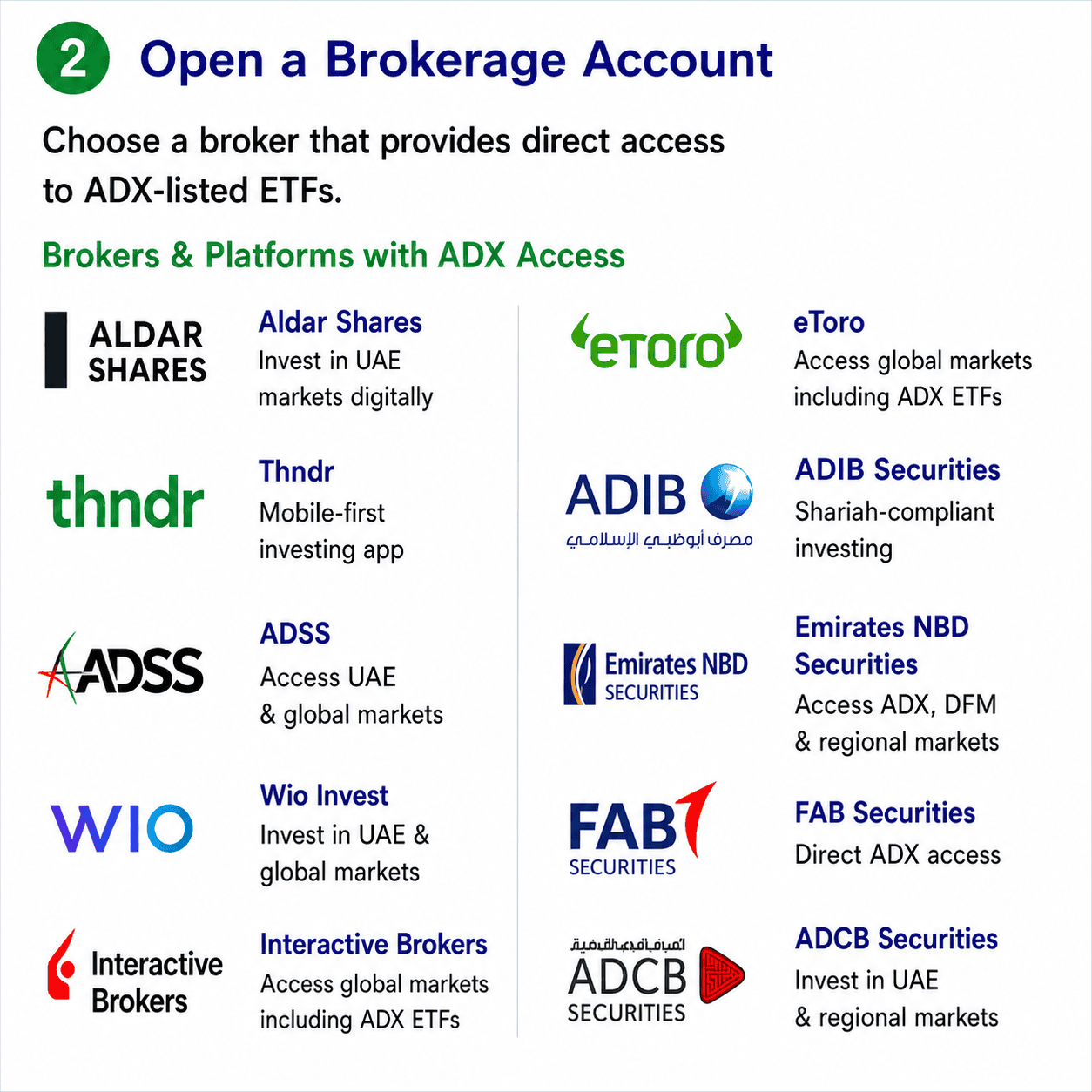
For U.S. persons, broker choice may be more limited because some local firms do not onboard U.S. clients due to tax and regulatory requirements. Interactive Brokers (IBKR) has offered access to both ADX and DFM since late 2025, making it one of the more practical options for U.S. investors seeking direct access to UAE-listed securities.
A U.S. investor who wants to buy UAE-listed ETFs would typically open an IBKR account, complete the required tax forms, fund the account, enable UAE market access, and then place trades through the platform. IBKR allows investors to access UAE equities alongside other global markets through a single account.
Step 3: Link Your Bank Account and Fund the Account
After completing the required identification and KYC checks, you can fund your brokerage account by bank transfer. If your broker is part of the same banking group as your bank, the account may already be linked and funding may be as simple as moving money internally. Otherwise, you may need to send a transfer, and the funds may take a business day or more to become available for trading.
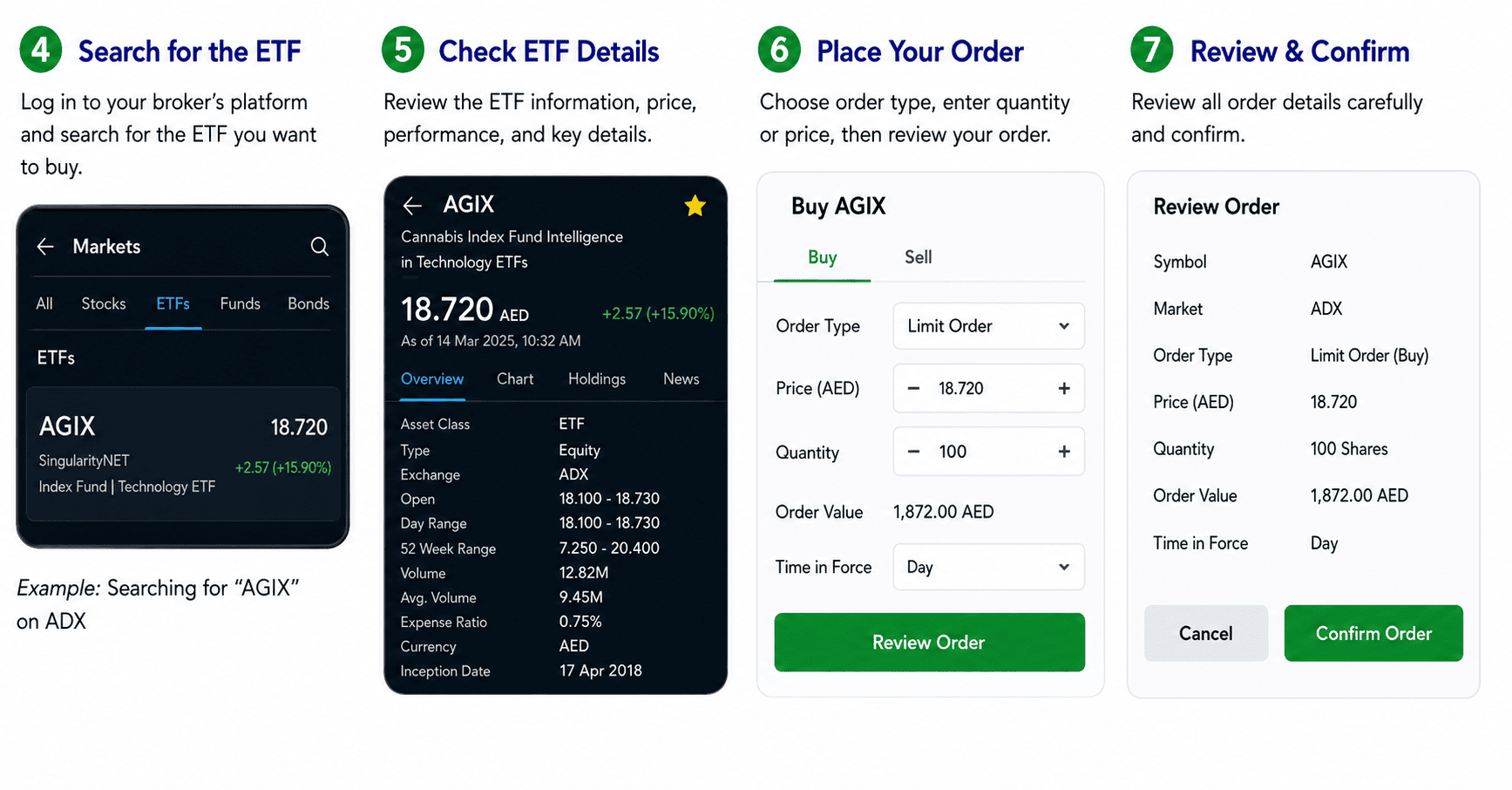
Step 4: Search for the ETF and Place Your Order
Once the account is funded, you can search for the ETF you want to buy on your broker’s trading platform. Like stocks, ETFs trade throughout the day and are identified by ticker symbols. ADX’s ETF market has expanded in recent years, giving investors access to a broader mix of local and international strategies.
Examples of locally listed ETFs include products from Lunate, such as AIPOWR, which focuses on AI data, power, and infrastructure themes, and QUANTM, which provides exposure to companies linked to quantum computing. Lunate also offers broader regional, global, and Shariah-compliant ETF strategies through its platform.
ADX also offers access to cross-listed international ETFs, including AGIX and KWIN from KraneShares. These funds broaden the range of themes available to local investors, including artificial intelligence and Shariah-compliant income strategies, without requiring a separate overseas brokerage account.
Before placing an order, review the ETF’s investment objective, holdings, fees, liquidity, historical performance, and risk profile to make sure it fits your goals and risk tolerance. Once you are comfortable with the fund, you can enter a buy order through your broker. Selling follows the same process, provided you already hold the ETF.
Step 5: Invest Responsibly
Investing involves risks and can result in loss of money. Investors should size positions appropriately, diversify their holdings, monitor their portfolios, and rebalance or use dollar-cost averaging where suitable.