
Geopolitical Risks and the Strait of Hormuz
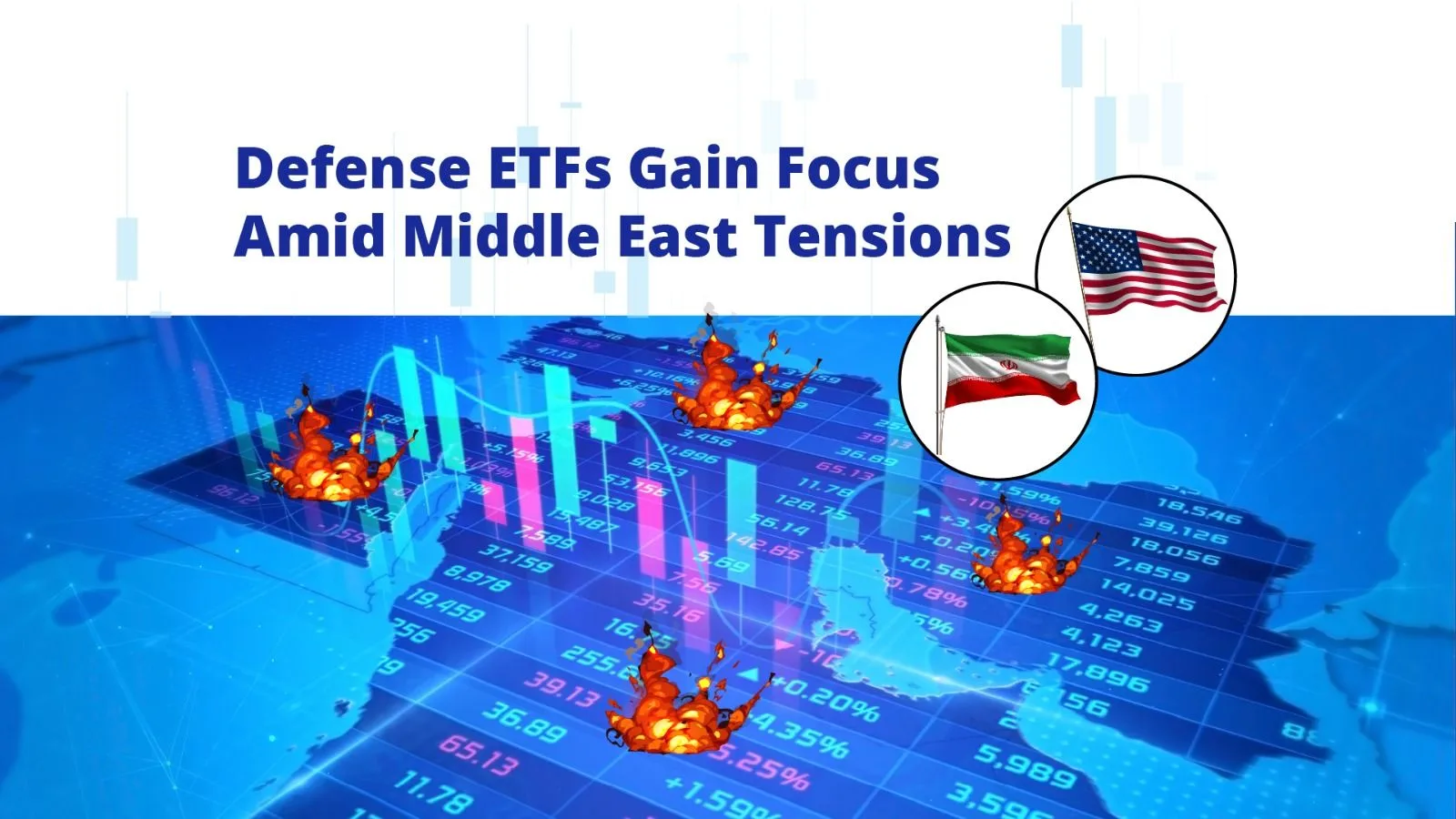
Rising geopolitical tensions in the Middle East have once again placed financial markets on alert. One of the most critical focal points is the Strait of Hormuz, a narrow maritime corridor between Iran and Oman through which roughly 20% of global oil trade flows. Because such a large share of the world’s crude oil supply passes through this chokepoint, disruptions or heightened security risks around the strait can quickly trigger volatility in global energy markets and investor sentiment.
For investors in the Gulf Cooperation Council (GCC), developments around this region are especially significant. The Gulf economies are deeply connected to global energy markets, meaning geopolitical risks can influence oil prices, shipping costs, and regional equity markets simultaneously. As a result, geopolitical events in the region often prompt investors to reassess portfolio allocations and risk exposure. (Source: Nukoud)
GCC Markets React with Caution
Recent developments have already affected regional equity markets. According to reporting by Khaleej Times, Saudi Arabia’s Tadawul All-Share Index declined about 2.67% amid volatility linked to regional tensions, reflecting investor caution as geopolitical risks escalate.
Kuwait also temporarily suspended trading following missile and drone activity in the region, while other Gulf markets were expected to open with limited declines as investors assessed the evolving situation. Market analysts suggest that these movements largely reflect global risk sentiment rather than structural weakness in GCC economies. Strong government balance sheets, elevated oil revenues, and supportive fiscal policies continue to underpin many Gulf economies.
In periods of uncertainty, analysts often recommend that investors prioritize portfolio flexibility, diversification, and liquidity, rather than making aggressive directional bets based on short-term geopolitical developments. (Source: Khaleejtimes)
Why Defense Stocks and ETFs Attract Attention
When geopolitical tensions rise, investor attention frequently shifts toward sectors linked to national security and defense spending. Defense companies are often supported by long-term government procurement contracts, making their revenues less sensitive to economic cycles than many other industries.
Research from ETF.com notes that wars and global security tensions can increase demand for defense systems, military technology, and surveillance infrastructure, which can influence the performance of defense contractors and sector-focused exchange-traded funds (ETFs). (Source: ETF.com)
Recent market trends appear consistent with this historical pattern. According to reporting by Semafor, defense stocks have risen during the latest Middle East tensions, while sectors such as airlines and cruise operators have faced pressure due to fuel price uncertainty and travel disruptions. (Source: Semafor)
For investors seeking diversified exposure to the sector, defense ETFs provide a way to invest in a basket of aerospace and defense companies rather than relying on individual stocks. These funds typically include companies involved in military aircraft manufacturing, missile systems, cybersecurity technologies, and satellite infrastructure. (Source: ETF.com)
Defense ETFs: GCC Investor Guide
UCITS & US-Listed Defense ETFs – Tickers, AUM, Holdings & Descriptions
The table below highlights a selection of defense-focused ETFs spanning global, European, US, and Korean markets, followed by individual fund descriptions and top holdings.
Comparative Overview
UCITS-Listed ETFs (Accessible to GCC Investors via European Brokerages)
The UCITS ETFs provide exposure to companies involved in military systems, aerospace manufacturing, cybersecurity, and advanced defense technologies. As global governments increase defense spending to address evolving security challenges, these funds allow investors to gain diversified exposure to companies involved in defense modernization programs.
US & Other-Listed Defense ETFs
AUM figures sourced from Bloomberg data. TER = Total Expense Ratio per annum. Holdings counts approximate and are subject to change.
ETF Descriptions & Key Holdings
VanEck Defense UCITS ETF (DFNS)
Tracks the MarketVector Global Defense Industry Index with full physical replication. The 43-position portfolio is concentrated in Industrials (91.4%) and IT (8.6%), spanning US primes alongside European and Asian contractors. UCITS-compliant, domiciled in Ireland.
Top Holdings: RTX Corporation, Thales, Leonardo S.p.A., Hanwha Aerospace, Saab AB
WisdomTree Europe Defence UCITS ETF (WDEF)
A pure-play European defense ETF launched in March 2025, covering a diversified basket of European companies. It excludes US companies entirely, making it a strong complement to US-focused ETFs for investors seeking targeted European rearmament exposure. TER: 0.40% p.a., 49 holdings.
Top Holdings: Thales SA (12.5%), BAE Systems (11.6%), Rheinmetall AG (11.0%), Safran SA (8.3%), Leonardo SpA (8.3%), Airbus SE (8.2%), Rolls-Royce (8.1%)
HANetf Future of Defence UCITS ETF (NATO)
Tracks the EQM NATO+ Future of Defence Index, including companies deriving over 50% of revenues from military aircraft, defence equipment, or cybersecurity contracted with NATO+ member countries. With 61 holdings and a TER of 0.49%, it is among the broadest UCITS defense offerings, uniquely combining traditional hardware and cybersecurity exposure.
Top Holdings: Cisco Systems, Safran, Northrop Grumman, Lockheed Martin, BAE Systems
iShares U.S. Aerospace & Defense ETF (ITA)
Managed by BlackRock, ITA tracks the Dow Jones U.S. Select Aerospace & Defense Index and is the largest and most liquid defense ETF globally ($16.2B AUM). Its market-cap weighting makes it top-heavy: GE Aerospace (~20.6%) and RTX (~16.1%) dominate the portfolio. Best for investors seeking straightforward, liquid US defense exposure. Note: US-listed, not UCITS.
Top Holdings: GE Aerospace (20.6%), RTX Corporation (16.1%), Boeing (7.4%), Lockheed Martin, Northrop Grumman
Global X Defense Tech ETF (SHLD)
Sits at the intersection of conventional defense contracting and AI-driven military technology, the only major defense ETF with meaningful exposure to next-generation military innovation. It blends US primes, European names, and AI/data analytics companies. With $7.8B AUM and TER of 0.50%, it suits investors who believe technology will define the future of defense. Note: US-listed, not UCITS.
Top Holdings: Lockheed Martin (9.0%), RTX Corporation (7.8%), Rheinmetall AG (7.2%), General Dynamics (7.0%), Palantir Technologies (5.9%)
Invesco Aerospace & Defense ETF (PPA)
Tracks the SPADE Defense Index covering US defense, homeland security, and aerospace companies. Its modified market-cap weighting limits overexposure to the largest names, producing a more balanced portfolio than ITA. With 62 holdings, TER of 0.58%, and ~$8.3B AUM, PPA offers the broadest US-centric defense exposure in this group. Note: US-listed, not UCITS.
Top Holdings: RTX (8.0%), Boeing (7.8%), GE Aerospace (7.7%), Lockheed Martin (7.2%), Northrop Grumman (5.4%), General Dynamics (4.8%), Honeywell (4.4%)
PLUS Korea Defense Industry Index ETF (KDEF)
Offers targeted access to South Korean defense exporters, particularly relevant as European nations seek alternatives to US-sourced military equipment. Tracks an AI-scored index of companies driving Korea’s defense innovations across manufacturing and technology. With 24 holdings and ~$181M AUM, it is the most concentrated fund in this group. Carries country-concentration and currency risk. Note: Korean-listed, not UCITS.
Top Holdings: Hanwha Aerospace (17.1%), Hyundai Rotem (12.0%), Korea Aerospace Industries (8.7%), Satrec Initiative (8.2%), Hanwha Systems (7.2%)
Bottomline
Defense ETFs can contribute to portfolio diversification because their performance drivers differ from those of many traditional sectors. Government defense budgets and long-term military procurement programs can provide relatively stable revenue streams for companies in the industry.
However, the sector is still influenced by political decisions, defense budgets, and global security dynamics. Changes in government priorities or military spending policies can affect the financial outlook for defense contractors.
For investors navigating uncertain geopolitical conditions, maintaining diversification, disciplined risk management, and a long-term perspective remains essential. Defense ETFs may offer exposure to a sector linked to global security spending, but they are typically most effective when integrated into a broader investment strategy rather than used as a short-term tactical trade.