
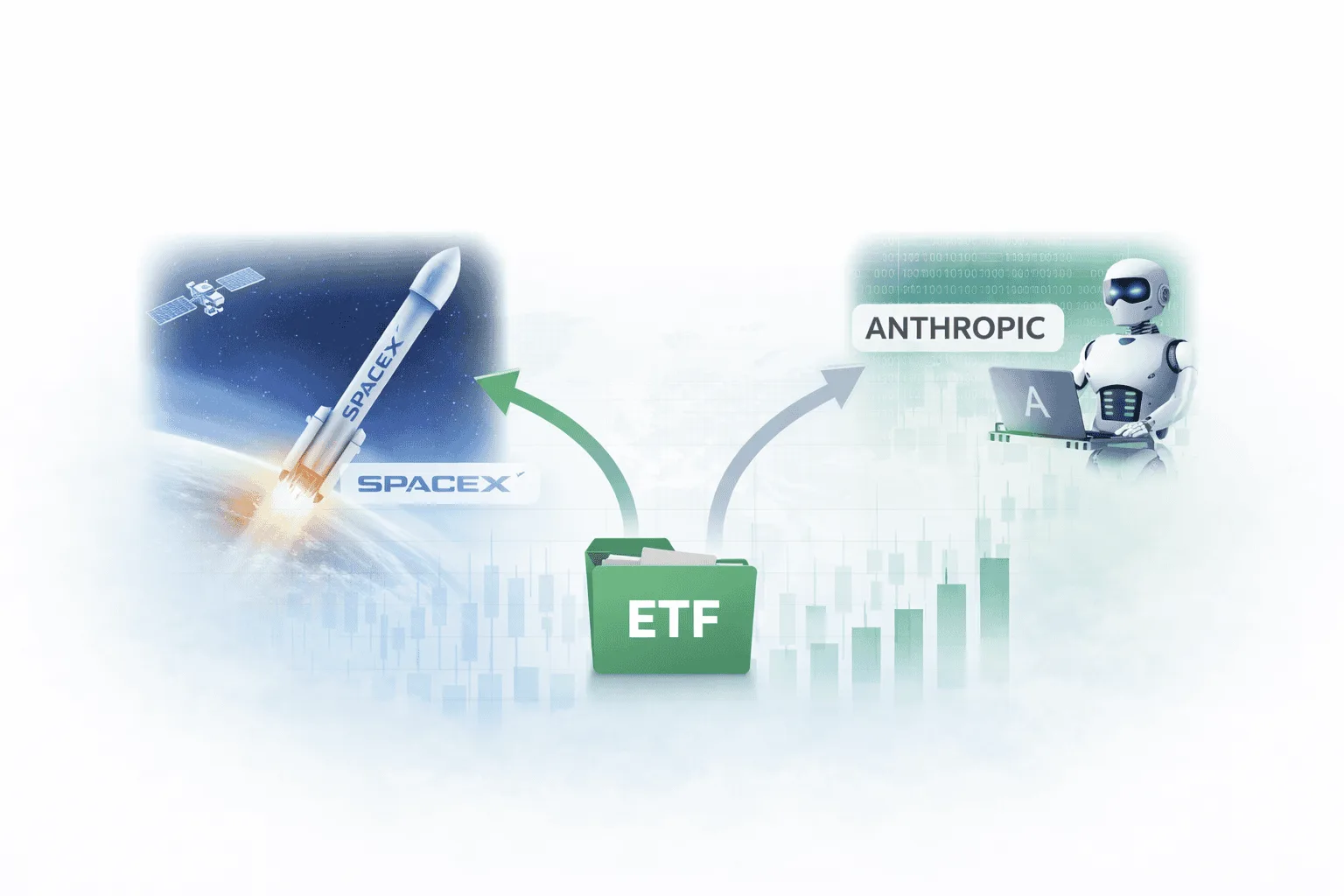
In the race to capture investor excitement around blockbuster IPOs, ETF issuers are beginning to position themselves before the starting gun has even fired. Fresh regulatory filings from REX Shares and Tuttle Capital Management outline plans to launch leveraged exchange-traded funds tied to SpaceX and Anthropic, despite neither company yet trading on public markets.
The proposed T-Rex products would aim to deliver twice (200%) the daily performance of each stock once listed, underscoring just how far ETF innovation has evolved. No longer content with tracking existing markets, issuers are increasingly attempting to anticipate them. With both companies widely expected to go public in 2026, the logic is clear, secure first-mover advantage in what could quickly become two of the most actively traded names globally.
This reflects a broader shift in the ETF ecosystem toward speed, narrative, and retail demand. Leveraged ETFs, funds that use derivatives such as swaps to amplify daily returns have seen sustained growth in assets under management (AUM), or total investor capital, as traders seek to capitalize on short-term volatility. These products are structurally designed for tactical exposure, not long-term holding, but their popularity continues to expand.
What makes these filings unusual is their timing. Until SpaceX or Anthropic shares begin trading, there is no underlying price to replicate. That raises questions about how exposure will be implemented in the interim, whether through proxies, delayed activation, or synthetic structures. Even once live, the daily reset mechanism introduces path dependency, meaning returns over longer periods can diverge significantly from a simple 2x multiple, particularly in volatile IPO conditions.
Importantly, investors already have limited, if indirect ways to gain exposure to these themes. The Themes Generative Artificial Intelligence (AGIX) ETF, for example, provides exposure to the broader AI ecosystem, including companies with strategic ties to firms like Anthropic, as well as the infrastructure layer underpinning AI growth. While it does not offer pure-play or direct holdings in private companies like SpaceX, it reflects how ETF issuers have already been packaging pre-IPO narratives into listed products.
For GCC investors, structural considerations remain key. Leveraged ETFs are typically U.S.-domiciled rather than UCITS-compliant, limiting accessibility through regional platforms in the UAE and Saudi Arabia. They also introduce withholding tax and estate tax considerations. From a Sharia perspective, the use of leverage and derivatives would likely render such products non-compliant for many investors.
Ultimately, these filings highlight an ETF industry pushing deeper into speculative territory, where anticipation itself becomes an investable theme. Launching a leveraged fund tied to a company that does not yet trade publicly may seem premature, but in today’s market, being early is increasingly the strategy, not the risk.