
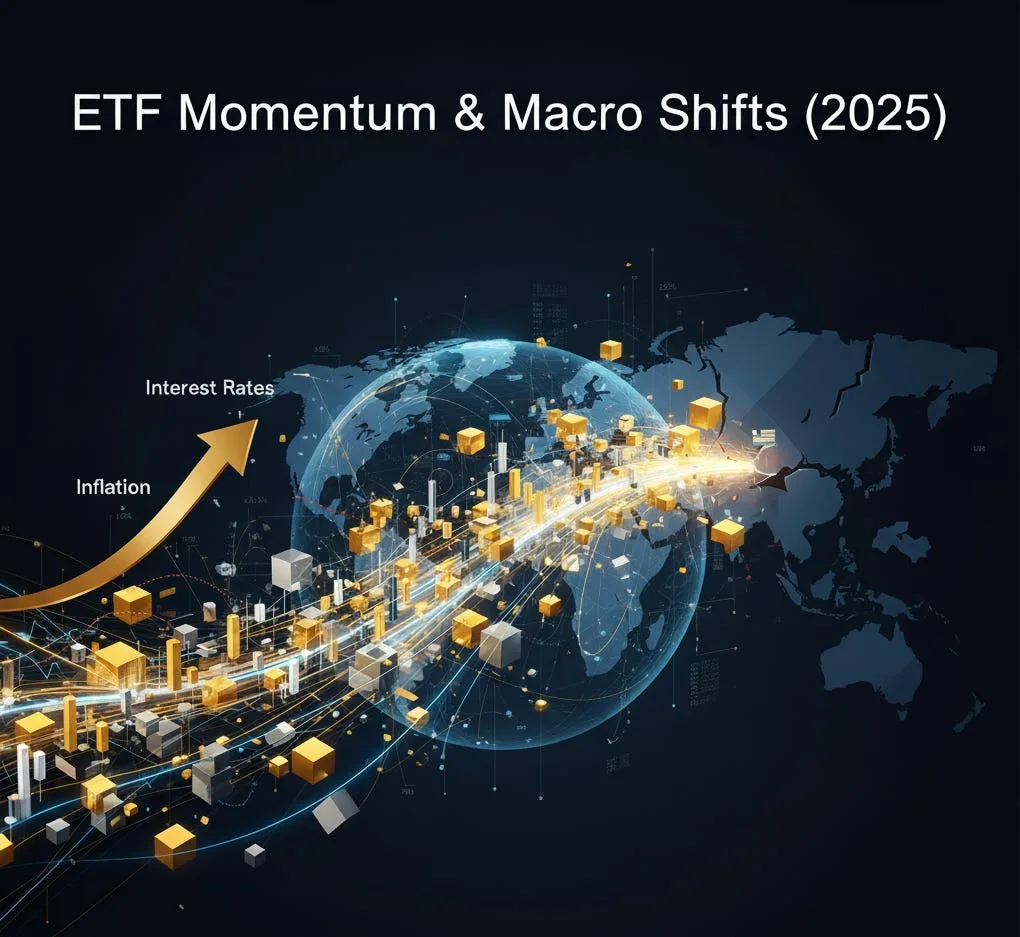
Global ETF flows have continued to surge in 2025, with year-to-date net inflows surpassing US$820 billion as of October 6, according to data from ETFGI and Refinitiv Lipper. The pace of asset growth underscores the industry’s resilience in a year defined by macro turbulence from shifting interest-rate expectations and persistent inflation to renewed geopolitical fragmentation. Rather than retreating amid uncertainty, investors have leaned further into exchange-traded funds for liquidity, cost efficiency, and tactical flexibility.
Michael Arone, Chief Investment Strategist, and Matthew Bartolini, Head of SPDR Americas Research, note that ETFs have evolved well beyond their passive roots.
They argue that ETFs are now the preferred vehicle through which investors express macro views and adjust portfolios in real time, reflecting a broader shift toward transparency, flexibility, and global access.
ETF Momentum in a Volatile Macro Climate
ETF’s rise in 2025 reflects two converging forces, market uncertainty and investor adaptability. With central banks cutting rates after a bruising inflation cycle, and with trade realignments reshaping global capital flows, ETFs are being used for both tactical positioning and long-term portfolio construction.
Bartolini notes that ETFs have become “the first responders” in asset allocation. This view is supported by the numbers, with ETFs accounting for nearly 32% of all equity trading volume on U.S. exchanges in Q1 2025 (Bloomberg, April 2025). In volatile markets, liquidity and transparency make them indispensable.
For Gulf allocators, the appeal is similar. UAE family offices and Saudi sovereign funds have leaned into ETFs not just for broad market beta, but also as tools for inflation hedging, sector rotation, and cross-border exposure.
Macro Drivers: Rates, Inflation, and Fragmentation
1. Interest Rate Cycles
Historically, rate-hike environments drive investors into short-duration bond ETFs to limit interest-rate risk, while easing cycles see flows into long-duration Treasurys for capital appreciation. With the Federal Reserve signaling three cuts by December 2025, duration plays are already shifting. Global bond ETFs have seen US$75 billion in inflows YTD 2025, led by U.S. Treasurys and investment-grade corporations.
For GCC investors particularly those benchmarked to dollar assets this shift matters. Many UAE institutions hold U.S. fixed income ETFs as their de facto duration management tool, adjusting allocations as Fed cycles evolve.
2. Inflation and Commodities
Despite easing headline CPI, structural inflationary forces like tariffs, supply-chain re-shoring, and fiscal stimulus persist. Central banks purchased 3,176 tonnes of gold since 2022, underscoring demand for real assets. ETFs tracking gold and commodities have become the retail-accessible hedge, even as physical bullion markets remain opaque.
In Dubai and Riyadh, gold ETFs remain among the most traded listed funds, with Sharia-compliant versions in particularly high demand.
3. Geopolitical Fragmentation
Trade wars, tariffs, and regional conflicts rank as top concerns for investors in 202. ETFs allow allocators to shift exposures away from vulnerable geographies or toward safe havens with agility.
For example, GCC allocators have selectively reduced Europe-focused ETFs in favor of U.S. large-cap and emerging Asia ETFs, while adding Treasury and gold ETFs as geopolitical hedges.
Beyond The Beta: ETFs as Tactical Weapons
Arone stresses that the ETF wrapper has gone beyond its index-tracking origins. Active ETFs now represent 32% of global flows YTD 2025, while alternatives (private credit, structured outcome ETFs, and digital assets) are carving out space in institutional portfolios.
This opens two opportunities for investors
- Yield Diversification: Private credit ETFs, launched in 2025, provide access to high-yield lending markets that Gulf sovereigns have historically accessed only through direct allocations.
- Currency and FX Hedging: UCITS ETFs with currency-hedged share classes are increasingly being used in Abu Dhabi and Dubai to navigate dollar-pegged regimes while accessing euro or yen assets.
The GCC Lens: Adoption, Challenges, and Opportunity
While global ETF AUM has reached US$13.8 trillion, the GCC market is still nascent. Tadawul, ADX, and DFM have expanded listings, but liquidity remains concentrated in a handful of funds, notably Saudi Aramco-focused ETFs and gold products.
Challenges remain:
-Liquidity: Bid/ask spreads on locally listed ETFs can be wider than global benchmarks, reducing tactical efficiency.
-Sharia compliance: Not all alternative or derivative-heavy ETFs are eligible, requiring careful screening.
-Withholding tax: U.S.-domiciled ETFs face dividend withholding for GCC investors, making UCITS ETFs listed in Europe a more tax-efficient option.
Still, momentum is undeniable. Regional regulators (e.g., UAE’s Securities and Commodities Authority, Saudi CMA) are actively promoting ETF market depth, aiming to attract both retail and institutional flows.
Lessons for the Next Cycle
The macro climate of 2025 underscores a critical shift as ETFs are not simply a way to “own the market” but have become the preferred mechanism through which investors express macro views, hedge tail risks, and navigate fragmentation.
For Gulf allocators, the path forward is to embrace ETFs as tactical risk tools rather than passive sleeves, to demand Sharia-compliant and UCITS structures that align with regional needs, and to leverage ETFs’ liquidity for faster, more cost-efficient portfolio adjustments in a world where volatility is the new constant.
As Arone and Bartolini argue, ETFs are now central to how investors translate macro shifts into portfolio decisions, and in the GCC, where oil-linked revenues, FX pegs, and sovereign wealth allocations intersect with global flows, ETFs are poised to become not just convenient wrappers but strategic levers of resilience.