
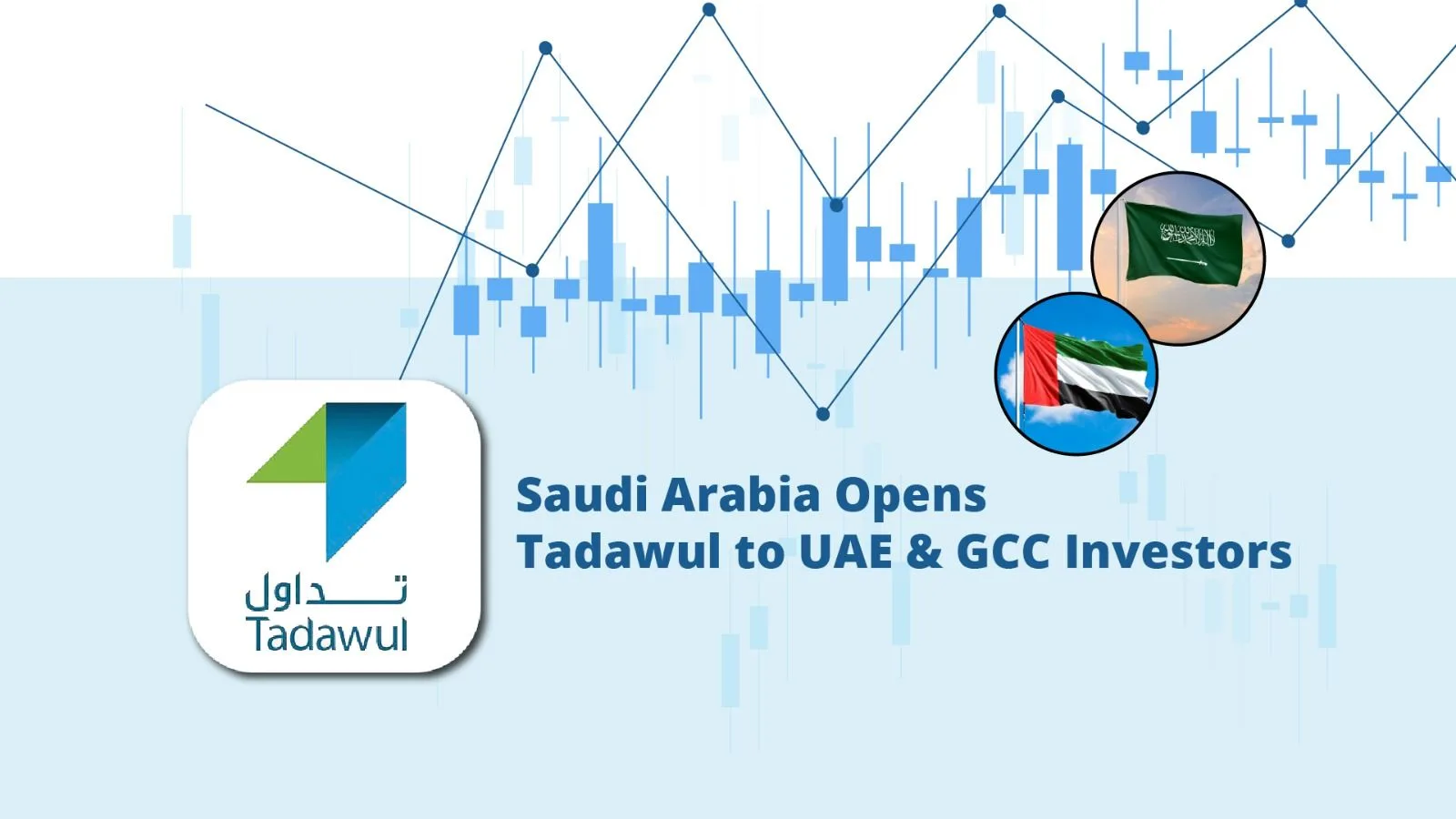
Saudi Arabia’s Tadawul is the largest stock exchange in the Gulf Cooperation Council (GCC), commanding over 40% of total GCC market capitalization and $183.5 billion in trading value in H1 2025 alone. For years, GCC residents could see, track, and read about it. What they could not do was invest in it directly.
That restriction is gone. Saudi Arabia’s Capital Market Authority (CMA) has formally opened the Tadawul main market to all UAE and GCC residents with full direct ownership, no intermediaries, no swap structures, and no minimum asset thresholds. Effective February 2026, Gulf investors will be able to hold Saudi-listed securities in their own name and trade on their own terms.
This is not a minor regulatory tweak. The old Qualified Foreign Investor (QFI) framework required institutions to hold approximately USD 500 million in AUM just to qualify for access. That framework has been abolished entirely. For retail and institutional investors alike, the playing field in the Gulf just changed permanently.
What Exactly Changed, at a glance
Saudi Arabia Dominates the Gulf in Market Size
To understand why this matters, consider the scale gap. In the first half of 2025, Saudi Arabia’s Tadawul recorded $183.5 billion in trading value, more than the combined total of every other GCC exchange. The next closest, Abu Dhabi, posted $48.9 billion.
Code:
Saudi-Listed ETFs Now Accessible to GCC Investors
The following ETFs are listed on the Saudi Exchange (Tadawul) and are now directly accessible to UAE and GCC residents under the new CMA regulations. All prices are in Saudi Riyals (SAR).
SAUDI EQUITY ETFs
SAUDI THEMATIC ETFs
SAUDI FIXED INCOME ETFs
(Source: Saudiexchange marketwatch)
How GCC Investors Can Get Started
Accessing Tadawul is now more straightforward than ever. According to the CMA’s updated guidelines, foreign investors should complete a structured onboarding process before placing trades.
- Open a Saudi Investment Account
Start by engaging a broker or custodian authorised by Saudi Arabia’s Capital Market Authority (CMA) to set up a portfolio investment account. - Complete KYC Requirements
Investors must complete the required Know Your Customer (KYC) procedures and client due diligence in line with CMA regulations. - Review Tax Considerations
Investors should assess potential tax implications both in Saudi Arabia and their home jurisdiction, including any withholding taxes on dividends or capital gains.
The Bottom Line
Saudi Arabia’s regulatory overhaul is not a minor administrative update; it is a structural opening of the region’s most liquid, most capitalized equity market to a new and large class of investors. For GCC residents who have long watched Tadawul from the sidelines, the barrier to entry has been decisively lowered.
The Saudi-listed ETFs detailed above represent the most accessible, regulated, and cost-efficient entry points into the Saudi market. As Vision 2030 advances, including its defense localization agenda, these instruments will increasingly serve as the primary vehicle for regional capital allocation into the Kingdom’s growth story.