

The U.S. Securities and Exchange Commission has delayed the launch of the first exchange-traded funds tied to prediction markets, slowing what many in the ETF industry viewed as the next frontier in financial product innovation.
More than two dozen proposed ETFs from issuers including Bitwise Asset Management, GraniteShares, and Roundhill Investments are now under additional SEC review after regulators requested more detail on product mechanics, disclosures, and investor risks.
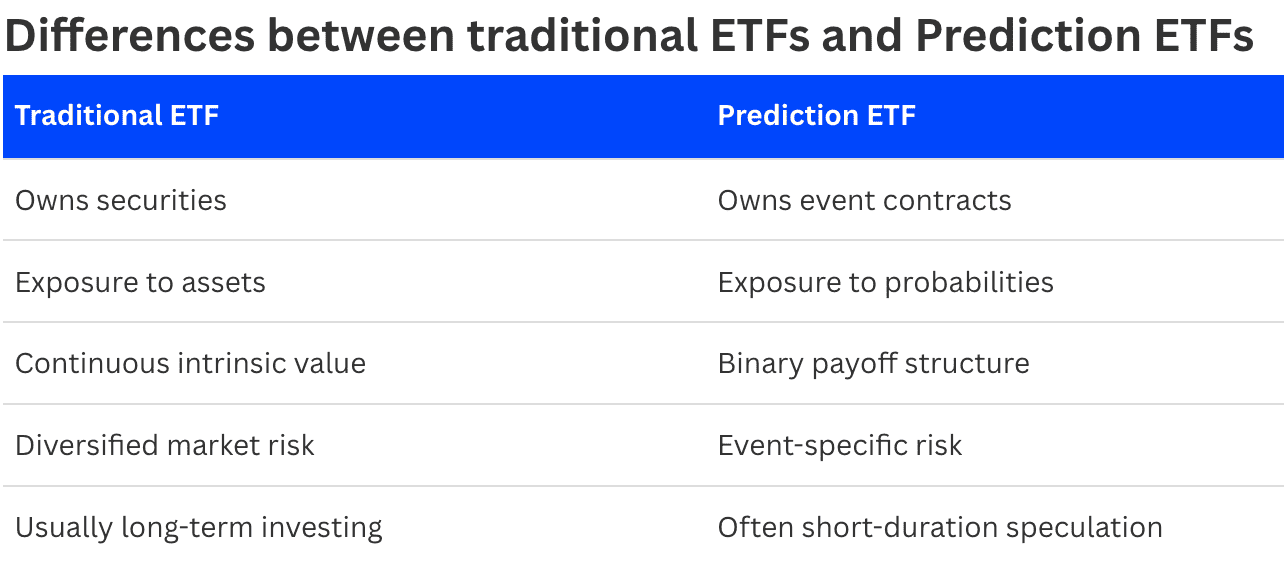
The products aim to package prediction markets into a traditional ETF wrapper, allowing investors to trade event-based contracts as easily as stocks or index funds. Proposed ETFs include exposure tied to U.S. elections, recession probabilities, Federal Reserve policy decisions, tech-sector layoffs, and even oil prices.
Structure of Prediction ETFs
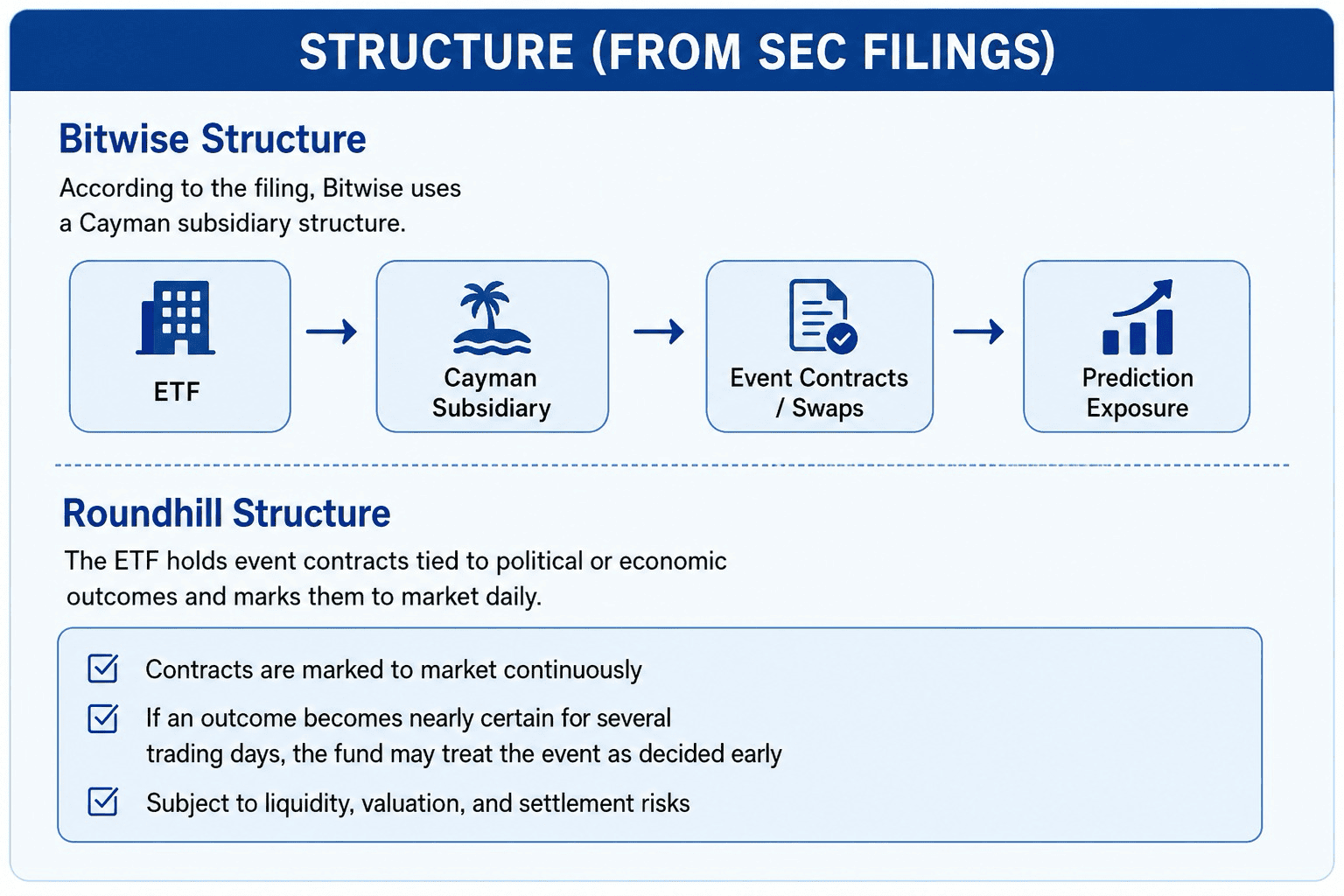
According to the SEC fillings, the structure of the Bitwise and Roundhill ETFs differed. Bitwise uses a Cayman subsidiary to own these predictive contracts or swap agreements on the prediction contracts. Roundhill will own the contracts directly. However the outcomes for both structures are expected to be similar.
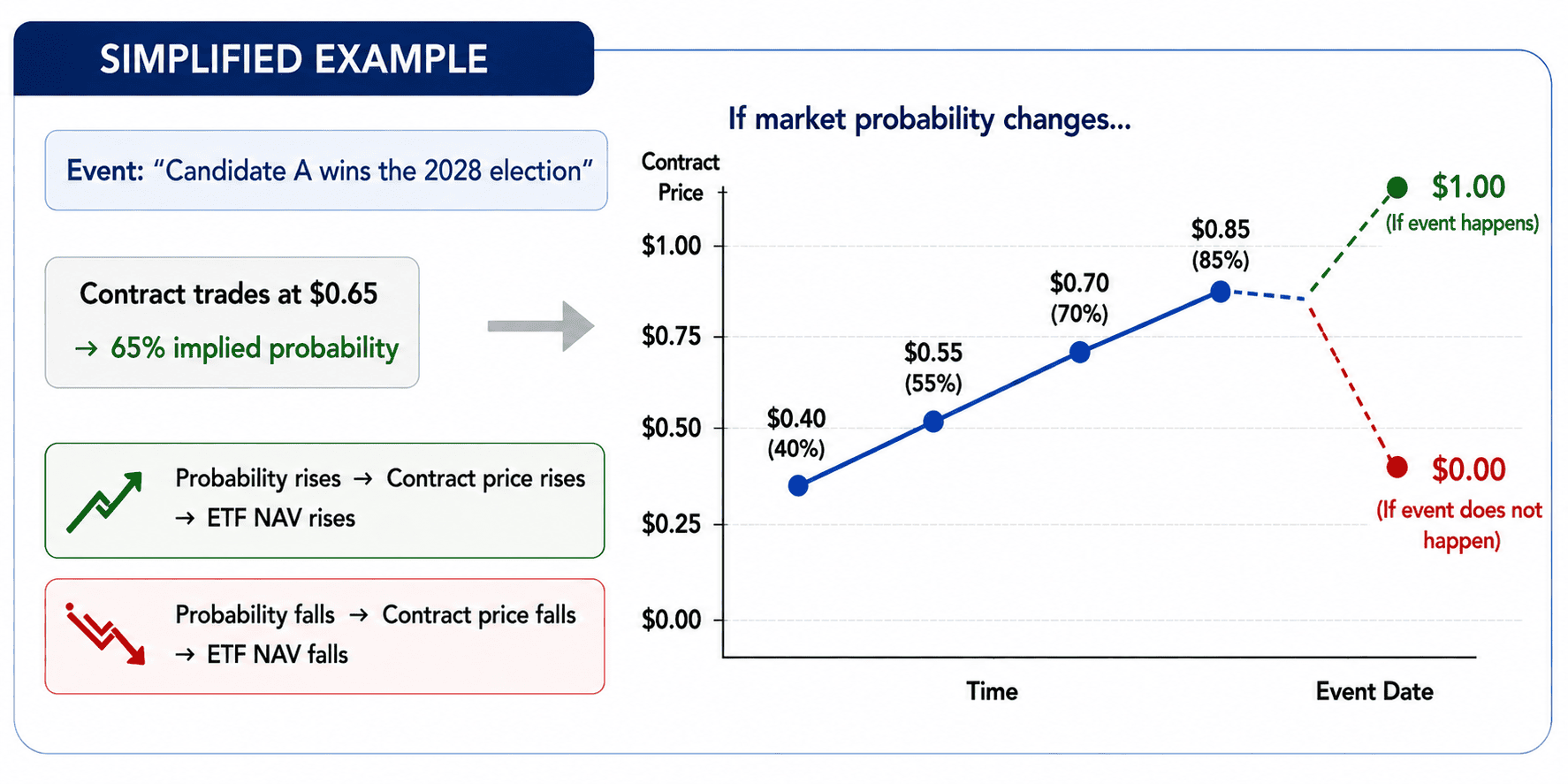
Most of the strategies rely on derivatives linked to binary “yes/no” contracts traded on regulated platforms such as Kalshi. These contracts function as probability markets: if traders believe there is a 40% chance of a U.S. recession, for example, the related contract may trade near 40 cents. If the event ultimately occurs, the contract settles at $1; if it does not, it expires worthless. The simplified example below illustrates how prediction-market contracts behave inside an ETF structure as probabilities shift over time.
The ETFs themselves would actively manage baskets of these event contracts, continuously adjusting positions as market probabilities shift in real time. In effect, the structure transforms prediction markets into tradeable macro instruments inside a regulated ETF format.
SEC’s Concerns
The SEC’s intervention came just as the mandatory 75-day review window for several filings was set to expire. Bloomberg ETF analyst Eric Balchunas described the delay as procedural rather than fatal, noting that regulators are likely scrutinizing disclosure standards given the novelty and complexity of the products.
The SEC filing highlights risks including:
- Low liquidity
- Wide bid/ask spreads
- Valuation uncertainty
- Settlement disputes
- Extreme volatility
The development highlights how rapidly prediction markets have moved toward mainstream finance following the growth of platforms such as Polymarket and Kalshi, particularly after they gained attention for accurately forecasting parts of the 2024 U.S. election cycle.
Still, the sector remains controversial. Critics have raised concerns around market manipulation, insider trading risks, liquidity, and the ethical implications of allowing investors to speculate on political events, military conflicts, or economic distress. SEC filings themselves warn investors that some products could lose “substantially all” of their value if outcomes move against them.
The ETF industry, however, continues pushing into increasingly unconventional territory as issuers search for differentiated products capable of attracting flows in an increasingly crowded market. For now, prediction-market ETFs remain in regulatory limbo, but the delay itself suggests the SEC is engaging with the structure rather than rejecting the category outright.