
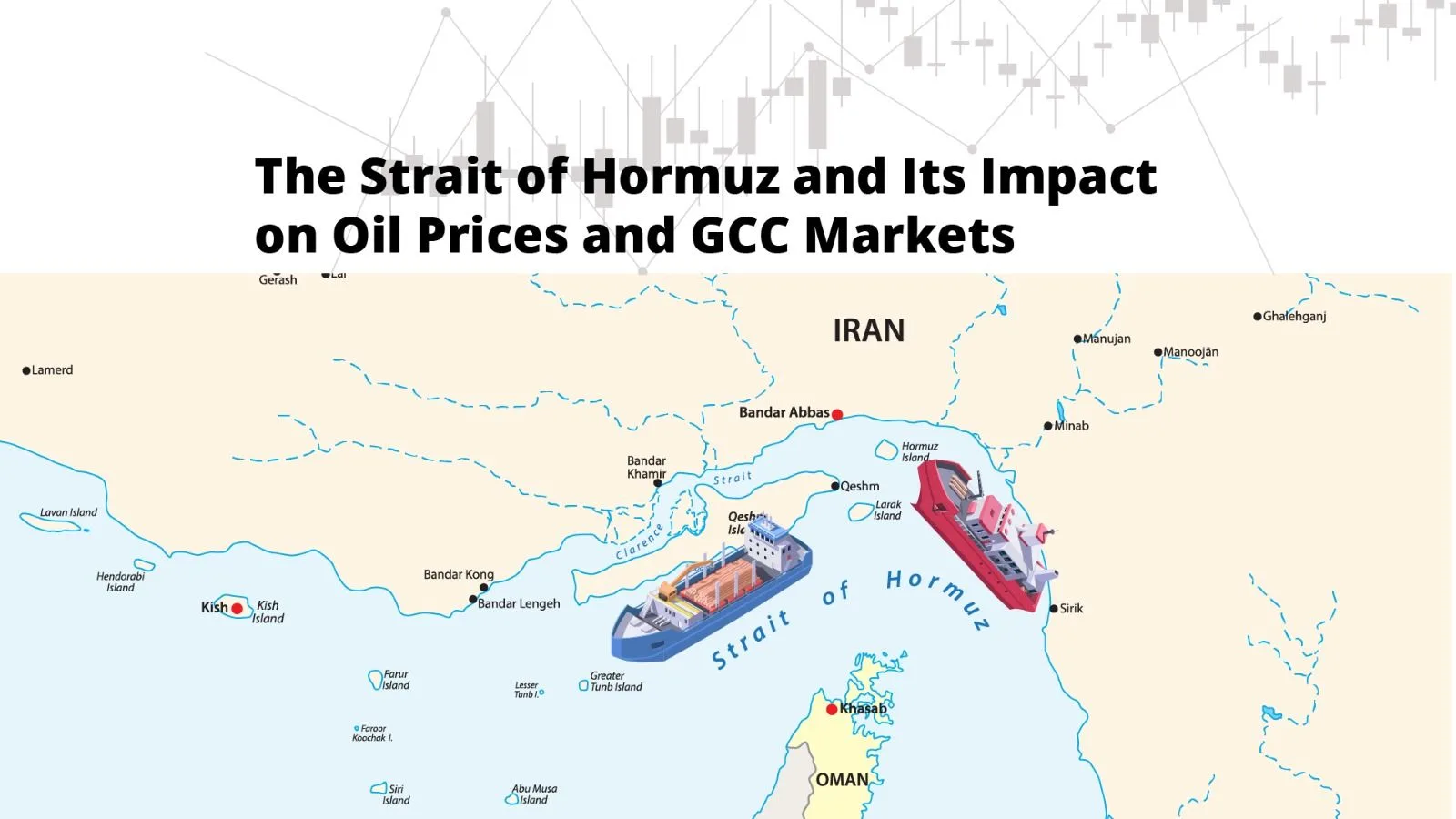
The Strait of Hormuz, a narrow waterway between Iran and Oman, has become a focal point of global energy risk since the U.S. and Israel launched military strikes on Iran in late February 2026 and Iran subsequently retaliated, disrupting commercial oil shipping through the region. (~20% of global oil moves through this chokepoint). (Source: Reuters)
Transit through the Strait remains critically important. According to the U.S. Energy Information Administration, oil flows through the Strait of Hormuz averaged approximately 20 million barrels per day in 2024, equivalent to nearly one-fifth of global petroleum liquids consumption. In addition, around one-fifth of global LNG trade also passes through this strategic corridor. (Source: EIA)
This concentration of energy volumes makes Hormuz one of the world’s most vital energy chokepoints and vulnerable to geopolitical developments that directly affect market pricing and supply expectations.
The Hormuz Equation: By the Numbers
The table below summarizes the commodity exposure at risk:
Asia’s Oil and LNG Dependence on the Middle East
Although Japan has the highest proportional dependence, China appears the most strategically vulnerable in absolute terms. As the world’s largest crude importer, China sources roughly half of its crude imports from the Middle East and is the biggest buyer of Iranian oil. It is also the world’s largest LNG importer, with approximately one-third of its LNG supply coming from the region. This combination of scale, industrial energy intensity, and heavy Gulf sourcing means that a prolonged disruption in Hormuz would directly affect a substantial share of China’s total energy inflows. Even with an estimated 900 million barrels in strategic reserves, a sustained supply shock would require inventory drawdowns or aggressive competition in global spot markets, amplifying price volatility.
By comparison, the United States imports less than 0.9 million barrels per day from Gulf producers against demand exceeding 20 million barrels per day, while the European Union’s crude exposure is around 5%. The Gulf still matters to global energy markets, but in terms of direct physical supply risk, it matters most to Asia and particularly to China.
(Source: Reuters)
Oil Price & Insurance Shock: The Cost of Conflict
Brent crude closed at approximately $73/bbl on Friday, February 28, already carrying a geopolitical premium. Analysts at Kpler expect a sharp opening in the $85-90 range when markets reopen, with some scenarios placing the intraday high above $88. (Source: Kpler) Meanwhile, war-risk insurance premiums for Gulf-transiting vessels had already doubled from 0.2-0.3% of hull value to 0.5%, with panic-peak quotes approaching 1%. For a Q-Flex LNG carrier valued above $200 million, that translates to structural cost increases of $0.10-0.15 per million BTU. (Source: Forbes)
Such volatility often transmits quickly into ETF pricing, spreads, and liquidity conditions, a dynamic explored in ETFs Become a Primary Liquidity Tool for Institutions
How Are GCC Equity Markets Pricing Regional Geopolitical Stress?
The Gulf Cooperation Council (GCC) markets opened sharply lower as investors reacted to escalating US-Israel-Iran tensions and fears of disruption around the Strait of Hormuz. Saudi Arabia’s Tadawul All Share Index (TASI) fell as much as 4.6% intraday before closing 2.21% lower, while Saudi Aramco gained 3.37% on expectations of higher oil prices. (Source: The National News)
Elsewhere, Oman’s Muscat Stock Exchange closed 1.4% lower after steeper early losses, Bahrain declined 1%, and Boursa Kuwait suspended trading. The reaction highlights rising geopolitical risk, supply chain concerns, and near-term volatility across region-focused equities.
What It Means for GCC Investors
Three themes stand out for investors focused on GCC markets:
- Elevated Risk Premiums in Regional Equities: Energy and domestic sector ETFs remain vulnerable to heightened oil price volatility and supply uncertainty tied to Hormuz.
- Defense Spending Tailwinds: With global governments likely to increase defense budgets amid security concerns, defense ETFs offer diversified exposure to firms that may benefit from this secular shift.
- Diversification Imperative: IMF-projected non-oil growth in GCC economies faces headwinds amid geopolitical shocks, urging investors to reassess risk concentration and prioritize thematic diversification beyond domestic equities.
Conclusion
The 2026 US-Iran conflict has turned the Strait of Hormuz from a strategic talking point into a real economic constraint, with material impacts on oil price dynamics, regional equity performance, and investor behavior. As oil flows tighten and markets price in higher risk premia, defense ETFs have emerged as a key theme for investors seeking diversified exposure to sectors likely to benefit from heightened geopolitical tension.