
The KraneShares CSI China Internet ETF (KWEB) is the largest U.S.-listed China ETF, providing targeted exposure to China’s rapidly expanding internet and technology sector. With $9.8 billion in assets under management, KWEB tracks leading companies in e-commerce, fintech, cloud computing, artificial intelligence, and digital entertainment.
For investors seeking China tech exposure without selecting individual stocks, KWEB provides a streamlined approach to accessing businesses such as Alibaba, Tencent, PDD, Baidu, and JD.com through a single investment vehicle.
Key Features
● Full Name: KraneShares CSI China Internet ETF
● Primary Exposure: E-commerce, fintech, cloud computing, digital entertainment, AI
● AUM: $9.8 billion (largest U.S.-listed China ETF)
● Average Daily Volume: 22.9 million (3-month average)
● Options Market: Top 3 among 4,600+ U.S. ETFs
● Holdings: 31 companies
How Does KWEB ETF Work? Investment Strategy Explained
Unlike derivative-based products, KWEB invests directly in publicly traded Chinese internet companies. The ETF primarily holds Hong Kong-listed shares alongside some U.S. American Depositary Receipts (ADRs), providing diversified listing exposure that reduces concentration risk in any single market.
Sector Focus: What Companies Does KWEB Target?
KWEB focuses on Chinese companies that generate most of their revenue from internet-driven business models, giving investors concentrated exposure to the country’s digital economy. This includes major segments such as e-commerce platforms, fintech and digital payment providers, cloud-computing services, social media and messaging apps, and a wide range of digital entertainment businesses spanning gaming and streaming.
Moreover, the fund also captures companies involved in artificial intelligence development and deployment, as well as fast-growing online-to-offline services like food delivery, ride-hailing, and other local service platforms. Together, these categories represent the core engines of China’s internet and technology ecosystem.
KWEB Holdings: Top Companies Driving Performance
Major Portfolio Positions
KWEB’s portfolio features China’s most influential internet companies, with a concentration in top positions that significantly impact overall performance:
Leading Holdings Include:
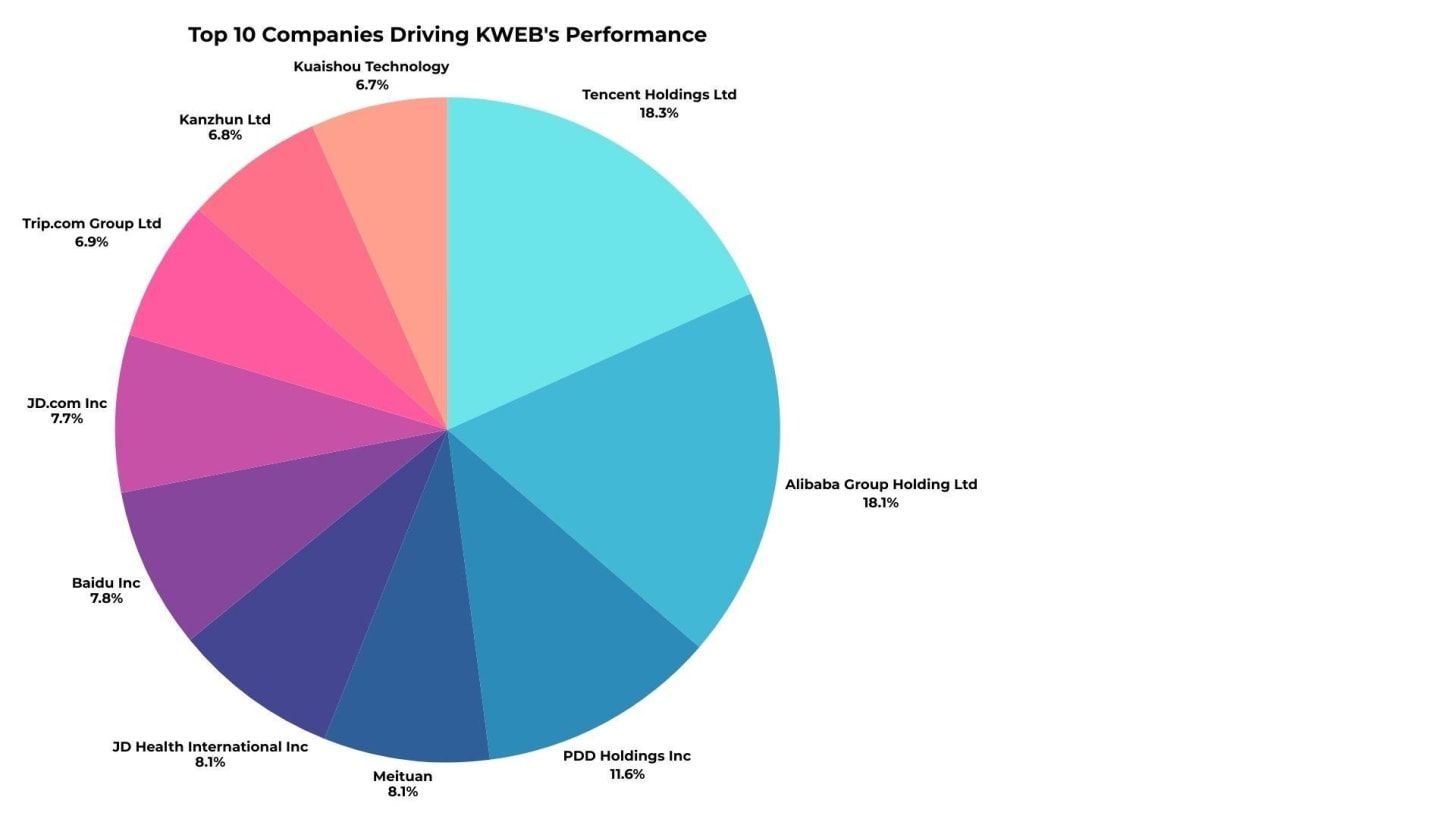
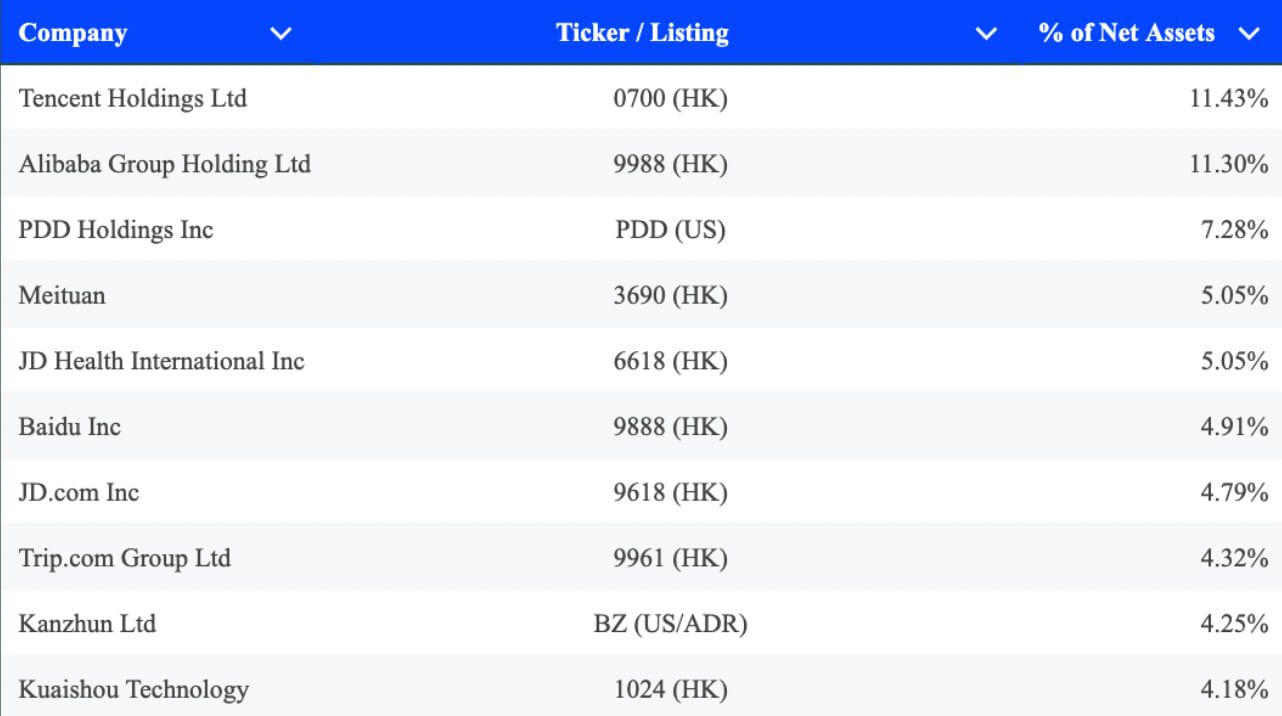
The ETF is heavily tilted toward major internet platforms, with Tencent and Alibaba contributing significantly to performance. Companies like PDD, JD.com, and Meituan capture growth in online retail and services, while Baidu and Kuaishou represent search, livestreaming, and AI development. This mix provides broad sector exposure rather than relying on a single segment.
The concentration at the top is notable: a small group of large companies drives much of the ETF’s movements, an important consideration for risk and return.
KWEB Year-to-Date Performance:
As of November 26, 2025, KWEB has risen from around $28.72 to roughly $37.47, marking a 30.5% YTD increase. The ETF has experienced volatility, but stronger sentiment toward China’s internet sector has supported gains throughout the year.
What’s Driving KWEB’s Recent Performance?
KWEB’s strong performance in 2025 has been fueled by a combination of structural and sentiment-driven catalysts. China’s recent progress in artificial intelligence has renewed investor confidence in the country’s ability to compete globally in next-generation technology. At the same time, regulatory clarity and a more supportive policy stance have helped restore market sentiment toward China’s internet sector after several challenging years.
Fundamentally, many of KWEB’s top holdings continue to deliver solid revenue growth and maintain strong balance sheets, reinforcing the long-term potential of the digital economy. The ongoing expansion of online services from e-commerce and cloud computing to digital entertainment and fintech has also contributed to stronger demand and improved earnings across the sector.
China’s AI Breakthrough: The DeepSeek Moment
China’s artificial intelligence sector has garnered global attention, particularly with developments such as DeepSeek’s efficient large language model (LLM) technology. Several KWEB holdings are at the forefront of this AI transformation:
Alibaba Cloud: Developing Qwen foundation models for enterprise AI applications
Baidu: Building the Ernie AI model and expanding its autonomous robotaxi network
Tencent: Integrating AI infrastructure across cloud computing and gaming platforms
These companies are positioning themselves as leaders in China’s next generation of AI-driven services, automation, and digital infrastructure
KWEB’s Expansion to Abu Dhabi’s ADX
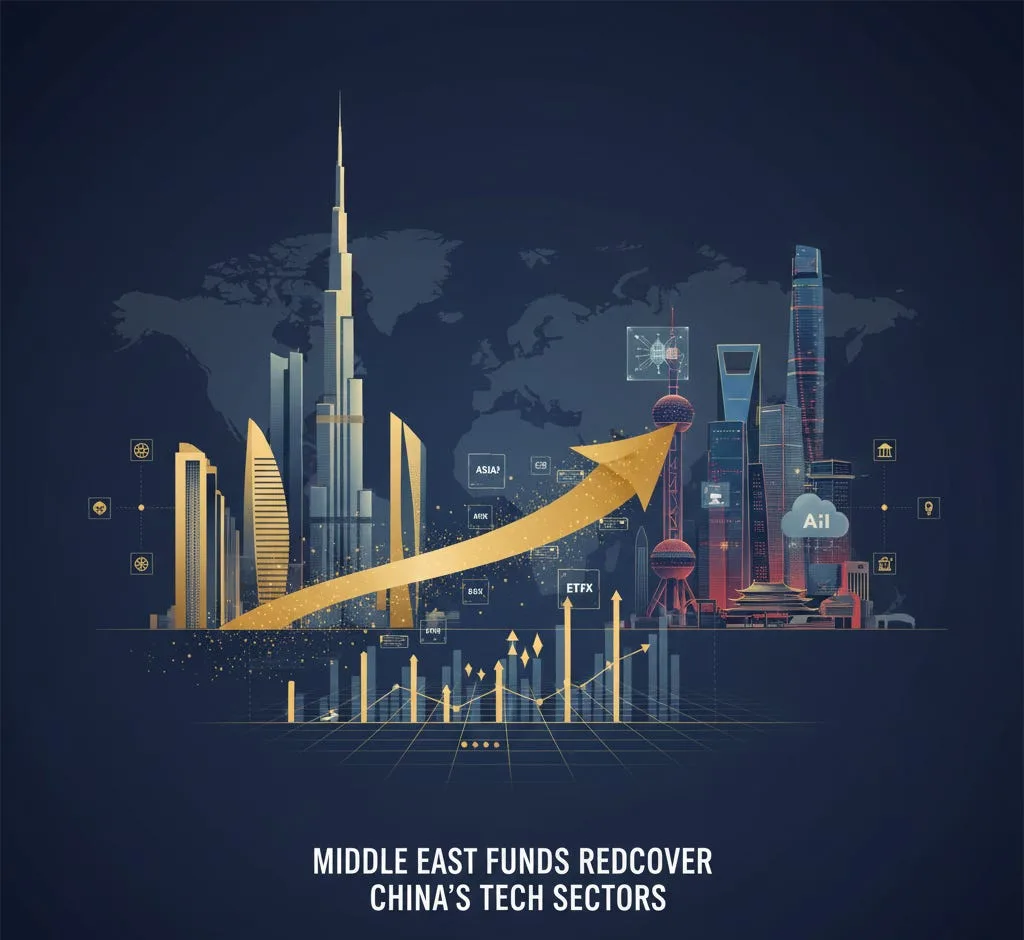
KWEB’s planned listing on the Abu Dhabi Securities Exchange (ADX) marks a significant strategic milestone, creating a new bridge between the Middle East and China’s fast-growing digital economy. For investors across the UAE and the wider Gulf region, this move unlocks direct, local-market access to China’s leading internet and technology companies without relying solely on U.S. trading routes. It also enhances liquidity by enabling trading across multiple time zones and supports the UAE’s broader ambition to deepen financial connectivity with Asia’s high-growth technology sectors. By bringing KWEB closer to regional investors, ADX strengthens its position as a rising hub for global ETF listings while expanding the toolkit available to both retail and institutional investors seeking exposure to China’s transformative digital landscape.




What’s Driving Growth in China’s Internet Sector?
China’s internet sector continues to expand on the back of powerful long-term structural trends. A massive and highly engaged digital population fuels demand for mobile apps, digital payments, and e-commerce, while enterprises are investing heavily in cloud computing, artificial intelligence, and automation. Growth in online education, healthcare, fintech, and logistics is further accelerating the shift toward a digitally enabled economy. At the same time, rapid innovation in short-form video, livestreaming commerce, and integrated platform ecosystems continues to reshape consumer behavior. Although government priorities around digital transformation and domestic innovation play an influential role, regulatory shifts can introduce periods of uncertainty that investors must monitor closely.
Risks to Consider
Despite growth potential, notable risks include:
● Regulatory changes affecting data privacy, competition, fintech, and content
● U.S.–China geopolitical tensions
● Heavy concentration in a few large firms
● Sensitivity to consumer spending trends and economic cycles
● Fast-changing technology competition requires ongoing reinvestment
These factors may affect valuations and performance.
KWEB vs Other China ETFs: How Does It Compare?
What Makes KWEB Different?
Pure Internet Sector Focus: Unlike broad China market ETFs that include state-owned enterprises, banks, and traditional industries, KWEB exclusively targets internet and technology companies.
Hong Kong Listing Emphasis: Greater reliance on Hong Kong-listed shares provides resilience against potential U.S. ADR delisting scenarios.
High Liquidity With average daily volume exceeding 22 million shares, KWEB offers superior liquidity compared to most China-focused ETFs.
The Active Options Market’s Ranking in the top 3 for options trading volume enables sophisticated hedging and income strategies.
Concentrated Portfolio With only 31 holdings versus hundreds in broad market ETFs, KWEB delivers pure-play digital economy exposure.
Who Might Consider KWEB?
KWEB may appeal to investors seeking targeted exposure to China’s internet and tech ecosystem. Rather than selecting individual stocks, the ETF provides a consolidated approach to major platforms and emerging technology players. However, given its sector and geographic concentration, suitability depends on an investor’s diversification, risk tolerance, and time horizon.
Final Thoughts
KWEB offers focused access to companies shaping China’s rapidly evolving internet and technology landscape. Its portfolio reflects both established digital platforms and emerging AI and cloud innovators benefiting from China’s ongoing digital transformation. While regulatory and geopolitical shifts remain part of the landscape, the ETF continues to attract attention for its role in tracking China’s long-term digital and technology growth.