
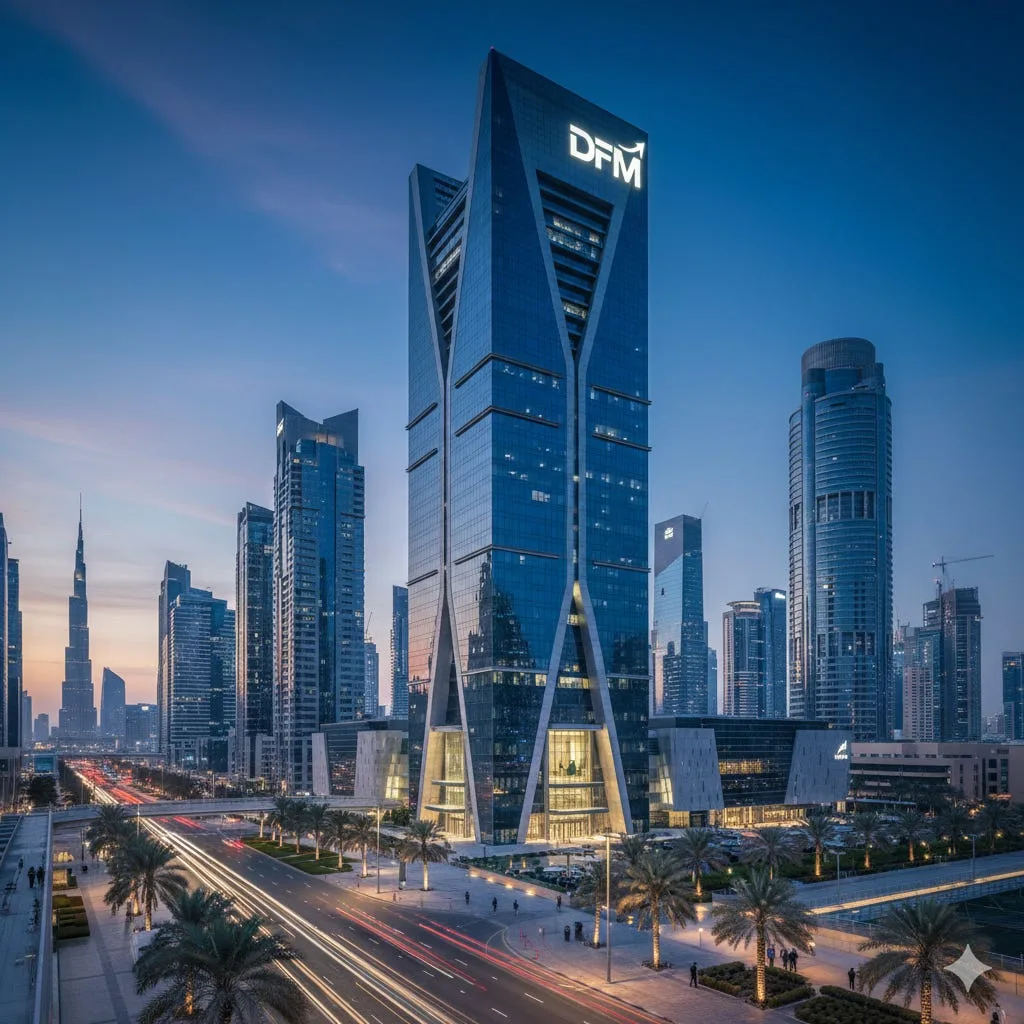
The Dubai Financial Market (DFM), founded in March 2000, serves as a secondary market for trading equities, government bonds, investment fund units, and other approved instruments in the UAE. Borse Dubai remains the largest shareholder, holding about 80.66% of DFM.
Trading Momentum
In the first half of 2025, DFM posted robust results, highlighting its resilience and surging attractiveness among investors. Net profit before tax rocketed 298% year-on-year to AED 777.1 million, while total income escalated 191% to AED 888.9 million.
Trading activity also gained momentum, with the average daily traded value climbing 75% to AED 692 million. Total traded value reached AED 85 billion, a sharp increase from AED 48 billion in the same period last year.
Retail investors and high-net-worth individuals (HNWI) played a crucial role in boosting DFM’s liquidity, contributing around 29% of total trading activity in the first half of the year.
Investor Participation Surge
Investor participation fuelled growth in H1 2025, with around 53,665 new investors (of which 84% were international), pushing the total past 1.2 million. Institutions drove 71% of trading, while foreign investors accounted for 53% of traded value and nearly 20% of market capitalization, underscoring Dubai’s global appeal and market openness.
Moreover, the DFM General Index advanced 10.6%, outperforming ADX (+1.22%) and Saudi Arabia’s Tadawul All Share Index (-7.25%), and market capitalization grew 9.7% to AED 995 billion. This performance builds on strong momentum from 2024, with the DFM General Index gaining 27.1% (closing at its highest year-end level since September 2014) and market capitalization rising 32% year-on-year to AED 907 billion at the end of last year.
Performance Drivers
Several factors have supported this performance. DFM Chairman H.E. Helal Saeed Al Marri noted that DFM’s strong H1 2025 results were supported by stronger market depth, active institutional and foreign participation, and Dubai’s vibrant economy.
He highlighted record real estate activity, high-profile IPOs, rising hedge fund presence, and capital inflows as key drivers, while the May Capital Market Summit, which drew over 1,500 global participants, reinforced DFM’s international profile. Looking ahead, DFM plans to expand its infrastructure and diversify its offering to sustain growth.
This week, ALEC Holdings, a well-known construction and engineering group, launched its IPO on the DFM, raising nearly AED 7 billion at AED 1.35–1.40 per share.
Stock & ETF Performance
UAE equity ETFs provide investors with a balanced mix of exposure to both ADX and DFM. For instance, the iShares MSCI UAE ETF includes leading names from each market, with notable DFM stocks such as Emaar and Emirates NBD alongside heavyweight ADX listings like First Abu Dhabi Bank, e&, and Abu Dhabi Islamic Bank.
As of September 2025, ADX has posted a year-to-date gain of around 7.3%, reflecting steady market growth despite regional volatility, aided by strong earnings from key listed companies and growing foreign investment. You can read more about it here.
Almost all the major sectors in DFM witnessed a double-digit growth year to date. As of September 23, the Materials sector witnessed a return of 32.93%, followed by Industrials (+32.47%), Financials (+29.91%) and Real Estate (+22.75%).
There are two ETFs listed on DFM – Chimera S&P UAE Shariah ETF- Share class B – Income (CHAESHIN) and Chimera S&P UAE UCITS ETF – Share Class A – Accumulating (CHAE). Year-to-date, Chimera S&P UAE Shariah ETF surged 21.39%* and Chimera S&P UAE UCITS ETF escalated 25.71%.
Looking Forward
Recently, three analysts covering the DFM now project revenues of AED 492 million for 2025, representing a 27% decline compared with the past 12 months. Previous estimates had put 2025 revenues at AED 431 million, indicating increased optimism.
However, looking at the broader picture, sales are expected to reverse sharply, with a projected 46% annualized decline by year-end 2025, a significant shift from the 18% average growth over the past five years. In contrast, peers in the same industry are forecast to see revenue growth of around 6.7% annually.
While challenges such as global economic uncertainty, oil price volatility, and reliance on foreign inflows may create near-term headwinds, the DFM’s reform initiatives, strong IPO pipeline, and openness to international capital position it well for sustainable growth.
The UAE economy is projected to expand by 4.9% in 2025, revised upward from a previous estimate of 4.4%, driven by higher oil output and robust growth in non-oil sectors, according to the central bank. The hydrocarbon industry is expected to grow 5.8% in 2025 and 6.5% in 2026, supported by increased oil production aligned with OPEC+ agreements.
As Dubai strengthens its role as a regional and international financial hub, the DFM is set to remain a central platform for investors seeking exposure to the Gulf’s dynamic economy.
*Data Sourced from Government of Dubai, Zawya, Arab News, Bloomberg, DFM investor presentation