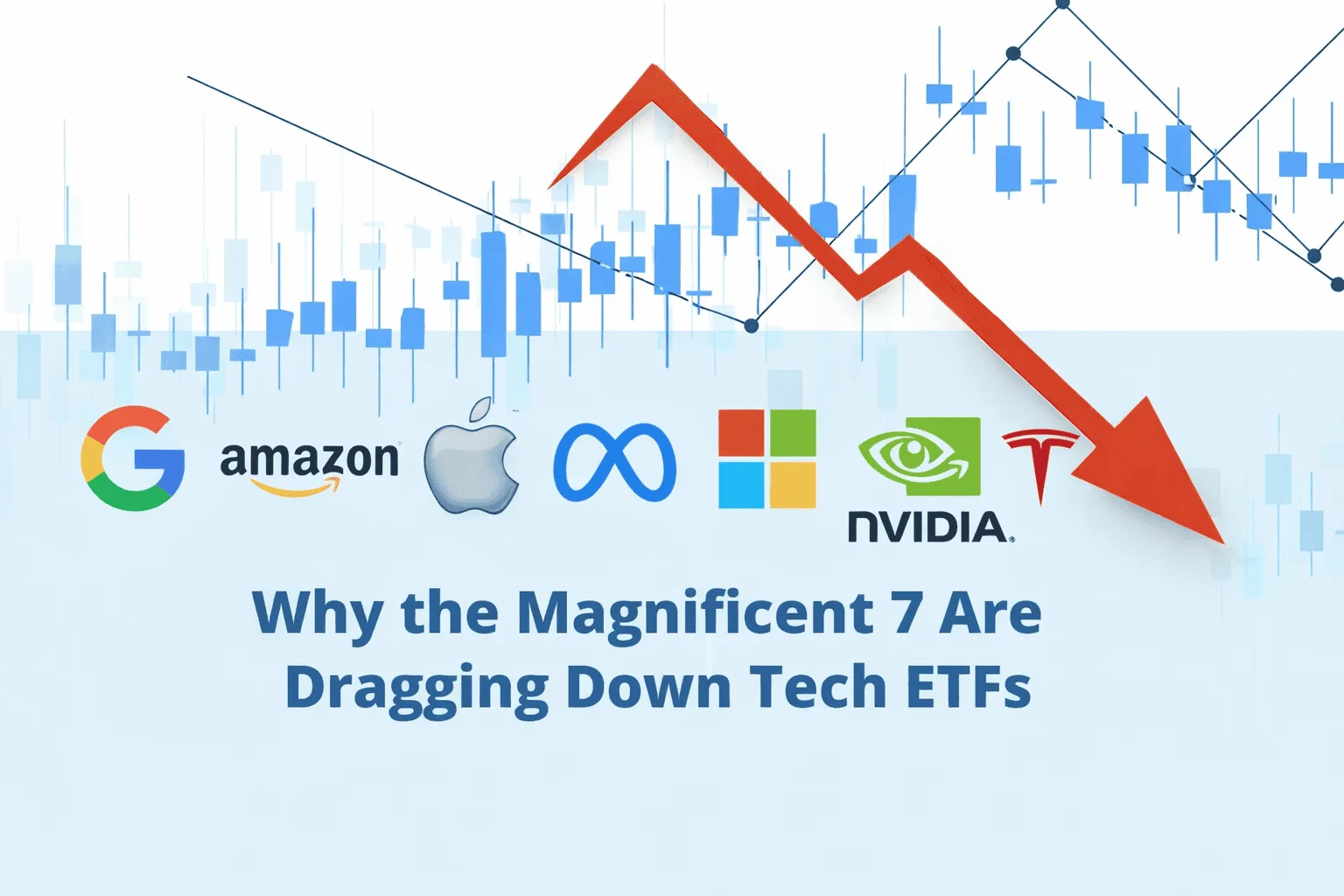
The past few weeks have been pivotal for global markets, highlighted by the earnings announcements of major U.S. technology giants collectively known as the “Magnificent 7.” Industry leaders such as Amazon, Alphabet, Microsoft, Meta, and Apple reported strong quarterly results, fuelled by accelerating demand for artificial intelligence (AI)-driven cloud infrastructure, digital services, and advanced hardware.
Their robust performance has boosted technology-focused ETFs across global markets. In the GCC, tech ETFs are riding this wave of optimism, as investors increase exposure to innovation-led growth and the region’s ongoing digital transformation.
Amazon Surges on AI Momentum
Amazon.com, Inc. posted a 13% year-over-year (Y/Y) increase in third-quarter net sales, reaching $180.2 billion, driven by AI-powered enhancements across its operations. Amazon Web Services (AWS) also regained momentum, expanding 20.2% Y/Y its fastest growth rate since 2022.
CEO Andy Jassy said “We continue to see strong demand in AI and core infrastructure, and we’ve been focused on accelerating capacity – adding more than 3.8 gigawatts in the past 12 months,”
Looking ahead, Amazon expects fourth-quarter net sales between $206 billion and $213 billion, reflecting projected annual growth of 10% to 13% as AI integration continues to drive efficiency and revenue expansion.
Alphabet’s AI and Subscription Push Hits New Highs
Google parent Alphabet Inc. reported a 16% Y/Y rise in third-quarter revenue to $102.35 billion, driven by double-digit growth across Google Search and Other, YouTube ads, Google Subscriptions, Platforms and Devices, and Google Cloud.
“We delivered our first-ever $100 billion quarter,” said CEO Sundar Pichai, highlighting the company’s growing strength in AI and digital services. “Our first-party AI models, including Gemini, now process 7 billion tokens per minute through direct API use, while the Gemini App has surpassed 650 million monthly active users.”
Pichai added that Google Cloud ended the quarter with a $155 billion backlog and over 300 million paid subscriptions, led by Google One and YouTube Premium, underscoring Alphabet’s expanding ecosystem of AI-driven and subscription-based revenue streams.
Meta’s AI Innovation Take Centre Stage
Meta Platforms, Inc. reported third-quarter earnings per share of $1.05, which includes a one-time, non-cash income tax charge of $15.93 billion.
CEO Mark Zuckerberg highlighted the company’s ongoing AI initiatives and says “Meta Superintelligence Labs is off to a great start, and we continue to lead the industry in AI glasses. If we deliver even a fraction of the opportunity ahead, the next few years will be the most exciting period in our history.”
Looking ahead, Meta projects fourth-quarter revenue between $56 billion and $59 billion, reflecting continued momentum in AI-driven products and services.
Microsoft Cloud & AI Acceleration Powers Growth
Technology giant Microsoft Corporation reported first-quarter revenue of $77.7 billion, an 18% Y/Y increase. Cloud revenue rose to $49.1 billion, up 26% Y/Y, while remaining performance obligations climbed 51% Y/Y to $392 billion. Microsoft 365 Commercial and Consumer cloud revenues grew 17% Y/Y and 26% Y/Y, respectively.
CFO Amy Hood noted, “We delivered a strong start to the fiscal year, exceeding expectations across revenue, operating income, and earnings per share.”
CEO Satya Nadella added, “Our planet-scale cloud and AI factory, together with Copilots across high-volume domains, is driving broad diffusion and real-world impact. This is why we continue to increase our investments in AI across both capital and talent to meet the massive opportunity ahead.”
Looking forward, Microsoft expects second-quarter revenue between $79.5 billion and $80.6 billion, driven by ongoing demand for cloud and AI solutions.
Apple’s iPhone & Services Lead the Growth
Apple reported fiscal fourth-quarter revenue of $102.47 billion, up 8% Y/Y, while earnings per share rose 13% Y/Y to $1.85. The company achieved record September-quarter revenue, fuelled by a quarterly high in iPhone sales and an all-time record in Services revenue.
CFO Kevan Parekh noted, “Thanks to very high levels of customer satisfaction and loyalty, our installed base of active devices reached a new all-time high across all product categories and geographic segments.”
CEO Tim Cook highlighted that a 4% revenue decline in Greater China was mainly owing to supply constraints, while overall growth remained strong.
GCC Tech ETFs Ride the Global AI Earnings Wave
As global demand for digital infrastructure and AI capabilities rises, GCC-based technology ETFs, many of which have exposure to U.S. and international innovation leaders, are seeing renewed investor interest and performance gains. Invesco QQQ Trust (QQQ), which has exposure to “Magnificent 7” stocks surged around 22% year-to-date.
In GCC, funds such as the Albilad MSCI US Tech ETF in Saudi Arabia have benefited from strong performance among U.S. tech giants leading AI innovation and risen around 31% year to date.
Also, the Chimera S&P UAE Shariah ETF has gained traction, rising around 18% year to date, as Gulf investors seek exposure to diversified, Shariah-compliant equities amid rising interest in digital transformation.
Looking Ahead
As the earnings season continues, all eyes are now on Nvidia — the AI chip powerhouse that recently surpassed the $5 trillion mark — ahead of its results on November 11.
Market sentiment toward Nvidia remains broadly optimistic, with Goldman Sachs expecting the company to once again outperform forecasts on the back of strong data centre demand and expanding AI infrastructure investments.
Looking beyond the U.S., the growth outlook for AI in the GCC is equally compelling. Driven by ambitious national strategies for economic diversification and digital transformation, AI is projected to add up to $320 billion to the Middle East economy by 2030.
The UAE and Saudi Arabia are expected to capture the largest share of this growth, with annual AI contributions rising between 20% and 34%, underscoring the region’s accelerating embrace of next-generation technologies.