Ready to level up your investing game? Ditch the stress of picking individual stocks and dive into the smart world of Exchange Traded Funds (ETFs).
What is an ETF?
An ETF is like a pre-packaged basket of stocks. Instead of buying one company’s stock, you buy a single share of an ETF and instantly own a piece of dozens, or even hundreds, of different companies. Think of it as a diversified portfolio in one click, which is designed to follow the performance of a specific index (like the S&P 500), an industry sector (like technology), a commodity (like gold), or a group of bonds.
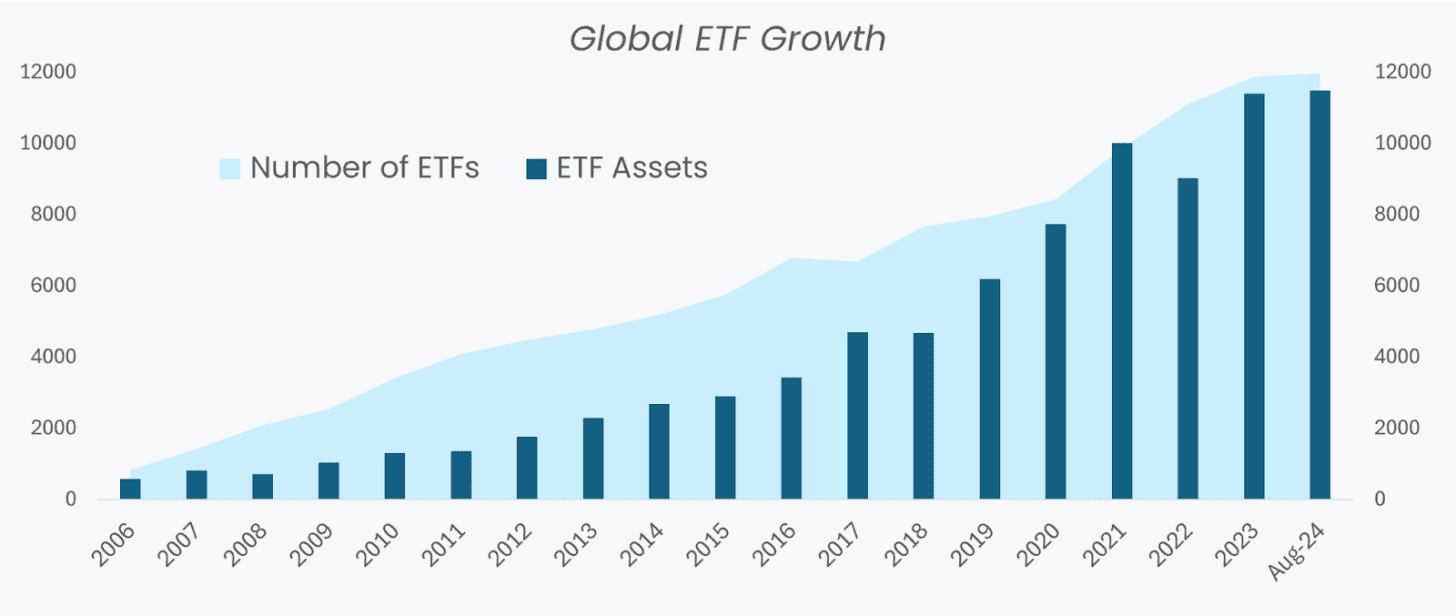
As of March 2025, ETFs hold around $15 trillion in assets globally, with GCC holding about $0.002 trillion.*
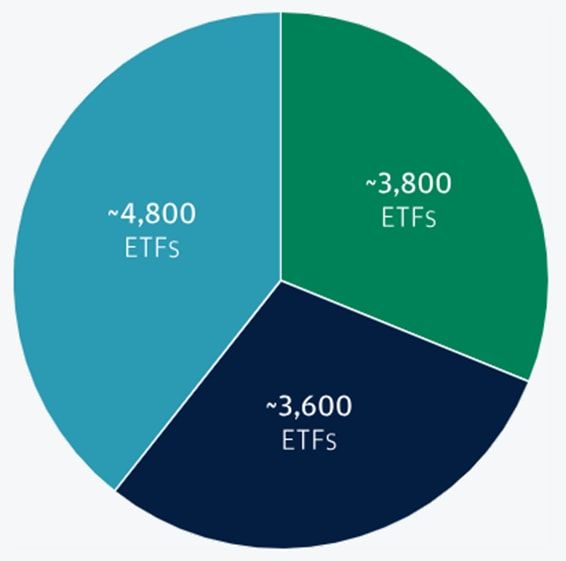
Geographically, the United States dominates the ETF landscape with more than 3,100 funds and assets under management (AUM) exceeding $9 trillion. Europe follows with over 3,300 ETFs and $1.8 trillion in AUM, while the Asia-Pacific region accounts for around 3,300 ETFs with $0.9 trillion in AUM. Meanwhile, the GCC market remains nascent, with just 25 ETFs and less than $2 billion in AUM.
Types of ETFs
Equity ETFs: These are the most common type, investing in a basket of stocks. They can track broad market indices (e.g., S&P 500, Dow Jones), specific sectors (e.g., technology, healthcare), or geographical regions (e.g., emerging markets).
Bond ETFs: These invest in fixed-income securities like government bonds, corporate bonds, or municipal bonds. They offer diversified exposure to the bond market and can vary by maturity, credit quality, or issuer type.
Commodity ETFs: These provide exposure to raw materials such as gold, silver, oil, or agricultural products. They can invest directly in physical commodities or use futures contracts.
Currency ETFs: These aim to track the performance of a specific currency or a basket of currencies against another currency (e.g., USD vs. EUR).
Inverse ETFs: Designed to profit from a decline in the value of an underlying index or asset. They use derivatives to achieve returns that are the opposite of the benchmark’s performance.
Leveraged ETFs: These seek to amplify the daily returns of an underlying index or asset, often by a multiple (e.g., 2x or 3x). They use financial derivatives and are typically intended for short-term use due to their complexity and magnified risk.
Sector ETFs: Focus on specific industries or sectors of the economy, allowing investors to target growth areas or diversify within a particular industry.
Thematic ETFs: Invest in companies related to a specific theme or trend, such as artificial intelligence, renewable energy, or cybersecurity, rather than a traditional sector classification.
How ETFs Differ from Stocks and Mutual Funds
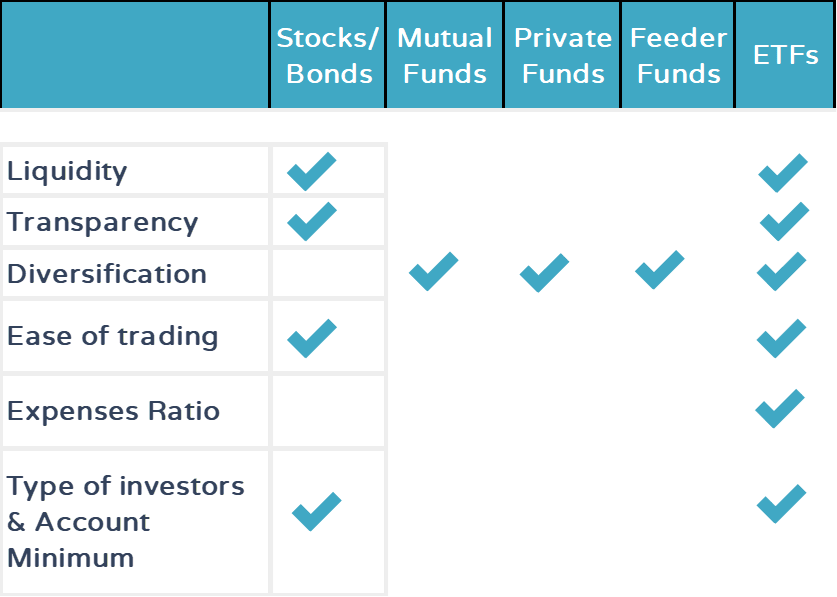
The primary difference between ETFs and Mutual Funds are how they are traded: ETFs are bought and sold on a stock exchange throughout the trading day, with their price fluctuating based on market demand, just like a stock. Meanwhile, mutual funds are priced only once per day, after the market closes, with all buy and sell orders executed at that single, daily price.
As most ETFs are passively managed index funds, they typically have lower expense ratios and are generally more tax-efficient than their mutual fund counterparts.
For hands-on investors who value intraday trading and low costs, ETFs are often the preferred choice. Meanwhile, mutual funds are a solid option for investors who prefer a “buy-and-hold” strategy with a set minimum investment and a simplified, one-time daily transaction.
Key Benefits Of ETFs
- Diversification: ETFs inherently provide diversification by holding a basket of assets. This helps reduce risk compared to investing in a single stock, as the impact of poor performance from one asset is mitigated by others.
- Liquidity: ETFs are bought and sold on exchanges throughout the day, offering high liquidity. This means you can easily buy and sell shares at market prices during investment hours.
- Lower Costs: ETFs typically have lower expense ratios (management fees) compared to actively managed mutual funds, as most ETFs are passively managed and track an index. Many online platforms also offer competitive commission structures for ETF investments.
- Accessibility: ETFs provide easy access to various markets, sectors, and asset classes that might otherwise be difficult or expensive to invest in directly (e.g., specific international markets, commodities).
- Transparency: The holdings of most ETFs are disclosed daily, providing investors with transparency into what they own.
- Flexibility: ETFs can be invested in like stocks, allowing for strategies such as limit orders and stop-loss orders.
Potential Risks
- Market Risk: As with any investment tied to the stock market, an ETF’s value can decline if the underlying market, sector, or assets perform poorly.
- Trading Costs & Liquidity: While many ETFs are commission-free, less liquid or niche ETFs can have wider “bid-ask spreads” (the difference between the buying and selling price), acting as a hidden transaction cost.
- Tracking Error: For index-tracking ETFs, there’s always a possibility that the fund’s performance may not perfectly replicate its underlying index due to operational costs, sampling methods, or other factors.
- Complex Products: Specialized ETFs, such as leveraged and inverse ETFs. use derivatives to amplify returns (e.g., 2x or 3x the daily return of an index) or bet against the market. But they are designed for short-term use and can incur significant, compounded losses, making them unsuitable for most long-term investors. Counterparty risk can also arise with synthetic ETFs that use derivatives.
- Concentration Risk: If an ETF is highly concentrated in a specific sector, industry, or a few large holdings, it can be more volatile and susceptible to risks affecting that particular area.
- Currency Risk (for international ETFs): If an ETF holds international assets, fluctuations in exchange rates can impact your returns when converting back to your home currency.
- Psychological Bias: Emotional factors, such as fear and greed, can influence investment decisions. Letting emotions dictate investing can lead to impulsive and irrational choices.
ETF Market
The ETF market plays a crucial role in the economy by providing accessible avenues to diversified portfolios, enhancing market liquidity, and offering a flexible investment vehicle for various strategies.
The ETF market refers to the ecosystem where ETFs are created, managed, and bought and sold. It involves:
ETF Issuers – Companies that create and manage ETFs
Authorized Participants (APs): Large financial institutions that facilitate the creation and redemption of ETF shares directly with the issuer, helping to ensure the ETF’s market price stays close to its Net Asset Value (NAV).
Stock Exchanges: Where ETF shares are listed and traded by individual investors and institutions throughout the investment day.
Investors: Individuals and institutions who buy and sell ETF shares on the open market.
Global ETF Market
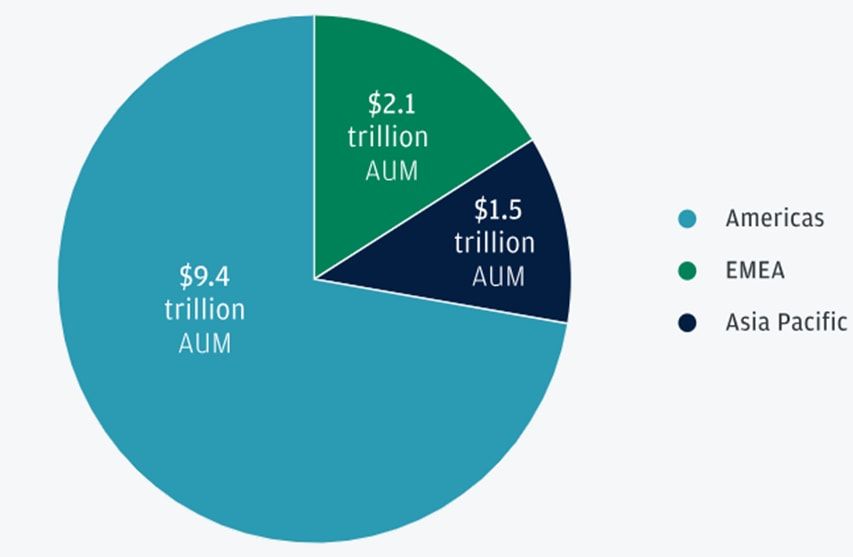
As of 2024, globally, ETFs total assets under management stood at around $15 trillion.* The United States holds the largest share of the global ETF market, accounting for around 70% of the total AUM, with Europe (EMEA) and the Asia-Pacific (APAC) region trailing behind, with Europe’s AUM nearing $2 trillion and Asia-Pacific’s around $1.5 trillion.
ETFs in the GCC
The Gulf Cooperation Council (GCC) region, which includes Saudi Arabia, the United Arab Emirates (UAE), Qatar, Kuwait, Oman, and Bahrain, presents a compelling opportunity for investors in the ETF space.
Abu Dhabi and the overall GCC region are positioning themselves as a global financial hub by leveraging visionary leadership, world-class infrastructure, progressive regulatory reforms, and a strong commitment to innovation.
In 2023, the SCA introduced new rules on marketing foreign funds in the UAE, temporarily halting new registrations. Today, such funds can only be offered to professional investors via an SCA- or free zone–licensed entity. For retail clients, banks may invest only if the ETF is UAE-domiciled, or with a minimum ticket size of AED 500,000.
On the other hand, Saudi Arabia launched the Financial Sector Development Program in 2018 to transform its financial industry, with emphasis on banking, insurance, capital markets, and debt markets. The program is central to advancing income diversification, increasing savings, and expanding financing and investment opportunities, positioning the sector as a key driver of the kingdom’s economic future.
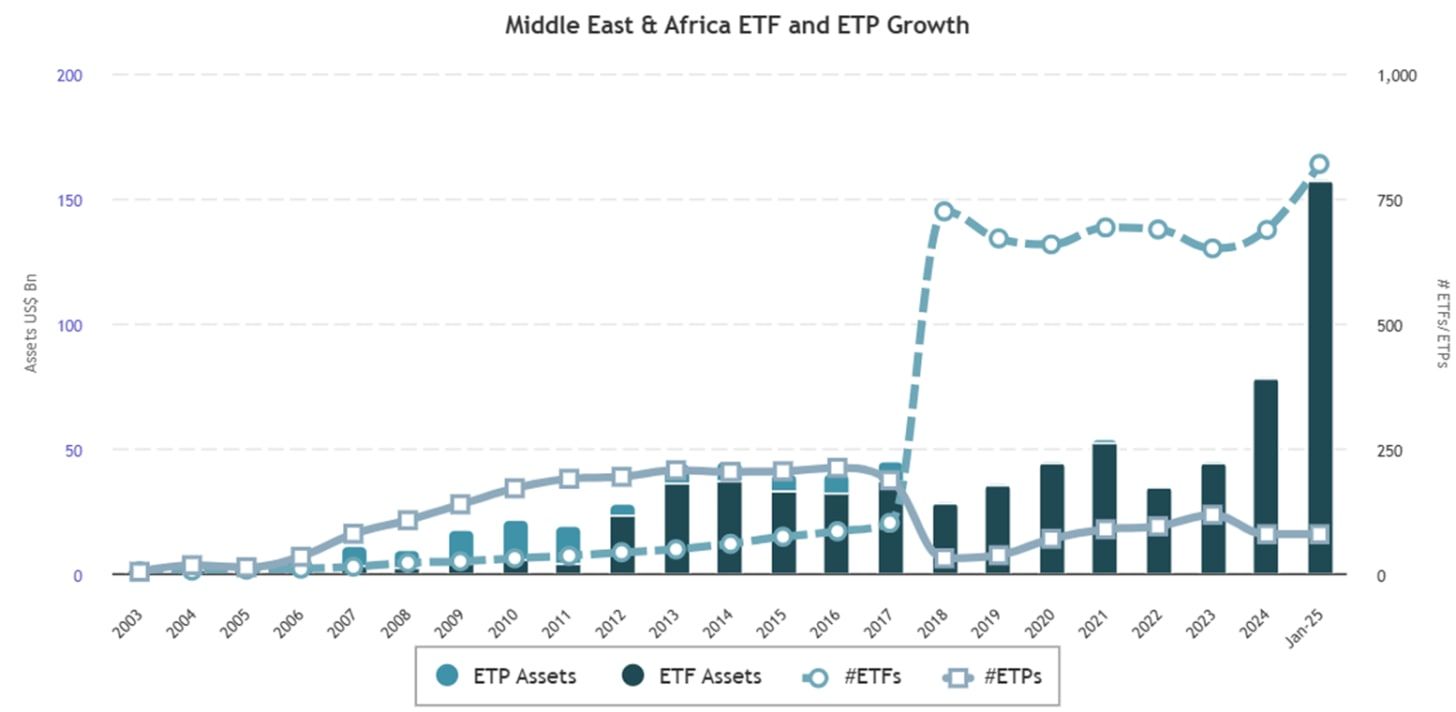
As of August 2025, by country, GCC ETFs AUM totaled around $2.5 billion, with Saudi Arabia AUM accounting for $2.0 billion trailed by UAE which stands at $279 million.
The GCC ETF market is expected to maintain its robust growth, with a projected compound annual growth rate (CAGR) of 10%-12% from 2025 to 2030.
In a Nutshell
ETFs represent a powerful and flexible tool for building a diversified investment portfolio. Their benefits of diversification, lower costs, and trading flexibility make them an attractive option for a broad spectrum of investors.
However, like all financial instruments, they come with inherent risks. By understanding the different types of ETFs, their advantages, and their potential drawbacks—and by leveraging insights from trusted financial authorities—investors can harness the power of ETFs to align with their financial goals and navigate the path to long-term wealth creation.
*Data sourced from State Street, J.P.Morgan, Lipper,