
Oman’s equity market is rallying on renewed optimism that the country could secure an upgrade from Frontier Market to Emerging Market (EM) status in the MSCI Global Standard Indexes.
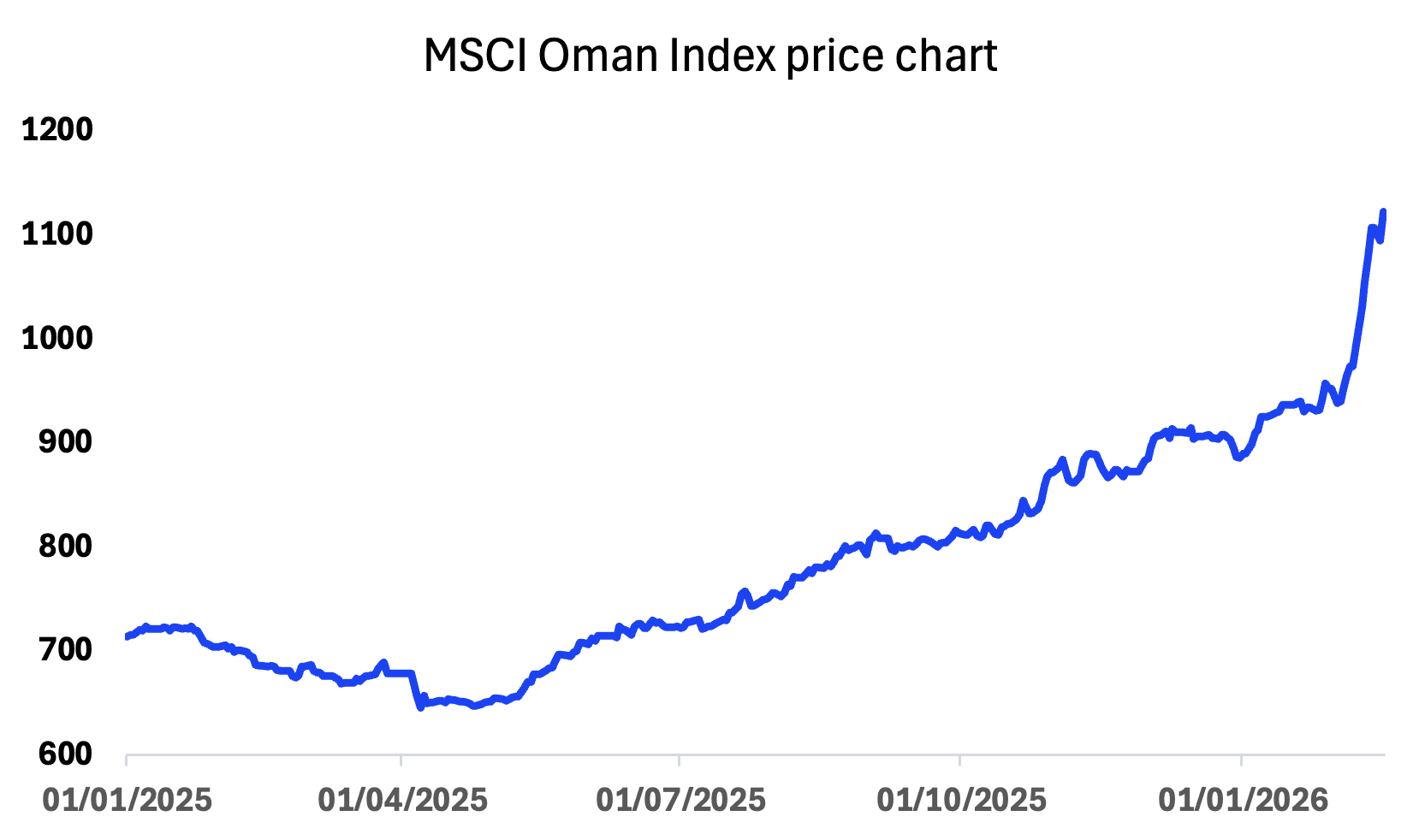
The MSX 30 Index has climbed more than 9% in a single week, its strongest performance since 2014 and is up nearly 20% year-to-date as of mid-February 2026, outperforming the broader MSCI Emerging Markets Index. The rally reflects growing anticipation that Oman could meet MSCI’s quantitative requirements this year and potentially secure inclusion by 2028.
But what exactly stands between Oman and EM status and what would the upgrade mean?
The MSCI Requirements: Three Stocks, Two Years
To qualify for inclusion in the MSCI Emerging Markets Index, a country must have at least three companies that simultaneously meet MSCI’s minimum thresholds for:
- Market capitalization
- Free-float market capitalization
- Liquidity (measured by trading turnover)
These criteria must be satisfied for approximately eight consecutive index reviews, or about two years.
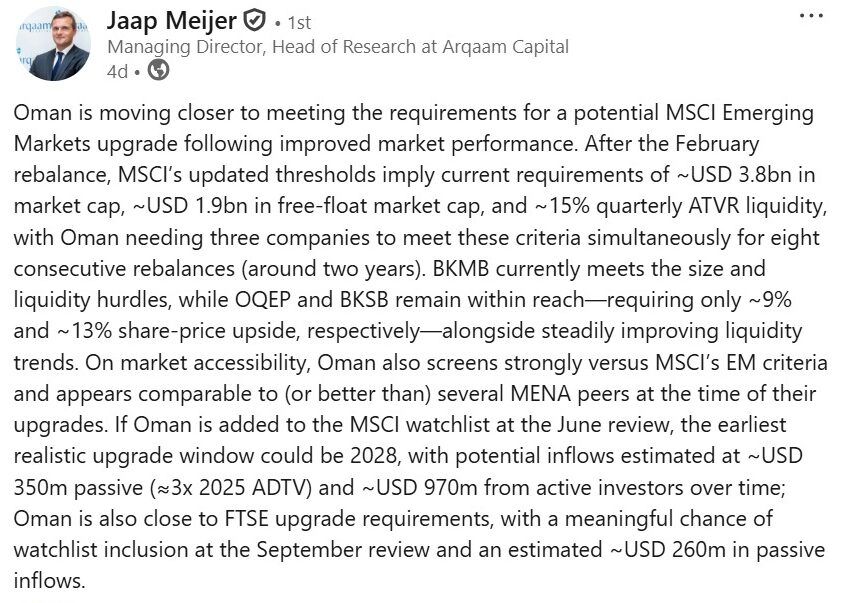
Currently, Bank Muscat is the only Omani company that fully qualifies. Two additional names, OQ Exploration & Production (OQEP) and Sohar International Bank are close. Market estimates suggest they would require modest share-price gains of roughly 9% and 13%, respectively, to consistently clear MSCI’s size thresholds.
Importantly, Oman already scores well on market accessibility, including foreign ownership rules, settlement efficiency, and operational infrastructure factors that MSCI weighs heavily in classification decisions.
The Potential Inflows: Passive and Active
An upgrade to Emerging Market status typically unlocks two channels of capital:
Passive inflows:
Index-tracking ETFs and funds benchmarked to MSCI EM would be required to buy Omani stocks upon inclusion. Estimates suggest this could generate approximately $350 million in passive flows, roughly three times Oman’s average daily traded value in 2025.
Active inflows:
Active EM managers, many of whom are restricted from investing in frontier markets, could allocate additional capital. Estimates suggest up to $970 million in potential active flows over time.
Separately, Oman is also close to meeting FTSE Russell’s EM upgrade requirements, which could bring an additional $260 million in passive flows.
MSCI Oman Index Characteristics
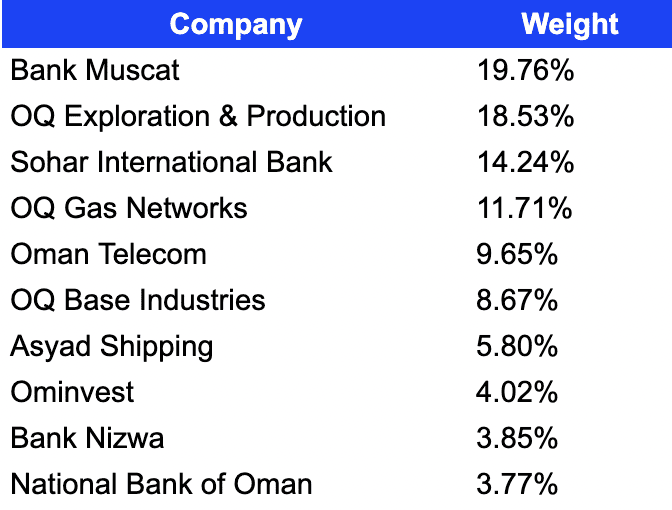
The MSCI Oman Index is concentrated, with its top three holdings accounting for more than half of total weight, and remains heavily tilted toward financials and energy-linked corporates.
Its moderate valuation multiples and relatively high dividend yield position it as an income-oriented frontier market with rerating potential if liquidity and index status improve.
MSCI Oman Index Snapshot
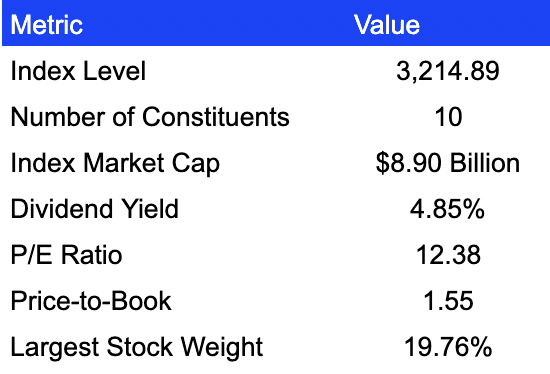
The index is relatively concentrated, with financials and energy-linked companies dominating overall weight.
Top 10 Constituents (By Weight)
A snapshot of the index’s size, valuation profile and concentration as of Feb 16, 2026.
Why the Timing Matters
Oman’s upgrade push comes amid broader structural reforms and privatization efforts. State-backed energy group OQ has played a central role in deepening market liquidity through recent listings, including OQEP. Increased liquidity providers and improved investor relations practices have further supported market depth.
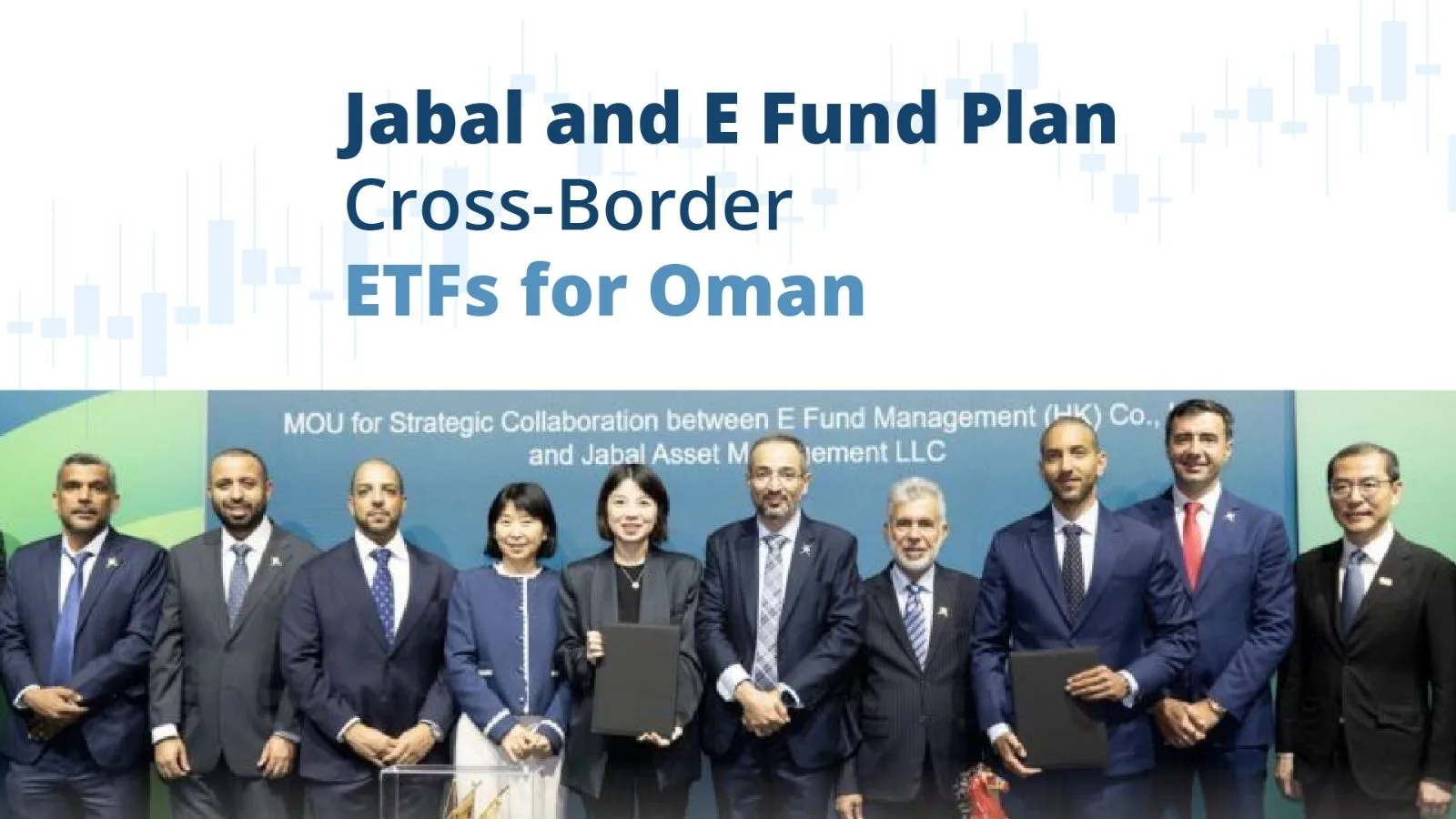
For ETF investors, inclusion would mean Oman shifting from niche frontier allocations into mainstream EM products. Currently, Oman receives limited representation in global portfolios. An MSCI upgrade would embed Omani equities into large EM ETFs, potentially broadening the investor base structurally.
The timing also coincides with a recent Royal Decree aimed at strengthening Oman’s capital markets infrastructure, including plans to establish a dedicated financial district in Muscat.
The initiative is intended to attract international financial institutions, enhance regulatory coordination and position Oman as a more competitive regional capital markets hub a development that complements the country’s push for index reclassification and deeper global integration.
The Roadmap to 2028
The earliest milestone would be MSCI placing Oman on its Watch List, potentially as early as the June review. Full inclusion would likely follow only after sustained compliance with size and liquidity thresholds
The path is technical, but the implications are significant. If Oman successfully qualifies, it would transition from being a peripheral frontier allocation to becoming part of the core Emerging Market universe bringing with it structural, rules-based capital flows rather than opportunistic frontier exposure. MSCI Oman Index already returned
For a market that has historically traded on domestic and regional participation, that would mark a fundamental shift in capital access.