


The debate over how quickly artificial intelligence should advance spilled directly into markets on Monday, September 14, with semiconductor stocks absorbing the heaviest losses as investors questioned the pace of the AI infrastructure buildout.
The PHLX Semiconductor Index fell 5.9%, cutting its 2026 gain to 57%. Nvidia lost 3.4%, Micron fell more than 5%, while AMD and Broadcom each dropped more than 4%. The selloff was much heavier than the broader market, with the Nasdaq Composite down 0.56% and the S&P 500 losing 0.48%.
Arm and Intel were also among the hardest-hit chip names during the session. Before the opening bell, Intel had fallen 6.8%, Arm 7.2%, Micron 6.2% and AMD 5.8%, compared with a 2.7% decline for Nvidia. Those moves showed investors cutting exposure across the semiconductor supply chain rather than targeting a single AI winner.
Chip ETFs Take the Hit
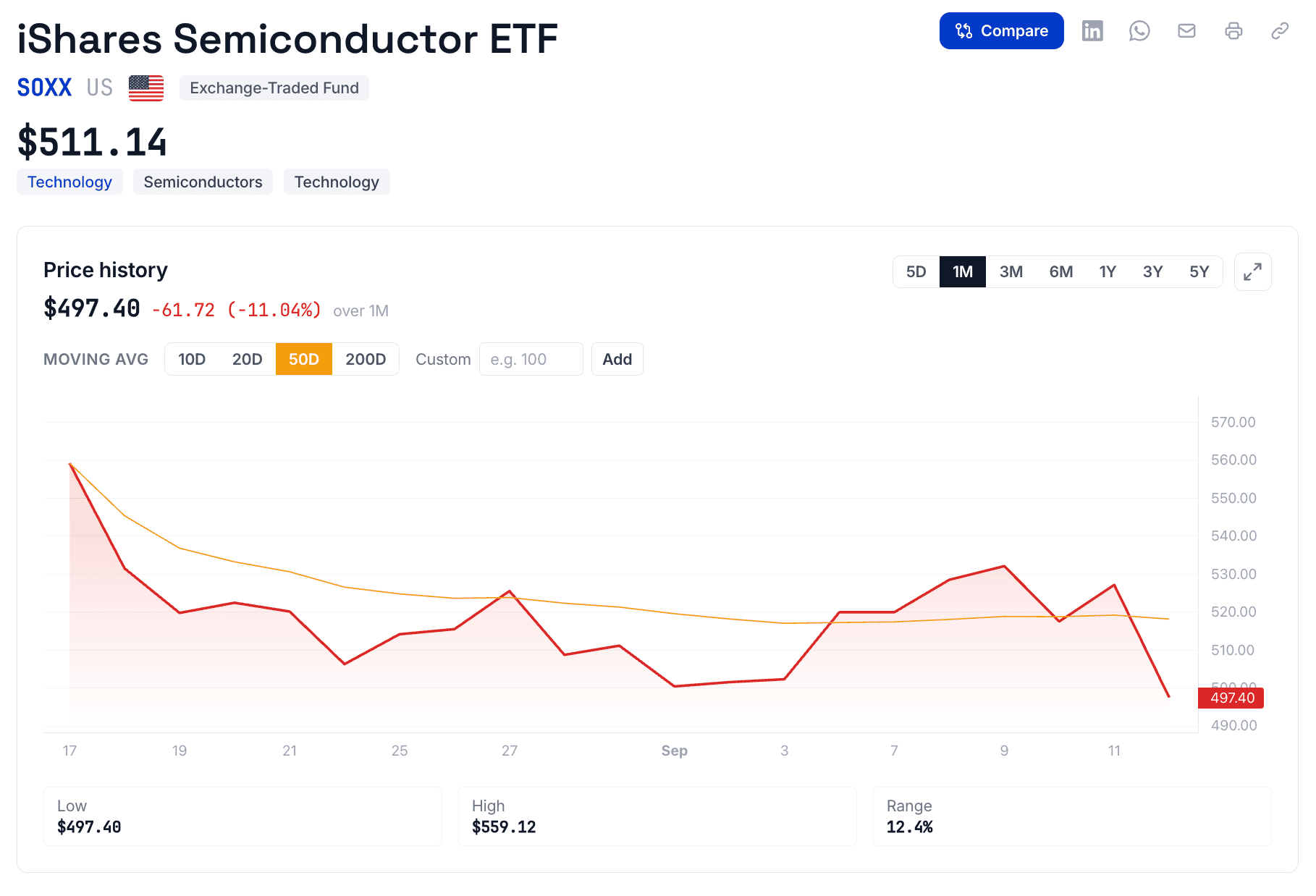
The selloff quickly reached ETFs. The iShares Semiconductor ETF (SOXX) fell close to 6% during Monday's session, reflecting the market's concern that slower model development could eventually temper demand for the processors, memory and equipment behind AI data centers.
The reversal is particularly sharp because memory stocks had rallied only days earlier on a very different concern: supply was becoming too tight rather than demand becoming too weak. Samsung Electronics and SK Hynix were reported to be carrying unusually low memory inventories as AI demand absorbed high-bandwidth memory capacity, raising expectations of tighter DRAM supply and firmer pricing. The development had supported semiconductor shares and memory-focused ETFs. Nukoud reported on the memory supply squeeze last week
The reaction was even more revealing in the Roundhill Memory ETF (DRAM), which fell about 5% in overnight trading as memory stocks came under pressure. DRAM, launched on April 2, 2026, is an actively managed ETF targeting companies deriving at least 50% of revenue or profits from semiconductor memory. Its exposure spans high-bandwidth memory (HBM), dynamic random-access memory (DRAM), NAND and related storage technologies. The fund charges 0.65%.
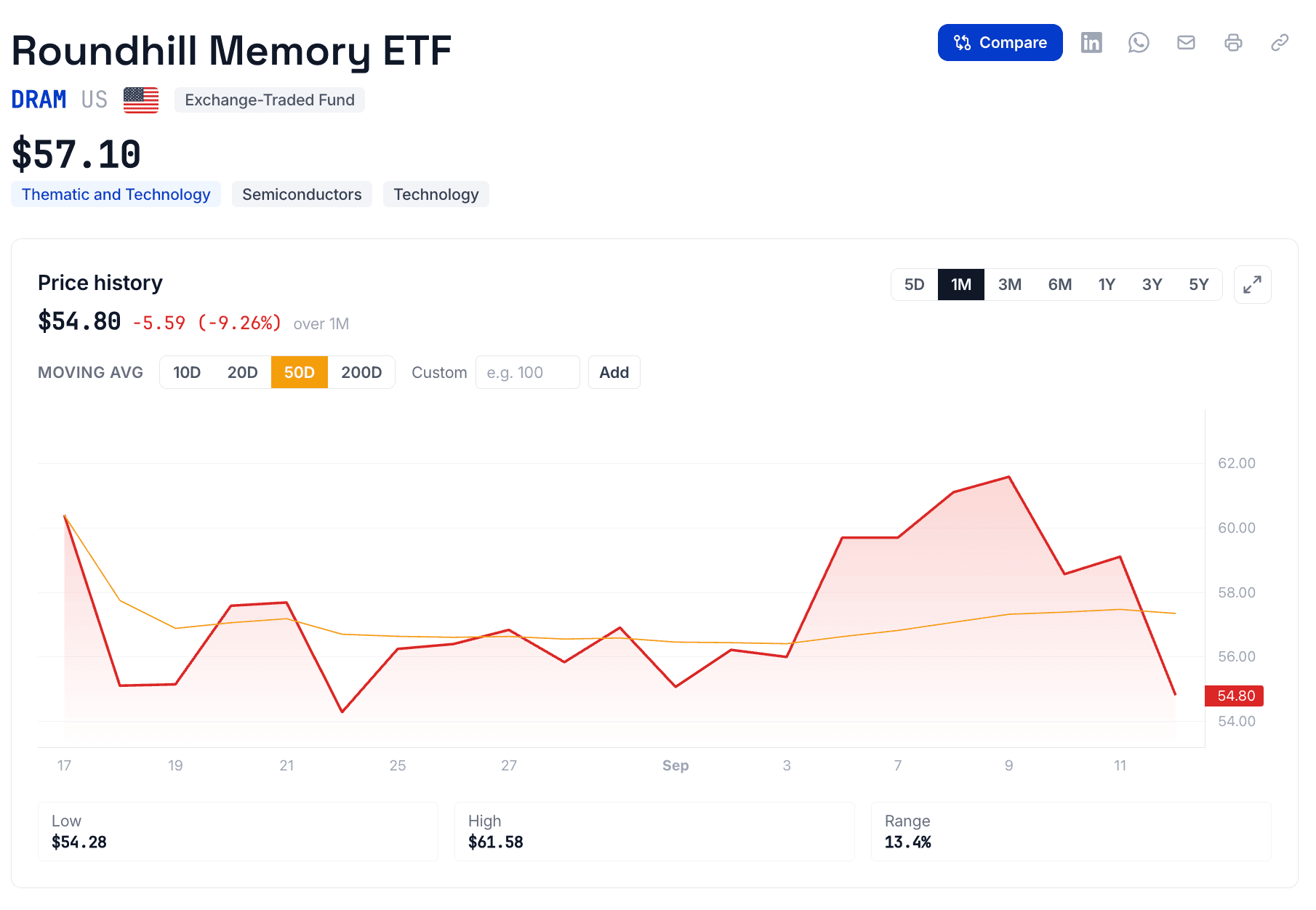
Micron, Samsung Electronics, SK Hynix, SanDisk and Kioxia were among DRAM's leading exposures as of June 30. That makes the ETF particularly sensitive to changes in expectations for AI infrastructure spending. HBM has become a key component of AI accelerators because it supplies the bandwidth required to move enormous quantities of data between memory and processors. Samsung began shipping its latest HBM4 products earlier this year as competition for AI-memory orders intensified.
The market reaction therefore went beyond Nvidia. Investors were marking down parts of the supply chain whose earnings expectations depend heavily on continued expansion in AI computing capacity.
The Market Is Dividing Hardware From Software
Software companies moved in the opposite direction, while chipmakers fell. Investors appeared to rotate away from businesses supplying computing capacity and toward companies applying AI through software. Reuters reported that the divergence raised the possibility that the next stage of the AI trade could depend less on how much infrastructure gets built and more on which companies can monetise it.
Broad technology funds spread their exposure across software, semiconductors and internet companies, while specialist products such as SOXX and DRAM concentrate the infrastructure risk.
Trump Pushes Back on an AI Slowdown
President Donald Trump rejected calls for a broad slowdown, arguing that restricting U.S. AI development could hand an advantage to China. His administration's position is that existing authorities provide tools to police misconduct without broadly constraining development.

Trump also spoke with Nvidia CEO Jensen Huang on Monday, with the discussion centering on AI's importance to U.S. economic growth and national security. The political message runs directly against the market's initial fear that warnings from AI executives will translate into a sharp reduction in infrastructure investment.
The harder test will be spending. Memory demand, GPU orders and data-centre construction depend on the capital budgets of hyperscalers and AI developers rather than Monday's headlines. DRAM's 5% drop shows where investors currently see the greatest sensitivity: the more specialised the exposure to AI infrastructure, the more sharply expectations can reset when assumptions about the pace of development change.