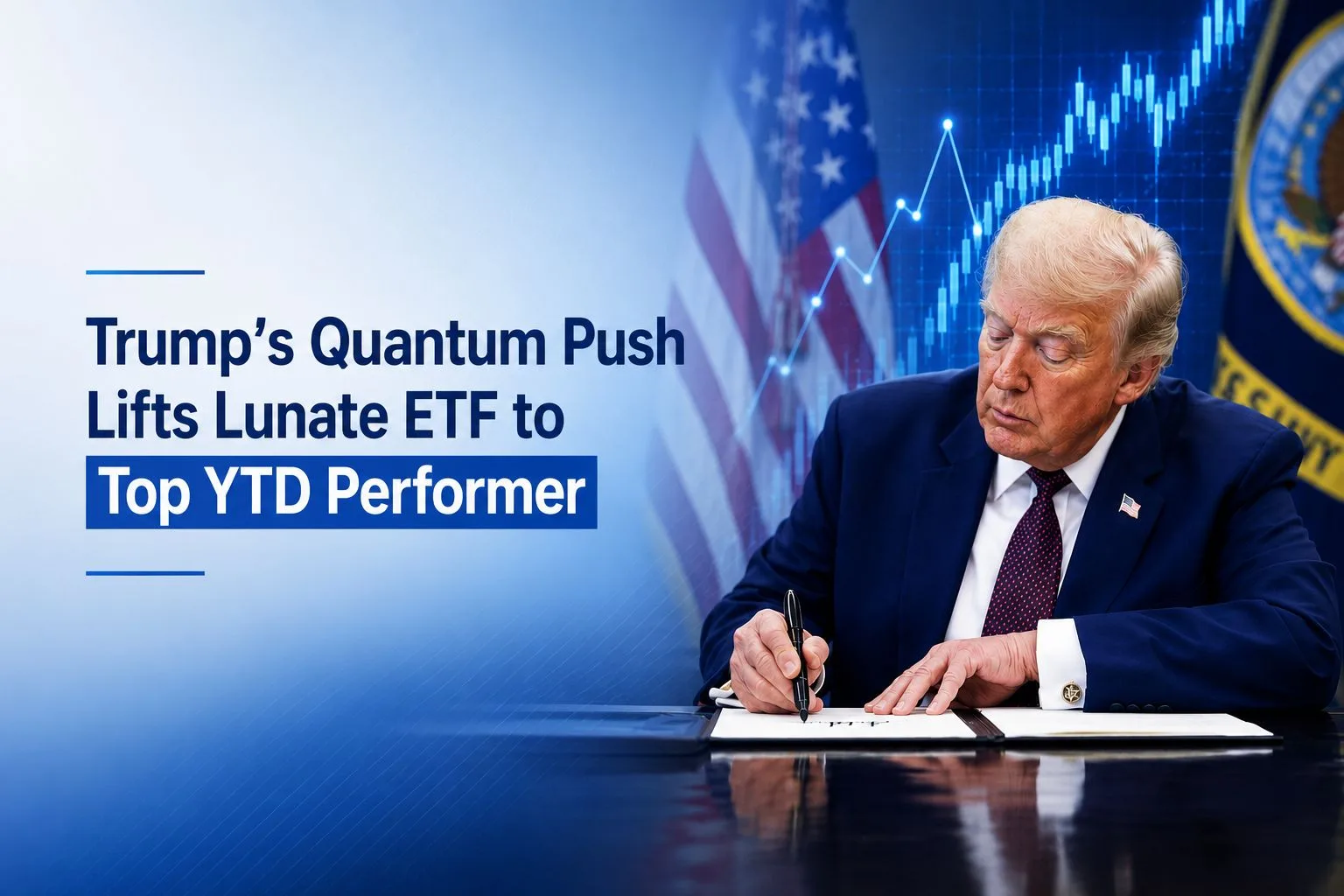
President Donald Trump has signed two executive orders aimed at accelerating America’s quantum-computing ambitions and protecting government systems from the cybersecurity risks that the technology may eventually create.
The first order calls for the development of a powerful quantum computer capable of supporting scientific research by 2028. Michael Kratsios, director of the White House Office of Science and Technology Policy, said the administration believes that target can be reached within the next two years. The second order focuses on cybersecurity, setting a goal for key government systems to migrate to post-quantum cryptography by 2030 or 2031.
Quantum computers use the principles of quantum physics to solve certain complex problems far beyond the reach of classical supercomputers. If the technology matures, it could transform artificial intelligence, drug discovery, materials science, chemistry, logistics, defense systems, and financial modeling.
But the same breakthrough also brings risk. A sufficiently powerful quantum computer could eventually break parts of today’s encryption infrastructure, creating a threat to governments, banks, communications networks, and critical infrastructure. That is why post-quantum cryptography has become such an urgent priority. The concern is “harvest now, decrypt later” activity, where sensitive encrypted data is collected today and decoded once quantum machines become powerful enough.
The executive orders also build on a broader U.S. push into quantum. The Commerce Department recently announced plans to take $2 billion in equity stakes across nine quantum-computing companies, including a new IBM venture. The latest package also calls for stronger international cooperation on intellectual property protection and supply-chain security, while agencies have been instructed to develop plans for quantum-enabled sensors and networks over the next five years.
For regional investors, the story has a direct market link through the Abu Dhabi Securities Exchange.
The Boreas Solactive Quantum Computing UCITS ETF, trading on ADX under the ticker QUANTM, gives investors access to the quantum theme through a UAE-listed ETF. The fund tracks the Solactive Developed Quantum Computing Index and holds 25 companies exposed to quantum computing, from large technology leaders to specialized quantum names. According to Lunate, the ETF is designed to capture the long-term growth potential of quantum computing.
That makes the timing of Trump’s executive orders especially relevant. QUANTM has already become one of the standout ETFs on ADX, reflecting growing investor interest in the theme. With Washington now treating quantum as a strategic priority, the policy signal may further support attention around companies involved in quantum hardware, software, sensors, cybersecurity, and enabling infrastructure.
For UAE investors, the ETF offers a local-market route into a highly specialized global technology theme without having to select individual quantum stocks.
The technology is still early, uncertain, and speculative. But the direction of travel is clear. Quantum computing is moving from the lab into government strategy, cybersecurity planning, and public-market investing. For ADX investors, QUANTM turns that global race into a tradable local exposure.