
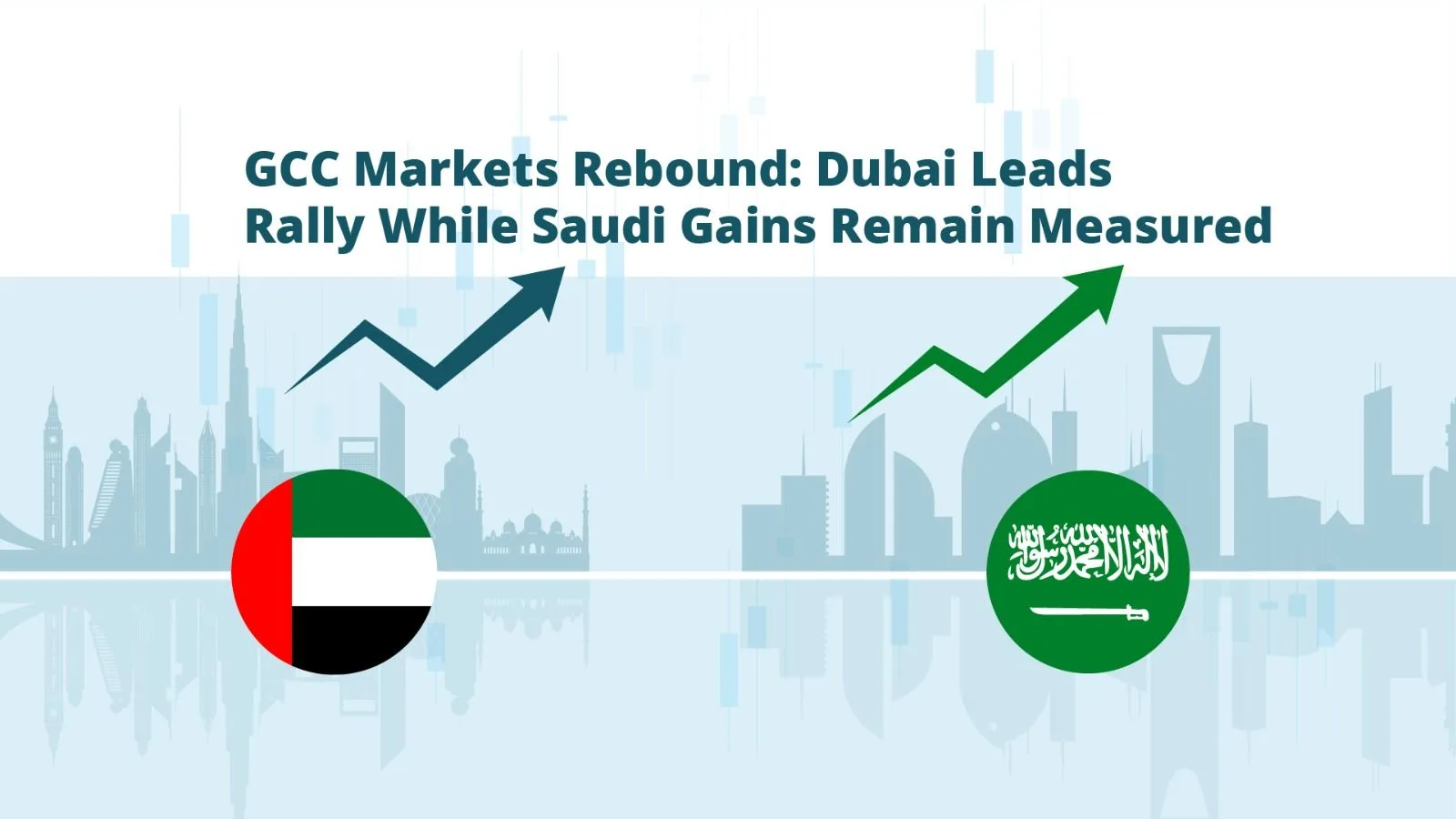
GCC equities opened on a firmer footing today, with markets stabilising after recent volatility, though the recovery remains uneven across the region.
In Saudi Arabia, the Tadawul All Share Index edged higher in its first session following the Eid break, rising around 0.7%. The move was notably muted given recent geopolitical developments, reflecting a more cautious investor stance.
Sector performance in Riyadh showed a clear rotation. Financials led gains, with banks such as Al Rajhi Bank and Saudi National Bank trading higher, alongside strength in real estate and communication services. At the same time, energy lagged, with Saudi Aramco declining, mirroring softer oil prices during the session.
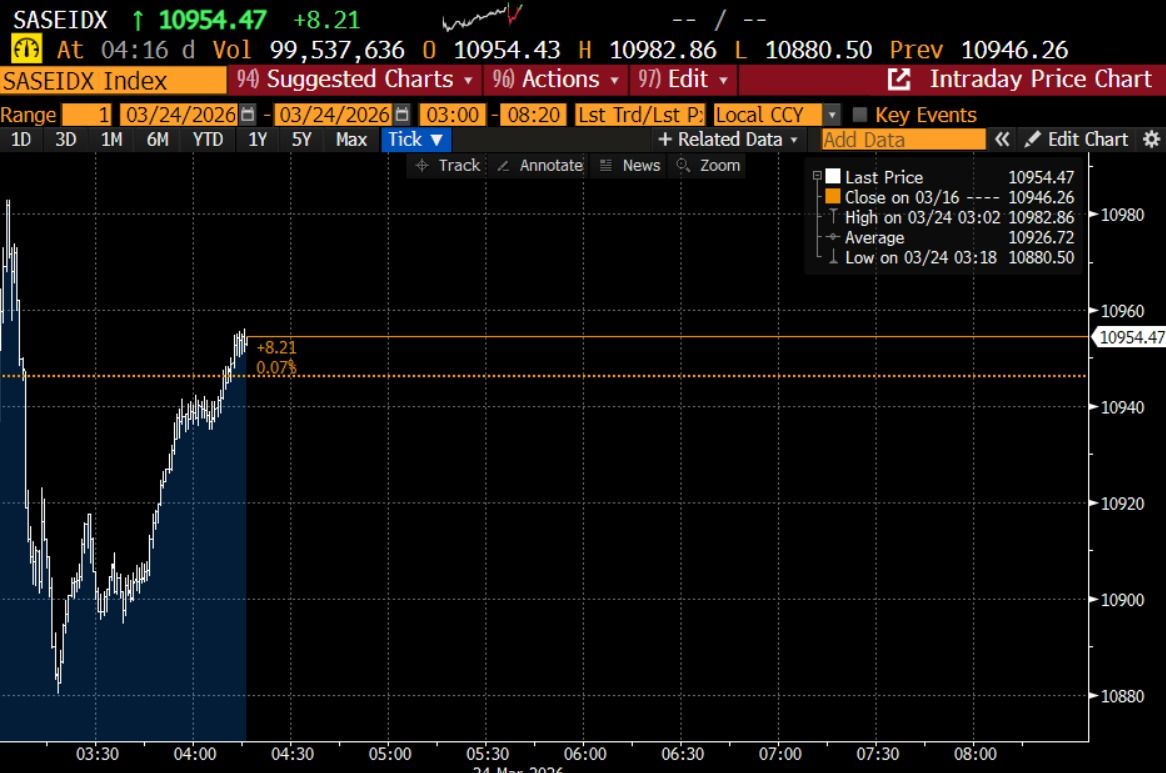
The divergence highlights a key shift. While oil has supported Saudi markets in recent weeks, today’s move suggests domestic sectors are beginning to carry more of the market momentum, even as crude prices ease.
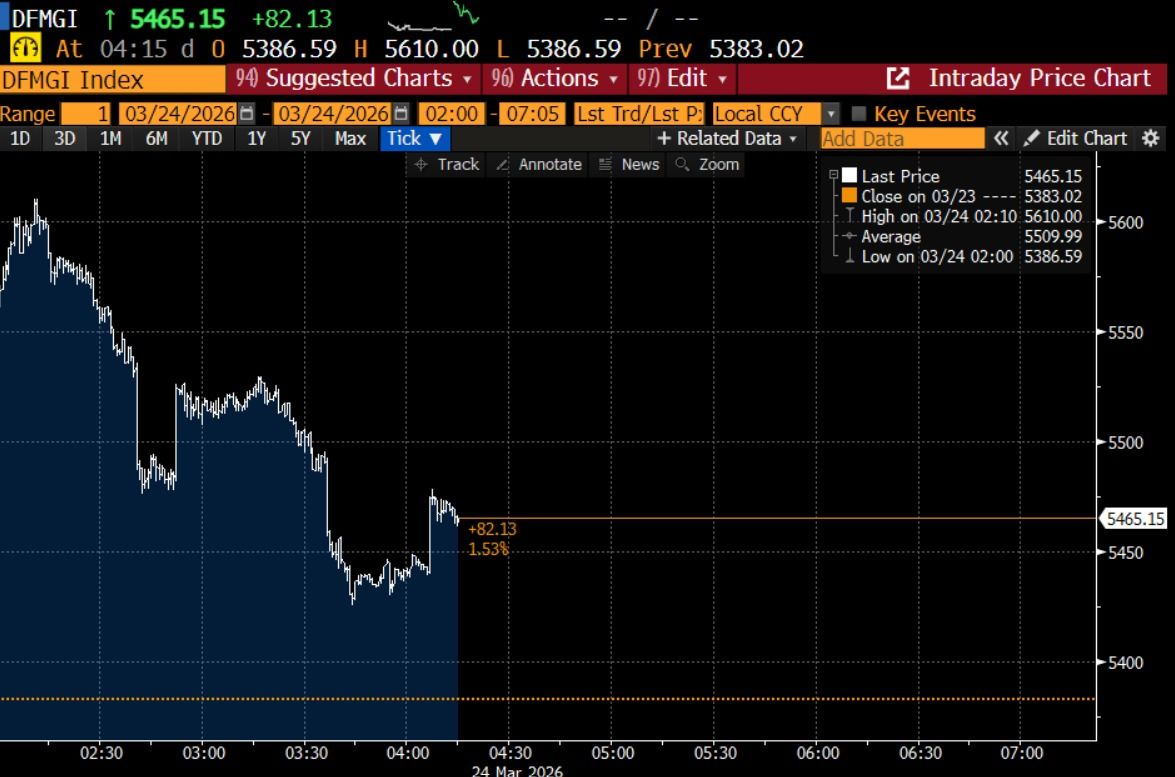
In the UAE, the tone was notably stronger, particularly in Dubai. The DFM General Index surged approximately 2.6%, driven by broad-based gains across consumer-facing and real estate-linked sectors.
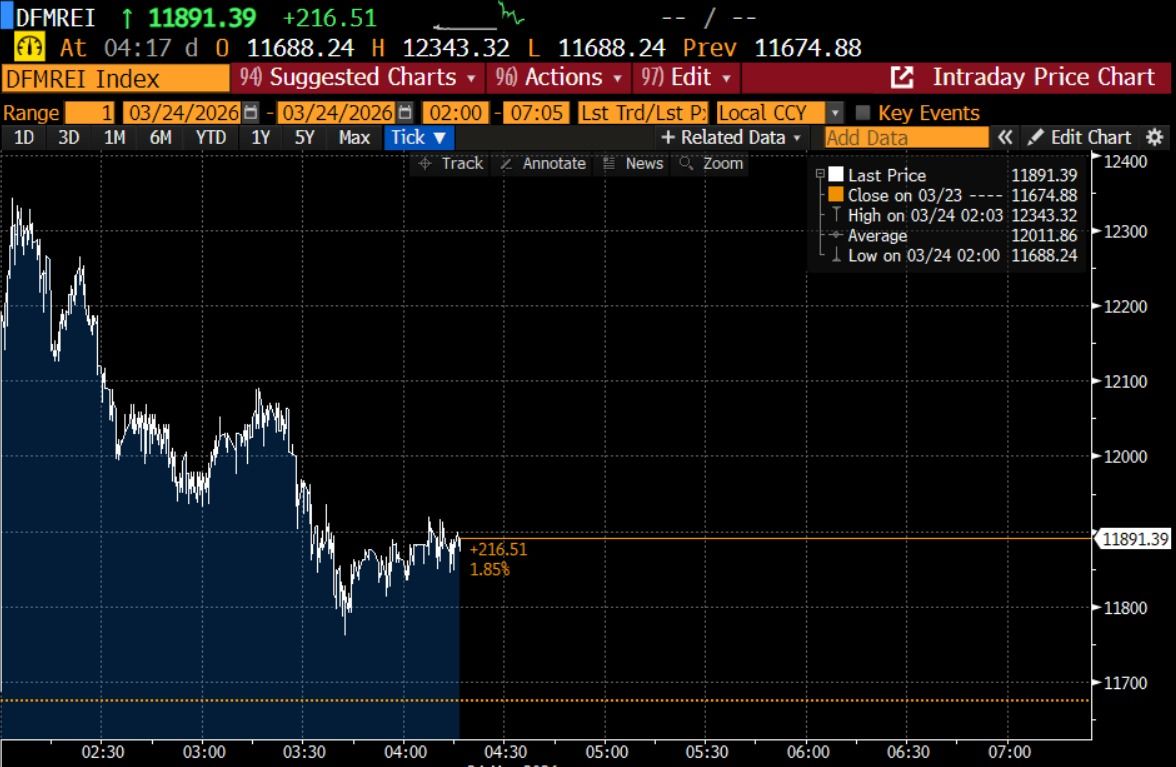
Real estate was the standout performer. Emaar Properties jumped nearly 5%, while Emaar Development (+2.18%) and Deyaar Development also posted solid gains. The strength reflects renewed investor appetite for Dubai’s most sentiment-driven sector.
Financials were mixed but broadly supportive. Emirates NBD advanced, while Dubai Islamic Bank lagged slightly. Meanwhile, transport and infrastructure names contributed to the upside, with Salik Company and Air Arabia moving higher.
Utilities and telecoms also added momentum. Dubai Electricity and Water Authority gained around 3%, while du advanced strongly, reinforcing the breadth of the rally.
In Abu Dhabi, the ADX General Index also moved higher, though gains were more measured compared to Dubai. The market was supported by select financials and industrial names, with top gainers including RAKBANK (+6.31%), TAQA (+4.21%), Emirates Steel Arkan (+4.00%), National Corporation for Tourism and Hotels (+3.70%), and RAK Properties (+3.19%). The more balanced sector composition of ADX, combined with its heavier weighting toward institutional flows, continues to result in less volatile but steadier price action.
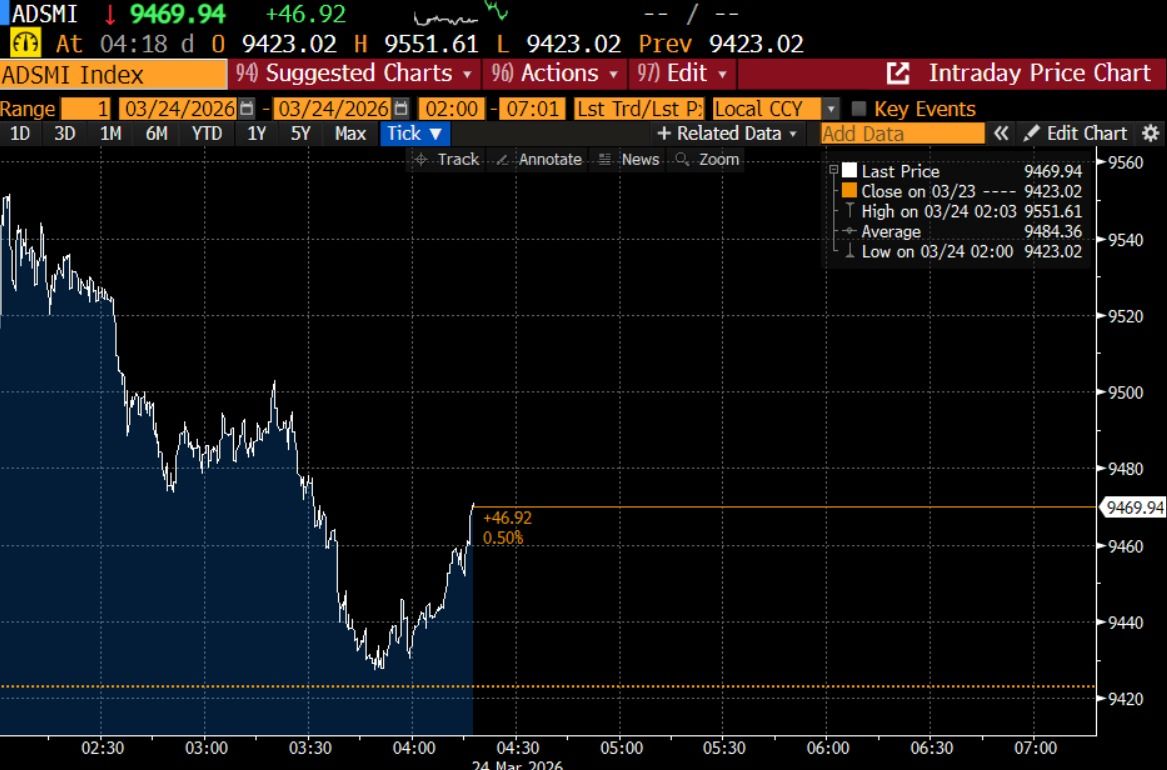
The sector composition helps explain the divergence within the UAE itself. Dubai’s market, with its heavier exposure to real estate and consumer sectors, is more sensitive to shifts in sentiment, while Abu Dhabi tends to move in a more controlled manner, reflecting its institutional base.
Taken together, today’s session highlights a growing divergence within GCC equities. Saudi Arabia remains anchored by oil and domestic liquidity, delivering steady but measured gains. Dubai is behaving more like a high-beta market, while Abu Dhabi sits in between, offering relative stability.
For investors tracking this divergence, regional ETFs are increasingly acting as useful tools to express these differences. Products such as the Chimera S&P UAE UCITS ETF, Chimera MSCI Saudi Arabia ETF, and Albilad MSCI Saudi Arabia ETF provide exposure to these markets, capturing the contrast between UAE’s higher-beta sectors and Saudi Arabia’s more oil-linked, domestically supported structure.
For investors, the message is increasingly clear: the GCC is no longer trading as a single block. Instead, market performance is being shaped by sector exposure, economic structure, and sensitivity to sentiment, with Dubai, Abu Dhabi, and Riyadh each responding differently even within the same macro environment.