
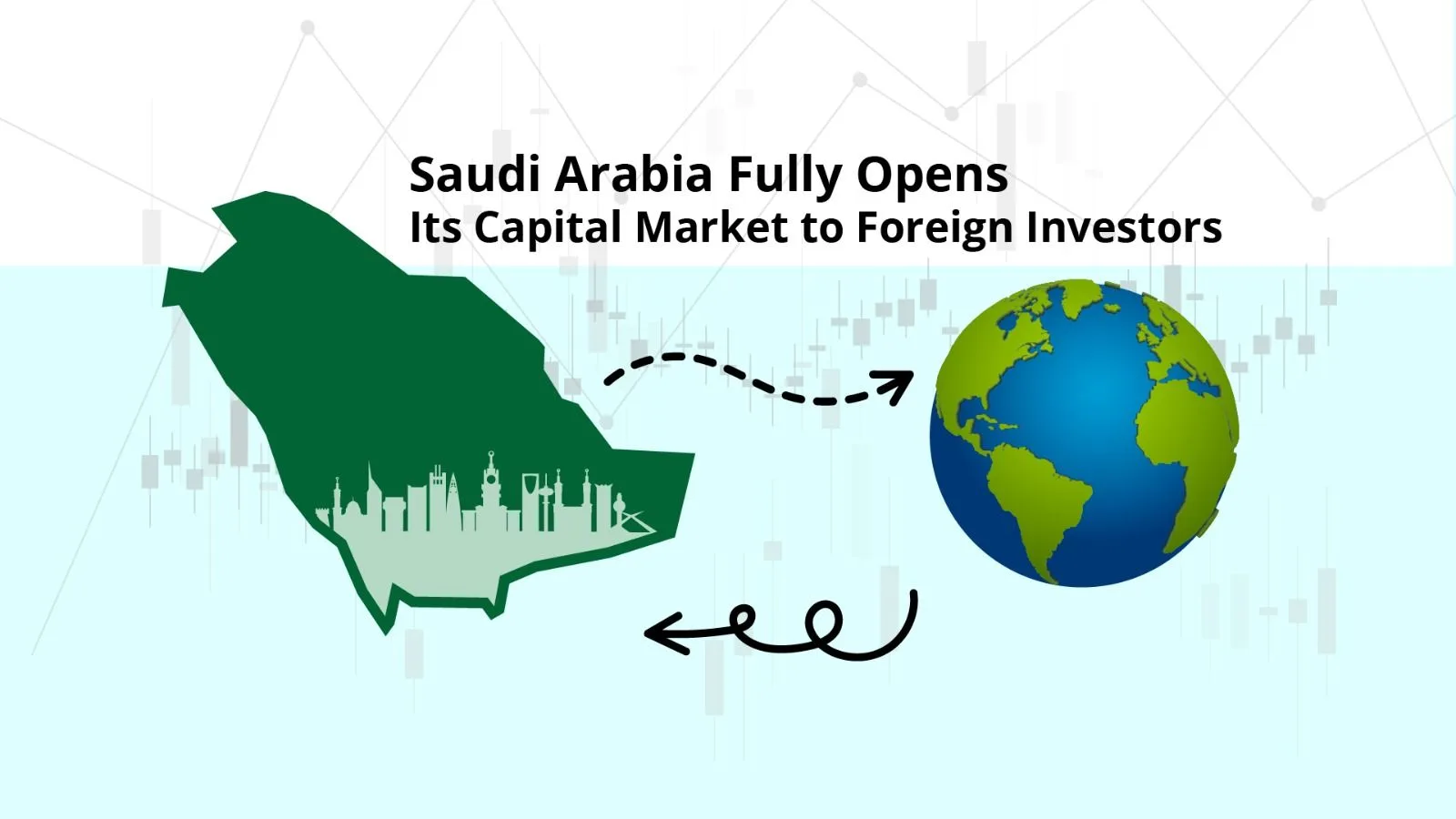
Saudi Arabia has taken a decisive step in the evolution of its capital markets, fully opening the Saudi stock market to all categories of foreign investors for the first time. Effective Sunday, February 1, overseas institutions, funds, and eligible entities can now invest directly in shares listed on the main market, the Tadawul All Share Index (TASI), without prior qualification requirements.
The move, approved by the Board of the Capital Market Authority (CMA), aligns Saudi Arabia’s equity market more closely with international access standards and represents one of the most significant liberalization measures since foreign participation was first introduced a decade ago.
From Qualified to Open Access
Under the new regulatory framework, the CMA has eliminated the Qualified Foreign Investor (QFI) regime for the main market, removing a long-standing barrier that required non-resident investors to meet minimum asset, experience, and regulatory thresholds.
Foreign investors including institutions, funds, or other legal entities may now trade Saudi equities directly, rather than relying on intermediated structures.
At the same time, the CMA has abolished the regulatory framework governing swap agreements, which previously allowed non-resident investors to gain only economic exposure to Saudi shares without legal ownership. Direct share ownership is now permitted.
Ownership Caps Still Apply
Despite the broad opening, foreign ownership is not unlimited. Under existing regulations:
- Non-resident foreign investors (excluding strategic investors) may not own 10% or more of any listed company.
- Total foreign ownership, including resident and non-resident investors but excluding strategic investors, remains capped at 49% of a listed issuer’s shares.
These thresholds reflect Saudi Arabia’s continued emphasis on balancing capital inflows with domestic ownership considerations.
Investor Classifications Under the New Framework
Foreign investors are now formally classified into multiple categories, including:
- Resident foreign investors
- Foreign residents in GCC countries
- Non-resident foreign investors
- Foreign legal entities
- Foreign funds
- Foreign strategic investors
This framework expands the investor base while maintaining clarity around regulatory treatment and ownership limits.
Foreign Flows Were Already Building
Even before the formal opening, foreign participation in Tadawul had been rising steadily.
In January 2026, QFIs were net buyers of SAR 4.8 billion worth of shares on the main market, according to data from Tadawul. Foreign investors accounted for 39.02% of total buy trades and 34.22% of sell trades during the month.
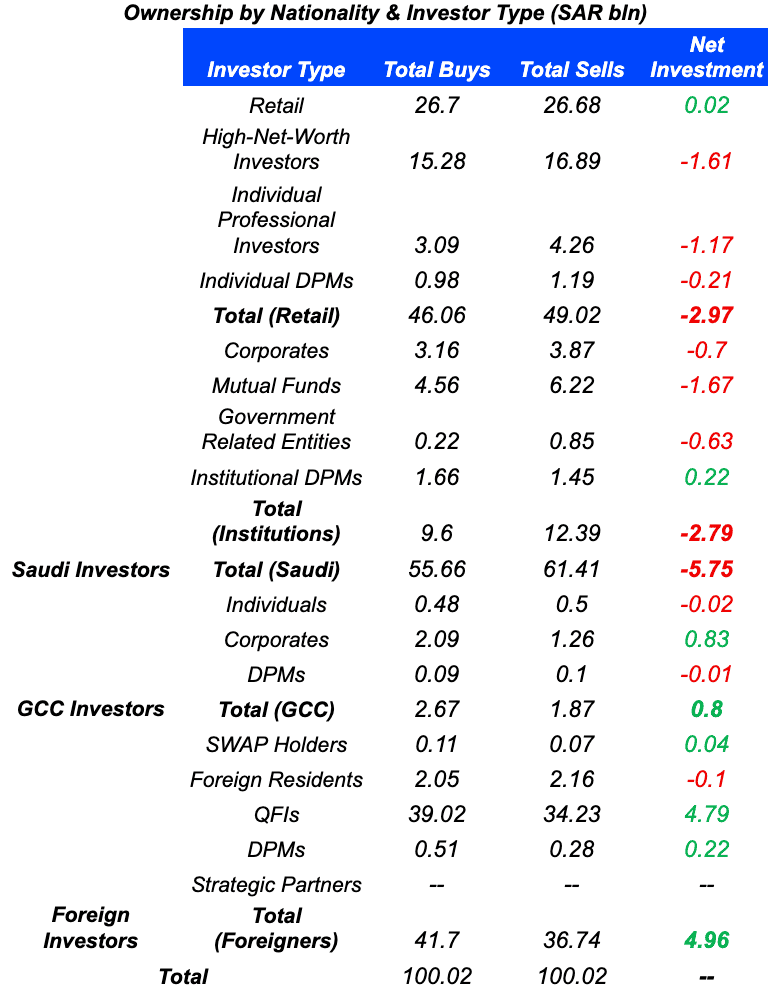
Ownership by Nationality & Investor Type January 2026 (SAR billions)
(Buys, Sells, Net Investment)
Key takeaways from January flows:
- Foreign investors: Net inflows of ~SAR 5.0bn
- Saudi institutions: Net sales of ~SAR 2.8bn
- Saudi individuals: Net sales of ~SAR 3.0bn
- GCC investors: Net inflows of ~SAR 0.8bn
Institutional Investors Take the Lead
Data also shows a growing institutional footprint.
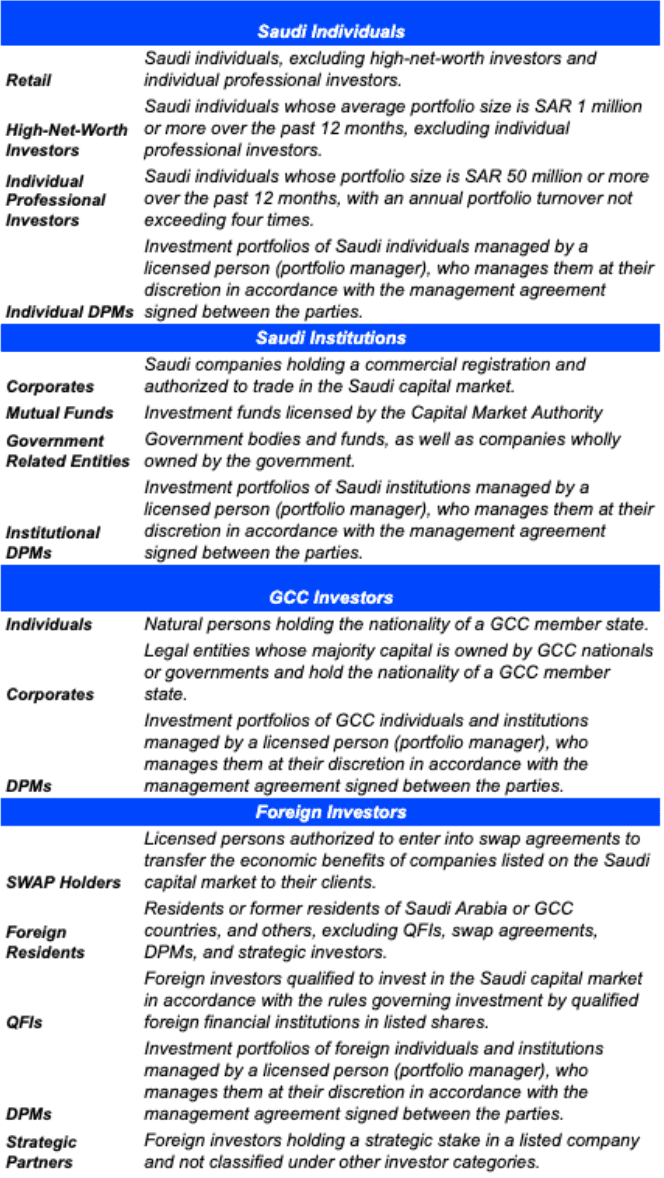
Ownership by Investor Classification January 2026 (SAR billions)
- Institutional investors: Net inflows of SAR 1.7bn
- Non-institutional investors: Net outflows of SAR 1.7bn
This reinforces the CMA’s stated objective: broadening and professionalizing the investor base, while enhancing market depth and liquidity.
The Bottom Line
Saudi Arabia’s decision to fully open its equity market marks a shift from controlled liberalization to global-standard access, without abandoning ownership safeguards. Foreign investors were already voting with their capital; the regulatory change now removes structural friction and formalizes that trend.
For global asset managers, emerging-market investors, and regional institutions alike, Tadawul is no longer a partially accessible market, it is now fully investable, with scale, liquidity, and clear rules.