
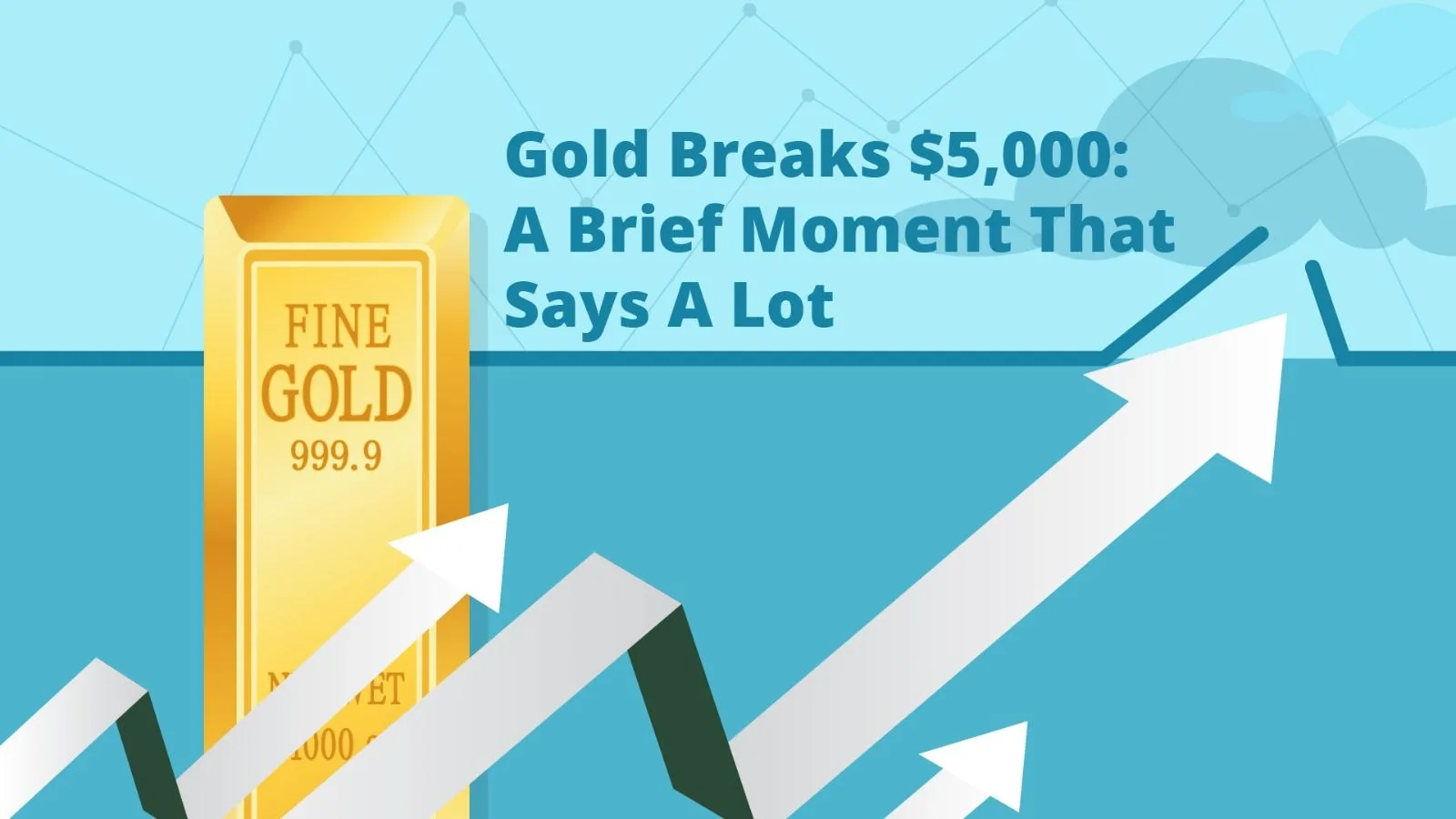
Gold has crossed $5,000 per troy ounce for the first time, briefly trading above $5,100 on Monday before settling around the low $5,000s, according to market reporting. It is a milestone few in the bullion market expected this decade, and one with immediate consequences in the Gulf. In the UAE, retail prices adjusted almost instantly, with 24-karat gold near AED 614 per gram, underscoring how global moves in bullion feed directly into local jewellery markets, savings behaviour, and portfolio positioning.
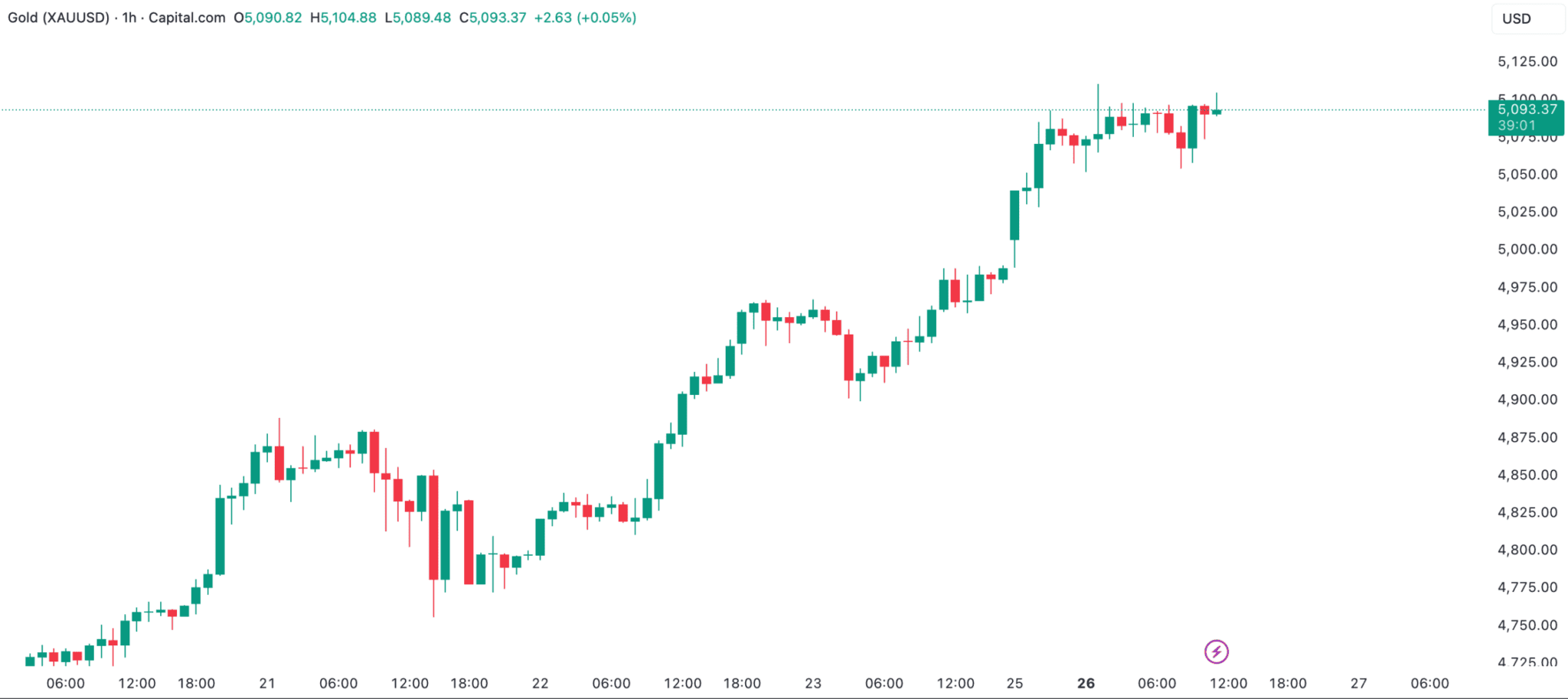
The surge is less about a single trigger than a convergence of pressures. Global reporting from Reuters, the Financial Times and others points to intensifying geopolitical tensions, renewed trade and policy uncertainty, a softer US dollar, and continued central-bank buying as key drivers. Gold’s rally is increasingly being read as a vote of no confidence in fiscal discipline and geopolitical stability, rather than a simple inflation hedge. In that context, bullion has regained its status as a primary safe haven, drawing capital away from government bonds and into hard assets.
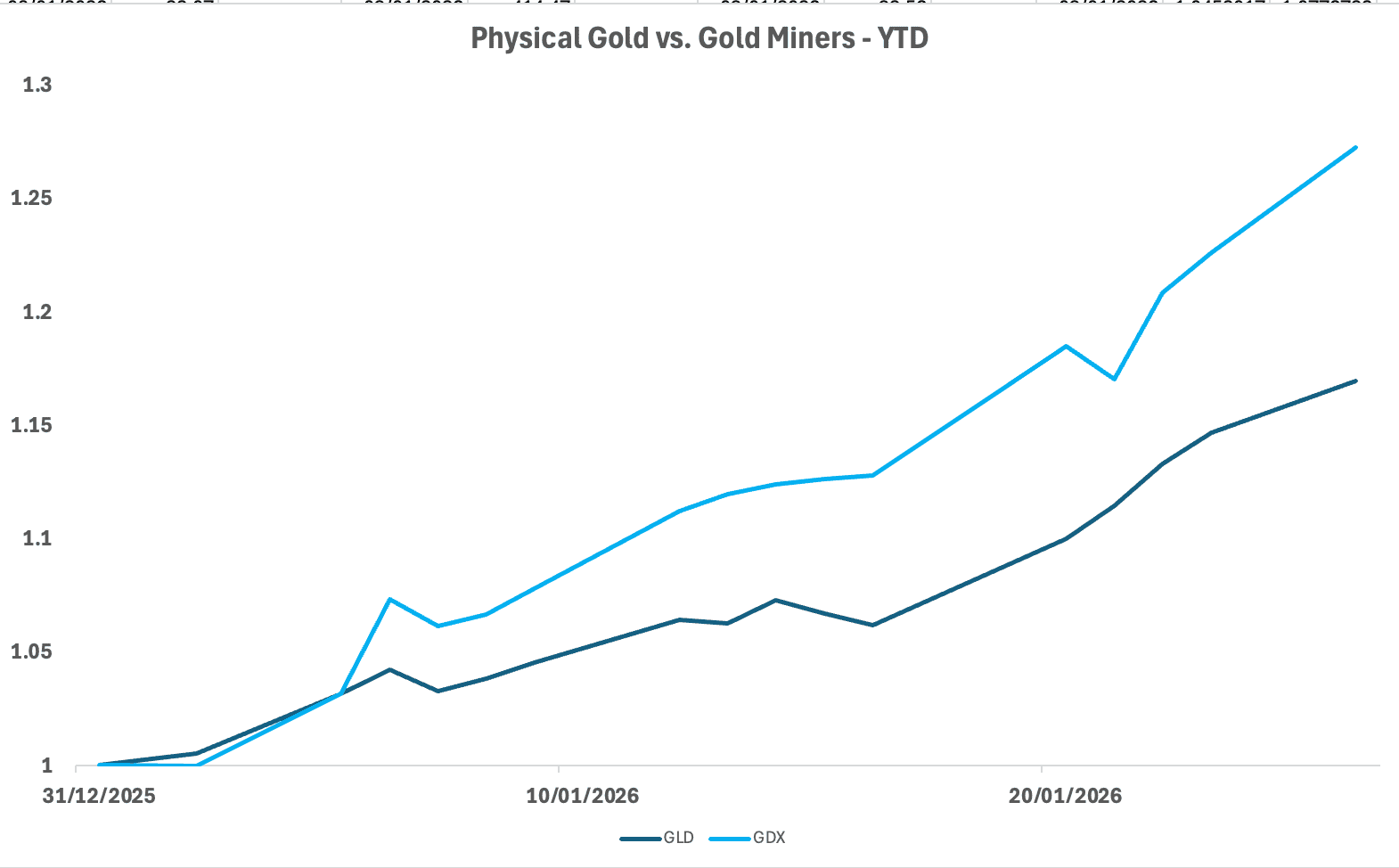
Gold miners have continued to outperform, with mining equities delivering leveraged gains as rising bullion prices expand margins and cash flows, once again reminding investors that gold’s upside often shows up fastest in the producers rather than the metal itself.
Looking ahead, bullish forecasts are becoming more visible. Bank of America has said gold could reach $6,000 per ounce, citing structural central-bank demand and persistent geopolitical risk.
For GCC investors, the question is no longer whether gold matters, but how to access it efficiently. Alongside physical bullion, regional market infrastructure has matured, including Saudi Arabia’s Albilad Gold ETF with a YTD return of 29.34%, which offers Shariah-compliant, exchange-traded exposure.
At these price levels, structure, fees, liquidity and compliance matter as much as the metal itself, signaling that gold’s break above $5,000 is not an endpoint, but the start of a more complex phase for investors in the Gulf.