

Feb. 2, 2026 Asian Morning Session
Oil prices tumbled sharply on Monday, extending a recent correction, after U.S. President Donald Trump expressed optimism about possible negotiations with Iran, easing fears of a military confrontation in the oil-rich Middle East and unwinding much of the geopolitical risk premium that had supported crude recently.
Key Global Crude Benchmarks Early Asian Trade:
- West Texas Intermediate (WTI): ~ $61.5–$62.5/bbl, down roughly 3-5% on the day and sliding toward the low $60s.
- Brent Crude: ~ $65-$67.1/bbl, also shedding over 3%.
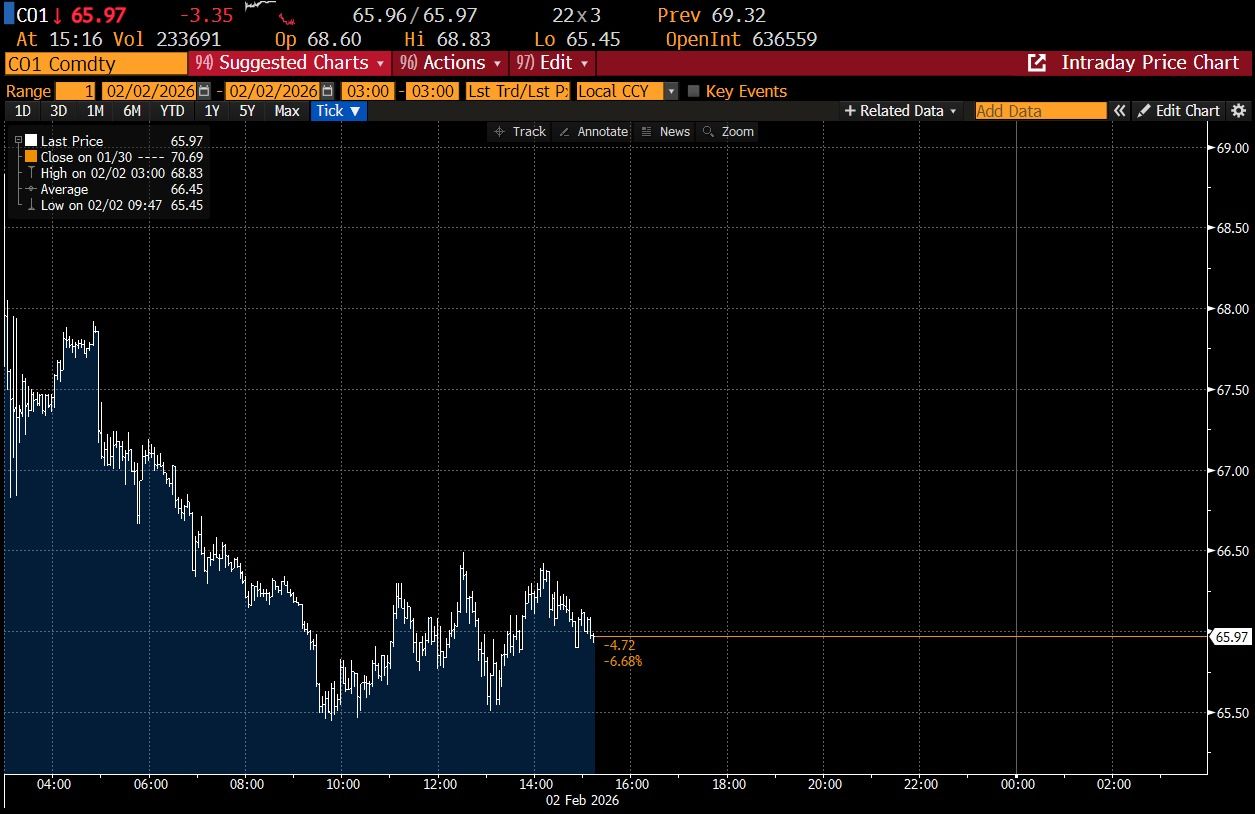
Brent oil chart
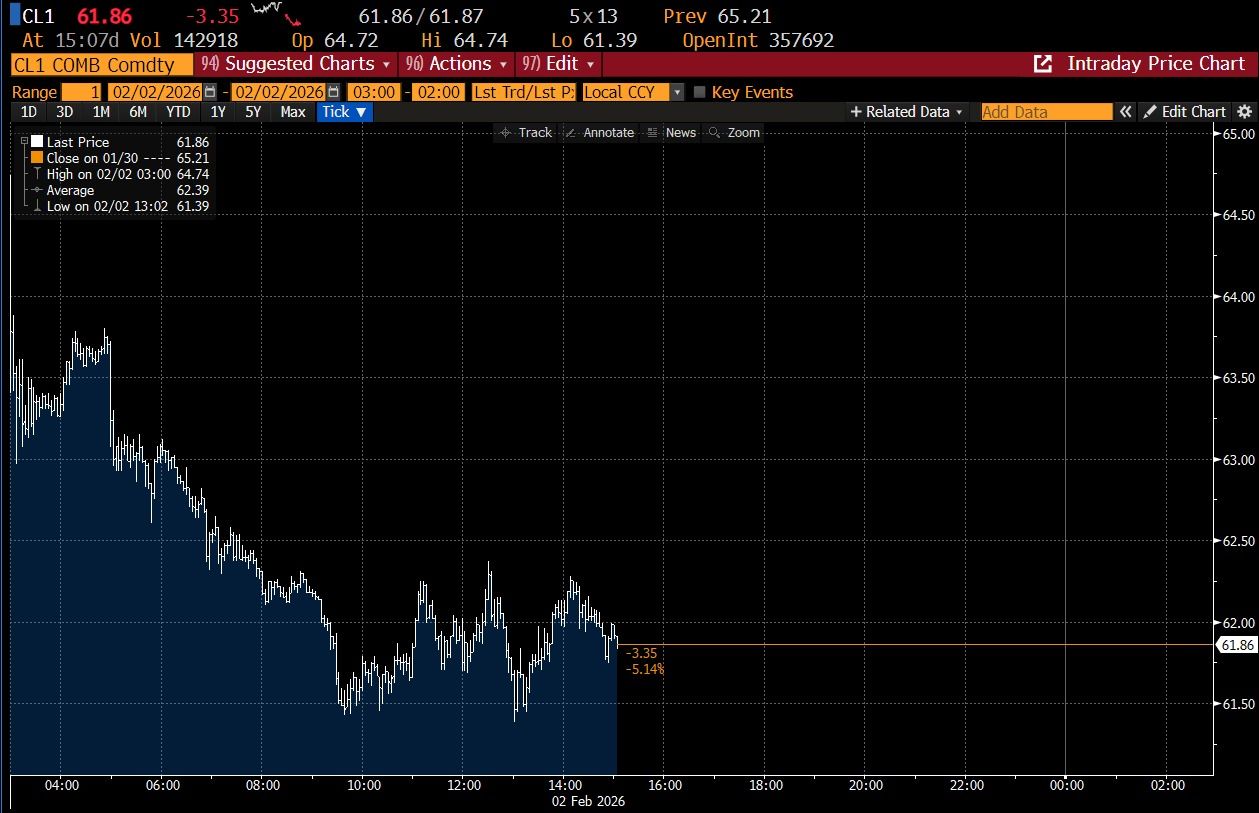
WTI oil Chart
Markets interpreted Trump’s comments and reports that Washington and Tehran are in discussions as a sign that potential supply disruptions from conflict are less likely, prompting broad commodity and energy selling.
The price declines follow a recent period of elevated risk pricing where fears of escalation around Iran had pushed Brent and WTI to multi-week highs late last month before reversing sharply this week.
GCC-Focused Pricing: Murban Crude Under Pressure Too
For Gulf market participants, the UAE’s flagship light sour grade Murban crude delivered at Fujairah and increasingly tracked as a regional benchmark is mirroring the broader slide. Current ICE Futures Abu Dhabi data shows Murban futures trading near ~$66-$69/bbl, down several dollars on the session and reflecting spill-over from global sentiment.
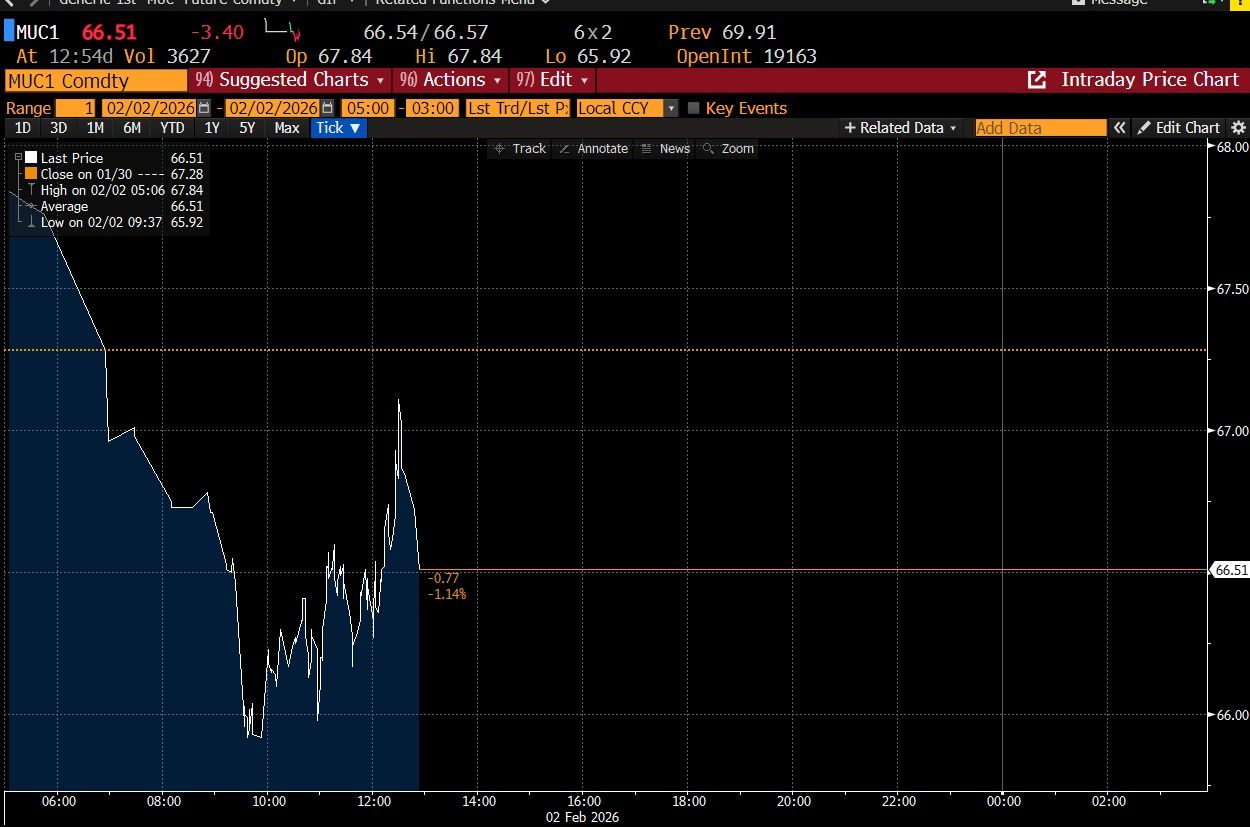
Murban oil chart
Murban’s price action matters for GCC producers and refiners because it often sets the tone for Asia-bound barrels and term contracts, anchoring pricing differentials against Brent and WTI in the regional export corridor.
Drivers & Risks Ahead
Short-term market drivers include:
- Geopolitical risk premium unwinding after diplomatic signals.
- OPEC+ production posture, with output steady into March supporting a shallow global supply backdrop.
- Broader risk asset movements, with commodities repricing as investors trim positions amid easing Middle East risk.
Watch for:
- Any re-escalation in U.S.-Iran political rhetoric, which has historically driven sharp oil volatility.
- Supply indicators from OPEC+ and non-OPEC producers that could tighten physical markets.
- Regional export flow data, particularly around Fujairah and the Strait of Hormuz, which can influence Murban spreads.
Bottom Line
After peaking on elevated geopolitical risk, crude prices across WTI, Brent and Murban are correcting as Iran-U.S. diplomatic signals take precedence over conflict fears. For Gulf investors, the evolving price of Murban highlights that regional benchmarks are now as sensitive to global sentiment as legacy Western markers, a reminder of how quickly risk premiums can swing in energy markets.