

South Korea's equity market has delivered one of the most dramatic boom-and-bust cycles of the AI era. After surging more than 135% between December 2025 and June 2026, the KOSPI has fallen 44% in just 40 days, wiping roughly $2 trillion from market capitalization and prompting authorities to step in with emergency measures aimed at stabilizing trading.
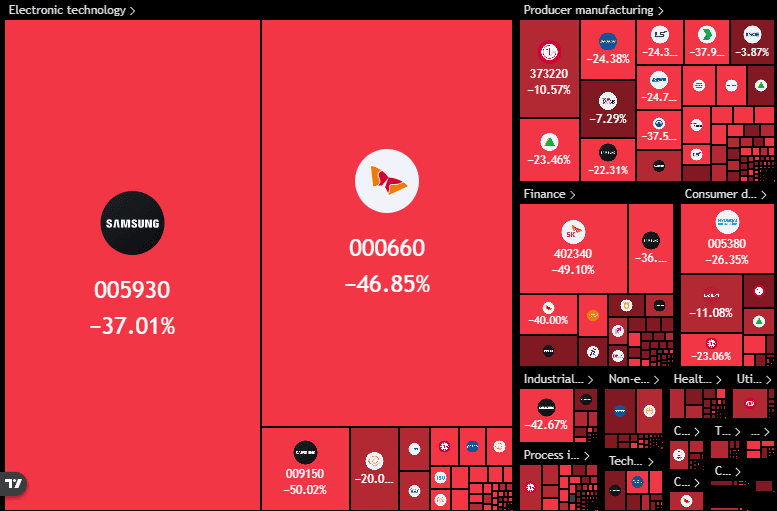
While the selloff has been driven by sharp declines in semiconductor giants SK Hynix and Samsung Electronics, the episode also shines a spotlight on the role of leveraged exchange-traded funds, whose rapid growth amplified both investor enthusiasm and market volatility.
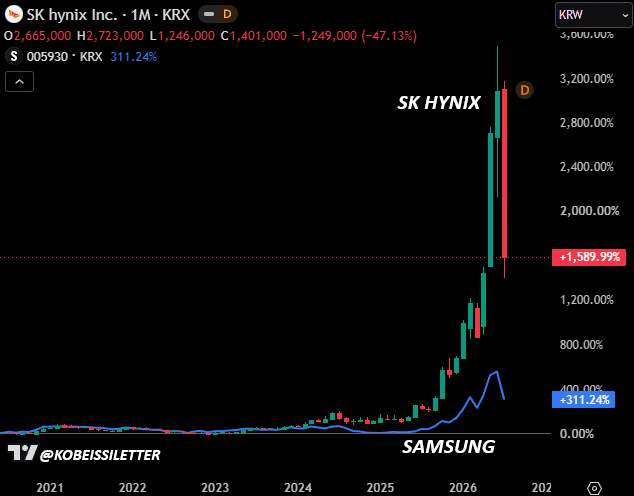
Source: KOBEISSIELETTER
At the heart of the rally was the global race to build AI infrastructure. Demand for high-bandwidth memory chips transformed SK Hynix into one of the world's best-performing large-cap stocks, with shares climbing nearly 1,900% over the previous year. Samsung also participated in the rally, gaining roughly 600%. Together, the two companies grew to represent about half of South Korea's equity market, creating an unusually concentrated market structure.
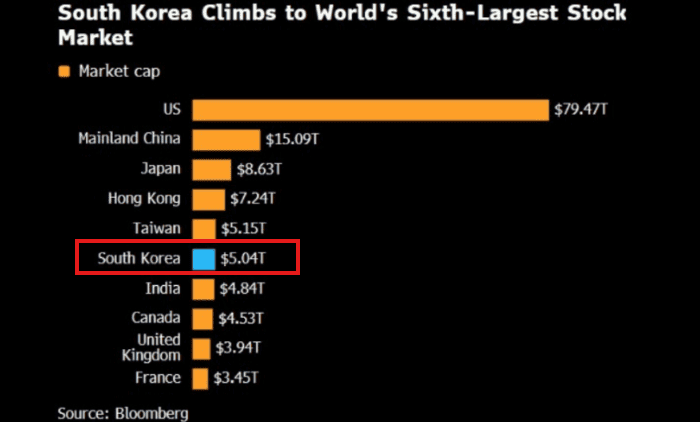
The surge propelled South Korea's stock market to become the world's sixth largest by market capitalization, overtaking India for the first time.
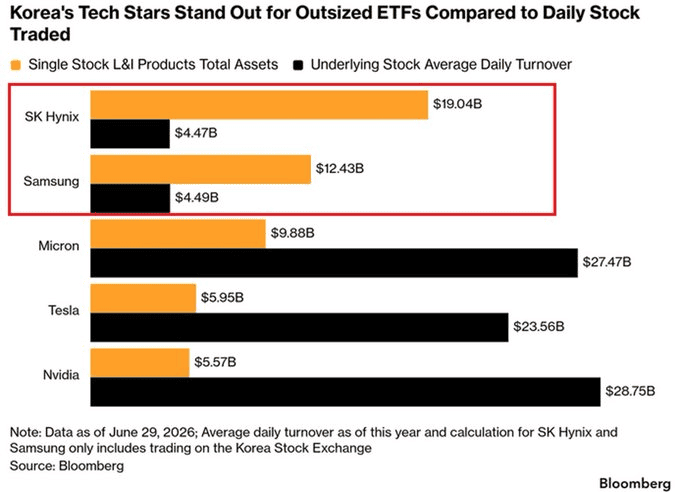
ETF demand accelerated alongside the rally. Leveraged and inverse ETFs linked to SK Hynix accumulated approximately $19 billion in assets, more than four times the stock's average daily trading volume of around $4.5 billion. Leveraged Samsung ETFs gathered another $12.4 billion, illustrating how derivative-based products became a major source of exposure to the country's semiconductor champions.
Such products rebalance daily, often requiring managers to buy additional shares after prices rise and sell after prices fall. In trending markets this can reinforce price movements, creating a feedback loop that benefits momentum during rallies but accelerates declines once sentiment reverses.
Warning signs began emerging in late June. According to Bloomberg data cited in the market commentary, stock trade defaults reached record levels while speculative activity in options markets also surged. Open interest in call options on the iShares MSCI South Korea ETF (EWY), the largest U.S.-listed ETF tracking Korean equities, reportedly climbed to a record $5.5 billion, reflecting heightened speculative positioning by global investors.
South Korea’s reversal also coincided with a wider loss of momentum across technology markets. Semiconductor shares had carried much of the AI rally, but by late July the selloff had spread across Asian chipmakers and U.S. technology names as investors questioned whether record capital spending would translate quickly enough into profits.
The pressure was uneven: Microsoft rallied after strong cloud results, while Meta fell as rising AI expenditure weighed on earnings and free cash flow. The split suggested that investors were becoming more selective within the technology sector rather than abandoning AI exposure altogether.
As semiconductor stocks retreated, leveraged ETFs magnified losses. SK Hynix has fallen roughly 60% since late June, dragging the broader KOSPI sharply lower as concentrated positioning unwound across both cash equities and derivatives.
South Korean authorities have since announced an emergency market monitoring system operating around the clock and indicated they will introduce tighter restrictions on leveraged ETF trading and retail investor exposure in an effort to reduce systemic risk.
For ETF investors, the episode reinforces a familiar lesson. Leveraged ETFs are designed to deliver multiples of daily index returns rather than long-term performance. During periods of elevated volatility, compounding effects can cause returns to diverge materially from investors' expectations, particularly when markets reverse direction.
The selloff also carries implications for GCC investors. Several global and emerging market ETFs held by regional investors have meaningful allocations to South Korean technology companies, while many AI and semiconductor ETFs include SK Hynix alongside Nvidia, TSMC and other chipmakers. Investors using these products should monitor concentration risk, underlying index weights and the use of leverage, especially when a single investment theme begins to dominate market performance.
Rather than signalling a structural weakness in South Korea's economy, the recent correction highlights how concentrated markets, abundant liquidity and leveraged ETF flows can combine to amplify both rallies and downturns. For ETF investors, understanding how products are constructed can be just as important as selecting the market they wish to own.