
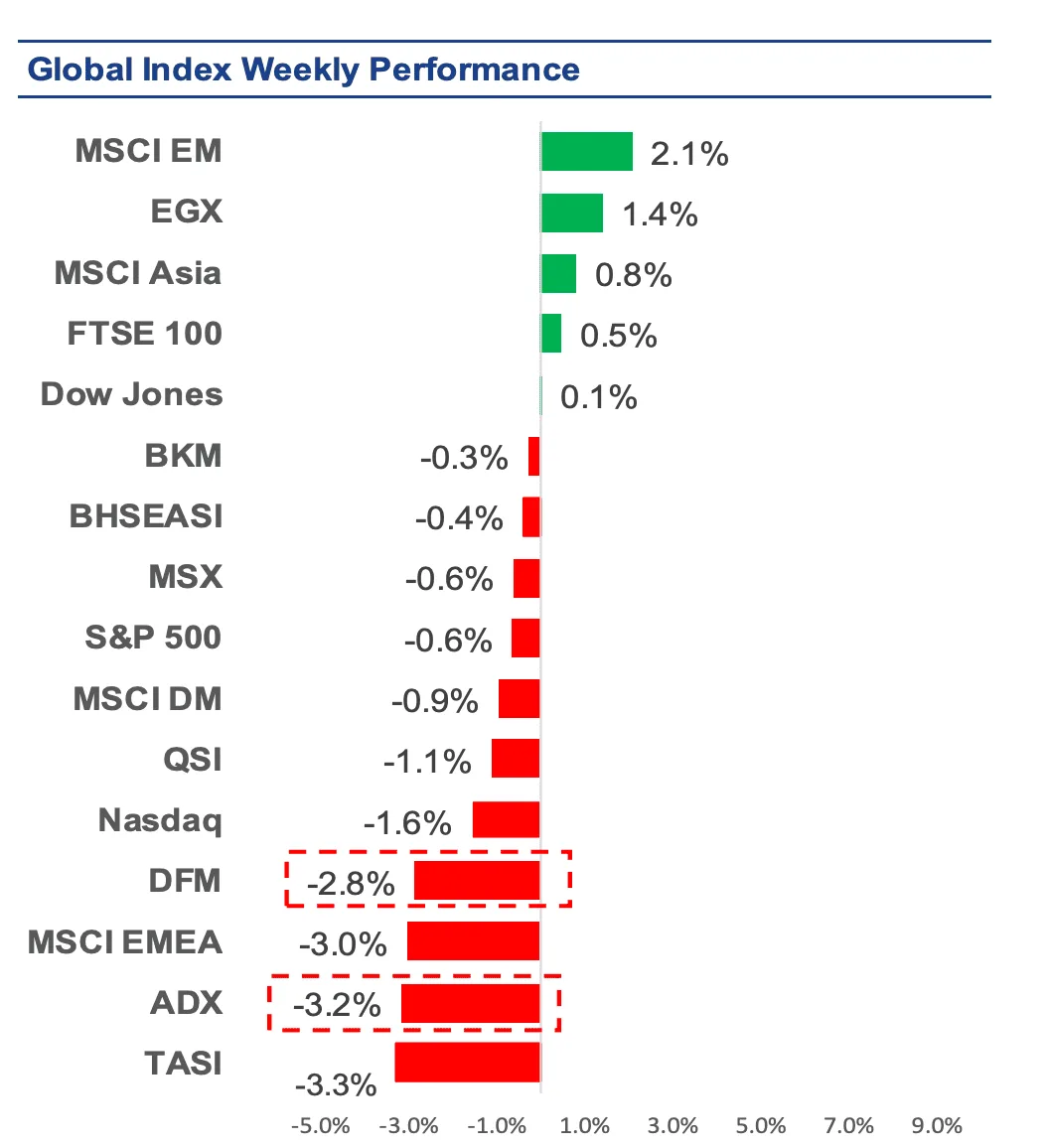
As we close out the first week of October, the UAE markets experienced a series of fluctuations, reflecting a combination of local and global factors. Both Abu Dhabi and Dubai stock markets saw declines, while oil prices edged higher due to looming concerns over supply disruptions. Here’s a breakdown of the key movements and trends across the UAE markets for the week ending October 4, 2024. To learn more on how to invest read here.

Abu Dhabi Securities Exchange (ADX) Performance
The Abu Dhabi Securities Exchange (ADX) witnessed a considerable drop this week, falling by 3.2%. This decline was largely driven by significant losses in specific sectors, particularly real estate and construction. Companies like Bildco and Aldar Properties underperformed, weighing down the overall index. Bildco, in particular, recorded one of the sharpest declines in its recent trading history.
Despite these setbacks, some defensive stocks managed to hold their ground. However, the ADX continues to reflect the cautious sentiment among investors, particularly as global economic uncertainties persist.
Dubai Financial Market (DFM) Overview
In Dubai, the Dubai Financial Market (DFM) also suffered a 2.8% decline this week. Similar to Abu Dhabi, the real estate sector contributed to this downturn. However, not all sectors fared poorly. NIH (National Industries Group) bucked the trend, emerging as a strong gainer during the week. This rise is attributed to better-than-expected financial results and a positive market outlook for the company.
On a broader scale, the downward movement of the Dubai index reflects caution among traders who are weighing local economic factors against global trends.
Global Market Influence: Oil Prices and Supply Concerns
One of the key drivers of market activity this week was the rise in oil prices. With supply disruptions looming large due to geopolitical tensions and production cuts by major producers, oil prices surged, giving a boost to energy-related stocks in the region. For the UAE, as a leading oil exporter, these fluctuations are particularly impactful.
The surge in oil prices was also supported by uncertainty surrounding OPEC’s future production strategies. While higher oil prices benefit the region’s energy companies, they also contribute to inflationary pressures and global economic instability, factors that UAE investors are closely monitoring.
Chinese Stimulus and Eurozone Inflation
Beyond the UAE, global factors have played a significant role in shaping the week’s market dynamics. Chinese stocks rallied on the back of stimulus hopes. Investors speculated that the Chinese government would introduce new measures to support its economy, which had been grappling with slower growth and subdued consumer demand.
Meanwhile, the Eurozone reported inflation dropping below 2% for the first time in months. This prompted speculation about a potential interest rate cut by the European Central Bank (ECB). If confirmed, such a move could provide relief for the European economy, which has been wrestling with slowing growth and rising borrowing costs. This news was a mixed bag for UAE markets, which maintain close ties with European and global trade.
Outlook for the Coming Weeks
Looking ahead, market participants are expected to closely watch oil price trends, geopolitical developments, and central bank actions in key regions such as Europe and the U.S. The performance of global markets, particularly China, will also continue to influence investor sentiment in the UAE. Additionally, sectors like real estate and construction, which have faced pressure recently, could see potential recovery if global conditions stabilize.
In conclusion, the UAE markets saw significant volatility during the week ending October 4, 2024, with both the ADX and DFM indexes experiencing declines. Oil price increases offered some support, but concerns over supply disruptions and global economic uncertainty kept traders cautious. The coming weeks will be critical in determining the direction of both local and international markets.