
GCC markets posted a mixed performance this past week, with investors balancing strong global equity momentum against softer energy prices. Regional benchmarks largely tracked international risk-on sentiment, but the retreat in oil and natural gas capped gains for energy-heavy Gulf bourses.
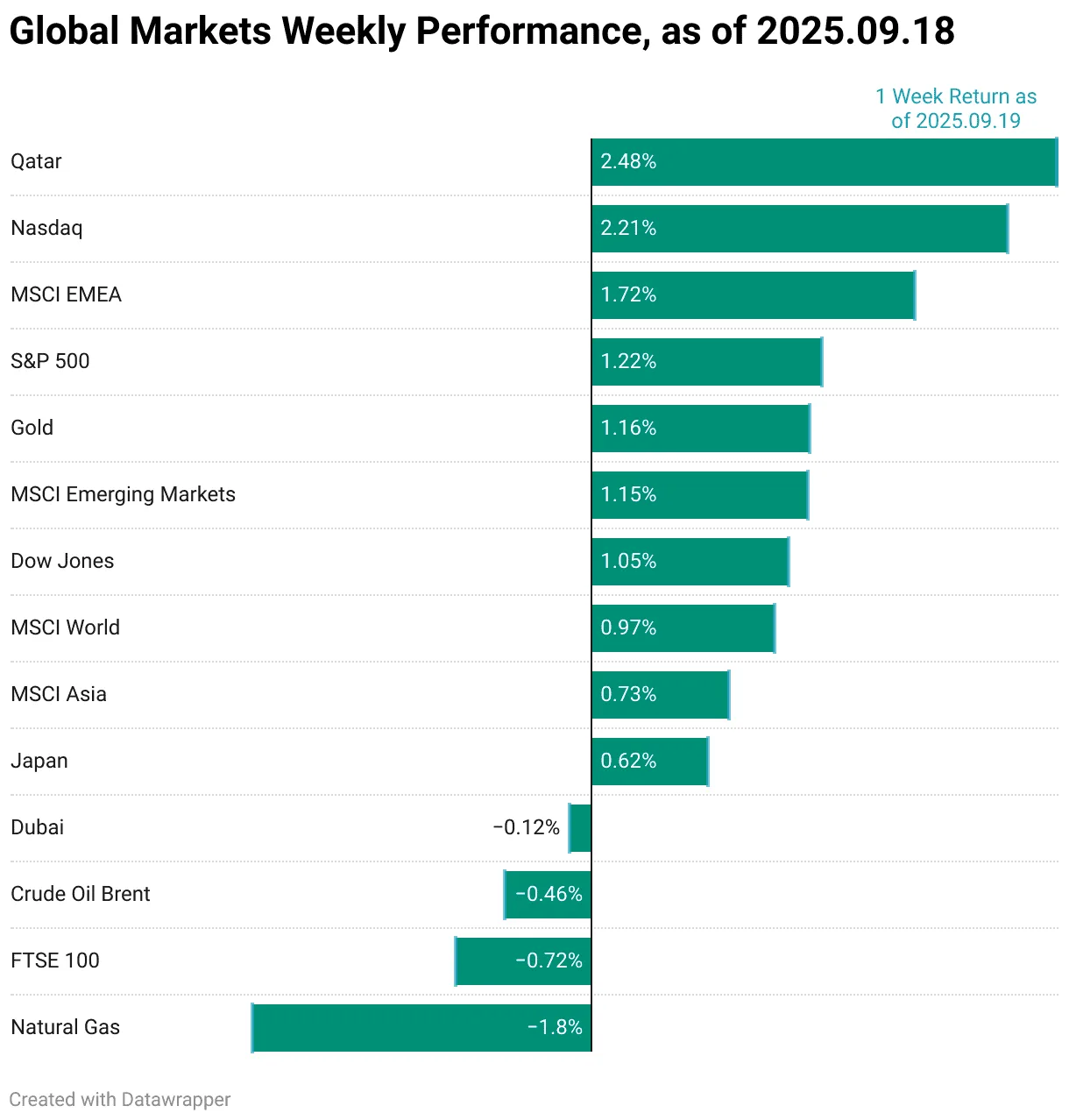
Qatar outperformed peers, advancing 2.48%, boosted by strength in financials and resilient foreign inflows as the market benefited from global appetite for emerging market assets. Dubai, in contrast, slipped 0.12%, with real estate names lagging after a strong run earlier in the month. Across the wider Middle East, sentiment mirrored the MSCI EMEA Index, which added 1.72%, as investors rotated into equities on expectations of stabilizing global interest rates.
International markets provided a supportive backdrop. The Nasdaq climbed 2.21% while the S&P 500 and Dow Jones rose 1.22% and 1.05%, respectively, marking another week of risk appetite driven by optimism around U.S. earnings resilience. The MSCI World Index gained 0.97%, underpinned by a rebound in Asia (Japan +0.62%, MSCI Asia +0.73%) and continued demand for technology shares. Emerging markets also drew flows, with the MSCI EM benchmark rising 1.15%.
Commodities weighed on the region’s outlook. Brent crude declined 0.46% while natural gas slid 1.80%, raising concerns about near-term revenue trajectories for energy exporters. Still, gold rose 1.16%, reflecting ongoing demand for safe-haven assets and providing some portfolio balance for GCC investors exposed to commodity fluctuations. The FTSE 100 fell 0.72%, contrasting with broader gains, as the UK market digested weaker economic data.
Overall, Qatar’s gains stood out as investors sought defensive exposure within the region, while Dubai’s marginal loss underscored sector-specific challenges. Looking ahead, energy prices remain a key swing factor for regional performance, even as global equity strength offers near-term support.