
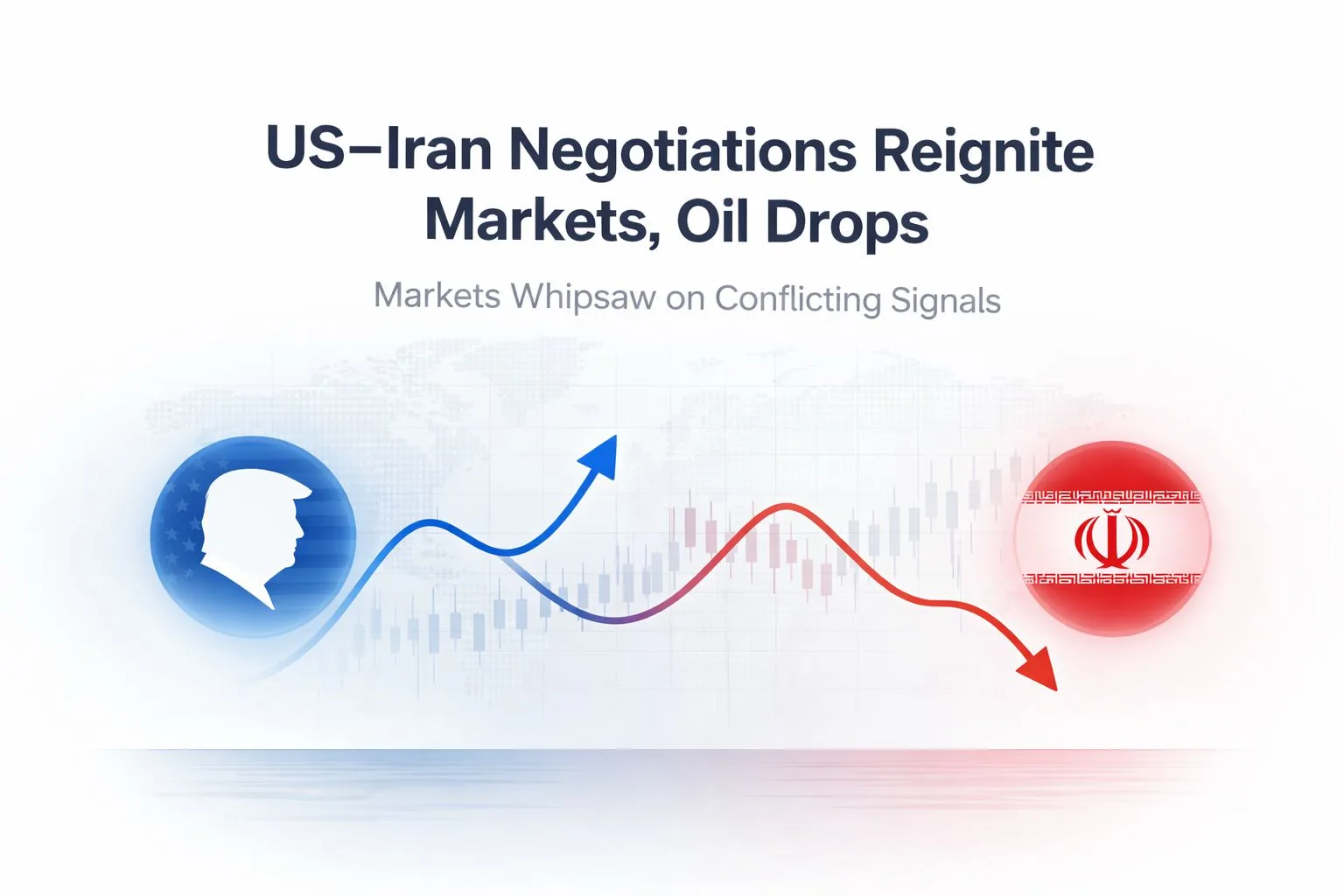
Markets surged after Donald J. Trump signaled a potential pause in military escalation with Iran, only for Tehran. Oil dropped more than 8% on the news before recovering slightly.
In a statement released on March 23, Trump said the United States and Iran had engaged in “very good and productive conversations” and indicated that planned military strikes on Iranian infrastructure would be postponed for five days. The tone suggested a possible de-escalation path, offering markets a rare moment of relief after weeks of rising geopolitical tension.
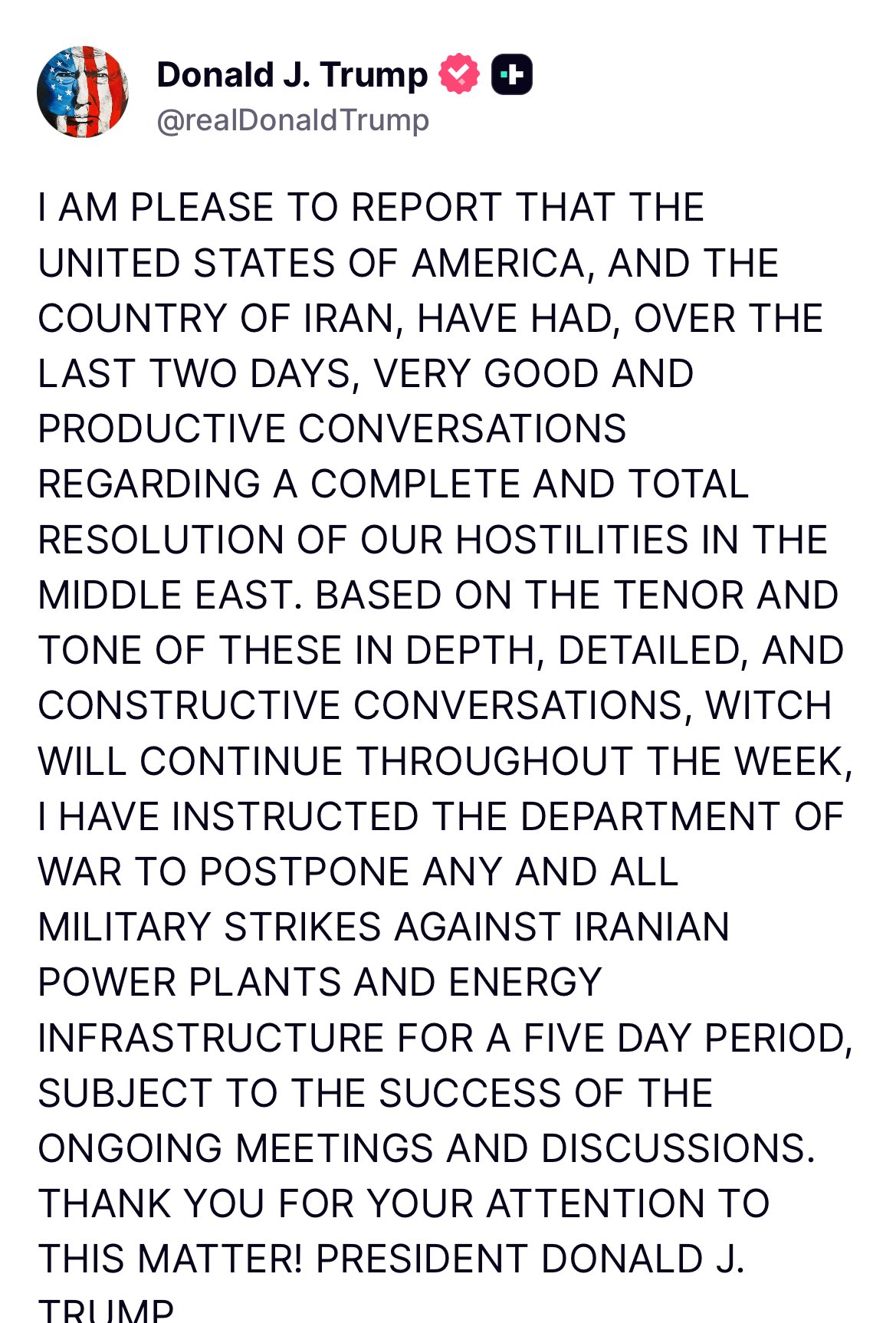
The reaction was immediate. S&P 500 futures surged more than 2%, reflecting a rapid shift into risk assets as investors priced in reduced escalation risk.
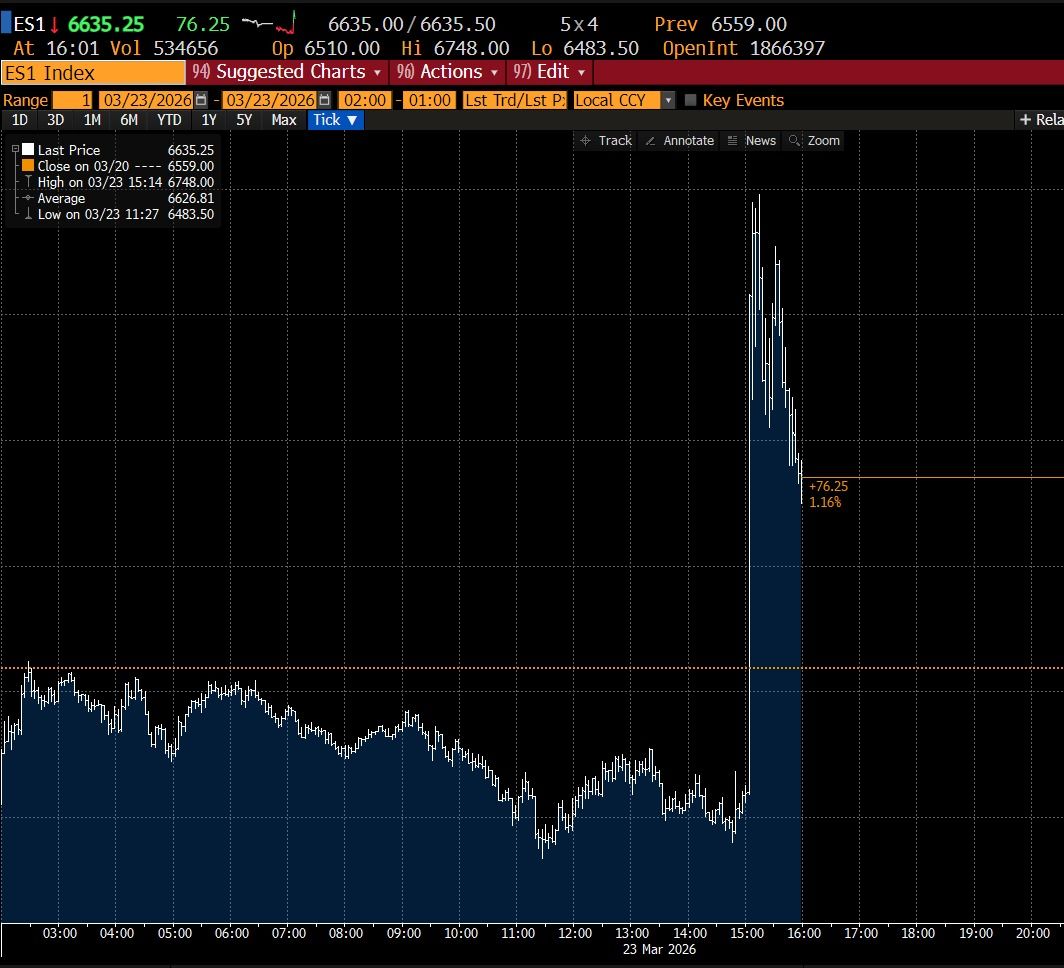
That response quickly altered the market narrative.
WTI crude futures dropped sharply, falling nearly 8% intraday. The UAE markets (ADX, DFM) were closed at the time of the announcement and Saudi Arabia is closed for EID. Oil continues to underpin Saudi markets through energy-linked names, while in the UAE, higher prices are offset by disruptions to logistics and export flows.
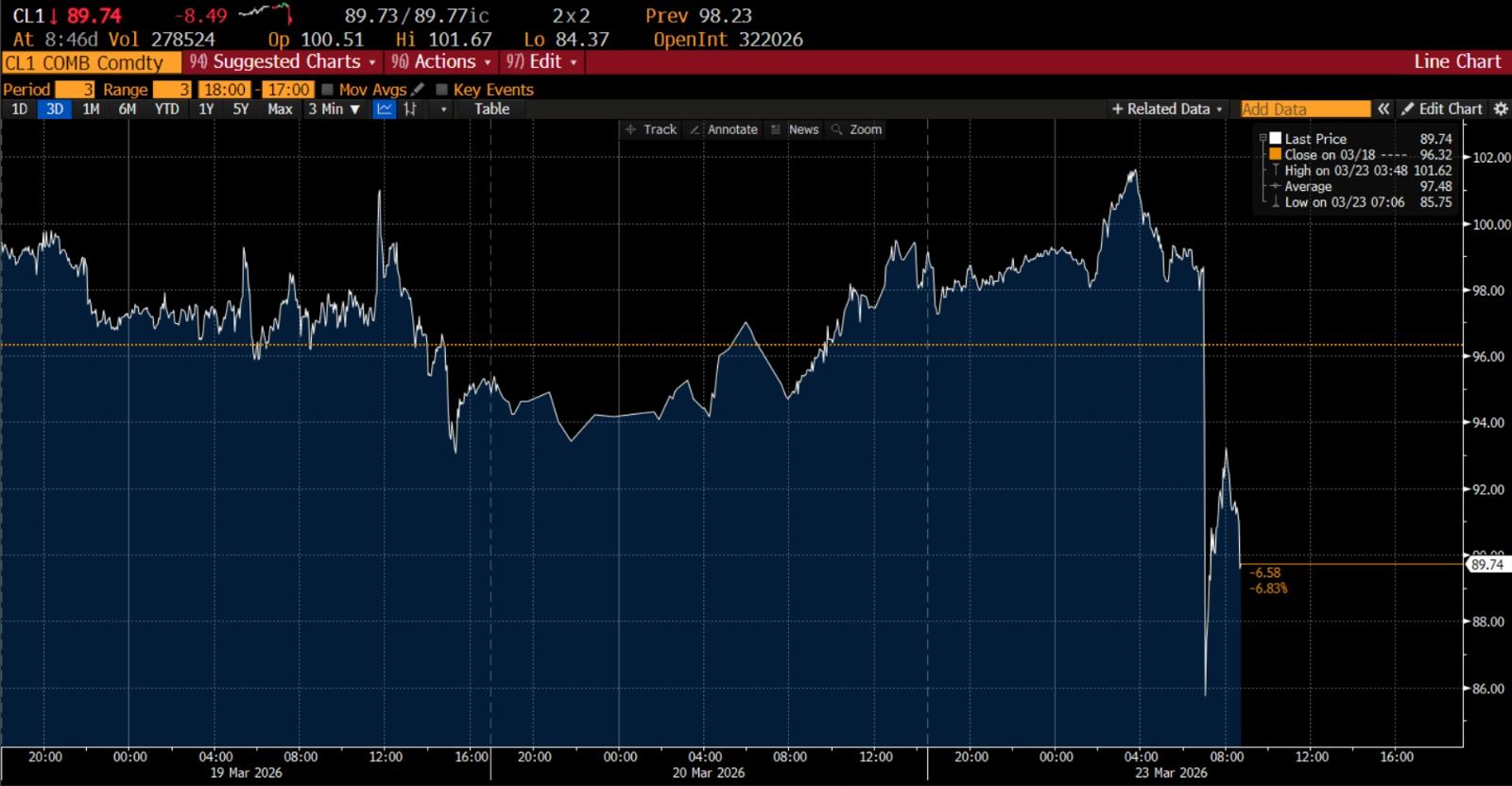
The episode underscores a broader shift in market behavior during this conflict. Reactions to geopolitical headlines remain sharp and are determining markets narrative globally from the US, to Europe, Asia and the GCC.
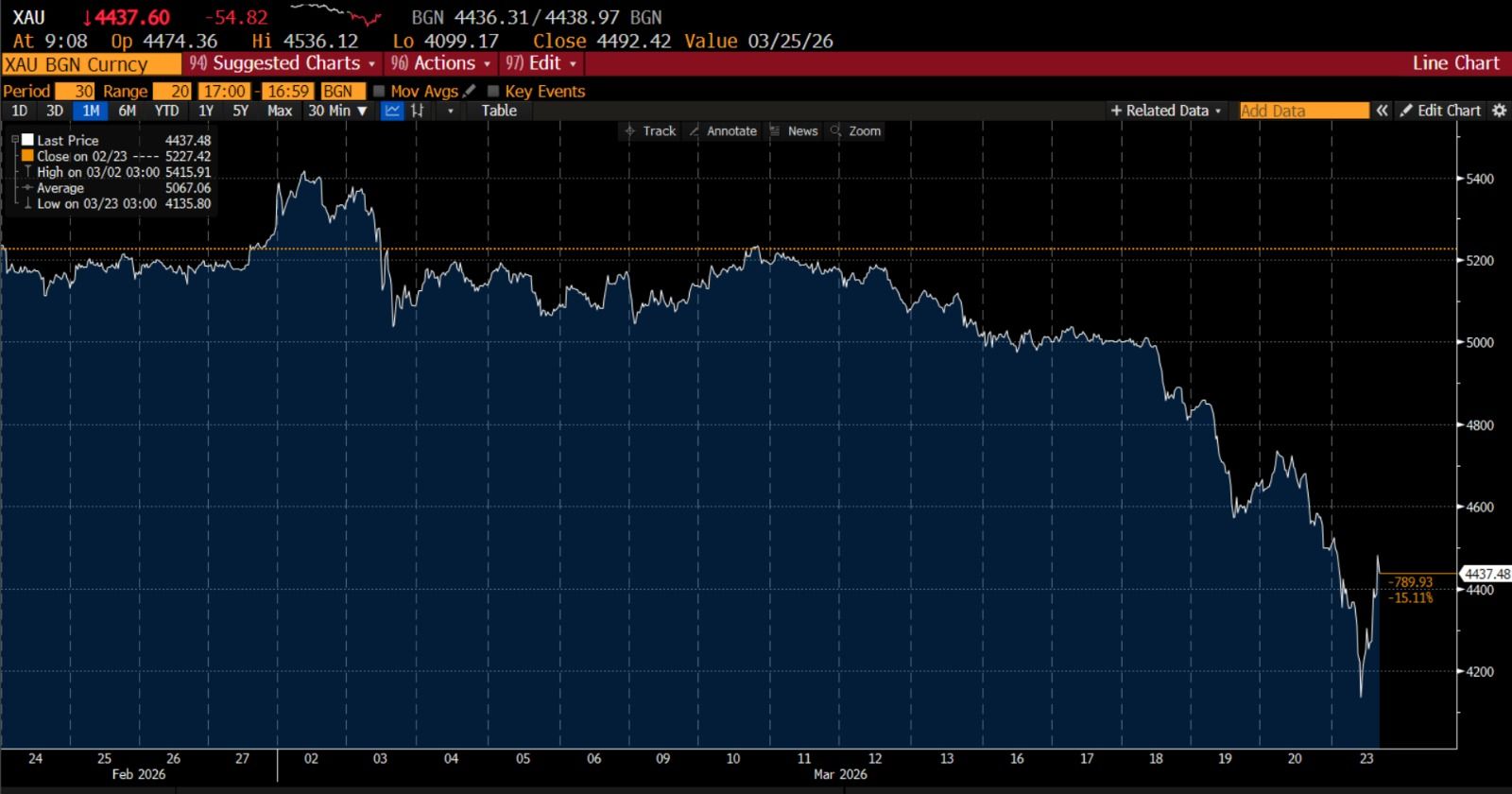
Gold rebounded shortly from its recent slump from $4150 an ounce to $4400 but still well below previous highs. Gold has not been reacting to geopolitical events as markets anticipated. It has been more sensitive to the re-inflation story stemming from the conflict.
Markets continue to witness strong volatility driven by unpredictable headlines. The next checkpoint for this story will be in 5 days, the new deadline announced by president Trump. But that does not mean no surprises and market swings in between.