

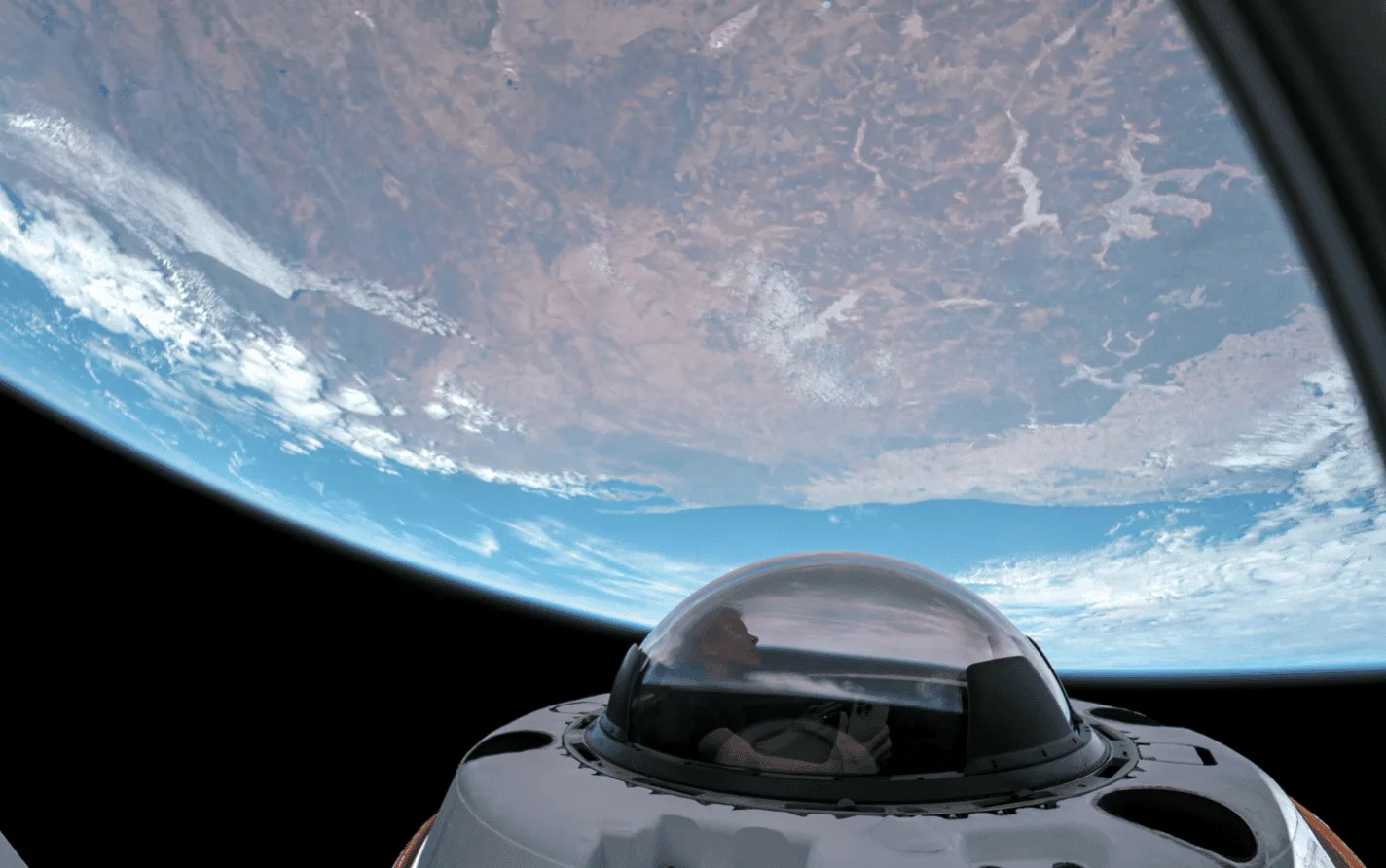
The S-1 that Space Exploration Technologies Corp. filed for its proposed "SPCX" listing on Nasdaq and Nasdaq Texas is, on paper, a launch and connectivity prospectus. It is also, in substance, one of the largest AI infrastructure documents ever put in front of public investors. The xAI acquisition closed on February 2, 2026, and the retrospectively recast financials now fold Grok, X, and a gigawatt-scale compute footprint into the same entity that flies Falcon 9 and is building Starship.
The mission, in their own words
The prospectus opens with this:
"Our mission is to build the systems and technologies necessary to make life multiplanetary, to understand the true nature of the universe, and to extend the light of consciousness to the stars. To do this, we have formed the most ambitious, vertically integrated innovation engine on (and off) Earth with unmatched capabilities to rapidly manufacture and launch space-based communications that connect the world, to harness the Sun to power a truth-seeking artificial intelligence that advances scientific discovery, and ultimately to build a base on the Moon and cities on other planets."
It is the only place in the entire S-1 where the Connectivity, Space, and AI segments are explicitly framed as serving a single objective. Everywhere else in the document they are reported as separate business lines with their own P&Ls.
Where the money actually comes from
For 2025, SpaceX generated $18,674 million in consolidated revenue against a loss from operations of $(2,589) million. The segment breakdown:
Connectivity, $11,387 million (61% of revenue)
- The cash engine of the business, primarily Starlink
- $4,423 million in income from operations, $7,168 million in Segment Adjusted EBITDA
- 49.8% revenue growth year over year, 120.4% operating income growth
- Approximately 10.3 million Starlink subscribers across 164 countries as of Q1 2026
- Roughly 7.4 million monthly unique devices on satellite-to-mobile across 30 countries
Space, $4,086 million (22% of revenue)
- Falcon 9, Falcon Heavy, Dragon launches for commercial and government customers
- Segment loss from operations of $(657) million, Segment Adjusted EBITDA of $653 million
- Funded $3,004 million of Starship R&D in 2025 alone
- Internal Starlink launches do not generate inter-segment revenue, so reported Space revenue understates actual launch volume
- Over 80% of global mass to orbit in 2025
AI, $3,201 million (17% of revenue)
- The newest and most cash-hungry segment
- Segment loss from operations of $(6,355) million, Segment Adjusted EBITDA of $(1,237) million
- AI capex of $12,727 million in 2025, more than Space and Connectivity combined
- Q1 2026 AI capex alone: $7,723 million
Within AI, the revenue breaks into advertising ($1,844 million, mostly X) and AI Solutions & Infrastructure ($1,357 million, which is Grok and X subscriptions, data licensing, API access).
The compute story
SpaceX is now running one of the largest AI training operations on Earth, with plans to move that operation into orbit.
- COLOSSUS and COLOSSUS II collectively provide approximately 1.0 gigawatt of compute capacity
- The first COLOSSUS cluster came online in 122 days, repurposing an existing factory shell
- The first COLOSSUS II cluster came online in 91 days, against an industry benchmark of roughly two years for a 100 MW greenfield data center
- COLOSSUS II is currently training Grok 5
- Next expansion phase: at least 220,000 additional GB300 processors and over 400 additional megawatts
On the customer side, in May 2026 SpaceX signed Cloud Services Agreements with Anthropic for $1.25 billion per month through May 2029, terminable by either party on 90 days' notice. Annualized, that single contract is roughly $15 billion per year against an AI segment that did $3.2 billion in all of 2025.
The orbital AI pitch
The long-term goal is to launch 100 gigawatts of compute capacity to orbit per year, beginning as early as 2028. The argument rests on Starship V3 being designed to deliver 100 metric tons to orbit reusably, AI compute satellites being framed as an evolution of the existing Starlink bus rather than a clean-sheet spacecraft, and solar power in sun-synchronous orbit removing the terrestrial energy bottleneck that the S-1 identifies as the binding constraint on AI growth. The S-1 also notes that full Starship reusability is not required to deploy V3 broadband satellites, V2 Mobile satellites, or initial AI compute satellites, so the orbital AI thesis has a partial path forward even if Starship slips against its current timeline.
Is Tesla a comparable? And should they just merge?
Once SpaceX is understood as an AI infrastructure business with launch and connectivity attached, the natural comparable stops being Boeing or Lockheed, and starts being Tesla.
The overlaps are no longer cosmetic. Terafab, the chip joint venture, is owned by SpaceX, Tesla, and Intel, with Tesla and SpaceX co-architecting the silicon both companies will run their AI workloads on. Both companies are building toward the same compute thesis from different angles, with Tesla pursuing it through Dojo and its in-house chip program for FSD and Optimus, and SpaceX pursuing it through COLOSSUS and orbital compute. Optimus, if it works, needs the kind of model infrastructure xAI is building, and Grok and FSD already share conceptual DNA on real-world reasoning under physical constraints. Shared leadership and growing technical interchange across the two companies create dynamics that an arms-length relationship would not naturally produce.
There is a real case for combining them. One publicly traded entity would mean one balance sheet to fund Terafab and Starship and Dojo simultaneously, a single stock for employees across the constellation, and an end to the persistent governance discount that comes from related-party transactions between two Musk-controlled companies. The end-state vision is internally coherent in a way that current corporate structures obscure: Optimus deployed on Starlink connectivity, trained on Grok, manufactured on Tesla lines, with chips from a Terafab fab. Investors would not need to model the synergies because they would own them directly.
The arguments against are equally real. SpaceX has significant US government and defense exposure that complicates a merger with a consumer EV company that does substantial business in China. Tesla shareholders would be diluted into a much larger, much more capital-intensive entity that is currently burning billions on AI and Starship simultaneously. The regulatory review across antitrust, CFIUS, and ITAR considerations would be a multi-year process with uncertain outcomes. And keeping SPCX as a standalone listing gives Musk a separately traded equity to use as currency for the next round of acquisitions, with the $60 billion implied equity value Cursor option being the active example, all without diluting Tesla holders.
The more probable near-term path is not a merger but a tighter web of cross-holdings, joint ventures, and shared infrastructure that gradually makes the two companies inseparable in practice even while they remain separate on paper. Terafab is the template, and there will likely be more of it.
The Elon premium
The governance structure is a meaningful input to any valuation of SPCX. Class B shares carry ten votes per share and elect 51% of directors as long as any Class B remains outstanding. Musk's January 2026 performance grant vests against market cap milestones up to $7.5 trillion, a number that only makes sense if you are underwriting a multi-trillion-dollar outcome. The S-1 names key person risk explicitly.
The premium cuts both ways. Bringing everything under one roof delivers unified capital allocation across the highest-conviction technology bets of the decade, a CEO whose track record on hard physical engineering is unmatched in the modern era, and a talent magnet that compounds over time. It also delivers concentration risk that no diversified investor would otherwise accept, combined with a governance structure that gives public shareholders limited recourse on any of it.
The market has historically paid the premium for Tesla, and the question SPCX puts to investors is whether they want to pay it twice, on a more capital-intensive business, with the AI segment still deeply unprofitable, and with a path to orbital compute that depends on a launch vehicle that has not yet reached its design specifications. The S-1 lays out the bull case clearly enough.
For ADX-based investors who want exposure to the AI infrastructure thesis without taking single-name risk on SPCX, the cross-listed AGIX ETF covers the broader stack of chips, hyperscalers, and equipment in AED with local settlement. It is not a SpaceX proxy, but it is the most accessible local expression of the same underlying trend.
Read our findings on the 10 surprising things about the SpaceX IPO here.