
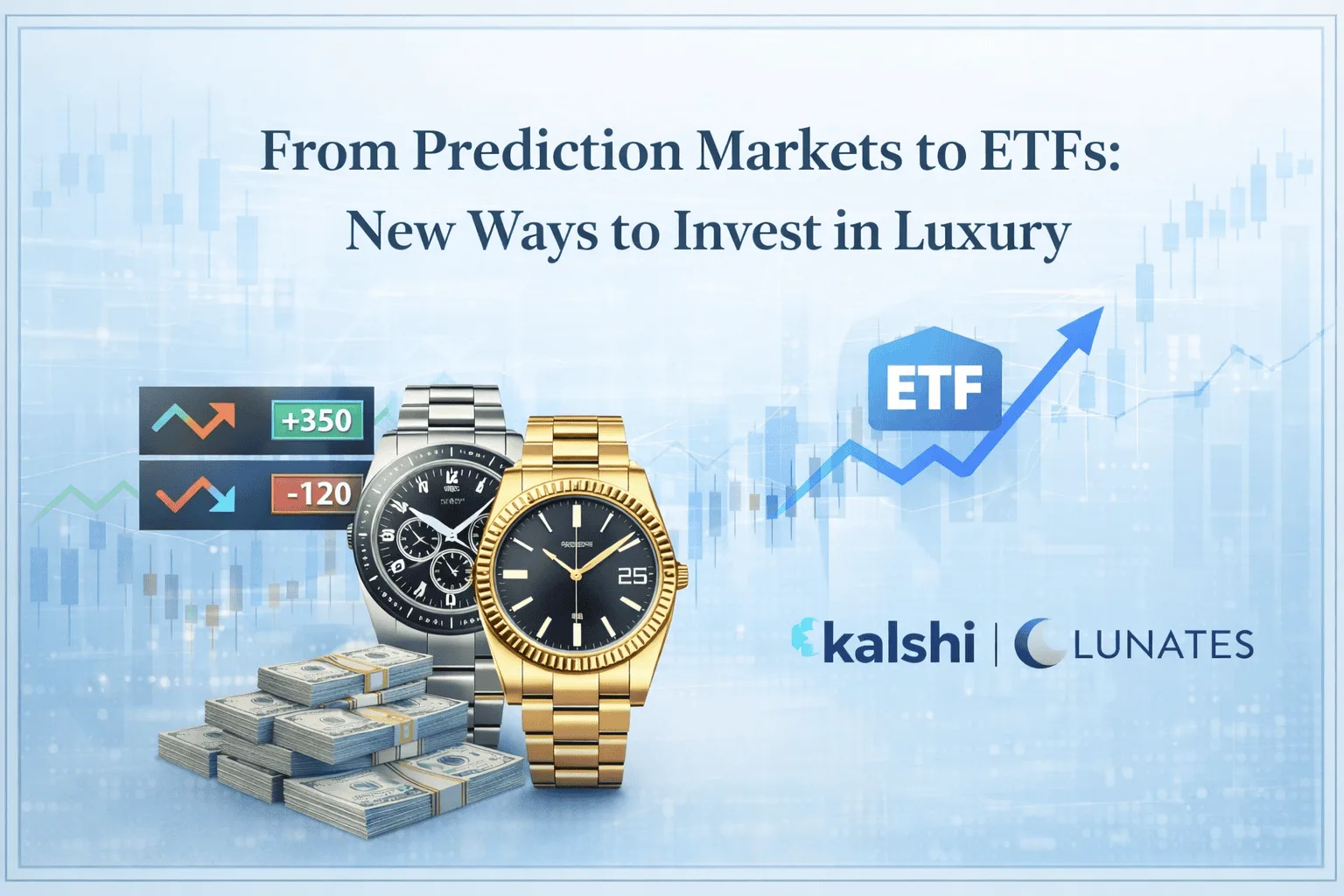
Luxury watches have long occupied a unique space between passion, purchase, and financial asset. Now, prediction markets are beginning to bring financial trading tools into the world of horology.
U.S. prediction exchange Kalshi is working with luxury watch marketplace Bezel to launch event contracts tied to high-end watches. These contracts would allow traders to speculate on outcomes such as whether the price of a particular Rolex model will exceed a certain level or whether brands like Patek Philippe will discontinue a specific reference.
The move reflects a broader trend: luxury watches increasingly function like an alternative asset class. Betting on luxury is now easier with ETFs. Investors can invest in some of these companies right here at home on ADX
Watches as Financial Assets
Over the past decade, rare timepieces from brands including Rolex, Patek Philippe, and Audemars Piguet have become highly sought-after collectibles with significant resale value. Limited production, global wealth growth, and the rise of online secondary markets have all contributed to rising prices.
Platforms like Bezel have further professionalized the market by building pricing models based on real-time sales data, allowing buyers and sellers to benchmark watch values more accurately. That pricing data will now feed into Kalshi’s prediction contracts, creating a framework for trading on watch-related outcomes.
For enthusiasts, the concept also lowers the barrier to entry. Instead of spending tens of thousands of dollars on a single watch, participants could take small positions on price movements or product launches.
Hedging a Watch Collection
Prediction contracts could also give collectors a new way to hedge the value of their watch portfolios.
For example, a collector holding a rare Rolex Daytona whose market value has surged could buy contracts predicting the watch will fall below a certain price threshold. If prices decline, gains on the contract could offset losses in the watch’s resale value.
This mirrors traditional financial markets, where investors use derivatives to manage risk on stocks or commodities. The concept signals a growing financialization of collectible markets, where assets once driven purely by passion are increasingly influenced by trading strategies.
Regulatory and Market Challenges
Prediction markets have expanded rapidly but face regulatory scrutiny. Kalshi, founded in 2018 and supervised by the Commodity Futures Trading Commission, allows trading on the outcomes of real-world events such as economic data releases and elections.
The sector has attracted strong interest from institutional investors and recently struck a data partnership with Tradeweb Markets.
However, critics argue that some contracts resemble gambling rather than financial derivatives. Questions have also arisen around market manipulation and insider information, particularly during geopolitical events where prediction markets have seen heavy trading activity.
ETF Exposure to the Luxury Economy
For investors who want exposure to luxury goods without speculating on collectibles, exchange-traded funds offer another option.
The Lunate Boreas Luxury ETF provides diversified exposure to global luxury companies across watches, jewelry, fashion, and premium consumer goods.
Top 10 Fund Holdings
Such ETFs allow investors to participate in the broader growth of the luxury sector while avoiding the liquidity risks and price volatility often associated with collectible assets.
As financial markets increasingly intersect with passion-driven goods, the world of luxury watches is evolving rapidly. What was once purely a collector’s hobby is now becoming part of a wider financial ecosystem, one where enthusiasts can not only buy timepieces but trade the future value of time itself.