
Bitcoin has surged to a two-month high, reclaiming investor attention as institutional capital flows decisively back into spot exchange-traded funds (ETFs). Following a period of consolidation after its October 2025 peak, the world’s largest digital asset is once again being propelled by sustained ETF inflows, an increasingly critical driver of price discovery. This renewed momentum comes amid cooling U.S. inflation, easing rate expectations, and rising geopolitical uncertainty, a backdrop that has simultaneously lifted gold, silver, and digital assets.
For investors across the Gulf Cooperation Council, where ETF adoption and digital-asset frameworks are maturing rapidly, Bitcoin’s ETF-led rally highlights a growing shift toward regulated, exchange-listed exposure as the preferred way to participate in the next phase of crypto market evolution.
ETF Inflows Put Institutions Back in Control of Bitcoin
Bitcoin climbed above USD 97,000 on January 16, 2026, marking its highest level in two months after retreating from late-2025 highs. The rebound has been powered by a decisive return of ETF inflows, underscoring the renewed presence of institutional investors in the market.
Spot Bitcoin ETFs recorded net inflows of approximately USD 753.7 million in a single session, the strongest daily total since October. A significant share of this demand was captured by BlackRock’s IBIT ETF, which alone attracted more than USD 150 million in one day. Market analysts increasingly view IBIT’s flows as a bellwether for institutional sentiment, reflecting how professional capital now accesses Bitcoin primarily through regulated vehicles.
According to Sam North, Market Analyst at eToro, the surge reflects a clear institutional re-entry into Bitcoin, further amplified by around USD 718 million in short liquidations. As bearish positions were forced to close, upward momentum accelerated, demonstrating how ETF-led spot demand and leveraged derivatives positioning can combine to drive rapid price moves.
Bitcoin’s Path Back to Potential USD 100,000
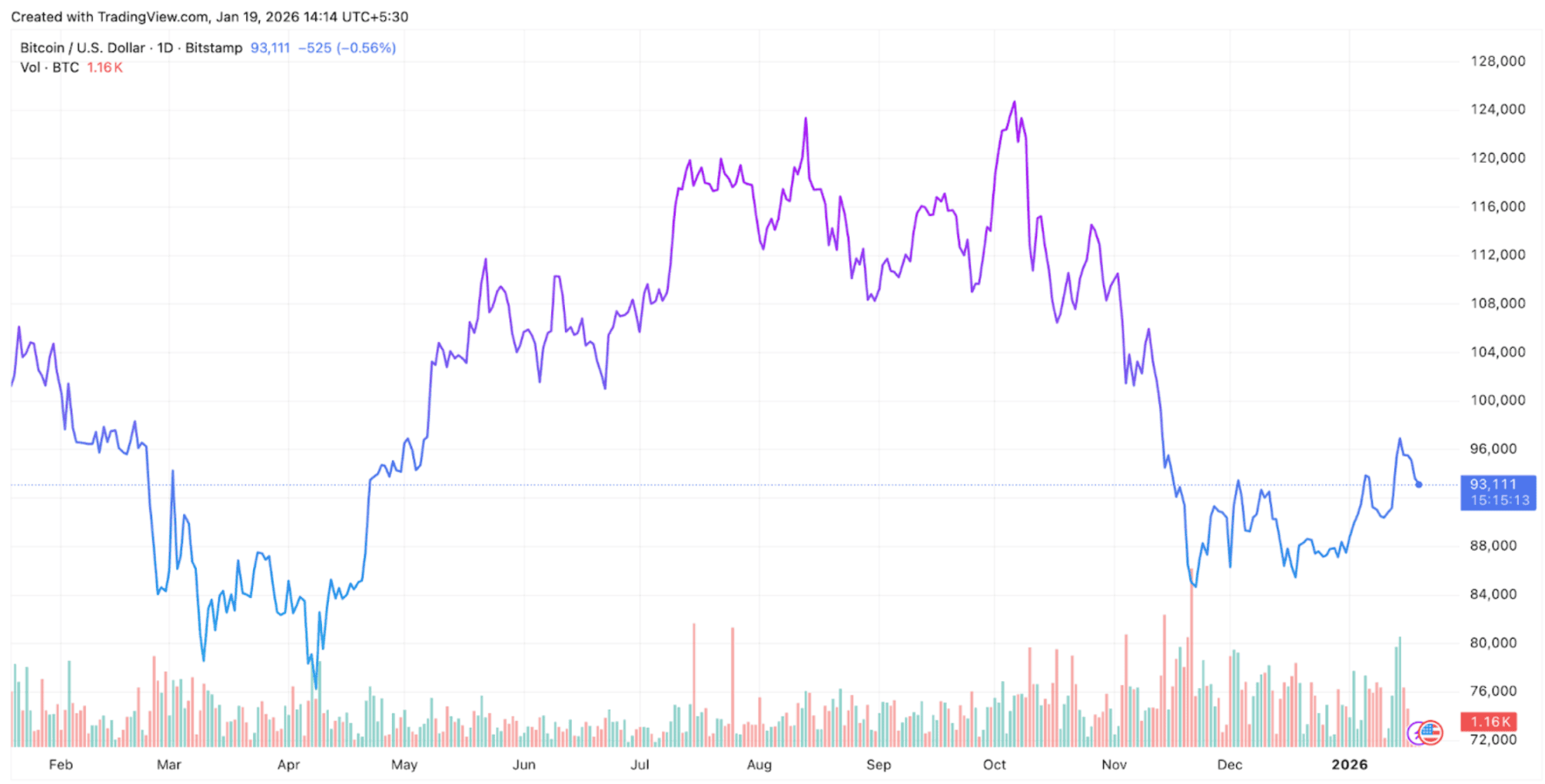
Bitcoin’s recent price action illustrates just how sensitive the asset has become to ETF flows. A failed breakout above USD 95,000 earlier in the month coincided with weaker inflows, triggering a pullback. As ETF demand returned, momentum quickly reversed.
From a technical standpoint, Bitcoin has now reclaimed the 61.8% Fibonacci retracement of its decline from the USD 126,200 high to the USD 74,400 low. The relative strength index (RSI) remains above 50, indicating positive momentum. Together, these signals bring the psychologically important USD 100,000 level back into focus.
That said, sustainability will depend on whether inflows remain consistent. In recent months, rallies have repeatedly stalled as long-term holders took profits, keeping Bitcoin range-bound between USD 85,000 and USD 95,000. Continued ETF demand could shift that dynamic; fading flows could lead to volatility returning.
Macro Tailwinds Boost Alternatives
Bitcoin’s rally is part of a broader move across alternative assets. Cooler U.S. core CPI data at 2.6% year-over-year has reinforced expectations of monetary easing, with markets pricing in two 25-basis-point rate cuts beginning as early as June. Historically, declining real yields have supported non-yielding assets, and that pattern is once again evident.
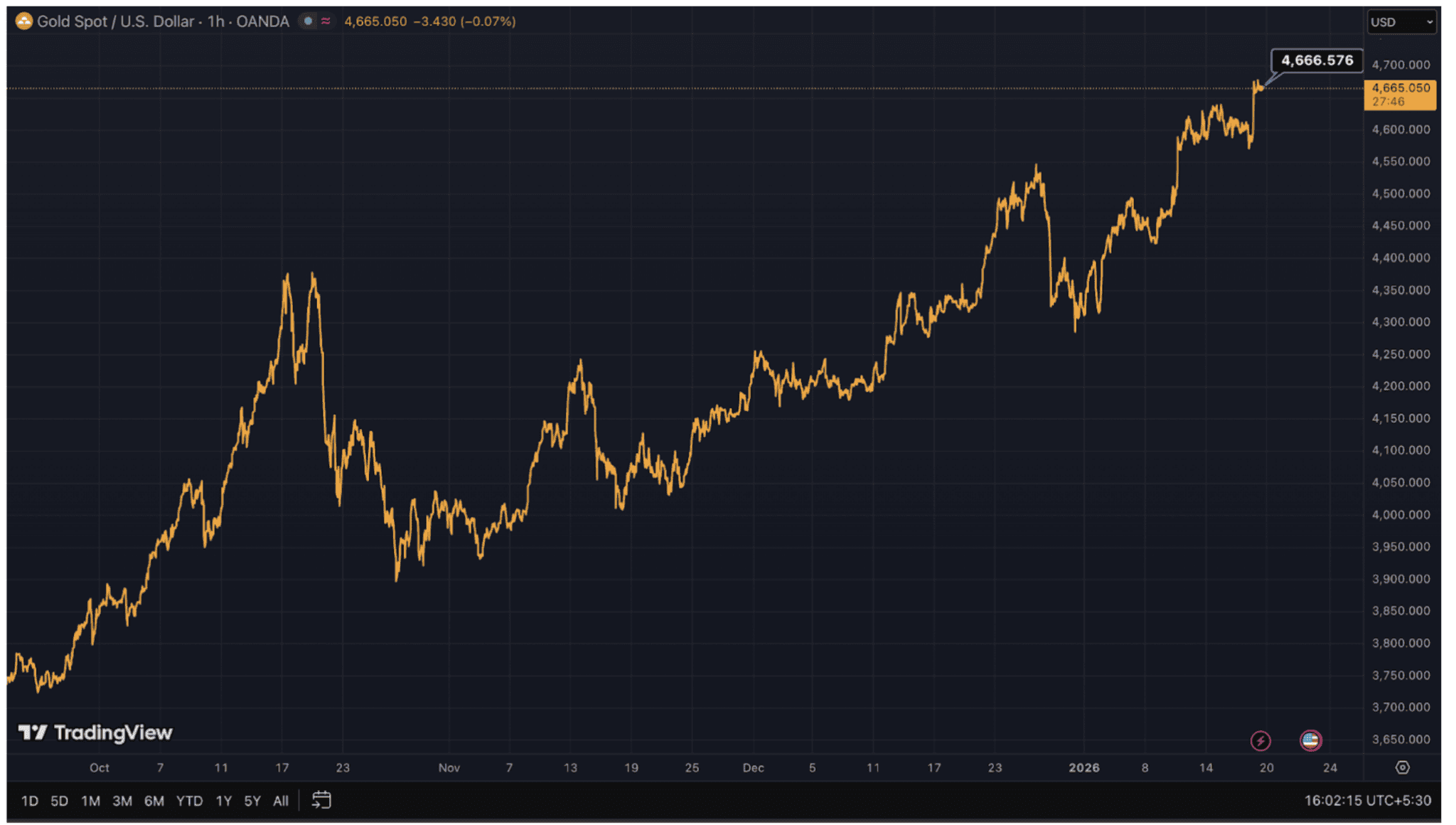
Gold has climbed to around USD 4,632 per ounce, while silver has surged to USD 90.11, up 5% on the day and more than 27% year-to-date. Bitcoin has benefited from the same macro dynamics, strengthening its role as a portfolio diversifier alongside precious metals.
Gold Spot Rate
Geopolitical risks have added another layer of support. Rising U.S.–Iran tensions, concerns over central bank independence, and uncertainty ahead of U.S. Supreme Court rulings on trade policy have encouraged investors to rotate into assets perceived as resilient during periods of instability.
GCC’s Strategic Positioning in the Alternative-Asset Cycle
Institutional Adoption and Hard-Asset Alignment
The GCC is steadily integrating digital assets through regulated, institutional channels. Abu Dhabi–based Mubadala Investment Company has disclosed a USD 436.9 million stake in BlackRock’s IBIT, signaling growing sovereign-level confidence in Bitcoin ETFs.
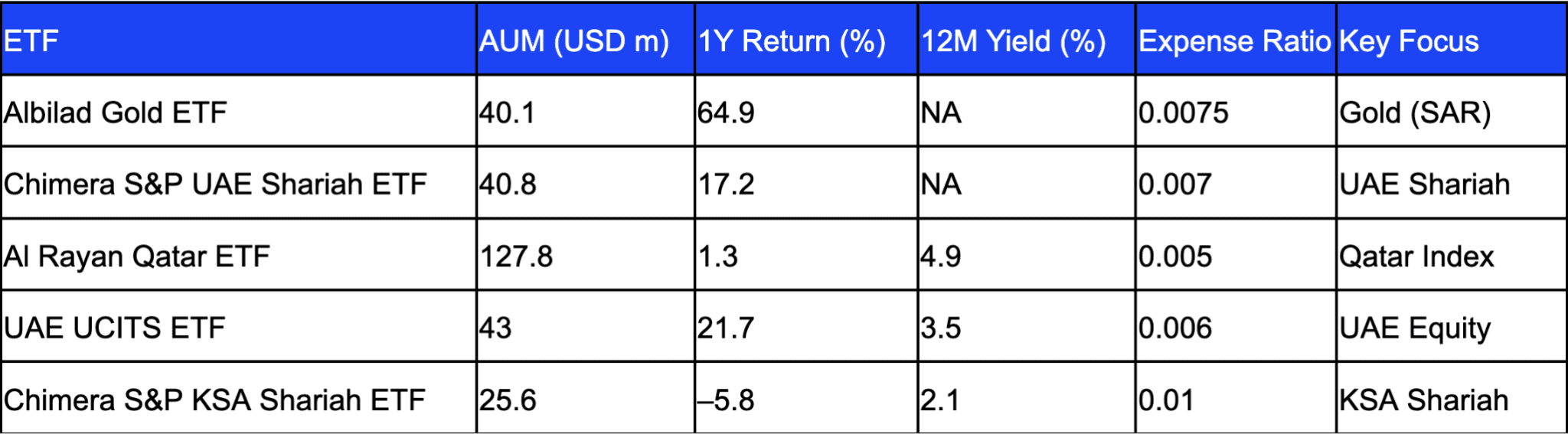
This approach aligns with the region’s long-standing reliance on hard-asset hedges, as reflected in gold’s strong performance. The Albilad Gold ETF (ALBIGOLD AB) delivered a 64.87% one-year return with approximately USD 40 million in assets under management, reinforcing gold’s role alongside Bitcoin in GCC portfolios. Supported by energy revenues and diversification reforms, regional markets have remained relatively resilient amid rising global volatility.
Rapid Expansion of the GCC ETF Ecosystem
The region’s ETF market has expanded sharply, with six new launches in 2025 lifting total GCC ETF assets to USD 11.5 billion across 36 products. Average expense ratios remain competitive at 0.68%, while daily trading volumes average around 18,292 units. Investor interest has been particularly strong in income-oriented and Shariah-compliant strategies.
The Chimera S&P UAE Shariah ETF (UAEA UH) posted a 17.23% one-year return with USD 40.8 million in AUM, while the Al Rayan Qatar ETF (QATR QD) offers a 4.88% yield by targeting dividend-rich sectors. Together, these trends position the GCC as an emerging hub for thematic ETF investing, spanning income, Shariah compliance, and next-generation themes such as technology and AI.
How Bitcoin’s Rally Translates to GCC ETFs
The revival of Bitcoin ETF inflows highlights a broader resurgence in institutional risk appetite, one that is increasingly spilling over into regions such as the GCC. Strength in commodities like gold and silver supports demand for GCC-listed gold and equity ETFs, offering diversification relative to crypto’s inherent volatility.
For investors reassessing exposure to U.S. assets amid policy and regulatory uncertainty, GCC ETFs,s particularly Shariah-compliant and local-currency products, provide an attractive alternative. These funds offer access to regional growth and income themes while remaining aligned with global trends in alternative assets.
Key GCC ETFs for Portfolio Diversification
Several GCC-listed ETFs stand out amid the current environment for their combination of liquidity, cost efficiency, and thematic relevance:
What Investors Should Watch
The durability of Bitcoin’s latest advance will depend primarily on the consistency of ETF inflows, which have emerged as the key driver of the market. Investors will closely monitor upcoming inflation readings, central bank communication, and shifts in geopolitical risk, all of which could impact risk appetite. More broadly, alternative assets are likely to remain sensitive to the interplay between easing monetary conditions and intermittent bouts of market volatility.
Bottom Line
Bitcoin’s two-month high confirms that ETF-driven institutional flows are now shaping crypto market cycles.
As Bitcoin, gold, and silver rise together, investors are increasingly favouring diversified exposure to alternative assets. For GCC investors, combining global Bitcoin ETFs with GCC-listed equity and gold ETFs offers a regulated, balanced way to capture upside while managing volatility and maintaining portfolio diversification.