



Bitcoin’s latest decline has coincided with a fresh custody shock, though the two events should not be treated as a single trade. The cryptocurrency changed hands near $62,546 on August 3, down from about $65,000 at the end of July. Separately, attackers exploited weak seed generation in certain Coldcard hardware wallets, draining 1,367 bitcoin worth almost $89 million from 4,585 addresses across three waves. The breach was measured in millions, rather than the reported $85 billion, and affected private keys generated by vulnerable wallet firmware rather than the Bitcoin protocol itself.
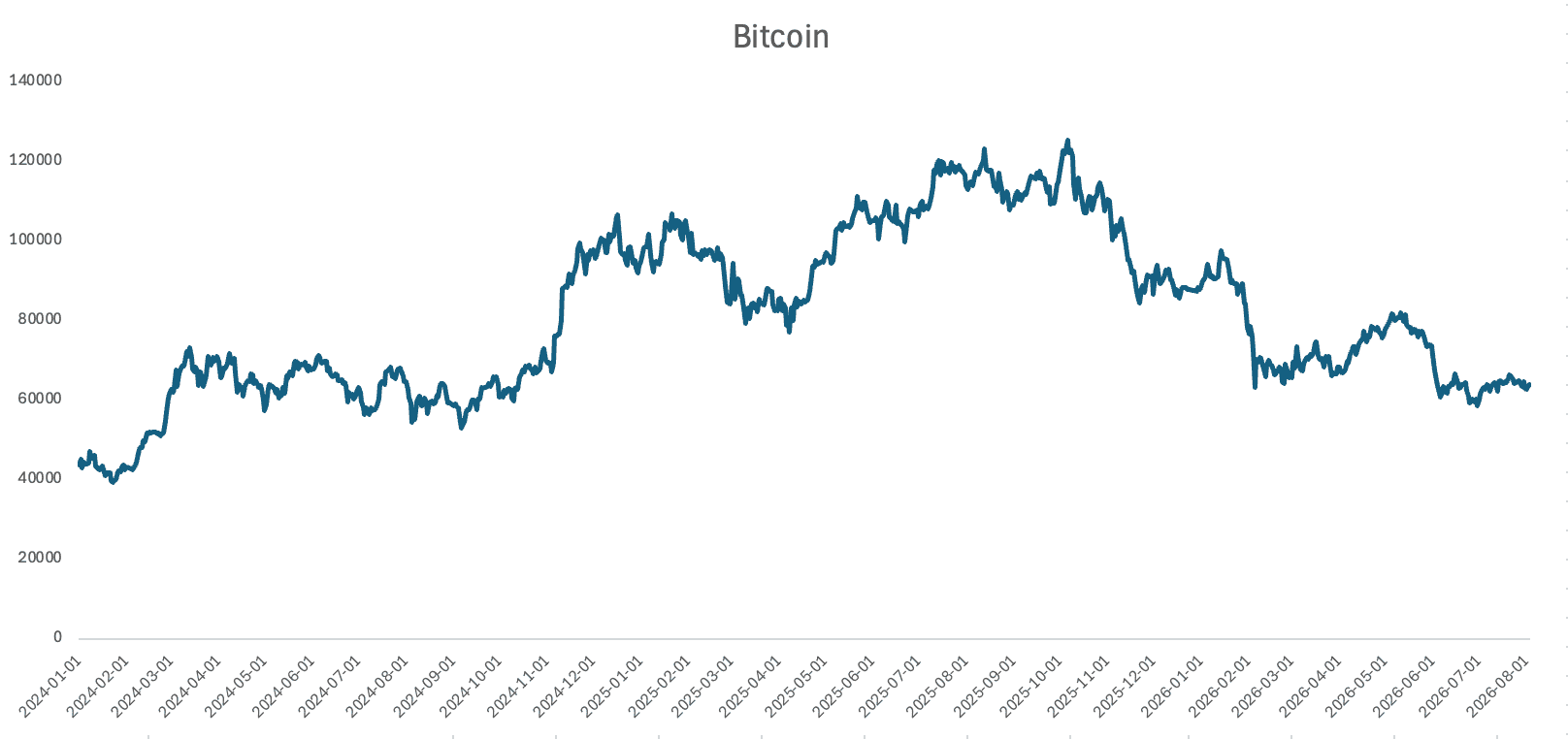
Bitcoin Well Below its 2026 highs
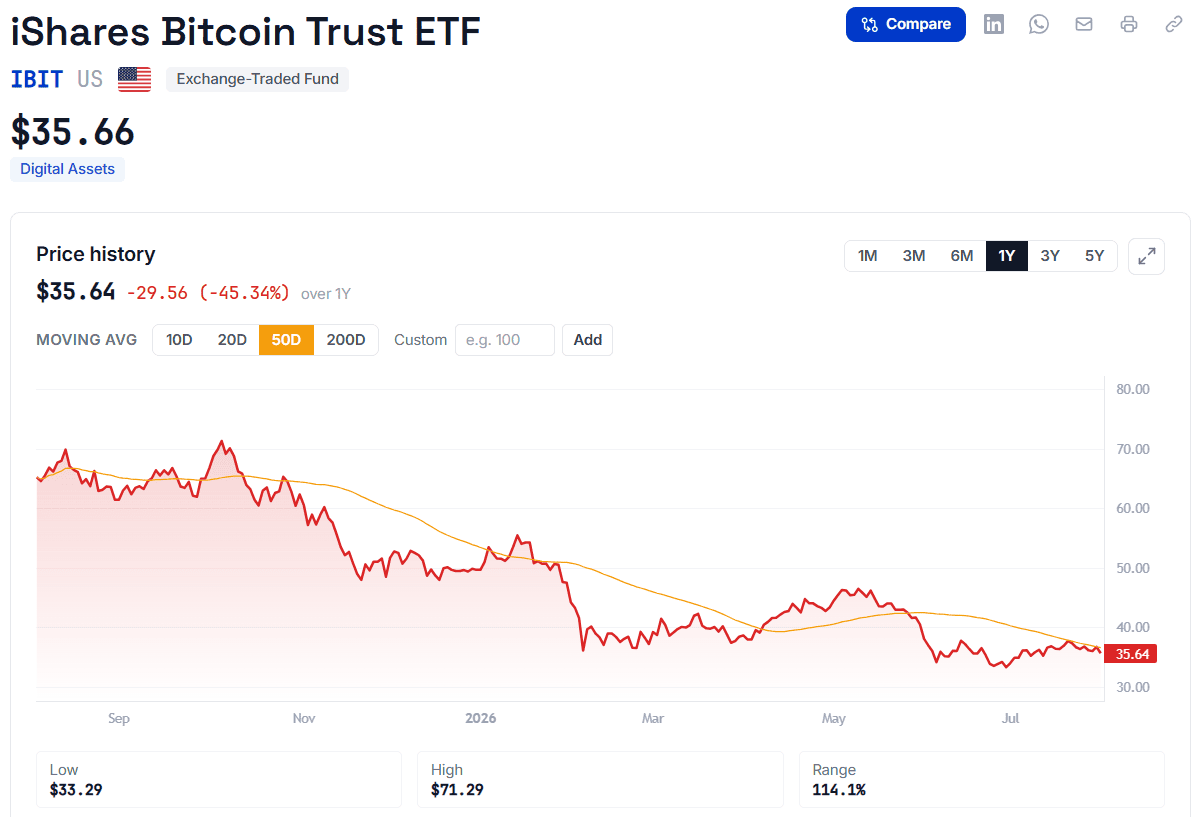
Bitcoin began 2026 near $87,440 and had fallen about 28% by August 3, extending the reversal that followed its October 2025 peak. BlackRock’s iShares Bitcoin Trust ETF, IBIT, recorded a year-to-date net asset value loss of 32.97% through June 30 before narrowing that decline to 25.94% by July 30 as bitcoin recovered during July. The subsequent slide towards $62,500 shows how quickly part of that rebound can disappear when ETF outflows, tighter financial conditions or leveraged liquidations weaken demand. IBIT still held $46.52 billion in net assets as of July 31, leaving it central to the institutional bitcoin market despite the drawdown.
Hacking remains a risk for Bitcoin
Hacks remain a material crypto risk, although the loss trend has improved from last year. TRM Labs counted $972 million stolen across 207 incidents during the first half of 2026, less than half the roughly $2.3 billion lost in the first half of 2025, even as the number of attacks more than doubled from 83. The Coldcard episode shows why the distinction between protocol risk and custody risk matters. Updating the affected firmware prevents the same flaw in newly generated seeds, but it does not repair an existing vulnerable seed. Investors using exchange-traded products avoid managing seed phrases themselves, while retaining exposure to custodian failure, operational errors and bitcoin’s price volatility.
The BlackRock Bitcoin ETFs for Traditional and Shariah Investors
Traditional and Shariah-conscious investors can access Bitcoin through two separate BlackRock products designed for different investor needs. IBIT (iShares Bitcoin Trust) is BlackRock's U.S.-domiciled spot Bitcoin trust listed on the Nasdaq. Launched in January 2024, it provides investors with direct exposure to the price of Bitcoin without the need to own, store, or secure the cryptocurrency themselves. The trust holds physical Bitcoin on behalf of investors, allowing investors to gain exposure through a traditional brokerage account just like any other listed security.
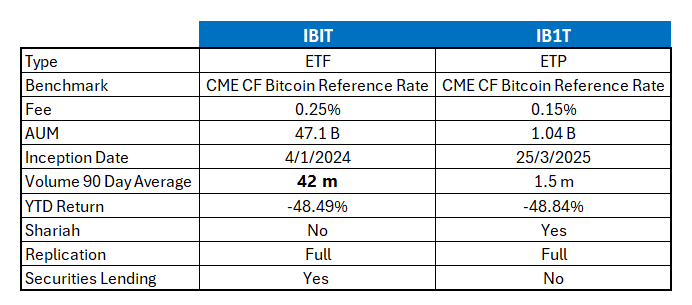
IBIT has become one of the largest and fastest-growing spot Bitcoin investment products globally, attracting tens of billions of dollars in assets from both institutional and retail investors thanks to its liquidity, accessibility, and the strength of the BlackRock iShares platform. It charges a competitive 0.25% annual sponsor fee and offers a simple, regulated, and transparent way to invest in Bitcoin. IBIT currently has close to 46.5 Billion in assets. It tracks the CME CF Bitcoin Reference Rate (New York Variant). The fund launched on January 5th 2024.
For Shariah-conscious investors, IB1T (iShares Bitcoin ETP) offers exposure to the same underlying asset through a European-listed exchange-traded product that has received Shariah certification. While both products aim to track the price of Bitcoin, the primary difference lies in their legal structure and regulatory framework.
IB1T was launched on March 18, 2025, with a 0.25% annual management fee, matching BlackRock's U.S.-listed IBIT. However, investors currently benefit from a 10 basis point fee waiver through the end of 2026, reducing the effective fee to 0.15%. The ETP tracks the CME CF Bitcoin Reference Rate, one of the industry's leading benchmarks for the spot price of Bitcoin. While significantly smaller than IBIT, IB1T had approximately $1.04 billion in assets under management as of the end of August 3rd, reflecting growing institutional demand for regulated Bitcoin investment products in Europe.
The ETP is listed across six major European markets—Switzerland (SIX Swiss Exchange), the United Kingdom (London Stock Exchange), Germany (Xetra), France (Euronext Paris), Italy (Borsa Italiana), and the Netherlands (Euronext Amsterdam)—providing broad access to investors across the region.
The Difference between ETF and ETP
An ETF (Exchange-Traded Fund) is a pooled investment fund that owns a portfolio of assets and is governed by fund regulations, whereas an ETP (Exchange-Traded Product) is a broader category of exchange-listed investment vehicles that includes ETFs, exchange-traded notes (ETNs), and exchange-traded commodities (ETCs).
In Europe, physically backed cryptocurrency products such as IB1T are generally structured as ETPs rather than UCITS ETFs because current UCITS regulations do not permit single-asset cryptocurrency ETFs. As a result, IB1T is legally structured as an ETP while providing investors with economically similar exposure to physically backed Bitcoin.
Together, IBIT and IB1T allow investors to access Bitcoin through regulated investment vehicles while selecting the structure that best aligns with their regulatory, geographic, and faith-based investment preferences.