



Artificial intelligence exposure in GCC markets is becoming more specialized. Investors no longer have to treat “technology” as a single trade. ETFs listed in Abu Dhabi and Riyadh now offer routes into U.S. mega-cap growth, quantum computing, AI infrastructure, Chinese internet platforms and Shariah-compliant American technology.
Artificial intelligence, quantum computing and advanced digital infrastructure are driving a new wave of technological innovation. As computing power expands and AI adoption accelerates across industries, opportunities are emerging across semiconductors, data centers, power infrastructure, cloud computing and next-generation technologies such as quantum computing. While these themes remain volatile and at different stages of development, they offer investors exposure to some of the most significant long-term shifts in the global economy.
China offers a parallel ecosystem led by firms such as Alibaba and Tencent, with Alibaba alone spending about $10 billion on capital expenditure in the June quarter, up 75% year on year. Further out, quantum computing represents the next frontier with the U.S. committed $2 billion to equity investments across nine quantum-computing companies in May 2026, while Microsoft is targeting commercially useful quantum systems by 2029.
Five funds illustrate the range:
- KraneShares Public-Private AI & Technology ETF (AGIX)
- Boreas Solactive Quantum Computing UCITS ETF (QUANTM)
- KraneShares CSI China Internet ETF (KWEB)
- Boreas S&P AI Data, Power & Infrastructure UCITS ETF (AIPOWR)
- Albilad MSCI US Tech ETF (9407)
These portfolios respond to different parts of the technology cycle. AIPOWR is tied to the physical buildout of AI capacity. QUANTM takes considerably more technology risk through quantum computing.
KWEB shifts the geographic bet to China, while USGRWTH and Albilad US Tech provide two different Shariah-compliant routes into established U.S. technology leaders.
1. AGIX: Public and Private AI in One ETF
The KraneShares Public-Private AI & Technology ETF (AGIX) gives GCC investors exposure to a broader AI value chain, combining listed technology companies with stakes in private AI businesses that are normally difficult for public-market investors to access. The fund was cross-listed on ADX in April 2026, giving UAE investors local access to the U.S.-domiciled ETF.
AGIX invests across AI hardware, computing infrastructure and applications. Its public holdings include companies such as Nvidia, Alphabet, Microsoft, Meta, Amazon and Broadcom, while the private portfolio adds another dimension. As of September 2026, private holdings included Anthropic, Apptronik, Ayar Labs, Nuro, Standard Bots and Polymarket. Anthropic alone accounted for about 1.2% of NAV in mid-September.
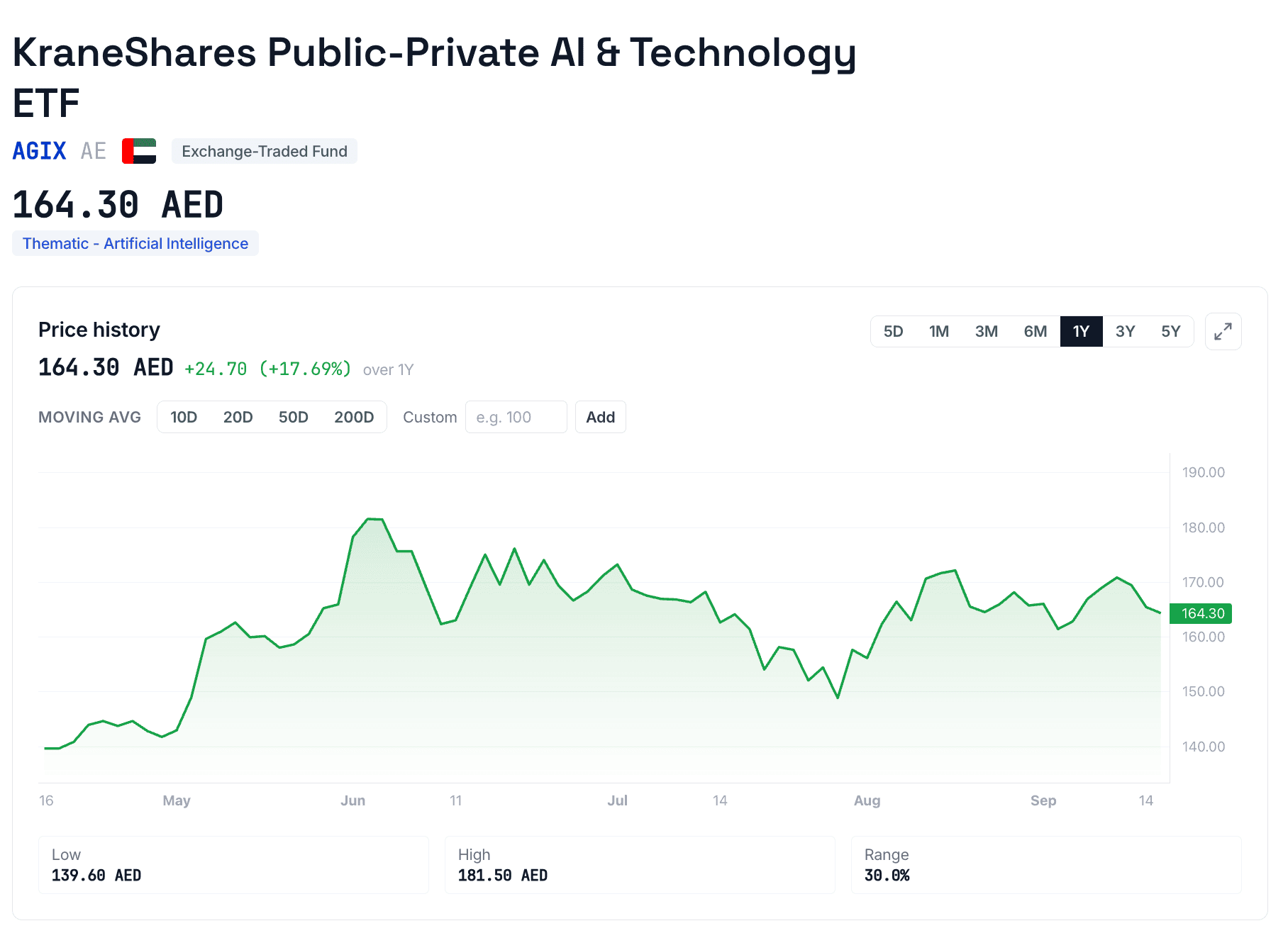
The fund has also grown quickly. AGIX had $882.4 million in net assets as of September 9, compared with $807.4 million at June 30. Its NAV had returned 24.53% year to date through August 31, while the fund charges a 1.00% annual expense ratio.
For GCC investors, AGIX stands apart from a conventional technology ETF because part of its portfolio reaches beyond listed markets. Its direct Anthropic position provides exposure to a major private foundation-model developer alongside established semiconductor, cloud and software companies. That also introduces risks absent from a purely listed portfolio: private holdings are less liquid, valuations are determined less frequently and exits depend on transactions such as funding rounds, acquisitions or public listings.
2. QUANTM: The Next Frontier of Technology
QUANTM takes the thematic approach much further. The ADX-listed Boreas Solactive Quantum Computing UCITS ETF tracks an index of 25 companies involved in quantum hardware, software and algorithms, communication and sensing. The index uses a 7.5% cap for larger qualifying constituents and a 2% cap for smaller companies.
That creates exposure to specialist names alongside larger technology companies involved in quantum research.
The volatility is already apparent. QUANTM fell 20.3% in July alone, after IonQ dropped 31.6%, D-Wave Quantum lost 24.6% and Rigetti Computing fell 22.6%. Even after that decline, Lunate reported the ADX share class up 11.2% year to date at July 31. AUM stood at AED26.8 million.
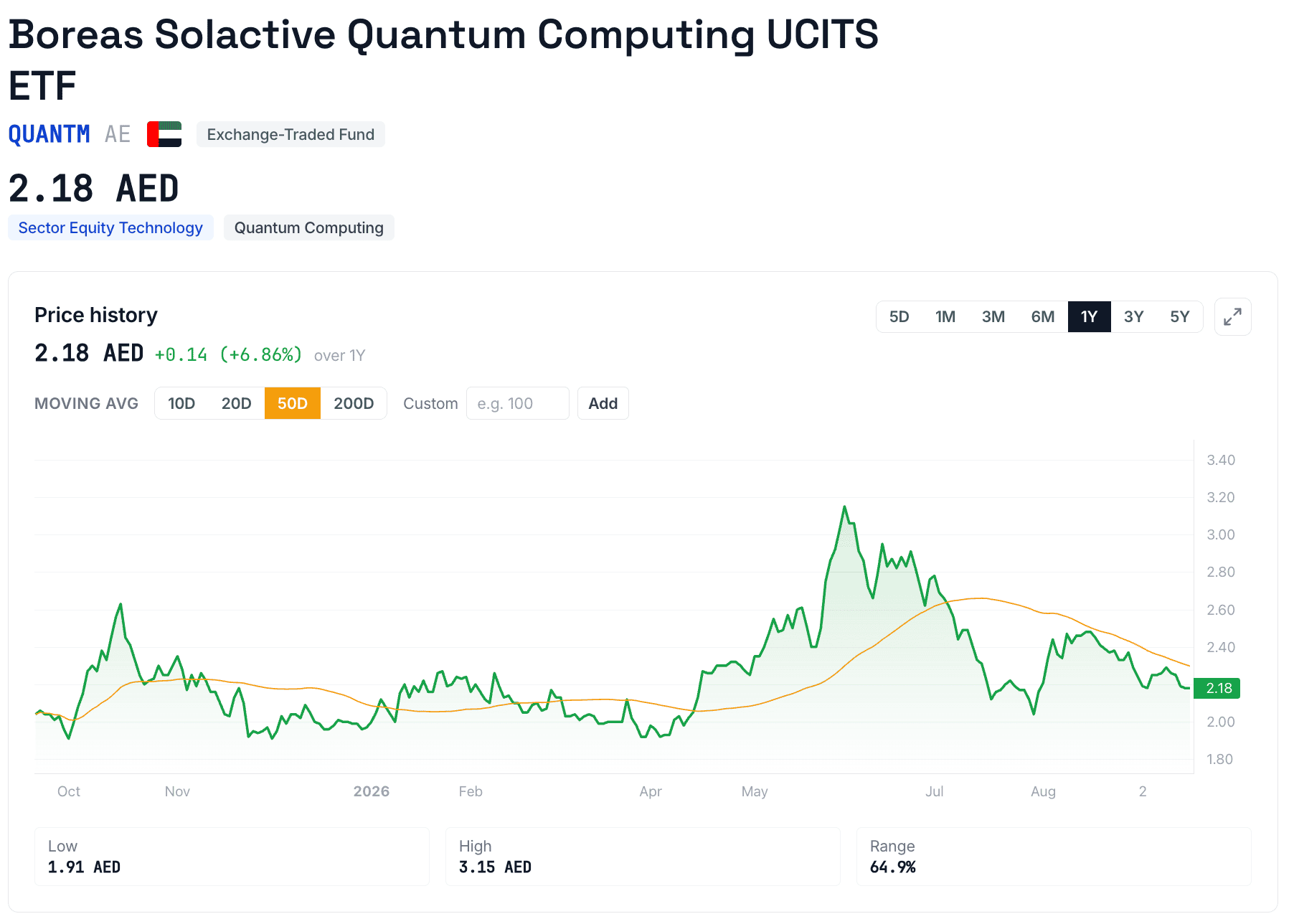
QUANTM therefore represents the most direct emerging-technology bet among these five funds, but also one where current valuations can depend heavily on expectations for technologies whose commercial economics are still developing.
3. KWEB: A China AI and Internet Alternative
KraneShares CSI China Internet ETF gives the group a completely different geographic profile. KWEB tracks Chinese internet companies and was cross-listed on ADX after receiving SCA and exchange approval in late 2025.
Its largest positions as of September 10 included Tencent at 10.18%, Alibaba at 8.56%, PDD at 8.10%, Meituan at 7.28% and NetEase at 6.28%.
KWEB is broader than a pure AI fund. Its holdings span e-commerce, gaming, online services and internet platforms, but several of its largest companies are investing heavily in AI models, cloud computing and applications. Alibaba's Qwen ecosystem and Baidu's AI operations give the portfolio direct links to China's attempt to build an AI stack distinct from the U.S.-led ecosystem.
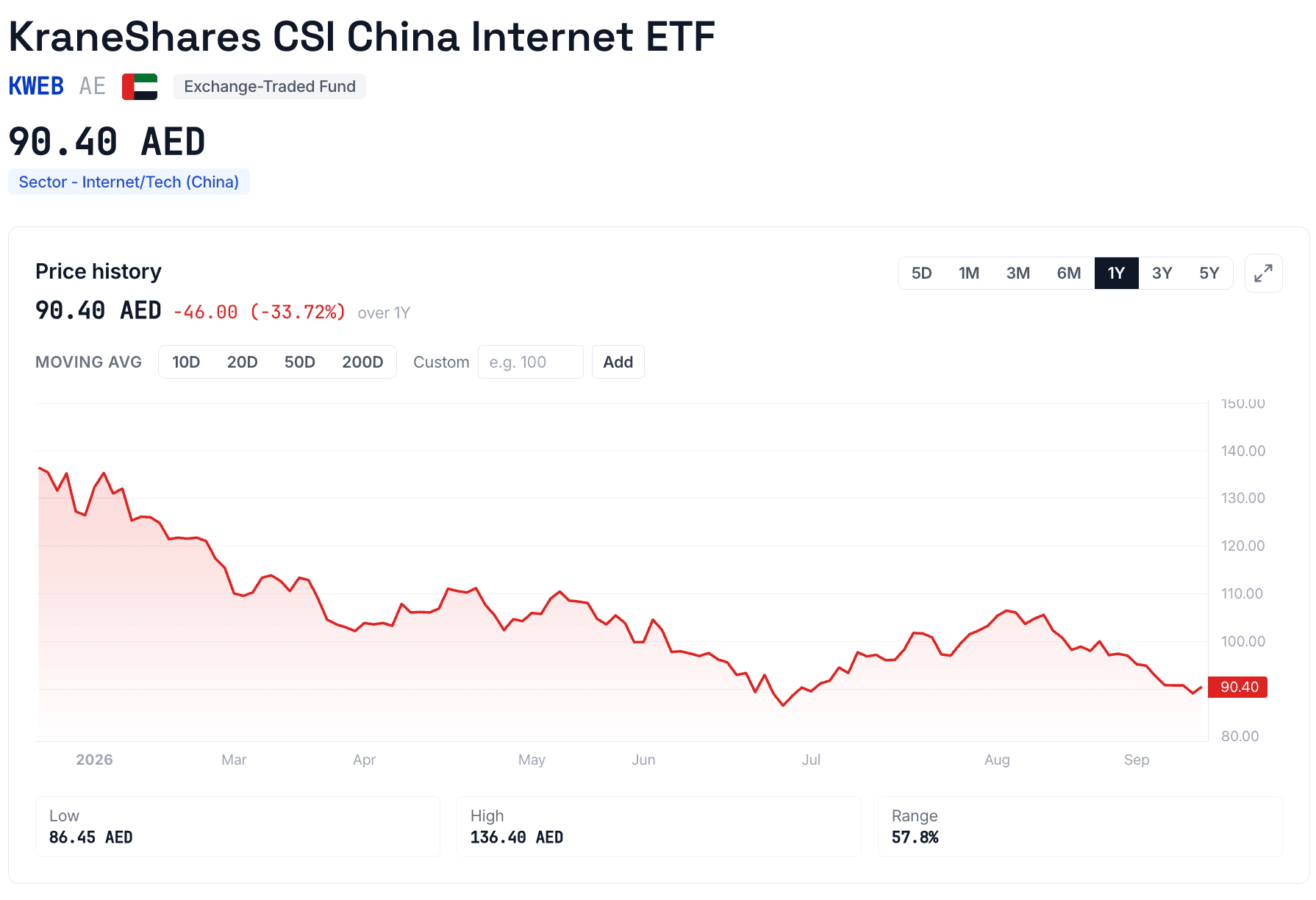
The U.S.-listed KWEB had $4.73 billion in net assets as of September 10 and charged 0.69%, but its performance remained weak: the fund was down 23.19% year to date through August 31.
KWEB also illustrates how Chinese technology exposure has migrated toward Hong Kong. As of September 10, 77.2% of the portfolio was held through Hong Kong listings.
4. AIPOWR: Investing in the Infrastructure Behind AI
AIPOWR approaches artificial intelligence from the other side of the spending cycle. Instead of trying to identify which model developer or application will dominate, the fund tracks companies supplying the infrastructure required to run AI.
The Boreas S&P AI Data, Power & Infrastructure UCITS ETF covers 35 companies across data centres, cloud hyperscalers, electrical equipment, power generation and related infrastructure. Its benchmark applies a 5% single-stock cap and a 25% cluster cap.
As of July 31, AIPOWR had AED67.2 million in AUM, making it substantially larger than QUANTM and AGIX. It was up 12.9% year to date, despite falling 1.8% in July.
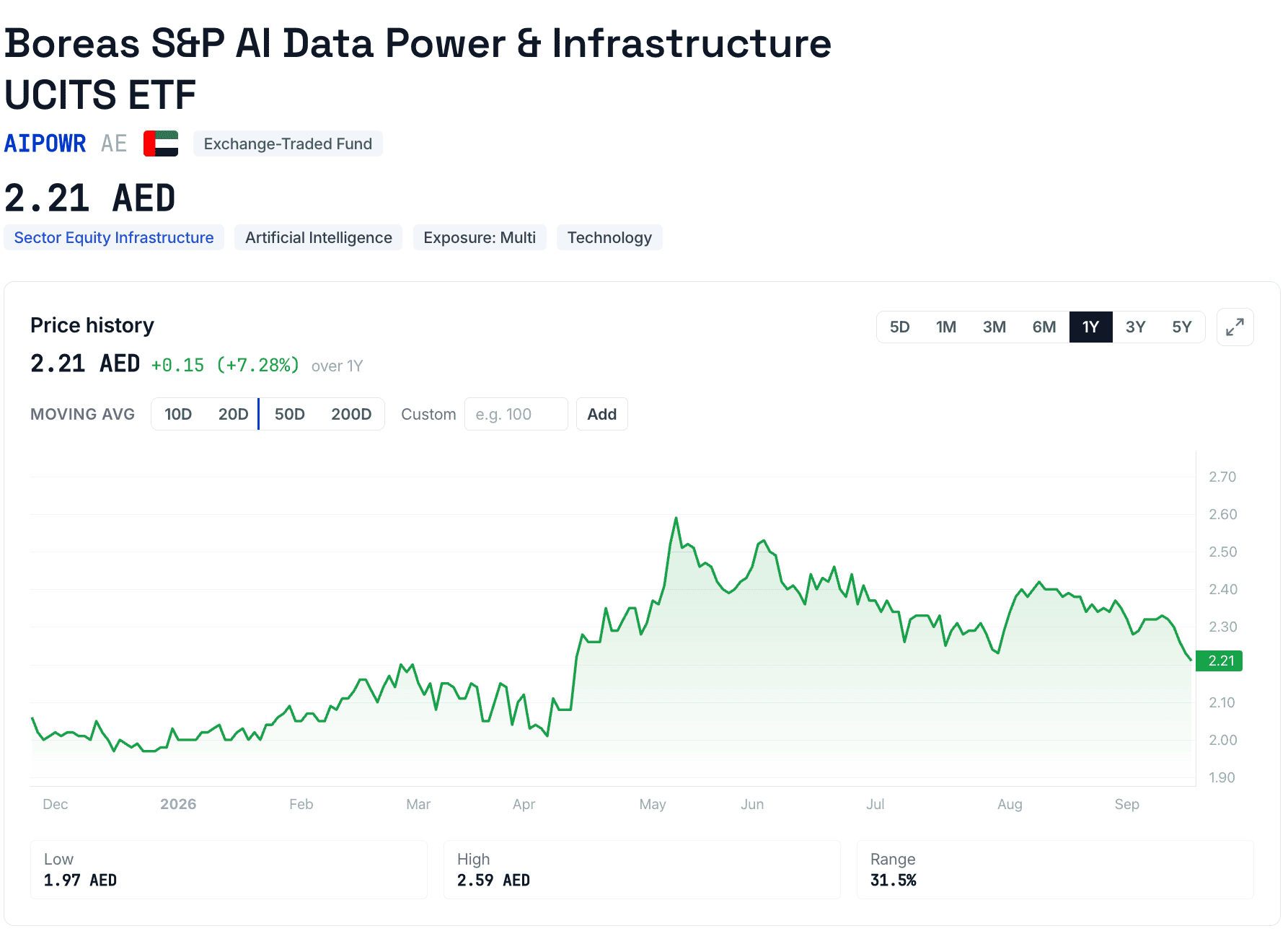
AIPOWR also offers an interesting contrast with QUANTM. One depends heavily on the commercial progress of a nascent computing technology. The other owns businesses supplying physical assets to an AI capital-spending cycle already measured in hundreds of billions of dollars.
5. Albilad US Tech: U.S. Technology Through Tadawul
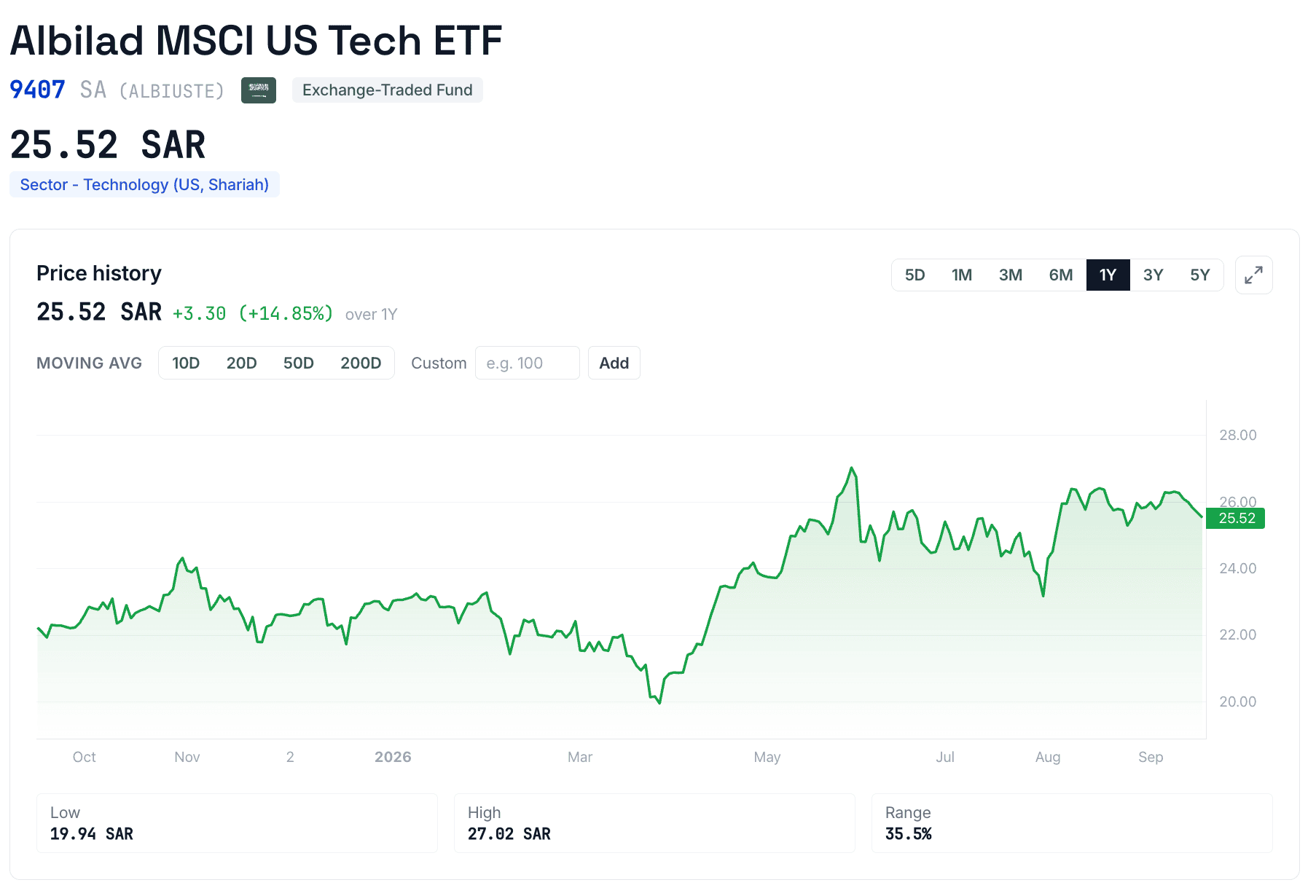
Saudi investors have a domestic route as well. Albilad MSCI US Tech ETF, ticker 9407, trades on the Saudi Exchange in riyals and is approved as Shariah-compliant by Albilad Capital's Shariah Committee.
Albilad's disclosed basket includes Nvidia, Broadcom, Microsoft, Tesla and Cisco, connecting Saudi-listed ETF investors directly to the U.S. semiconductor, software and technology cycle.
Trading activity accelerated during August. Saudi Exchange data show 9407 traded 333,150 units worth SAR8.59 million during the month, while its AUM reached approximately SAR23.36 million. The ETF gained 11.66% in August, making it one of the stronger performers in the Saudi ETF market during the period.
For Saudi investors, the local structure removes the need to trade U.S. market hours or fund an overseas brokerage account. It does not remove exposure to U.S. equities or the underlying dollar. The Saudi riyal's dollar peg reduces day-to-day SAR/USD currency variation, but the economic exposure remains overwhelmingly American.
Five ETFs, Five Different Technology Trades
The five funds show how far the GCC ETF shelf has moved beyond generic technology exposure.
The International Energy Agency expects capital spending by five major technology companies to rise 75% in 2026, while global data-centre electricity demand is projected to nearly double to 950 TWh by 2030.
That expansion should create more room for specialized GCC-listed ETFs. The current lineup already reaches public and private AI, infrastructure, quantum computing, China and U.S. technology. As the market develops, semiconductors, robotics, cybersecurity and power could become the next areas for more targeted regional ETF exposure.