
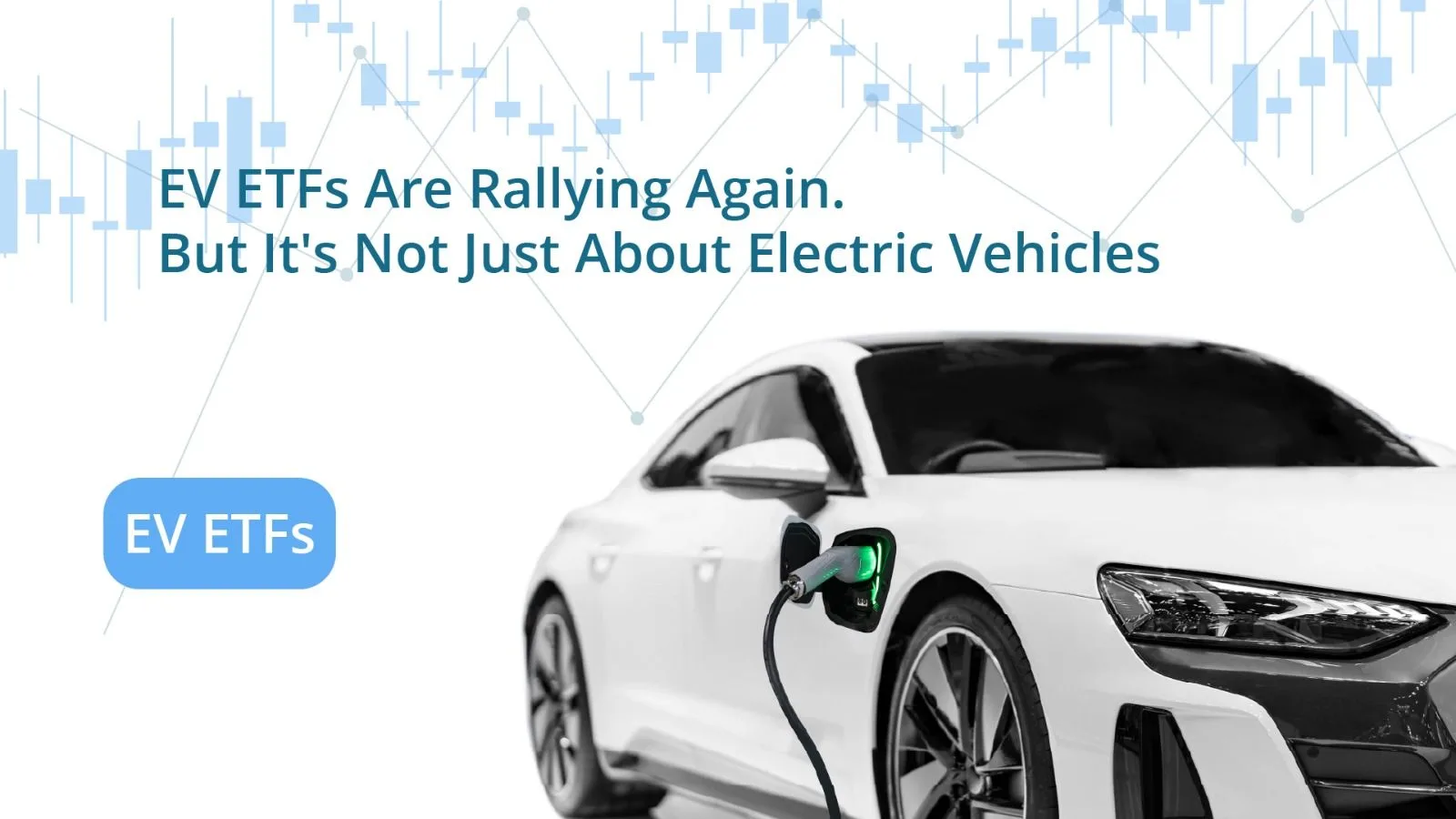
After two difficult years marked by rising interest rates, slowing EV demand growth, aggressive price competition, and weakening investor sentiment, several major EV and autonomous mobility ETFs have returned to outperforming broader markets. Yet what makes the recovery particularly interesting is that many individual EV manufacturers continue to face significant challenges.
Today, investors are increasingly buying exposure not simply to electric vehicles, but to a much larger ecosystem that includes batteries, battery metals, semiconductors, artificial intelligence, autonomous driving systems, and next-generation mobility infrastructure.
The EV Story Has Moved Beyond Vehicle Sales
One of the biggest misconceptions among investors is that the EV industry behaves as a single trade.
In reality, the ecosystem consists of four distinct segments including vehicle manufacturers, battery producers, battery-material suppliers, and enabling technologies such as semiconductors, autonomous driving systems, software platforms, and charging infrastructure.
Vehicle manufacturers have generally been the weakest performers. The global EV market remains highly competitive, particularly in China where BYD, Tesla, Li Auto, NIO, Zeekr, and dozens of smaller players continue fighting aggressively for market share. Multiple rounds of price cuts have pressured margins across the industry, making it increasingly difficult for manufacturers to translate growing deliveries into stronger profitability.
Tesla remains a good example, the company continues to dominate global EV mindshare, its automotive margins remain well below the levels investors became accustomed to during the pandemic-era boom. Similar pressures have been felt across much of the global EV industry.
Battery producers have fared better.
Companies such as CATL, LG Energy Solution, Panasonic, Samsung SDI, and BYD's battery division continue benefiting from structural growth in battery demand. Beyond passenger vehicles, battery deployment is expanding into energy storage systems, grid infrastructure, and renewable-energy projects. Investors increasingly view leading battery manufacturers as critical infrastructure providers for the global energy transition.
Lithium prices have fallen more than 80% from their 2022 peak after years of aggressive supply expansion. Nickel and cobalt prices have also retreated significantly. While painful for mining companies, lower commodity prices have dramatically improved battery economics across the entire EV industry.
Cheaper battery inputs reduce manufacturing costs, improve margins, and make EVs more affordable for consumers. Industry estimates suggest battery pack costs are approaching the critical $100 per kilowatt-hour threshold often viewed as a tipping point for mass-market EV adoption.
Technological Segment
Modern vehicles rely on advanced semiconductors, sensors, vehicle operating systems, cloud infrastructure, and AI-powered driver-assistance systems. As autonomous driving capabilities improve, companies exposed to software, computing, and artificial intelligence are becoming increasingly important beneficiaries of the broader mobility trend.
The result is that EV investing is becoming less about cars and more about technology.
AI Infrastructure Is Powering the Next Phase of Growth
AI infrastructure extends far beyond software and includes data centers, utilities, hyperscalers, and semiconductor companies that provide the computing power behind AI models.
ETFs such as AIPWR offer exposure across the full ecosystem, while SRVR focuses specifically on data-center operators such as Equinix and Digital Realty that benefit from growing demand for AI computing capacity.
The KraneShares Electric Vehicles & Future Mobility ETF (KARS) offers one of the broadest approaches to the theme. Rather than focusing exclusively on automakers, the fund invests across the entire EV value chain, including batteries, charging infrastructure, battery materials, semiconductors, and mobility technologies. Top holdings include BYD, CATL, Tesla, Xiaomi, and Li Auto. The portfolio reflects the reality that the future of transportation extends far beyond vehicle production alone.
The iShares Self-Driving EV and Tech ETF (IDRV) takes a more technology-oriented approach. While the fund maintains exposure to major automakers, it also allocates significant weight to semiconductor manufacturers, autonomous-driving developers, computing hardware companies, and advanced sensor providers. The ETF has benefited from growing investor demand for companies tied to AI-enabled transportation and autonomous mobility systems.
The Global X Autonomous & Electric Vehicles ETF (DRIV) arguably provides the clearest illustration of how the investment narrative has evolved. Information technology accounts for roughly 39% of the portfolio, compared with approximately 25% for consumer discretionary and 18% for industrials. Major holdings include NVIDIA, Microsoft, Qualcomm, Alphabet, and Tesla.
The Bigger Picture
The recent strength in EV ETFs suggests investors are looking beyond short-term challenges facing individual automakers.
While vehicle manufacturers continue battling price competition and margin pressure, investors are increasingly focusing on the technologies and supply chains enabling the long-term electrification of transportation.
Batteries, battery metals, semiconductors, autonomous driving systems, artificial intelligence, and mobility software are becoming just as important as vehicle deliveries themselves.
That shift may explain why many EV-focused ETFs have recently outperformed individual manufacturers. Investors are no longer simply buying electric vehicles.
They are buying the infrastructure powering the future of transportation.