


After briefly trading above $5,300 an ounce earlier this year, the metal has now slipped back below the $4,000 level, with spot gold trading near $3,965 after touching a seven-month low around $3,943. That leaves gold on track for its sharpest quarterly decline since 2013, as the market adjusts to a stronger dollar, higher Treasury yields, and renewed expectations that the Federal Reserve may stay hawkish for longer.
Gold’s rally earlier this year was built on several powerful drivers at once: central bank buying, inflation concerns, geopolitical risk, a weaker dollar, and heavy retail and ETF demand. In Q2, several of those drivers started moving in the opposite direction.
Gold Is Back in the $4,000 Support
After gold’s sharp pullback, prices are now trading around this support zone, making it an important test for whether the latest selloff is starting to stabilize.
That does not mean the long-term gold story has disappeared. But it does show that the technical picture has weakened. Gold has moved below key moving averages, and the 50-day moving average has crossed below the 200-day moving average, a pattern commonly referred to as a “death cross.” This is not always a reliable signal of future losses, but it does show that short-term momentum has deteriorated.
Gold had fallen for five consecutive weeks, with the LBMA Gold Price PM ending last week at $4,072/oz, down 1.9% on the week and 6.8% year-to-date. The WGC also highlighted key downside support around $3,887-$3,857, meaning gold is now trading in a broader support area where investors will be watching for signs of stabilization.
ETF Flows Are Now Central to the Story
Gold-backed ETFs helped amplify the rally earlier this year, but that channel has become less supportive. The World Gold Council said global gold ETF flows slowed sharply in May, with global gold ETF assets falling 2% month-on-month to $604 billion and holdings easing to 4,121 tonnes. Reuters also reported that gold-backed ETFs saw 16 tonnes of net outflows in May, with further outflows continuing into the first half of June.
When rate-cut expectations were strong, ETFs helped push the price higher. When rate-hike fears returned, ETF demand weakened and gold became more vulnerable.
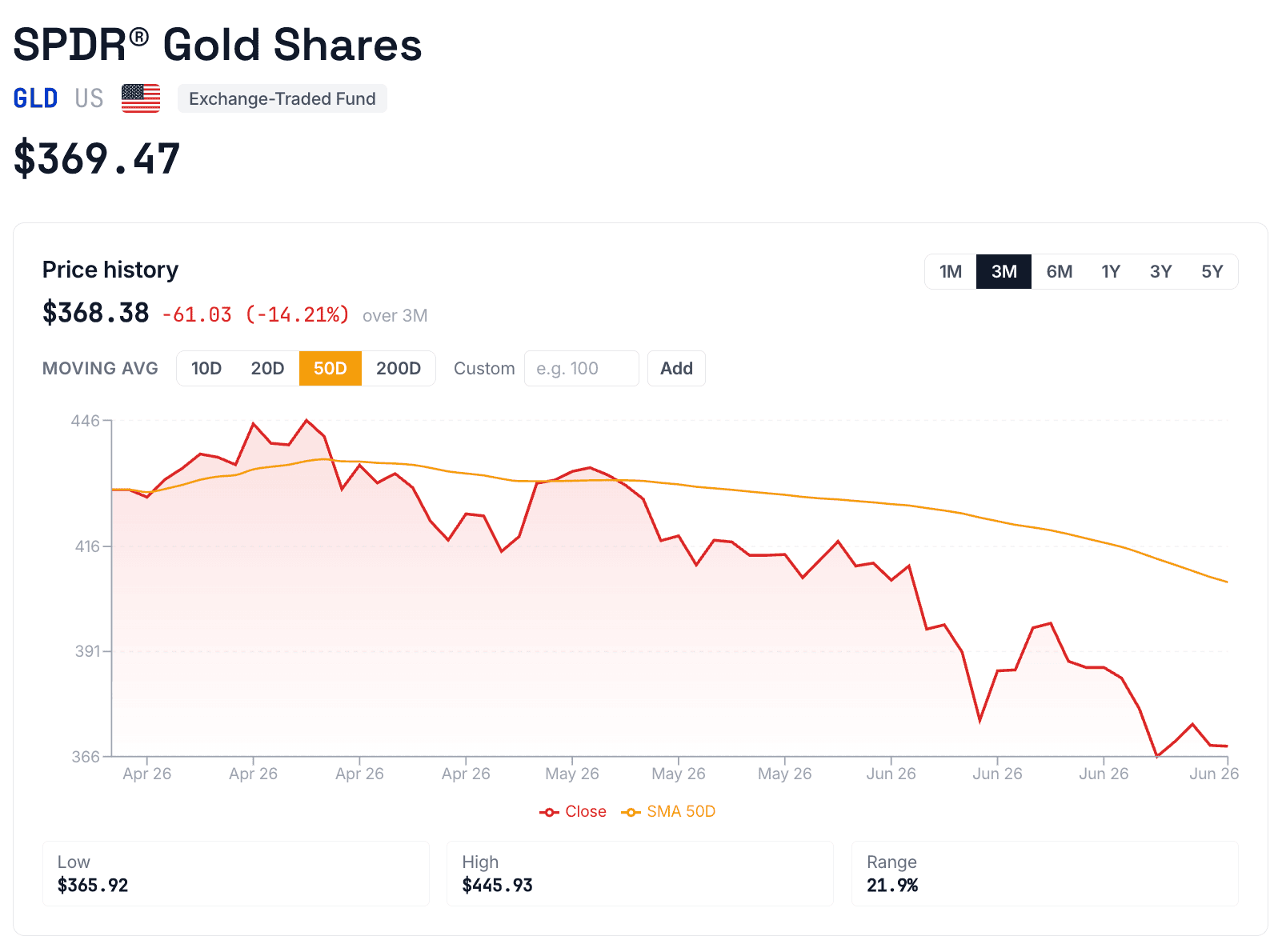
For U.S. investors, SPDR Gold Shares (GLD) remains the cleanest listed proxy for bullion exposure. GLD has followed gold lower and is now trading around $368, reflecting the broader pressure on physical gold exposure. Meanwhile, gold miners have also been hit.
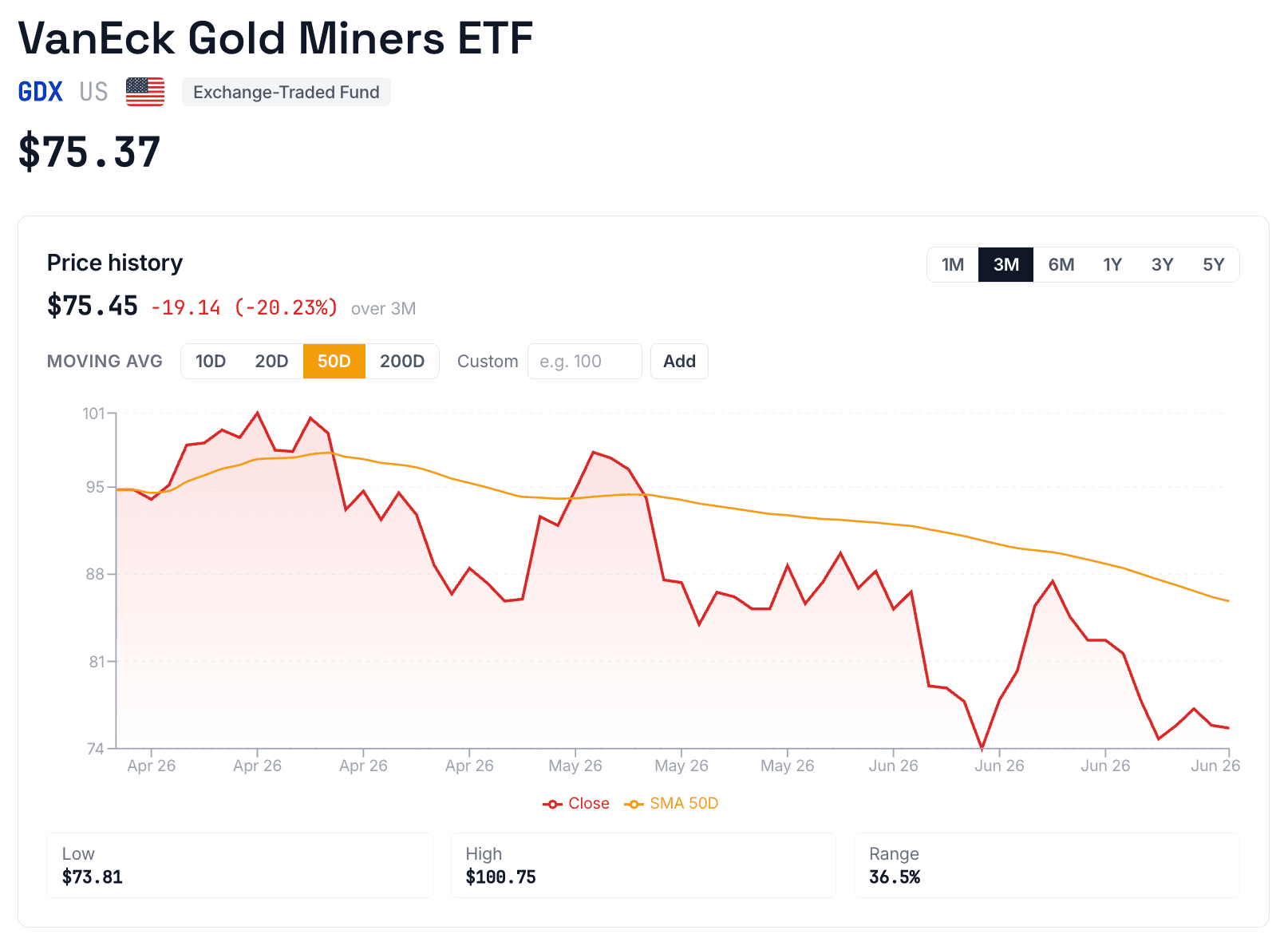
The VanEck Gold Miners ETF (GDX), which tracks gold mining equities, trades around $75 and has been more volatile than bullion itself. That is expected: miners can outperform when gold is rising, but they also carry equity-market risk, operating leverage, cost pressure, and margin sensitivity when bullion falls.
Regional Gold ETFs Matter Too
For GCC investors, the move also puts regional gold ETFs back in focus.
Saudi-listed Albilad Gold ETF offers Shariah-compliant exposure to physical gold through Tadawul. The fund is designed to track the DGCX spot gold price and gives investors access to bullion without the logistics of storing or insuring gold directly.
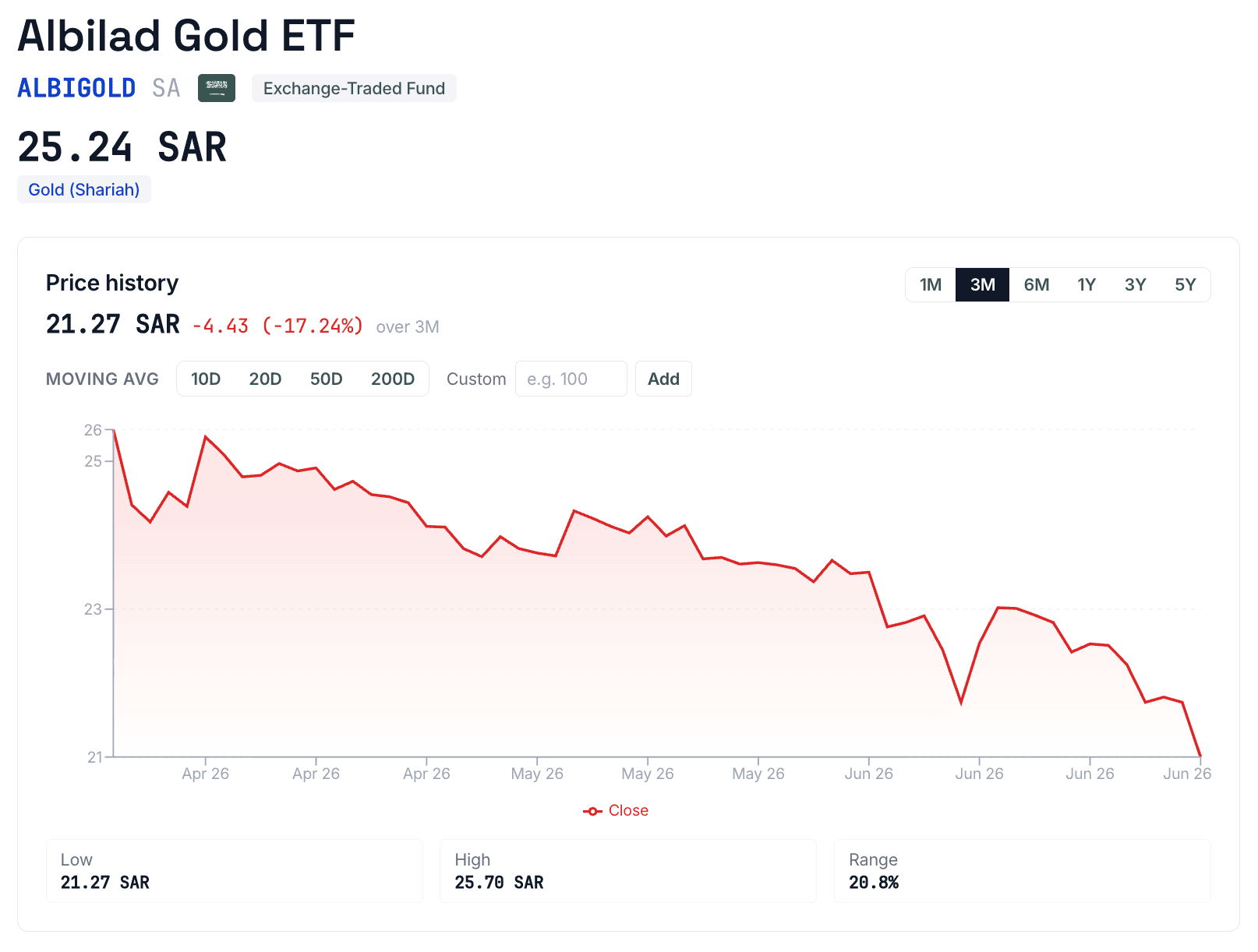
This makes regional ETF flows important to watch. If local investors continue using gold ETFs as a portfolio hedge, regional products may absorb some demand even while global ETF flows weaken. But if the selloff becomes more about higher real yields and dollar strength, regional investors may also turn more cautious.
Shariah Gold Products Remain a Key Category
Gold also remains one of the largest categories inside the Shariah-compliant ETF and ETP universe.
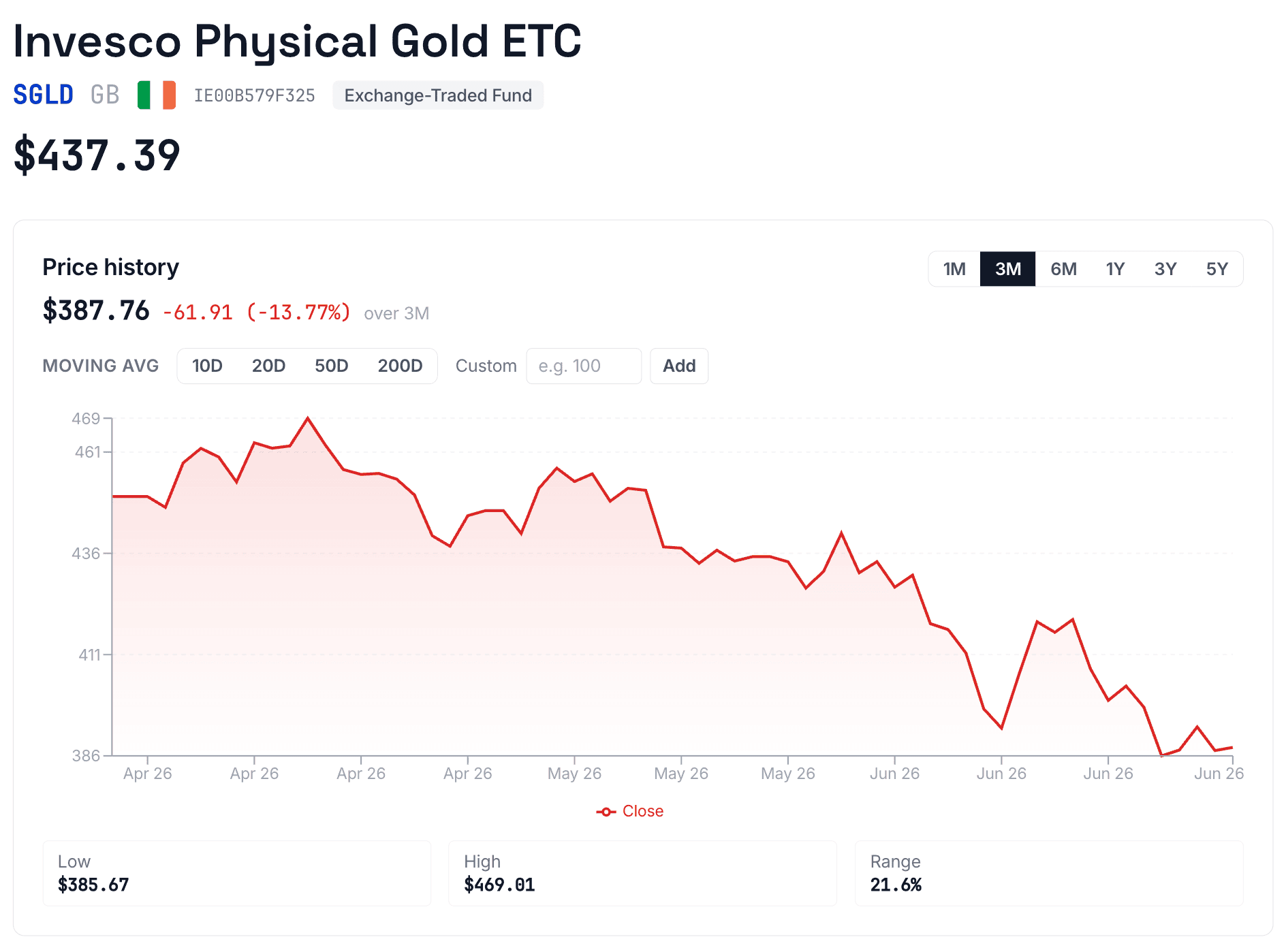
Products such as Invesco Physical Gold ETC and WisdomTree Physical Gold are important because they are backed by physical allocated gold rather than synthetic exposure. WisdomTree states that its Physical Gold product is backed by allocated gold held with HSBC, while Invesco says its Physical Gold ETC is backed by physical gold bars held in segregated accounts.
For Shariah investors, the structure matters as much as the asset. Physical backing, clear custody, and transparent ownership are essential. Investors should still check the Shariah certificate, trading mechanism, custody structure, and settlement process before assuming a gold product is automatically Shariah-compliant.
The Bigger Picture
The longer-term outlook should be separated from the short-term price correction.
Gold may be under pressure from ETF outflows, a stronger dollar, and higher rate expectations, but central bank demand remains a structural support. In the latest World Gold Council central bank survey, reserve managers continued to signal strong appetite for gold, with most expecting global central bank gold reserves to rise over the next 12 months.
That links back to the broader point we covered in our central bank gold survey article: official-sector demand is not trading gold for a quarter. It is holding gold as a long-term reserve asset for diversification, crisis protection, and reduced reliance on any single currency system.
That is why the long-term case has not disappeared. Central bank buying, fiscal concerns, geopolitical risk, and reserve diversification still support the strategic argument for gold. But the short-term setup is weaker. Gold needs to hold the broader $4,000 support area, ETF outflows need to stabilize, and the dollar or real yields likely need to soften before investors become more confident again.
For now, gold is no longer trading on the simple inflation-hedge narrative. It is trading on flows, rates, and technicals.