
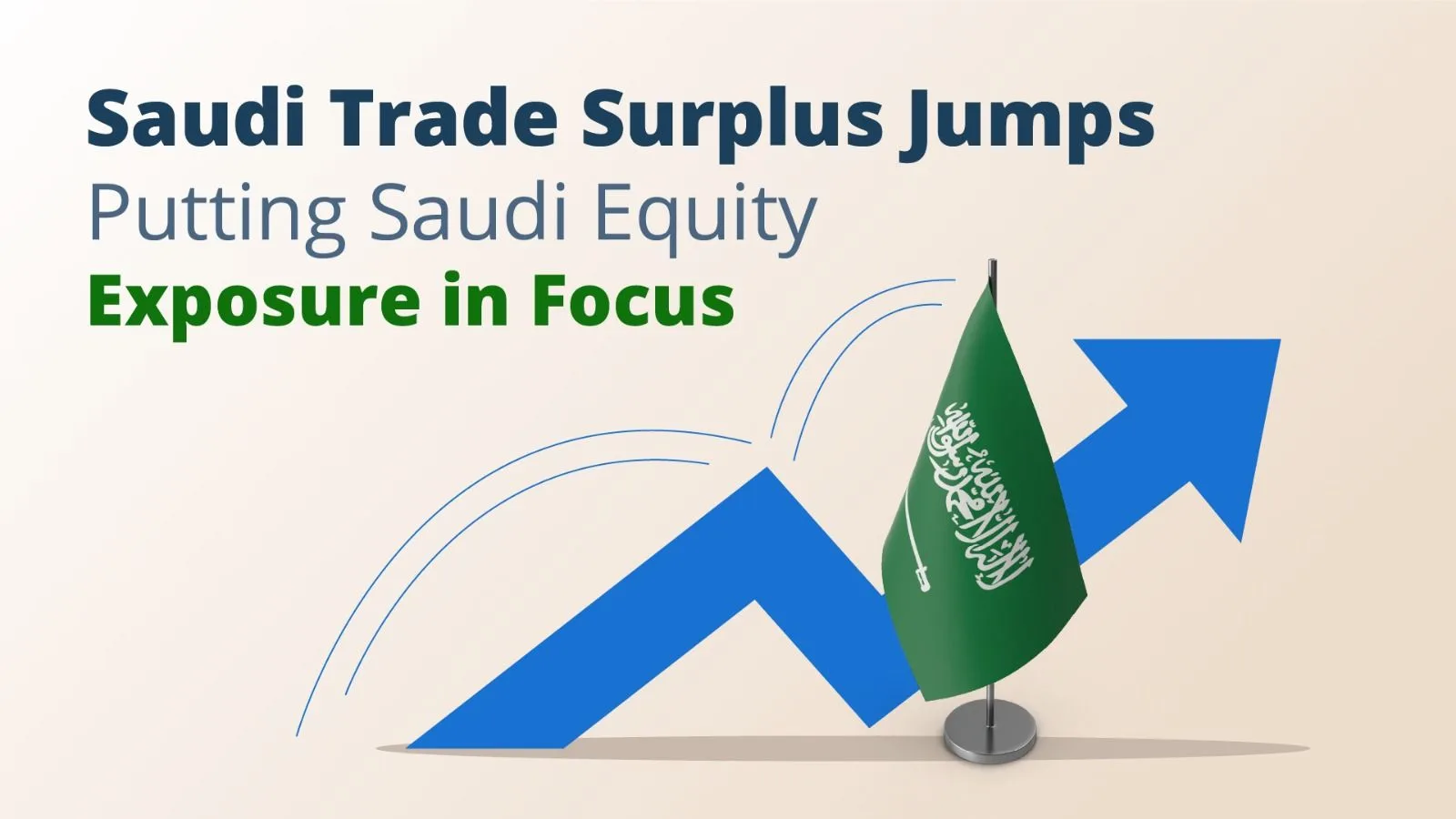
Saudi Arabia’s trade surplus rose sharply in the first quarter of 2026, reaching SR90.5 billion, up 43.7% year-on-year and nearly 60% higher than the previous quarter.
On the surface, this is a strong trade number. But the more important story is what it says about the Kingdom’s export engine, logistics role, and diversification path.
Total merchandise exports reached SR312.8 billion in Q1, while imports stood at SR222.3 billion. That left Saudi Arabia with one of its strongest quarterly trade positions in recent years. March was especially important, with the monthly surplus widening sharply as exports rose and imports eased.
Oil remains the main driver. The Kingdom’s external balance is still heavily tied to energy markets, which means a stronger oil export cycle can quickly expand the trade surplus.
Non-oil exports, including re-exports, exceeded SR86.1 billion in Q1. Re-exports alone rose to more than SR38 billion, up 32.9% from a year earlier. That points to Saudi Arabia’s growing role as a regional trade and logistics hub, not just a producer of energy commodities.
Asia remained the largest destination for Saudi exports, taking more than SR229 billion, while China remained the Kingdom’s largest export market at SR44.8 billion. That reinforces Saudi Arabia’s deep commercial link with Asian demand.
For investors, the macro data also brings Saudi equity exposure back into focus. The Albilad MSCI Saudi Equity ETF, listed on Tadawul under ticker 9412, offers access to more than 250 Saudi-listed companies across the main market and Nomu through a single exchange-traded product. Its benchmark is the MSCI Saudi Arabia Domestic Total Market Islamic M-Series Index, making it a broad Shariah-screened route into the Saudi market.
The stronger trade position feeds into the broader investment case for Saudi equities: energy scale, non-oil expansion, logistics growth, and deeper capital-market participation.
Saudi Arabia’s trade surplus is still powered by oil, but the composition is becoming more layered. Energy exports provide the scale, while non-oil exports and re-exports show where the diversification story is starting to appear.
If non-oil exports and re-exports keep growing when oil prices are less supportive, Saudi Arabia’s trade balance will start to look less like a commodity cycle and more like a structural transformation.