


Copper suffered its steepest weekly decline in 19 months despite critically tight physical supplies in China, exposing an extraordinary disconnect between futures markets, global inventories and industrial demand. London Metal Exchange (LME) three-month copper fell from $13,545 per metric tonne on November 13 to $12,237 on November 20, a decline of approximately 9.7%. The selloff marked the metal's sharpest weekly contraction since April 2025.
Copper Market Dashboard
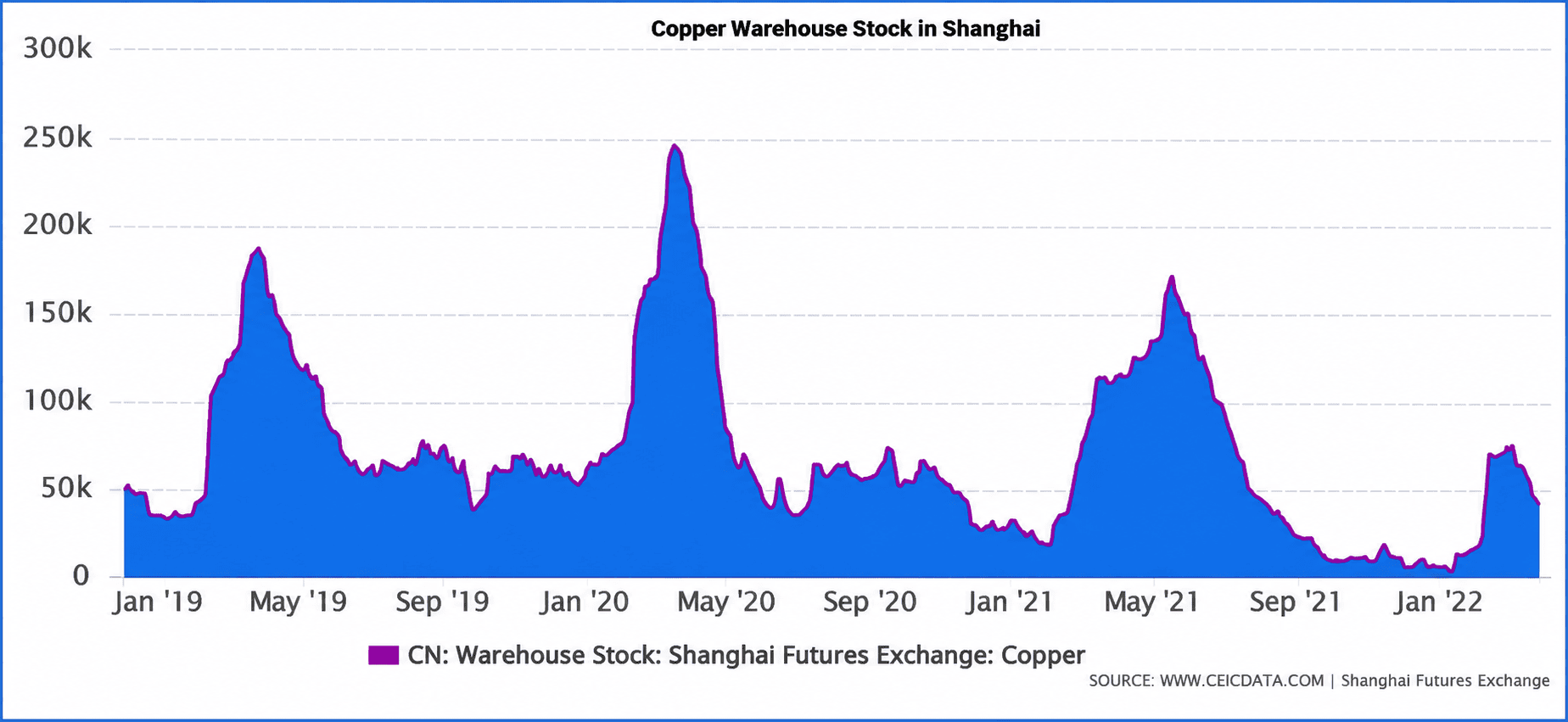
Yet the price collapse coincided with an acute shortage on the Shanghai Futures Exchange (SHFE), where deliverable inventories had fallen to 27,642 tonnes, down 93.6% from their March peak of 433,458 tonnes. The contradiction reflects a market increasingly shaped by speculative positioning, the unwinding of artificial intelligence (AI)-related trades and a geographic imbalance in physical copper inventories.
A Historic Shanghai Squeeze Collides With Falling Global Prices
The scale of the Shanghai supply squeeze became evident on November 16, when the expiring SHFE November copper contract surged more than 9% to 118,060 yuan per tonne. Its premium over the December contract widened to 9,910 yuan per tonne, approximately $1,486, as traders holding short positions faced an acute shortage of metal available for delivery.
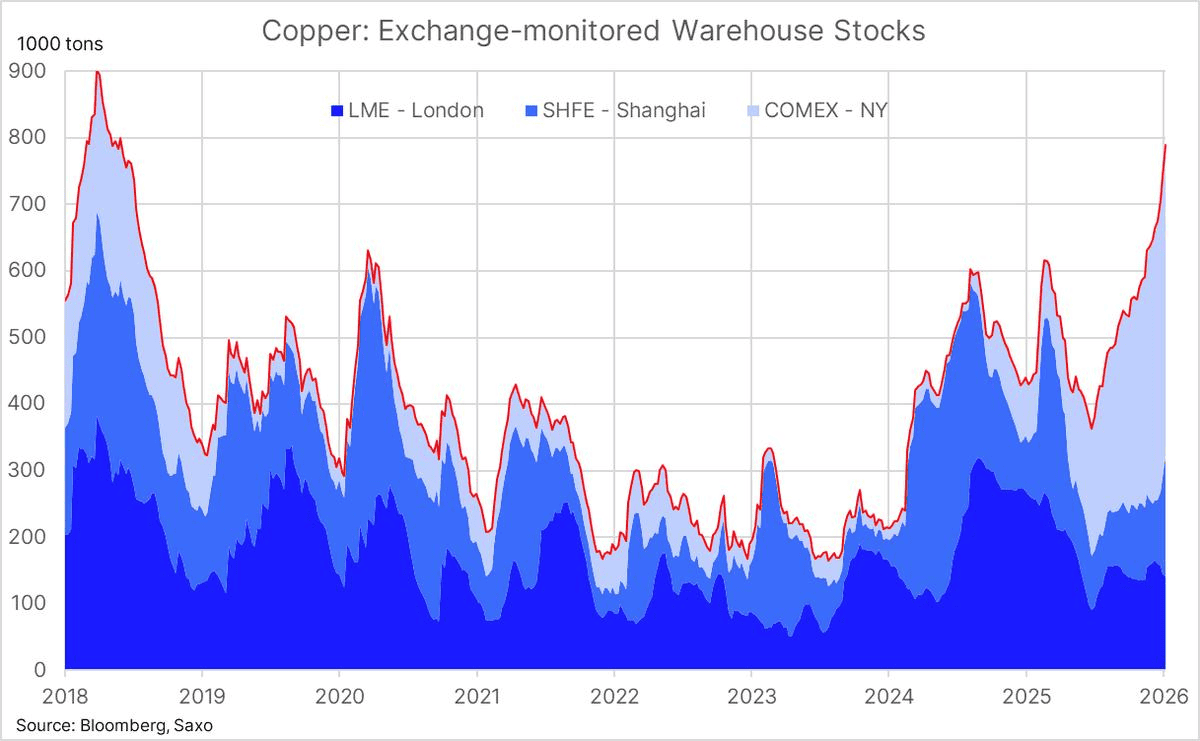
Although SHFE warehouses held 27,642 tonnes, only 2,270 tonnes were available for settlement against the expiring November contract. The shortage also pushed China's Yangshan copper import premium to a record $360 per tonne by November 18, compared with less than $100 in September.
A shortage of copper in Shanghai does not necessarily indicate insufficient global production. Instead, it reflects the difficulty of transporting available metal to where it is needed before contractual delivery deadlines.
Why the Futures Market Is Sending Conflicting Signals
The market's forward curves illustrate this fragmentation. In Shanghai, nearby copper traded at substantial premiums to later-dated contracts, a condition known as backwardation that typically reflects immediate physical scarcity. London's market, meanwhile, moved toward contango, with cash copper trading below three-month futures. By November 20, the LME cash-to-three-month spread stood at approximately minus $6.50 per tonne, compared with a $65 premium one week earlier.
The two exchanges were effectively pricing different conditions, immediate scarcity in China against weakening demand expectations and improving warehouse availability in London.
US Tariff Expectations Have Distorted Global Copper Inventories
Expectations of tariffs on refined copper encouraged traders to redirect substantial volumes toward American warehouses, where the metal could command a premium ahead of potential import restrictions.
US refined copper imports increased 80% to 1.64 million tonnes in 2025, according to World Bureau of Metal Statistics data cited by Reuters. Imports subsequently rose another 10% during the first eight months of 2026 to approximately 1.31 million tonnes.
By November 20, COMEX warehouses held approximately 730,482 tonnes of copper, compared with 30,846 tonnes registered at SHFE.
LME inventories reached 332,025 tonnes, with a substantial proportion also stored in US locations. The imbalance became particularly pronounced as traders reassessed the likelihood of proposed American import tariffs.
A potential 15% tariff on refined copper in 2027, rising to 30% in 2028, remains uncertain. As expectations shifted, the premium previously offered by US copper futures over London prices disappeared. This reversal has begun changing the economics of international metal shipments, potentially encouraging copper to move from US warehouses toward China.
However, transportation costs, shipment delays and unresolved tariff policy continue to complicate the adjustment.
Chinese Demand Weakness Challenges Copper's Bullish Narrative
The physical squeeze has unfolded against a deteriorating demand backdrop. Citi estimates cited by Reuters indicate that global copper consumption grew just 0.8% year-on-year in August 2026, with weakness in China representing a principal drag.
China's refined copper imports also declined 12.5% during the first nine months of 2026 compared with the corresponding period a year earlier. These figures challenge the assumption that low exchange inventories necessarily translate into stronger underlying demand.
Reduced smelter output, limited imports and geographic inventory distortions can tighten immediate supplies even when downstream manufacturers are purchasing less metal. Meanwhile, weaker manufacturing activity and uncertainty surrounding China's industrial recovery have increased concerns about near-term consumption.
The AI Trade Adds Another Layer of Volatility
Copper had previously benefited from expectations of accelerating electricity demand associated with AI data centres, power networks and advanced manufacturing. The recent technology-sector correction has weakened investor appetite for assets connected to that investment theme.
Higher US interest-rate expectations and a stronger dollar have added pressure, while investment funds have reduced bullish commodity positions. The impact has extended beyond copper. Tin, another metal exposed to electronics and data infrastructure, fell to an eight-month low of approximately $41,035 per tonne during the November selloff.
The broader adjustment suggests that financial market positioning has become an important driver of short-term industrial metal prices, alongside traditional supply and demand fundamentals.
What the Copper Correction Means for ETF Investors
For investors seeking exposure through exchange-traded funds (ETFs), the distinction between copper prices and copper-mining equities is particularly important.
The Global X Copper Miners ETF (COPX), for example, tracks companies involved in copper production rather than the metal's spot price. The fund carries a 0.65% annual expense ratio.
COPX closed at approximately $56.33 on November 20, compared with $69.23 one week earlier, representing an 18.6% decline over the period. Its larger percentage decline illustrates how mining shares can amplify commodity market movements because of operating leverage, earnings sensitivity and broader equity-market conditions.
Other products, including the iShares Copper and Metals Mining ETF (ICOP), provide diversified exposure to companies involved in copper and related metals production.
Investors can also examine broader natural resources funds, such as the iShares North American Natural Resources ETF (IGE) and SPDR S&P Global Natural Resources ETF (GNR), through Nukoud's ETF Data Hub.
As explored in Nukoud's earlier commodity analysis, copper remains closely linked to electrification and infrastructure investment. The recent correction demonstrates the importance of distinguishing long-term structural demand from short-term pricing conditions.
The Indicators That Will Determine Copper's Next Move
Three developments will be particularly important for the market's next phase.
First, a sustained recovery in SHFE inventories would indicate whether Chinese physical shortages are easing. Inventory changes must be assessed alongside imports and warehouse availability, rather than viewed independently.
Second, the Yangshan premium will help reveal whether Chinese buyers remain willing to pay elevated prices for imported metal. A decline from the recent $360-per-tonne peak could indicate improving availability or weaker physical purchasing demand.
Third, developments in US tariff policy will determine whether the exceptionally large American inventory stockpile remains economically attractive.
By November 23, copper had briefly fallen below $12,000 per tonne before recovering in early trading, suggesting that bearish financial positioning continued to dominate price discovery. The copper market therefore enters the final weeks of 2026 with unusually conflicting signals, with abundant inventory in the United States, acute shortages in parts of China and weakening global demand expectations. How quickly these conditions converge will determine whether the recent correction stabilizes or extends further.