

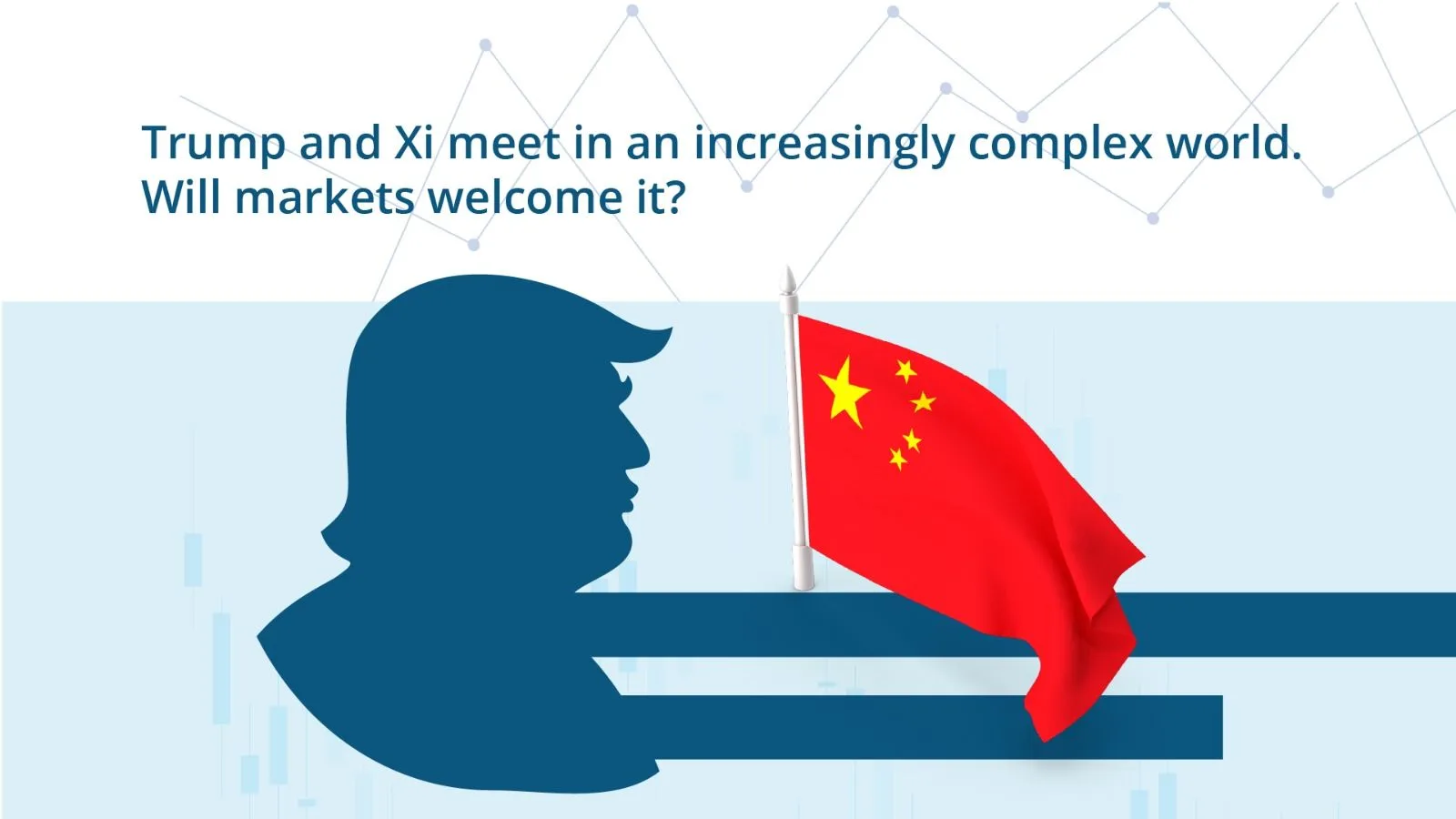
If the U.S.-China relationship seemed complicated last year because of tariffs, technology, Taiwan, trade, fentanyl, and other flashpoints, it is even more strained today. The war in Iran and the resulting energy shock have added a new layer of tension. At first glance, that may seem negative, but it could also shift some leverage back toward China and, most importantly, push Trump to seek stability with Beijing.
The agenda is longer than ever, but Trump may have to prioritize if he wants Xi’s help in easing pressure around Iran. Xi, in turn, may view this as an opportunity to press China’s position on Taiwan. As a result, many of the other issues could become secondary as both leaders focus on their most strategic objectives.
Despite the complexity, Chinese stocks, especially technology shares rose more than 5% on Wednesday in the US on hopes of a constructive meeting and progress toward a new trade arrangement. If the talks go well, they could lift Chinese companies that have been held back by U.S.-China tensions and allow investors to refocus on their business potential, particularly in AI.
The meeting
Historically, Trump-Xi meetings have often been followed by market-friendly headlines. The 2020 Phase One trade deal brought relief after a period of heavy volatility, while the 2019 meeting helped pause additional tariffs and reopen discussion around Huawei. This time, investors will be looking for announcements that signal further concessions on trade and technology, potentially matched by Chinese concessions on rare earths and market access for U.S. companies.
What does Trump want?
Trump is likely to seek Xi’s help in easing tensions around Iran and reopening the Strait of Hormuz, an outcome that would matter greatly to China given its exposure to energy supply disruptions. He is also expected to push for better access to critical minerals, including rare earths, which China dominates across several key materials vital to industries ranging from defense to artificial intelligence. At the same time, Trump appears focused on securing broader access for U.S. companies, especially in banking and technology to the Chinese market, while encouraging China to buy more American goods such as aircraft, soybeans, and other products.
What does Xi want?
For Xi, the political agenda is likely to come first, with Taiwan remaining the most sensitive issue in the relationship. It has become an even bigger source of friction following U.S. arms sales to Taiwan earlier this year. Because unification remains a core objective for Beijing, Xi may see Trump’s pressure in the Middle East as an opportunity to seek concessions. At the same time, the issue is constrained by the long-standing U.S. position on Taiwan and by Taiwan’s central role in advanced semiconductor manufacturing, which makes it a national security priority for Washington. Economic issues also matter, especially tariffs and access to U.S. technology and markets. One example is Ford’s battery project in Michigan, which relies on technology licensed from CATL, highlighting that some commercial cooperation is still possible despite broader tensions.
What do markets want?
While political issues are top of mind, economic matters will have a greater impact on markets, especially over the long term. Investors want to see U.S.-China relations de-escalate and settle into a more stable balance. Trade and tariffs remain the main concern, as trade imbalances have caused significant market disruption and volatility for years. Technology is the second key issue, particularly for Chinese equities.
Greater access to advanced AI chips would benefit Chinese internet and technology companies that rely on them to develop more sophisticated AI products. It would also support U.S. AI companies such as NVIDIA, Qualcomm, and Micron, which have so far had very limited access to the world’s largest technology market. A third positive outcome for markets would be further opening of China’s economy, allowing more U.S. financial and technology firms to operate there.
Trade and market reaction
Some U.S. and Chinese stocks have already begun to move ahead of the trip. The yuan has strengthened to around 6.8 per U.S. dollar, its strongest level in months, which supports returns for U.S. investors in Chinese assets and may encourage additional inflows into China.
Chinese technology stocks such as Alibaba, Tencent, and JD.com have shown positive momentum in anticipation of lower tariffs and improved access to U.S. technology.
In the U.S., any additional Chinese purchases of aircraft or further easing of technology restrictions could benefit selected industrial and semiconductor names.
NVIDIA has already risen ahead of the trip, reflecting expectations that the meeting could improve the outlook for AI-related trade.
Micron could also respond positively if restrictions are eased, particularly because it remains affected by tensions with China while still being closely watched as part of the broader U.S. technology delegation and supply-chain discussion.
Potential ETF beneficiaries in the GCC
China-focused ETFs listed in the UAE and Saudi Arabia could be among the earliest beneficiaries of a positive outcome from the trip. Vehicles such as KWEB and other China or U.S. growth-oriented ETFs may attract renewed interest if sentiment improves around trade, AI, and cross-border market access.
China internet and technology exposure
U.S. growth and AI-related exposure
Regional vehicles that give GCC investors access to these themes
In the end, markets do not need a breakthrough to respond positively. Even a limited easing of tensions on trade, technology, or market access could be enough to improve sentiment and give both U.S. and Chinese assets a near-term lift.