
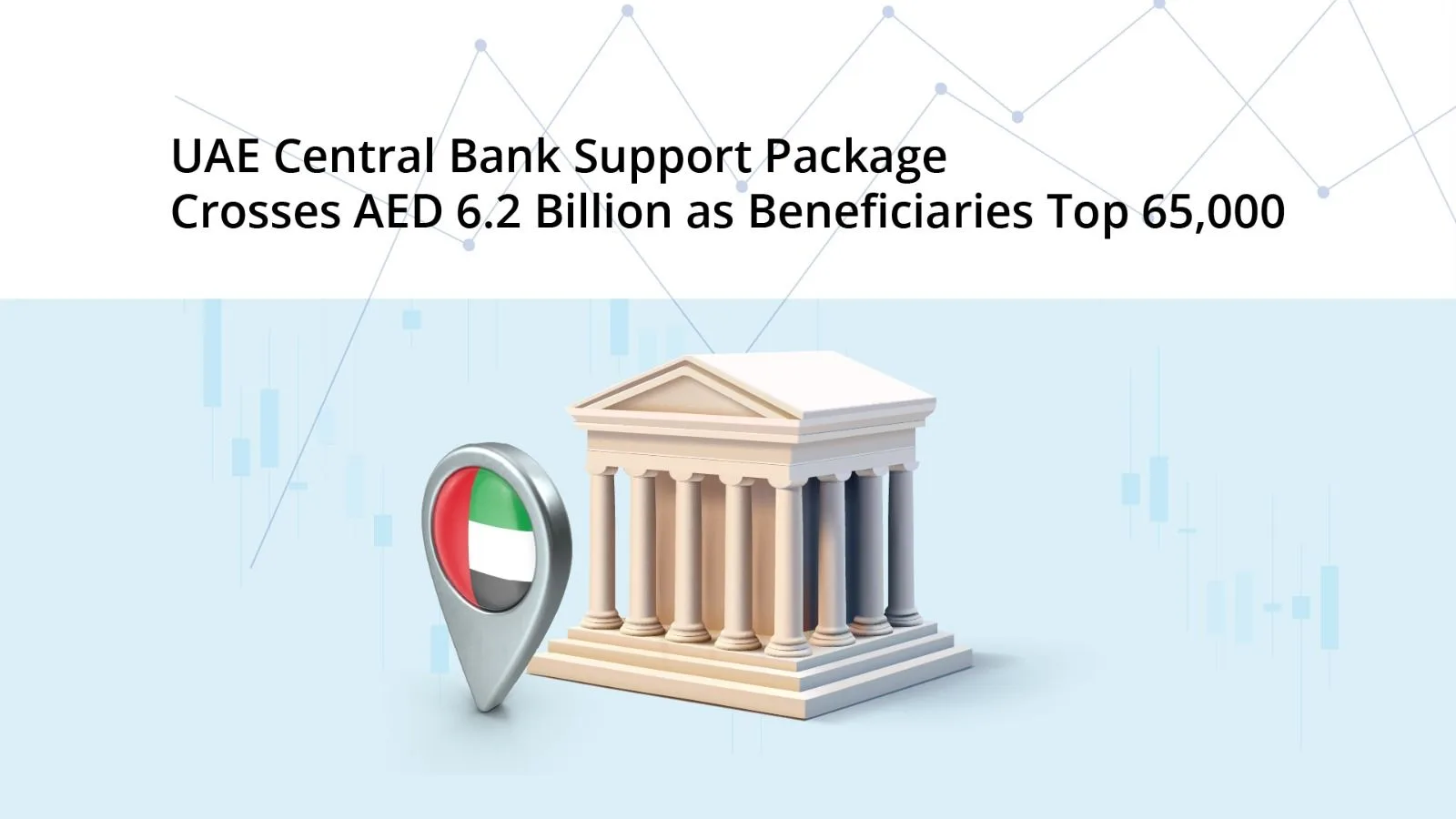
The UAE Central Bank’s Proactive Financial Institution Resilience Package is beginning to show measurable scale across the banking system, with total support now exceeding AED 6.2 billion and the number of beneficiaries surpassing 65,000, according to newly released figures from the Central Bank of the UAE.
The package, launched on March 17, was designed to support individuals, SMEs, and corporates affected by recent economic disruptions while preserving liquidity across the financial sector. The program combines loan deferments, interest relief measures, and fee waivers alongside broader banking-sector liquidity support.
As of May 1, 2026, approximately 60,559 individuals, 4,335 SMEs, and 485 corporates had benefited from the measures. Hospitality, transport, and entertainment emerged as key priority sectors, reflecting the areas most exposed to recent regional and macroeconomic volatility.
The Central Bank also highlighted continued growth across the UAE banking system during the support period. Banking-sector assets increased 2.1% between March 1 and May 1, while loans rose 3.2% and deposits expanded 1.9%. The monetary base cover ratio stood at 115.3%, underscoring the system’s continued liquidity strength despite elevated uncertainty across regional markets.
Unlike the broad pandemic-era stimulus frameworks deployed globally in 2020, the UAE’s latest package appears more targeted and sector-specific, aiming to stabilize credit conditions without significantly distorting broader financial activity. The structure prioritizes temporary repayment flexibility and operational continuity rather than outright fiscal transfers.
For markets, the data reinforces a broader theme emerging across the Gulf: policymakers are increasingly using proactive liquidity and banking-sector tools to contain volatility before it materially impacts financial stability or private-sector credit formation.
The measures also fit into a broader regional financial-stability framework that has become increasingly important amid recent geopolitical tensions and market volatility. Earlier this year, markets closely monitored discussions surrounding the U.S.-UAE currency swap line, a liquidity backstop mechanism designed to ensure access to U.S. dollar funding during periods of financial stress. Together, the swap-line discussions and the Central Bank’s resilience package highlight how Gulf policymakers are increasingly focused on maintaining liquidity transmission, banking-system confidence, and orderly capital flows during periods of external shock rather than relying solely on reactive crisis measures.
The scale of uptake also highlights the growing role of UAE financial institutions in acting as transmission channels for economic stabilization policy, particularly as regional economies navigate higher energy-price volatility, geopolitical uncertainty, and tighter global financial conditions.