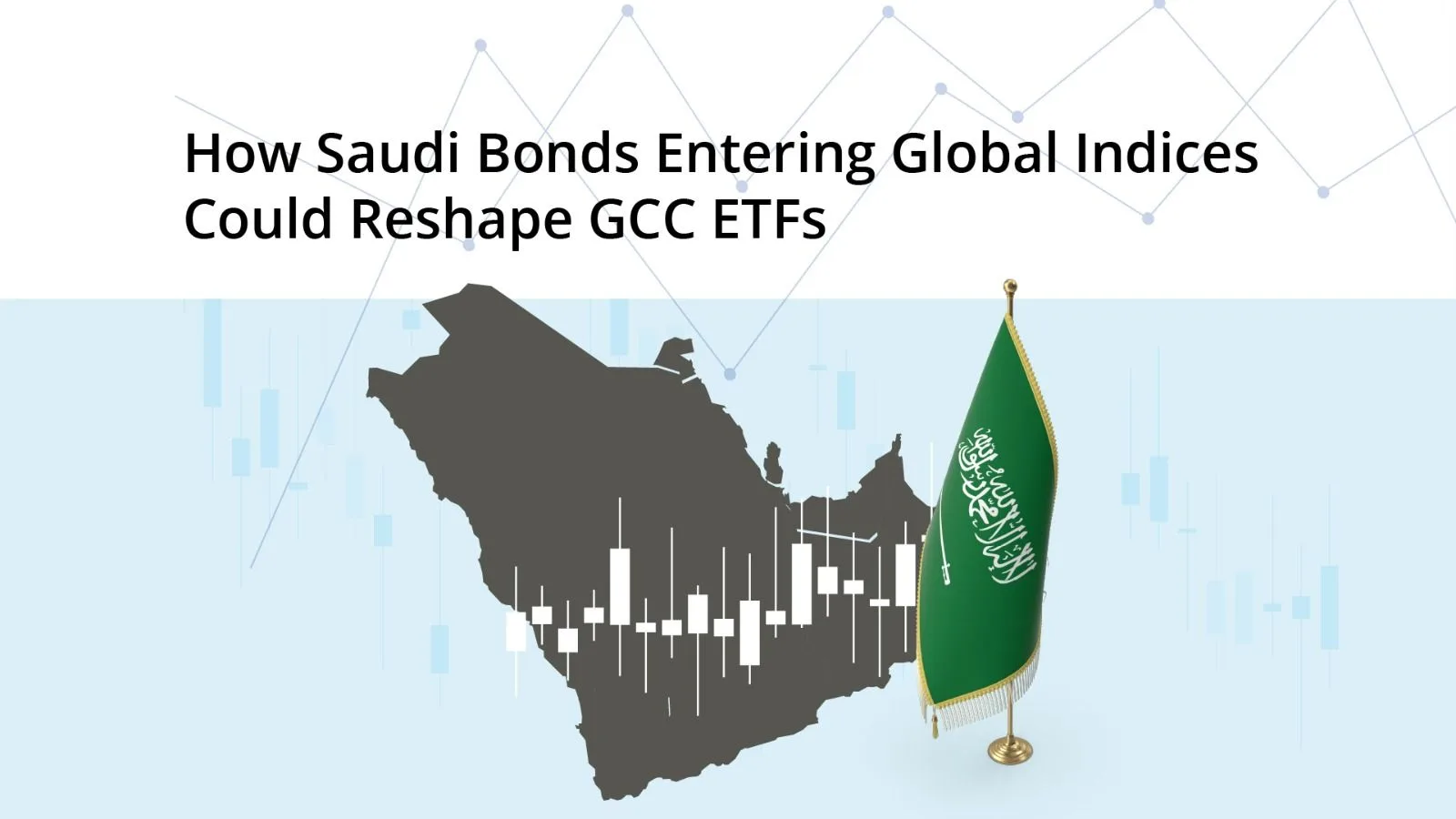
Saudi Arabia's SAR-denominated sukuk will join the JPMorgan GBI-EM and Bloomberg EM Local Currency indices in 2027, unlocking a structural wave of passive foreign capital into the Kingdom's $278 billion debt market.
Saudi Arabia is on the cusp of its most consequential capital market milestone since its MSCI Emerging Market upgrade in 2018. The Kingdom's SAR-denominated sovereign sukuk will be included in both the JPMorgan Government Bond Index-Emerging Markets (GBI-EM) and Bloomberg's EM Local Currency Government Bond index starting January 2027, a dual-index entry expected to channel over $10 billion in foreign inflows into the local debt market.
The index inclusion: key details
JPMorgan confirmed it will add Saudi bonds to its GBI-EM with a 2.52% weighting starting January 29, 2027, identifying eight eligible sukuk issuances with a combined value of $69 billion. The sukuk qualify with remaining maturities of up to 15 years and will be phased in on the index. Saudi Arabia will also be added to the ESG-focused JSTAR index with a 1.96% weighting.
Bloomberg Index Services separately confirmed the inclusion of SAR-denominated government sukuk in its Bloomberg EM Local Currency Government Bond index, effective end-April 2027, with a preview index to be published as early as Q3 2026. At 1.9% weight, Saudi Arabia becomes the 11th largest component of the Bloomberg index.
Why this matters: passive capital and ETF mechanics
The GBI-EM benchmarks approximately $233 billion in passive assets under management, tracked by ETFs such as the VanEck JP Morgan EM Local Currency Bond ETF (EMLC) and the iShares JP Morgan EM Local Government Bond UCITS ETF (SEML), alongside a broad universe of mutual funds and active mandates.
EMLC currently holds $5 billion across 490 bonds at a 0.30% expense ratio. Top country exposures include China (9.3%), Malaysia (8.2%), and India (8.2%). Saudi Arabia's 2.52% GBI-EM weight means passive funds tracking this benchmark must structurally purchase Saudi sukuk to stay aligned, creating a durable, non-discretionary demand floor.
"Once Saudi Arabia is included, passive funds will purchase Saudi bonds to remain aligned with the index. Unlike active investors, they do not rapidly buy or sell; they continue to hold as long as bonds remain in the index, providing significant stability to the Saudi debt market."
- Mohamed Damak Asharq Al-Awsat / JPMorgan research note
The reforms that made inclusion possible
The dual index inclusion is the result of a deliberate, multi-year reform programme. Saudi Arabia expanded its Primary Dealers Programme to include international banks, launched an over-the-counter settlement framework in mid-2025, and improved connectivity with global depositories, including Euroclear. Separately, effective February 2026, Saudi Arabia eliminated its Qualified Foreign Investor (QFI) regime, and foreign individuals and institutions can now access the Tadawul main market directly, without the prior $500 million AUM threshold.
The Saudi standalone index, launched in 2023 with 22 instruments valued at $59 billion, has since grown to 37 instruments valued at $175 billion by the end of 2025, aided by benchmark tenor development and the launch of several Saudi debt-focused ETFs in 2025.
GCC sukuk market: robust growth, geopolitical headwinds
The index inclusion backdrop coincides with continued momentum in GCC Islamic debt markets. Sukuk issuance across the GCC rose 13.1% in the first four months of 2026, driven by Saudi Arabia's local-currency borrowing programme. Global sukuk issuance grew 20% over the same period, led by Malaysia, Türkiye, and Indonesia.
S&P Global Ratings, in its Islamic Finance 2026–2027: Navigating Rough Waters report, expects Islamic finance industry growth to slow to 5%–10% in 2026, down from 10.2% in 2025, citing the ongoing Middle East conflict as a drag on regional economic growth. The GCC remains the dominant force, accounting for 45% of global sukuk issuance in 2025.
Weight cap adjustments: impact on peer EM markets
Saudi Arabia's entry into the GBI-EM triggers a structural rebalancing for the index's five largest constituents. Country weight caps will be reduced from 10% to 9% for China, India, Mexico, Malaysia, and Indonesia. For ETF holders, particularly those in EMLC or SEML, this means gradual trimming of those five exposures and corresponding accumulation of Saudi sukuk as the January 2027 effective date approaches.
For GCC investors: what to watch
Monitor the Q3 2026 Bloomberg preview index publication for early allocation signals. ETFs tracking the GBI-EM, particularly EMLC, will begin accumulating Saudi sukuk ahead of the January 2027 effective date. Domestically, Saudi debt-focused ETFs launched on Tadawul in 2025 offer a direct, SAR-denominated route to this market for regional investors
The bigger picture: Saudi Arabia's capital market evolution
This dual-index inclusion is not an isolated event. It follows Saudi Arabia's MSCI Emerging Market equity upgrade in 2018, FTSE Secondary Emerging classification, the QFI regime elimination in 2026, and ongoing Vision 2030-led capital market reforms. The $233 billion in assets tracking the JPMorgan GBI-EM benchmark, combined with the structural nature of passive fund mandates, means Saudi sovereign debt is transitioning from a predominantly domestic asset class to a core holding in global emerging market portfolios.
For GCC-based investors and those tracking regional fixed income ETFs, the practical implication is clear: the Saudi local bond market is becoming institutionally unavoidable, and the window ahead of January 2027 implementation may represent a significant positioning opportunity.