Artificial intelligence company Anthropic has publicly filed for an initial public offering on the Nasdaq under the proposed ticker ANT, offering investors a detailed view of one of the world's fastest-growing AI businesses.
The company submitted its Form S-1 registration statement to the US Securities and Exchange Commission on October 26, 2026, following an initial confidential filing in June. Goldman Sachs and Morgan Stanley are leading the offering, although its price, size and final valuation remain undetermined.
Beyond the proposed listing, the financial disclosures reveal a significant development: Anthropic is generating substantially more revenue from each dollar spent on computing infrastructure.
Revenue Growth Accelerates as Compute Economics Improve
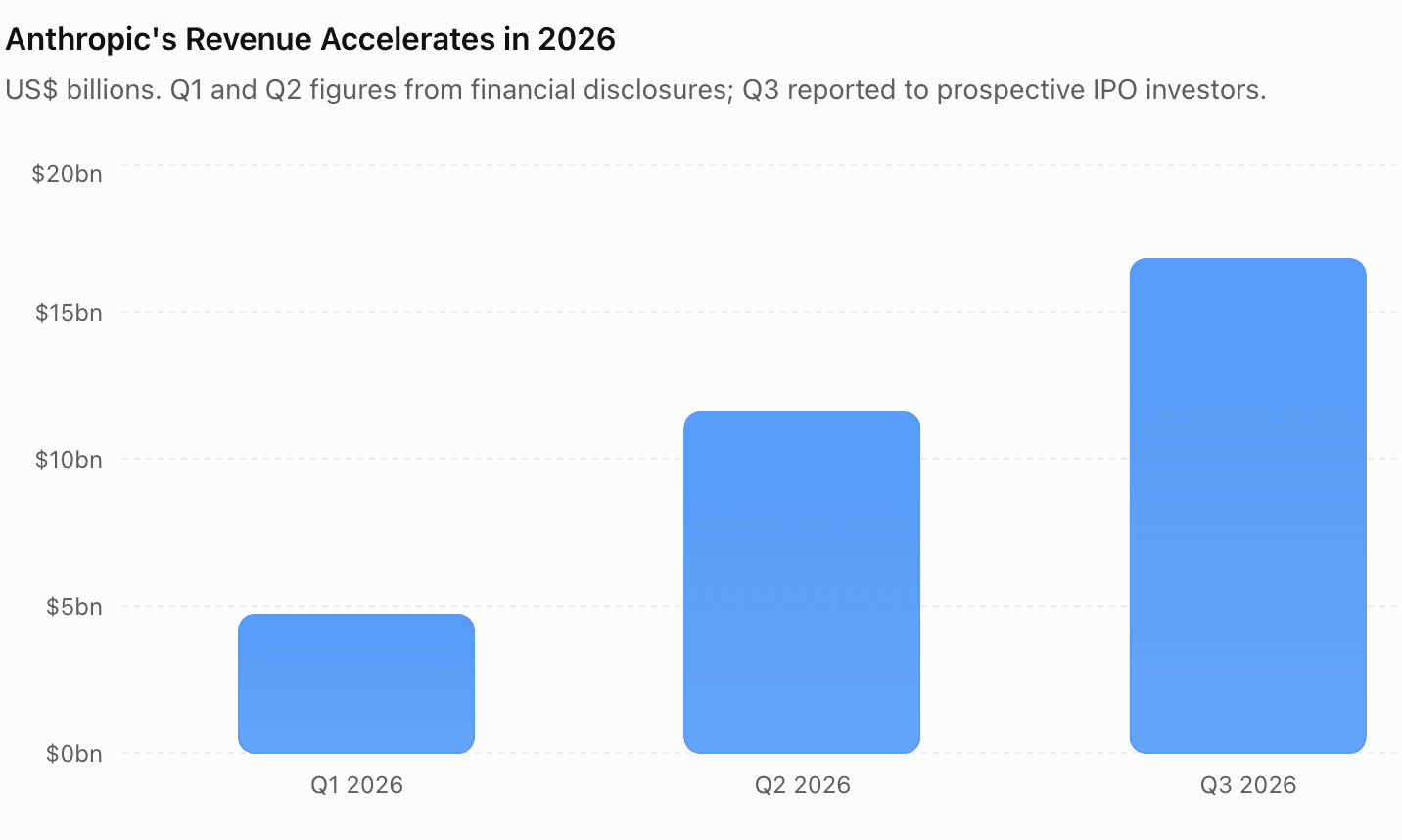
Anthropic generated US$16.3 billion in revenue during the first half of 2026, compared with US$1.2 billion during the same period in 2025.
Second-quarter revenue reached approximately US$11.6 billion, while third-quarter revenue reportedly climbed to US$16.8 billion, according to figures shared with prospective investors.
Crucially, computing expenditure has grown considerably more slowly than revenue.
In the first quarter of 2025, Anthropic generated approximately $0.40 in revenue for every dollar spent on compute and infrastructure. By the second quarter of 2026, that figure had climbed to $2.08, representing a 5.2-fold improvement.
Anthropic's Revenue and Compute Efficiency
Source: Anthropic's October 26 SEC filing. Figures rounded.
The improvement suggests that Anthropic is becoming more efficient at monetizing its computing capacity, helped by growing adoption of products such as Claude Code and advances in model efficiency.
However, these ratios are not profit margins. They exclude substantial other expenses, and compute costs can fluctuate as new infrastructure becomes operational.
Anthropic Generates Positive Operating Cash Flow
The filing also challenges the assumption that Anthropic's growth is entirely dependent on consuming cash.
During the first half of 2026, the company reported approximately US$3.9 billion in operating cash flow and US$482 million in capital expenditure, generating roughly US$3.4 billion in free cash flow under that calculation.
The figures contrast with its reported US$80.7 billion net loss, which included approximately US$72.4 billion in valuation-related accounting charges on financing instruments.
Anthropic also reported US$2.2 billion in stock-based compensation, a noncash expense that remains economically relevant to shareholders through potential dilution.
Importantly, positive free cash flow does not mean the company's entire expansion is self-financing. Anthropic reported substantial investing cash outflows and has entered into long-term computing arrangements worth hundreds of billions of dollars.
Its improving operating performance must therefore be considered alongside future financing requirements.
Claude Usage Surges Following New Model Releases
Demand indicators provide another positive signal.
According to OpenRouter usage data, the seven-day average daily token volume processed through Anthropic models increased approximately 3.6 times following the release of Claude Opus 5.5 in September.
Usage accelerated further after the introduction of Sonnet 5.5 and Haiku 5.5, with daily activity approaching three trillion tokens at peak levels in October.
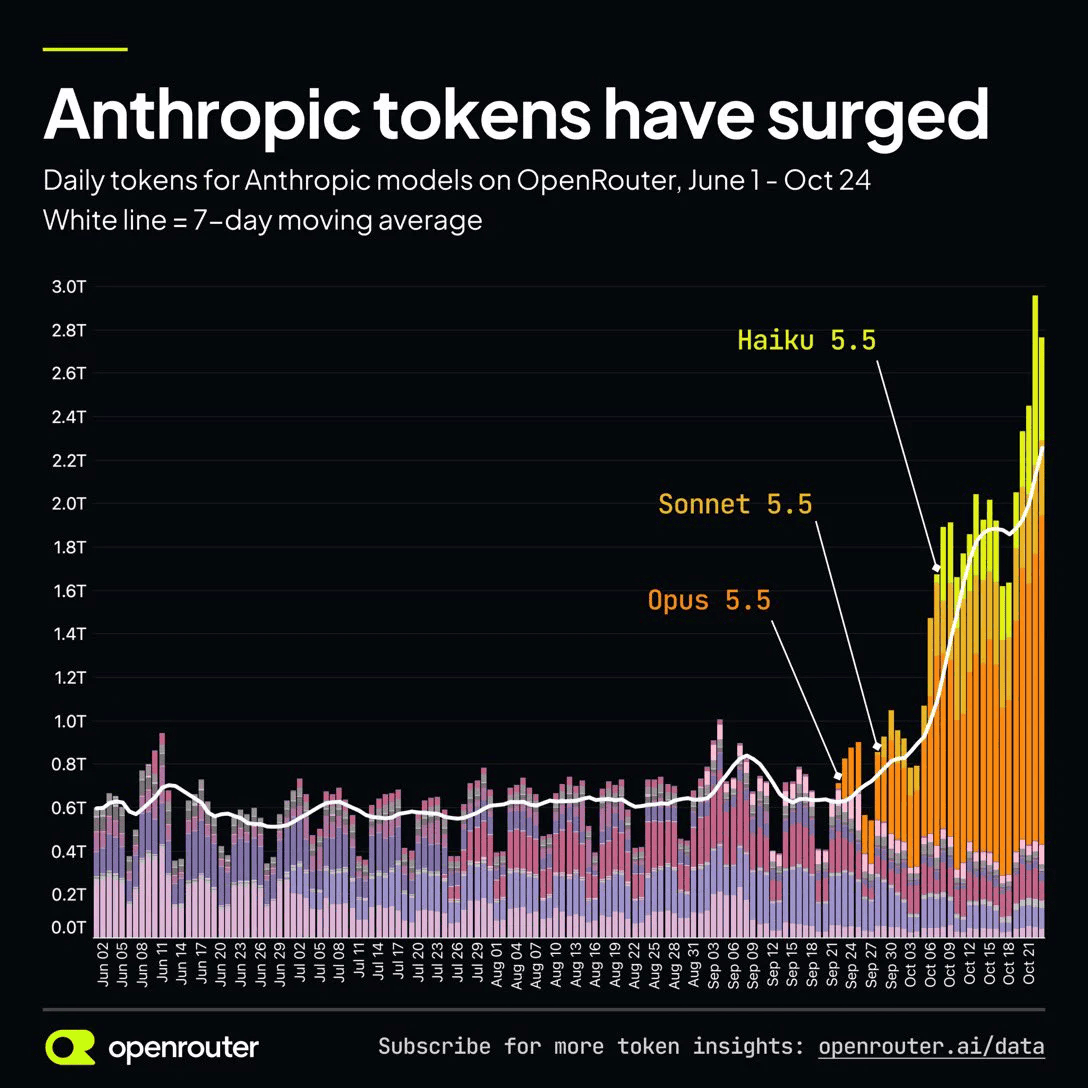
The surge suggests that lower costs and improved model capabilities are encouraging greater usage.
Nevertheless, token consumption is not equivalent to revenue. OpenRouter captures only one distribution channel, and falling prices can increase token volumes without producing proportional revenue gains.
What Anthropic's IPO Means for ETF Investors
Anthropic's potential Nasdaq listing could eventually give public-market investors direct exposure to one of the leading developers of frontier AI models.
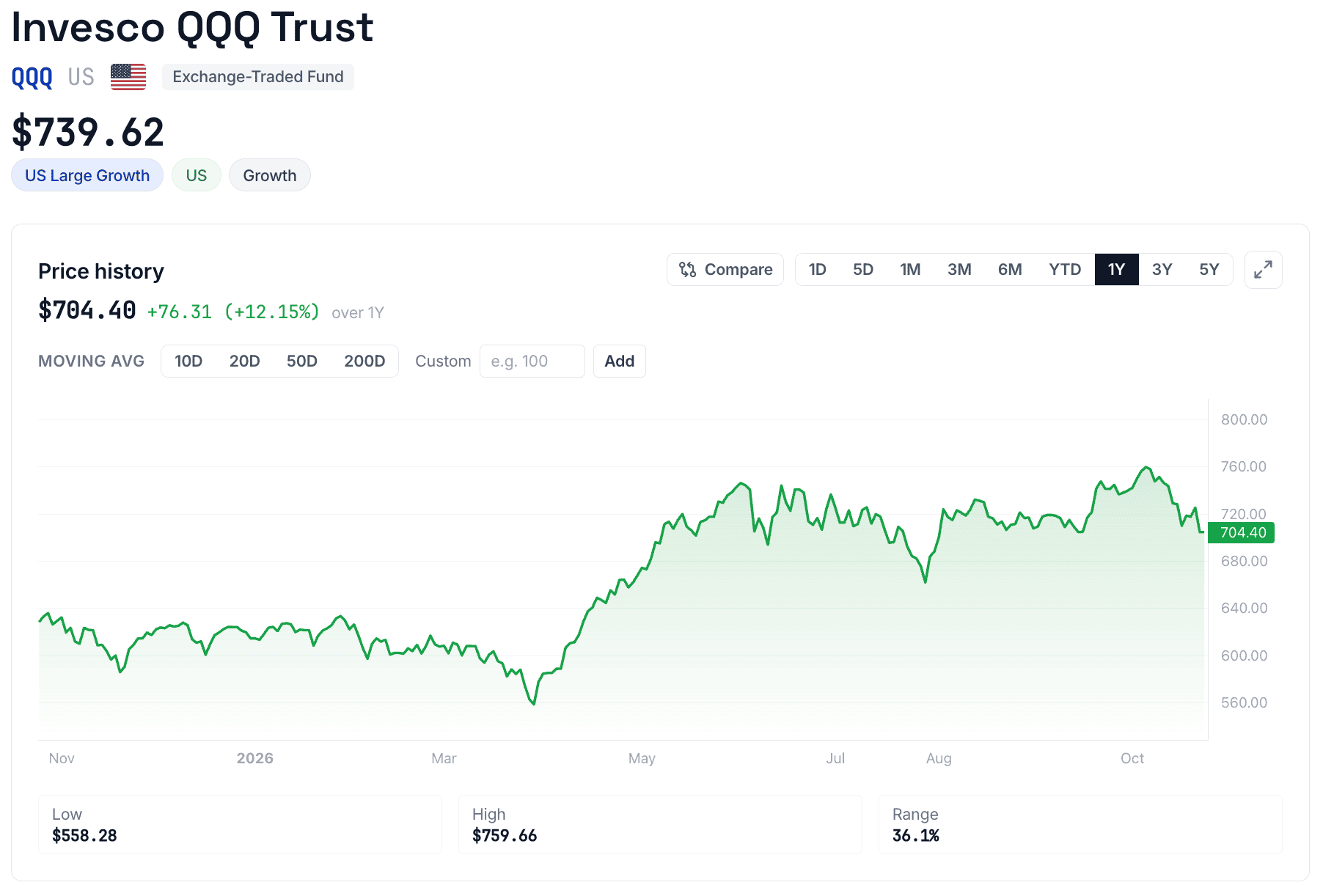
Currently, funds such as the Invesco QQQ Trust (QQQ) provide indirect exposure to the AI ecosystem through major technology companies, including semiconductor manufacturers and cloud infrastructure providers.
However, the KraneShares Public-Private AI & Technology ETF (AGIX) already holds Anthropic shares, having first invested in the privately held company in March 2025. As of October 8, 2026, Anthropic represented approximately 1.51% of AGIX's net assets, giving ETF investors direct exposure to the company ahead of its public listing.
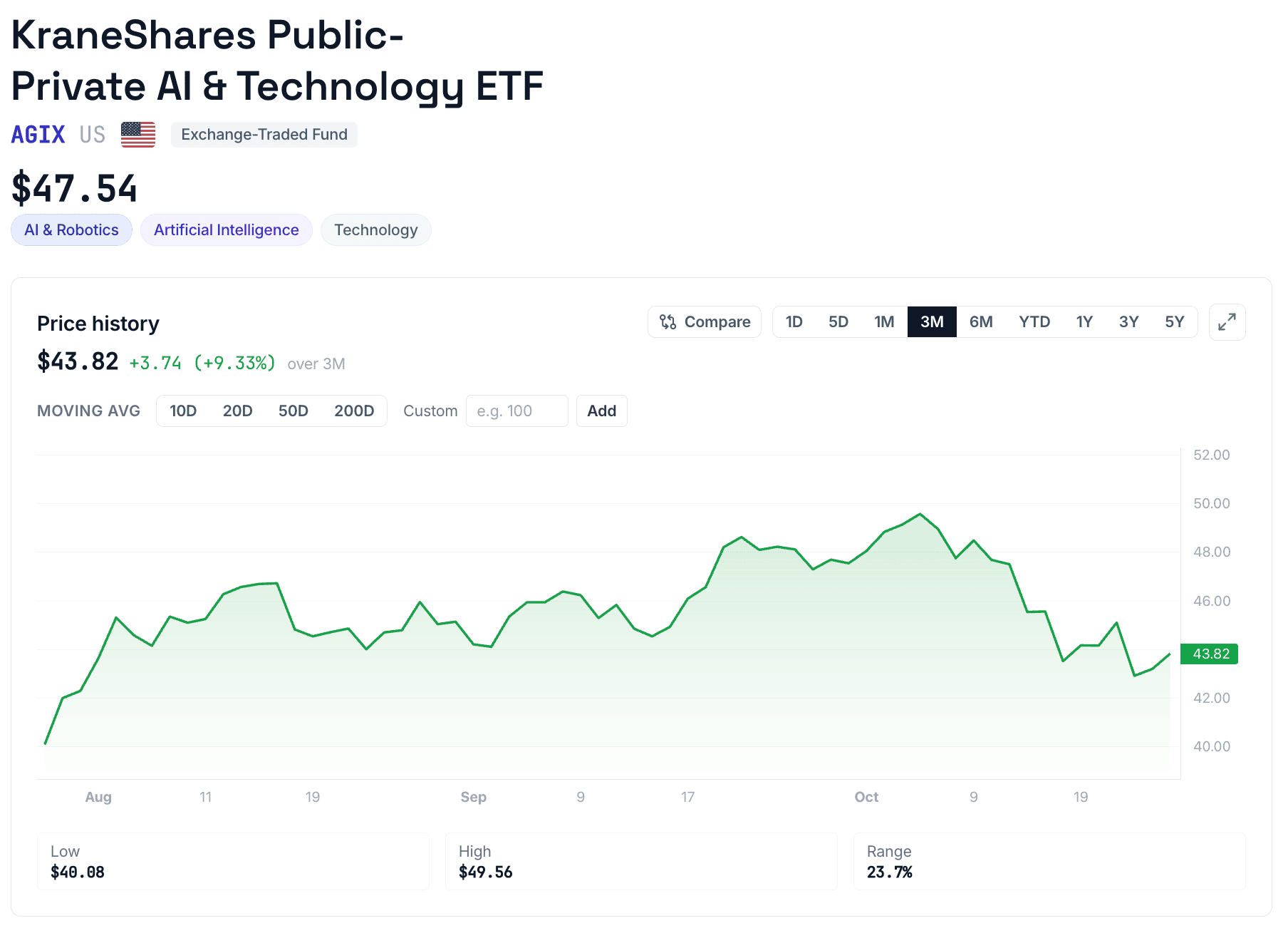
This distinguishes AGIX from conventional technology ETFs, which generally invest in publicly traded securities. Its private holdings also introduce additional valuation and liquidity considerations.
Anthropic's IPO could broaden its accessibility across the ETF market, but inclusion in major index-tracking funds such as QQQ would not be automatic. Eligibility would depend on listing requirements, market capitalization, liquidity and index review schedules.
The offering will provide an important test of how public-market investors value Anthropic's rapid revenue growth, improving compute efficiency and substantial infrastructure commitments.
Could Anthropic Qualify for Shariah-Compliant ETFs?
Anthropic could also become a candidate for Shariah-compliant equity funds, subject to financial and business-activity screening.
Although developing AI software is not inherently prohibited, index providers must assess revenue sources, interest-bearing obligations, cash holdings and other financial ratios under their respective methodologies.
The company's substantial convertible financing arrangements and complex balance sheet make these assessments particularly important.
Its reported accounting losses do not automatically determine Shariah eligibility, and the outcome may differ across screening providers.
For investors following Shariah-compliant ETFs, eligibility will become clearer after the company's listing and subsequent index reviews.
Anthropic's IPO ultimately presents a more nuanced AI investment story. Revenue is growing rapidly, computing efficiency is improving and operating cash flow has turned positive, but infrastructure commitments remain enormous.