
U.S. technology stocks fell sharply on Thursday, October 8, after reports revealed a $20 billion discrepancy in OpenAI's annualized revenue estimates, raising fresh concerns about the enormous capital commitments supporting the artificial intelligence industry.
The Nasdaq Composite declined 1.25%, while the S&P 500 lost 0.47%. Semiconductor stocks suffered heavier losses, with the Philadelphia Semiconductor Index falling approximately 3.4%, according to Reuters.
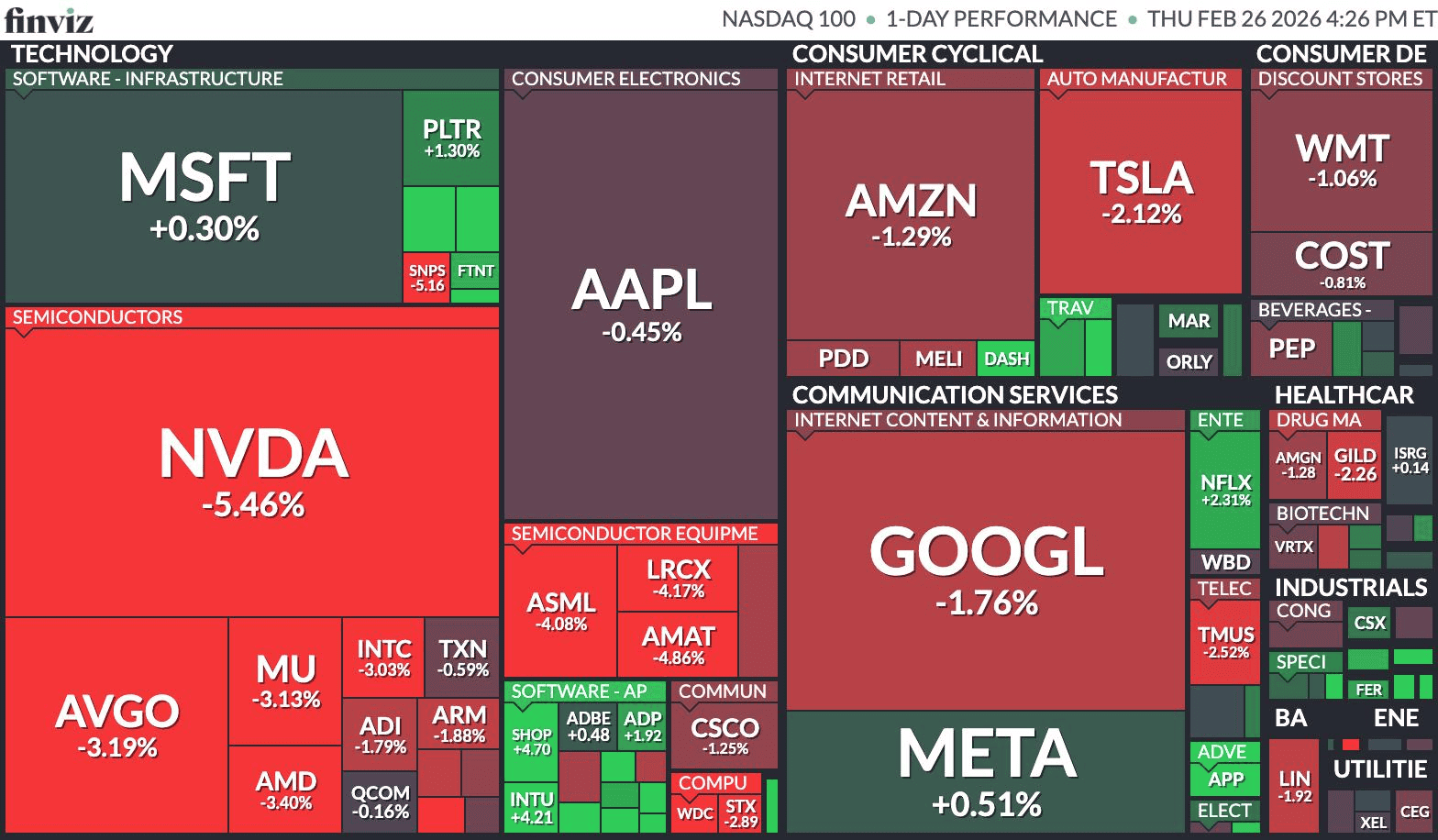
The selloff reflects growing investor scrutiny over whether AI developers can generate sufficient revenue to justify the infrastructure spending underpinning the sector's valuations.
Why OpenAI’s Revenue Figures Alarmed Investors
According to the Financial Times, OpenAI told investors its annualized revenue was approaching $50 billion at the end of September, compared with an earlier estimate of approximately $70 billion.
However, the $20 billion difference does not represent a confirmed revenue shortfall against company guidance. Part of the discrepancy stems from differences in how revenue generated through cloud partners is counted when comparing OpenAI with rival Anthropic.
Even so, the report arrived as investors were already questioning the economics of AI development, particularly the relationship between spending on computing infrastructure and the revenues generated by commercial AI products.
As Nukoud previously examined in its coverage of Alphabet's AI infrastructure spending, higher capital expenditure is increasingly influencing how investors assess technology companies.
Nvidia, Broadcom and Micron Lead Semiconductor Declines
The selling pressure was concentrated among companies supplying the AI infrastructure boom.
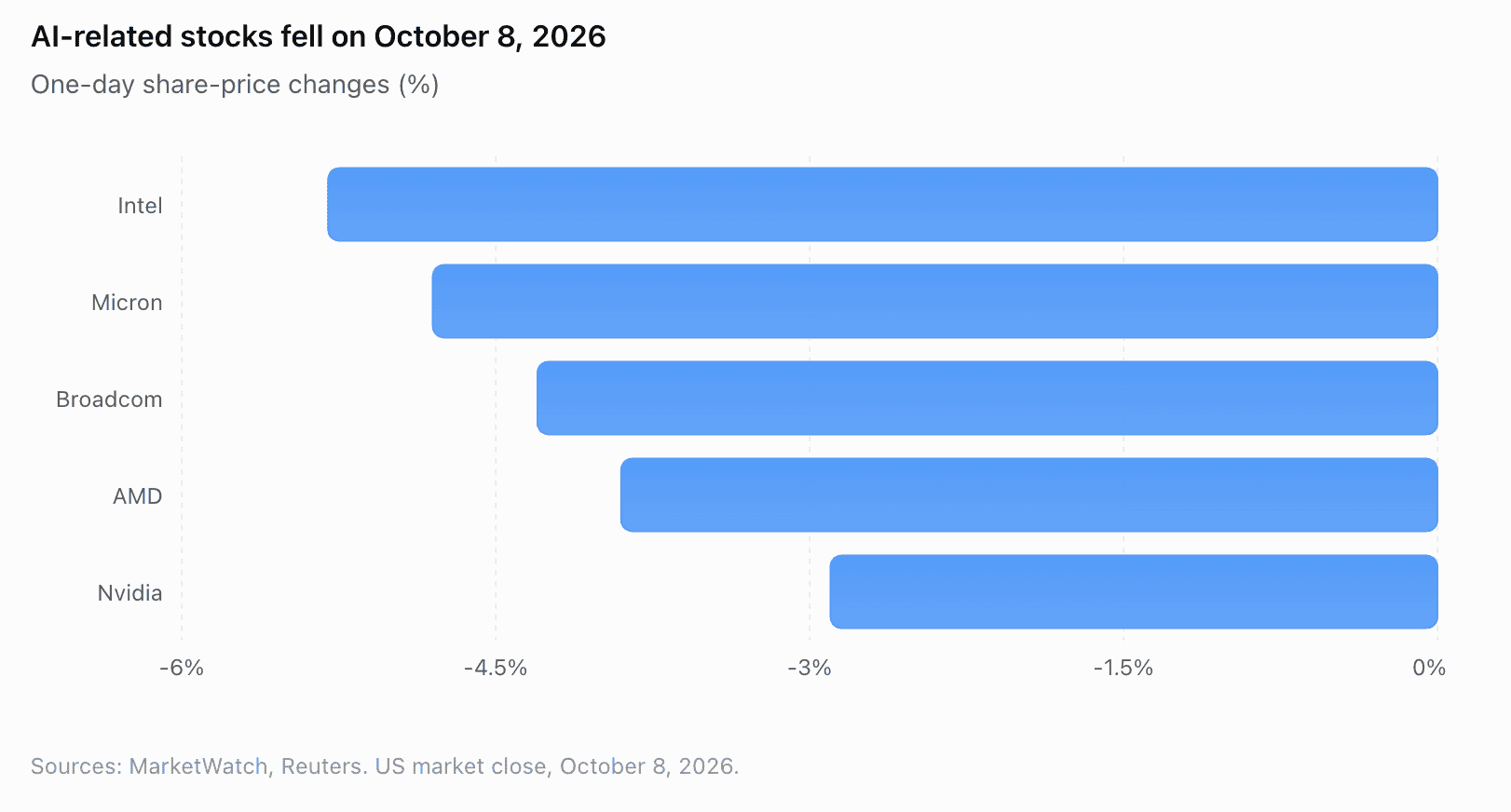
Nvidia shares fell 2.9%, Broadcom declined 4.4%, and Micron Technology dropped 4.8%. Oracle, which has expanded its AI infrastructure commitments, lost approximately 5.5%.
The decline followed separate reporting that Broadcom was arranging approximately $50 billion in financing for OpenAI, adding to concerns about the financial commitments required to expand AI computing capacity.
For semiconductor manufacturers, revenue growth increasingly depends on continued spending by AI developers and cloud providers. Any uncertainty surrounding customer economics can therefore affect expectations for future chip orders.
How the selloff affected technology ETFs
The selling pressure extended to (ETFs), with semiconductor and memory-focused strategies recording steeper losses than broader technology funds.
The Invesco QQQ Trust (QQQ) declined approximately 1.3%, while the Technology Select Sector SPDR Fund (XLK) lost around 1.8%.
However, the weakness on Wall Street contrasted with gains in Abu Dhabi on Friday, October 9, where two locally listed technology-focused ETFs advanced.
Semiconductor and AI ETF Performance
ETF | Market | Session | Daily Change |
|---|---|---|---|
iShares Semiconductor ETF (SOXX) | US | Oct. 8 | −3.35% |
Roundhill Memory ETF (DRAM) | US | Oct. 8 | −5.13% |
KraneShares AI & Technology ETF (AGIX) | US | Oct. 8 | −2.45% |
Lunate S&P US Shariah Growth ETF (USGRWTH) | ADX | Oct. 9 | +0.61% |
Lunate Boreas Quantum Computing ETF (QUANTM) | ADX | Oct. 9 | +1.39% |
Sources: Stock Analysis, Investing.com and ADX market figures communicated on October 9.
ADX returns are preliminary pending confirmation of final closing prices. The table compares different market sessions and should not be interpreted as simultaneous performance.
The Roundhill Memory ETF (DRAM) suffered the steepest decline among the three US-listed funds, falling 5.13%, compared with a 3.35% decline for SOXX. AGIX, which is also cross-listed on the Abu Dhabi Securities Exchange, lost 2.45% in Nasdaq trading, closing at $47.74.
In Abu Dhabi, the picture was different. The Lunate S&P US Shariah Growth ETF (USGRWTH) gained 0.61% on October 9, while the Lunate Boreas Quantum Computing ETF (QUANTM) advanced 1.39%, according to market figures shared with Nukoud.
The contrasting returns suggest that selling pressure had eased for these ADX-listed products following the previous session's US technology decline. The recovery was consistent with a broader improvement in global sentiment, as Nasdaq futures also rose on Friday.
However, differences in trading hours, portfolio composition and secondary-market liquidity mean the movements should not be treated as a direct comparison of identical exposures.
For investors assessing the sector, Nukoud's Artificial Intelligence ETF database and ETF screener provide tools to compare fund holdings, fees and historical performance.
What the AI Selloff Means for GCC Investors
The market reaction also matters for GCC investors accessing global technology through U.S.-listed funds and locally traded ETFs.
As covered in Nukoud's guide to five GCC-listed AI and technology ETFs, regional investors can obtain exposure across AI developers, semiconductor companies and digital infrastructure through different fund structures.
These distinctions become particularly important during market corrections, when ETFs linked to the same investment theme can experience different outcomes because of their underlying holdings.
With U.S. third-quarter earnings season approaching, investors will be watching corporate guidance on AI infrastructure orders, capital expenditure and customer demand for a clearer assessment of the industry's growth trajectory.