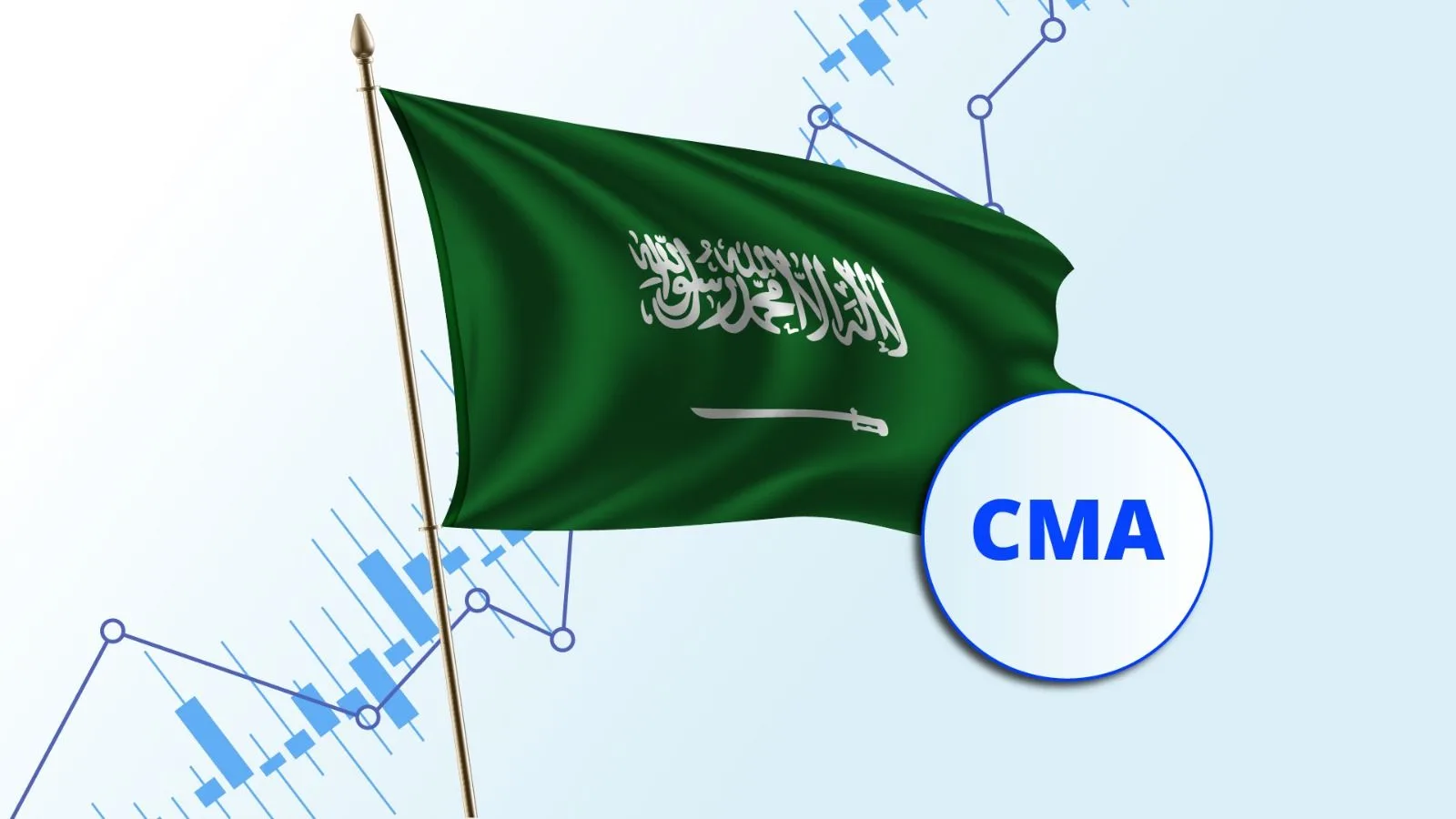

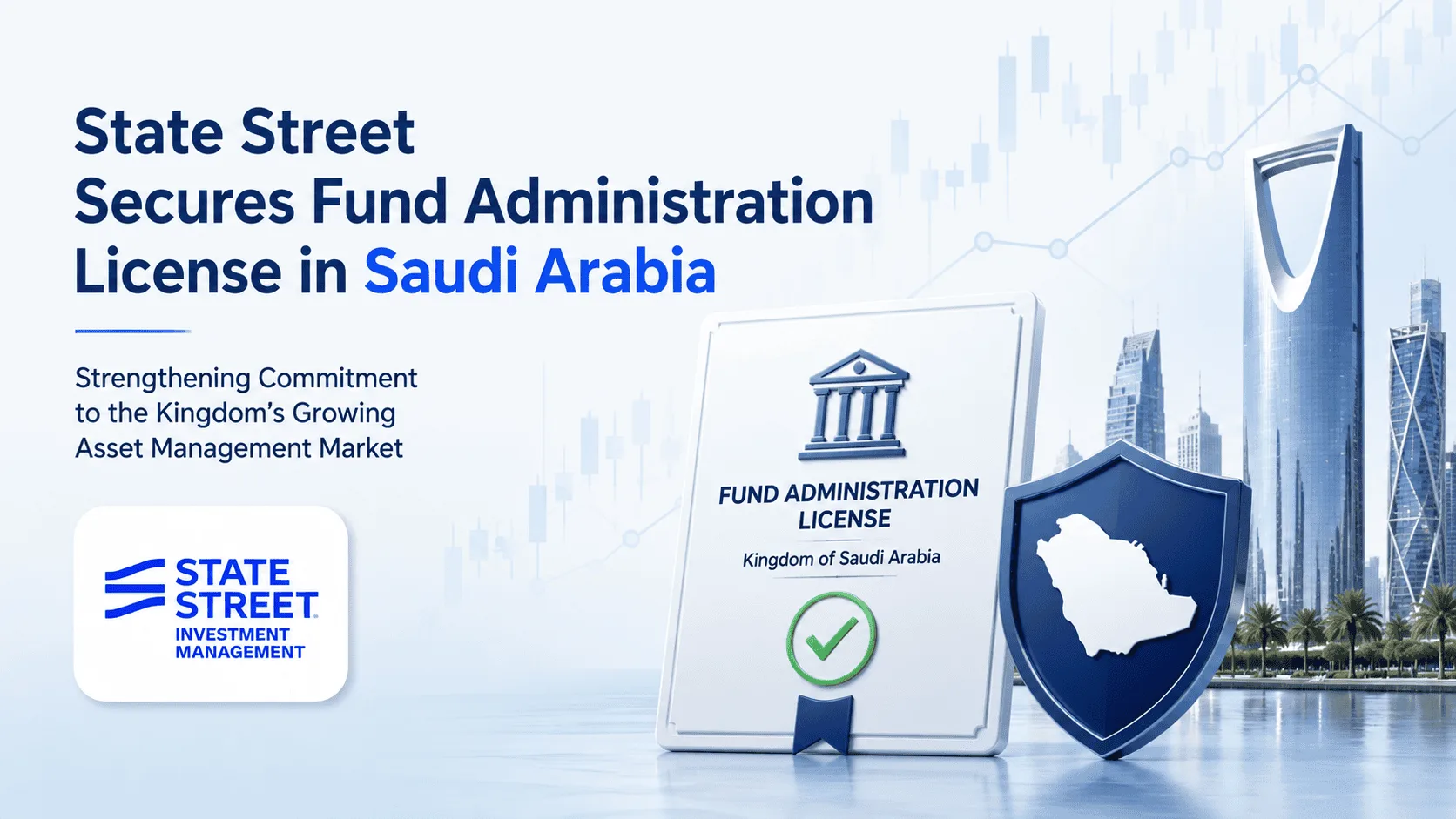
Global custodian and financial services giant State Street has obtained a Managing Investment and Operating Funds (MIOF) license from Saudi Arabia’s Capital Market Authority (CMA), marking a significant expansion of its operational capabilities in the Kingdom. The upgraded license enables State Street Saudi Arabia Financial Solutions to establish, operate, and administer funds entirely within Saudi Arabia, a step that underscores the rising attractiveness of the Kingdom’s asset management sector to global financial institutions.
State Street’s Saudi Arabia Footprint
State Street has been building its Saudi presence steadily since establishing local operations in 2020. It expanded those operations in 2024, the same year it launched its regional headquarters in Riyadh. The firm’s exposure to the Kingdom is already material:
With this MIOF license, the firm can now complement its existing custody and investment services by delivering fund administration locally, enabling eligible fund administration activities to be performed locally under the Kingdom’s regulatory framework.
What the MIOF License Unlocks
The MIOF license is one of the CMA’s core securities business authorisations, permitting holders to manage and operate investment funds within the Kingdom. For State Street, the upgrade represents a transition from a custody-and-servicing model to a full fund infrastructure provider. The table below illustrates the key operational differences:
Oliver Berger, Head of Strategic Growth Markets at State Street, described the move as enabling the firm to “manage and administer funds locally,” strengthening its position as a long-term partner to both global and local institutional investors. Rainer Kasch, Interim Head of Saudi Arabia and Bahrain at State Street, added that the license will allow the firm to provide “scalable investment servicing infrastructure to Saudi Arabia’s asset management ecosystem.”
Why Fund Administration Matters?
Fund administration forms the operational backbone of an investment fund. Core responsibilities typically include NAV calculation, fund accounting, investor reporting, transfer agency, regulatory filings, and compliance monitoring. As more global investment firms establish on-the-ground operations in Saudi Arabia, local fund administration capabilities are becoming increasingly important. The expanded licence enables State Street to deliver these services within the Kingdom, supporting clients with a locally regulated operating model.
Saudi Arabia's Fund Industry Is Growing Rapidly
State Street’s timing aligns with a sustained period of expansion in Saudi Arabia’s investment fund industry. According to the CMA's 2025 Annual Report, total assets under management in Saudi Arabia exceeded SAR 1.2 trillion by year-end 2025, representing 18% year-on-year growth. Investment fund assets reached SAR 884.45 billion in Q4 2025, up 26.5% from SAR 699.06 billion in Q4 2024, highlighting continued expansion in the Kingdom's regulated fund industry.
Why Saudi Arabia’s Fund Market Is Attracting Global Operators
Several structural drivers explain the surge in international interest:
Vision 2030 Capital Market Reform: The CMA issued 32 new licenses to capital market institutions in 2025, bringing the total to 215 licensed entities. The regulator has actively streamlined fund formation, introduced Simplified Investment Fund rules, and opened the main market to all foreign investor categories as of February 2026.
Foreign Investor Access: Net international investment in the Main Market rose to SAR 225.2 billion by the end of 2025, with international investor numbers reaching approximately 161,000. This momentum was further supported by Saudi Arabia's opening of its Main Market to all categories of foreign investors in February 2026, replacing the Qualified Foreign Investor (QFI) framework. Together with Simplified Investment Fund rules approved in March 2026, these reforms significantly reduce barriers for international asset managers establishing products in the Kingdom.
Sukuk Market Depth: Listed sukuk and debt instruments reached SAR 713.4 billion by end-2025, a 7.5% increase year-on-year. Corporate sukuk issuance proceeds of SAR 50.7 billion exceeded equity market proceeds for the second time in four years.
Public Investment Fund Scale: PIF AUM stood at approximately $925 billion in 2025, creating significant demand for institutional-grade investment infrastructure and custody solutions.
Strategic Implications for the GCC
State Street’s MIOF license extends a broader trend of global financial institutions deepening their GCC infrastructure rather than simply accessing the market remotely. For institutional investors, whether sovereign wealth funds, pension managers, or international asset allocators, the availability of locally licensed fund administrators reduces both operational complexity and regulatory risk.
For Saudi Arabia, each new licensed entity of this calibre further reinforces the Kingdom’s ambition to become a regional asset management hub, a goal explicitly embedded in Vision 2030’s Financial Sector Development Programme.
The move also signals that the Kingdom’s fund administration market, previously underdeveloped relative to its custody and brokerage infrastructure, is now attracting tier-one global service providers willing to commit capital and regulatory bandwidth to local licensing.
State Street's expansion in Saudi Arabia also reflects its broader strategic focus on the continued growth of ETFs and institutional investment worldwide. Readers interested in the firm's broader market outlook can also explore State Street's ETF Predictions Are Out. Here's What's in Store, which examines the trends expected to shape the global ETF industry over the coming years.
Bottomline
As the Kingdom's investment fund assets reached SAR 884.45 billion and total assets under management exceeded SAR 1.2 trillion at the end of 2025, demand for local fund servicing infrastructure is expected to continue growing alongside Saudi Arabia's expanding asset management industry.
For international asset managers, global custodians, and institutional investors, the ability to establish and administer funds within Saudi Arabia should improve operational efficiency while supporting the Kingdom’s ambition to become a leading regional asset management hub.