

Nasdaq Hits Record as AMD and Meta Power a Wider AI ETF Rally
The Nasdaq Composite returned to record territory this week as investors pushed back into artificial-intelligence stocks, with the rally spreading across mega-cap technology, semiconductor ETFs and even locally listed U.S. growth exposure in Abu Dhabi.
On September 21, Advanced Micro Devices crossed $1 trillion in market value for the first time, with Reuters reporting the shares up 9.6% at $613.31 during the session. AMD has gained about 185% in 2026, far ahead of the Nasdaq, as investors increasingly price the company as a serious competitor in AI computing.
Meta provided a different catalyst. Its shares jumped 11.4% on September 21 after strong early adoption of Muse, the AI assistant launched on September 8. Reuters reported that Muse recorded 2.8 million downloads in its first 12 days, while Meta shares have risen more than 20% since launch.
The Nasdaq then extended the move on September 22, reaching another record as technology stocks held their gains.
The Rally Is Showing Up Across ETFs
The strongest ETF response has come from funds with heavy semiconductor exposure.
Invesco QQQ (QQQ), the main ETF tracking the Nasdaq-100, closed at $747.46 on September 22, up 0.81% after gaining 2.77% the previous session. From the September 18 close, QQQ advanced about 3.6% in two trading days.
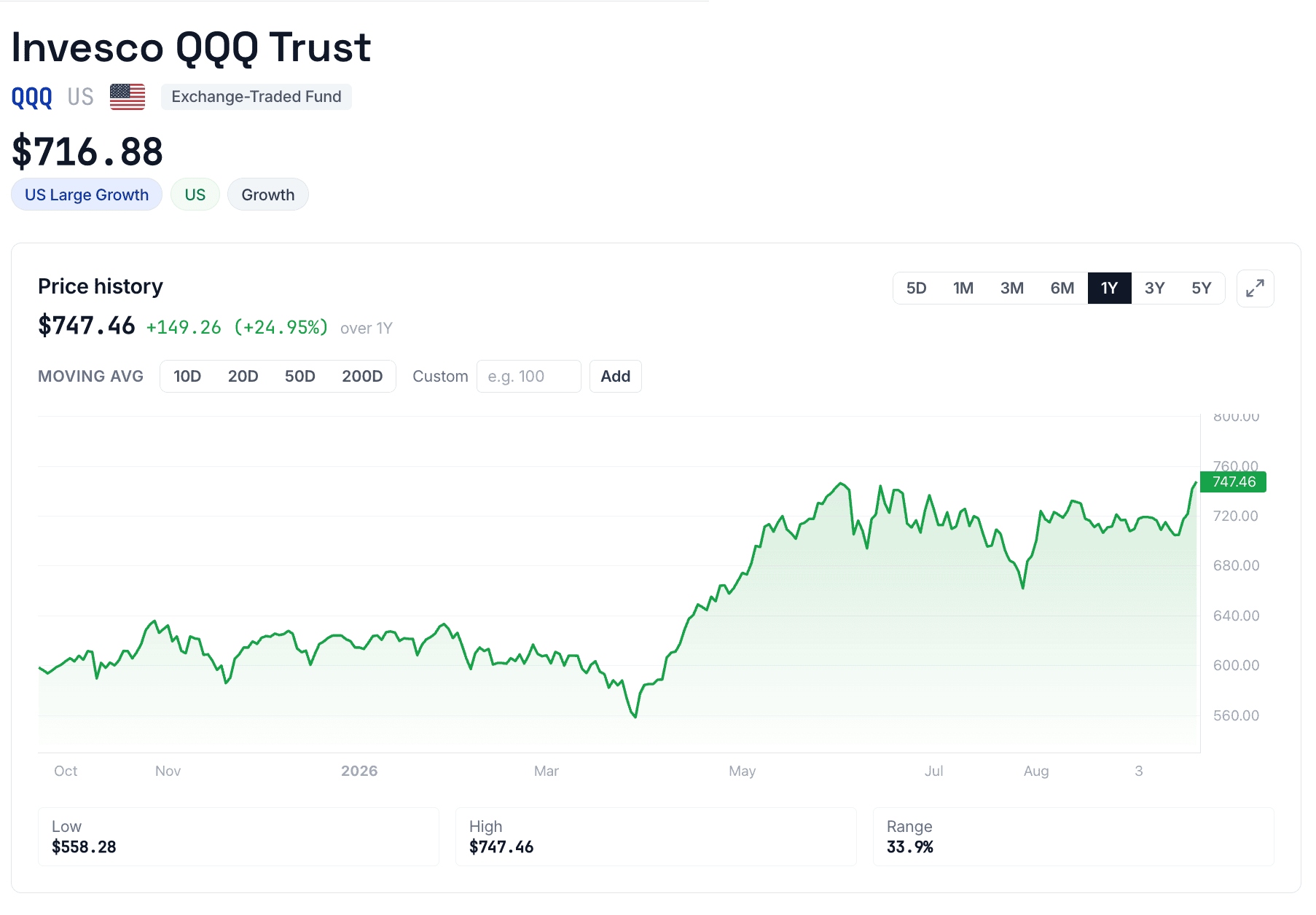
QQQ provides the broadest view of the current rally because it mixes major AI beneficiaries with software, consumer technology and other Nasdaq-listed growth companies. In August alone, QQQ gained 4.22%, attracted $12.84 billion of net inflows and ended the month with $489.84 billion in assets, according to Invesco.
The semiconductor funds have moved considerably faster.
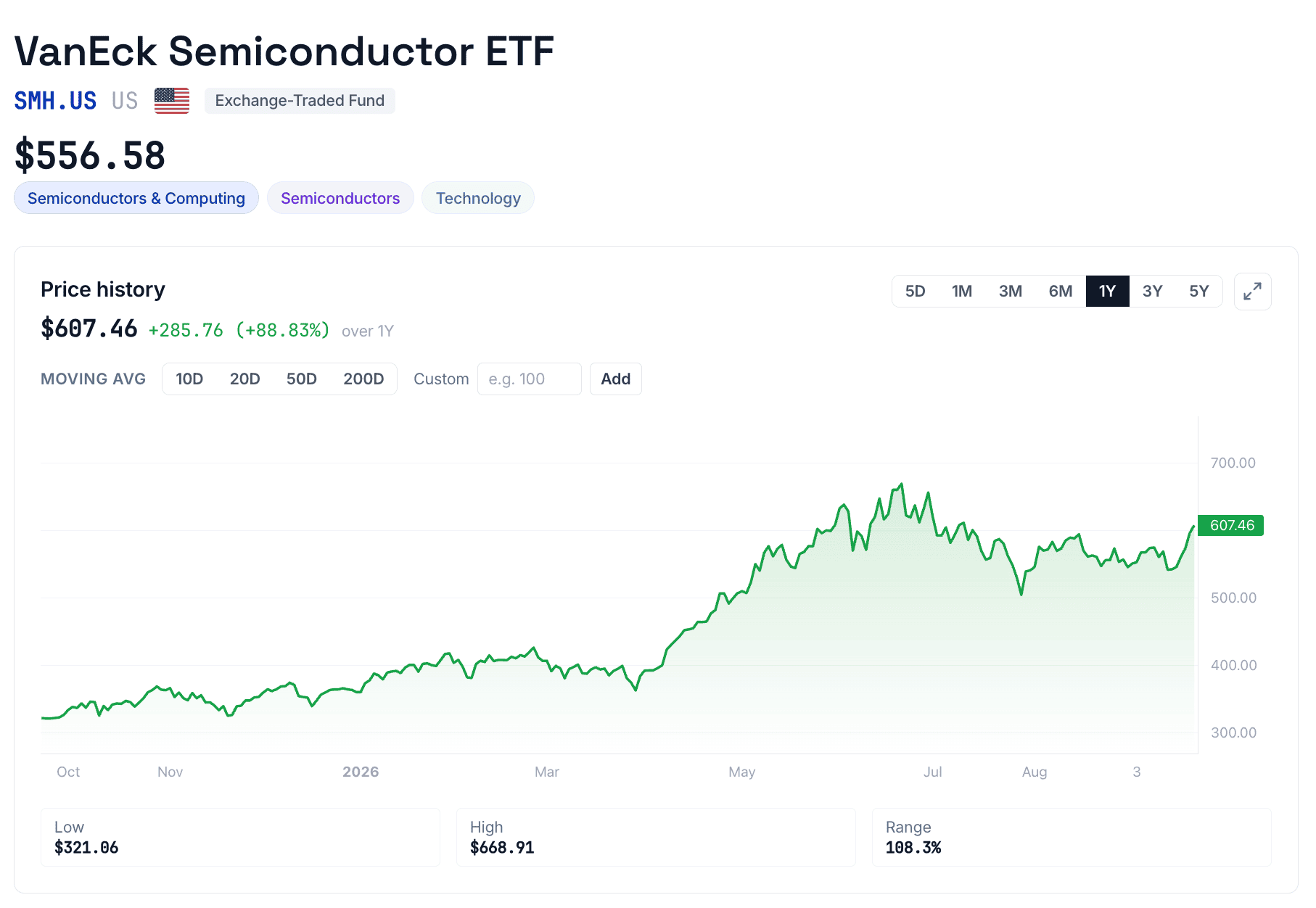
The VanEck Semiconductor ETF (SMH) rose from $573.00 on September 18 to $603.00 on September 22, a two-session increase of roughly 5.2%. As of September 17, Nvidia represented 22.42% of SMH, while AMD accounted for 6.16%, followed by TSMC at 9.80% and Broadcom at 5.67%.
The iShares Semiconductor ETF (SOXX) moved even more sharply, closing at $572.78 on September 22, up 2.40% for the day after gaining 4.93% on September 21. That puts its two-session advance at about 7.5%.
Its structure explains some of that sensitivity. In its September 9 portfolio, AMD represented 8.75%, Micron 9.17%, Nvidia 9.18% and Broadcom 7.07%.
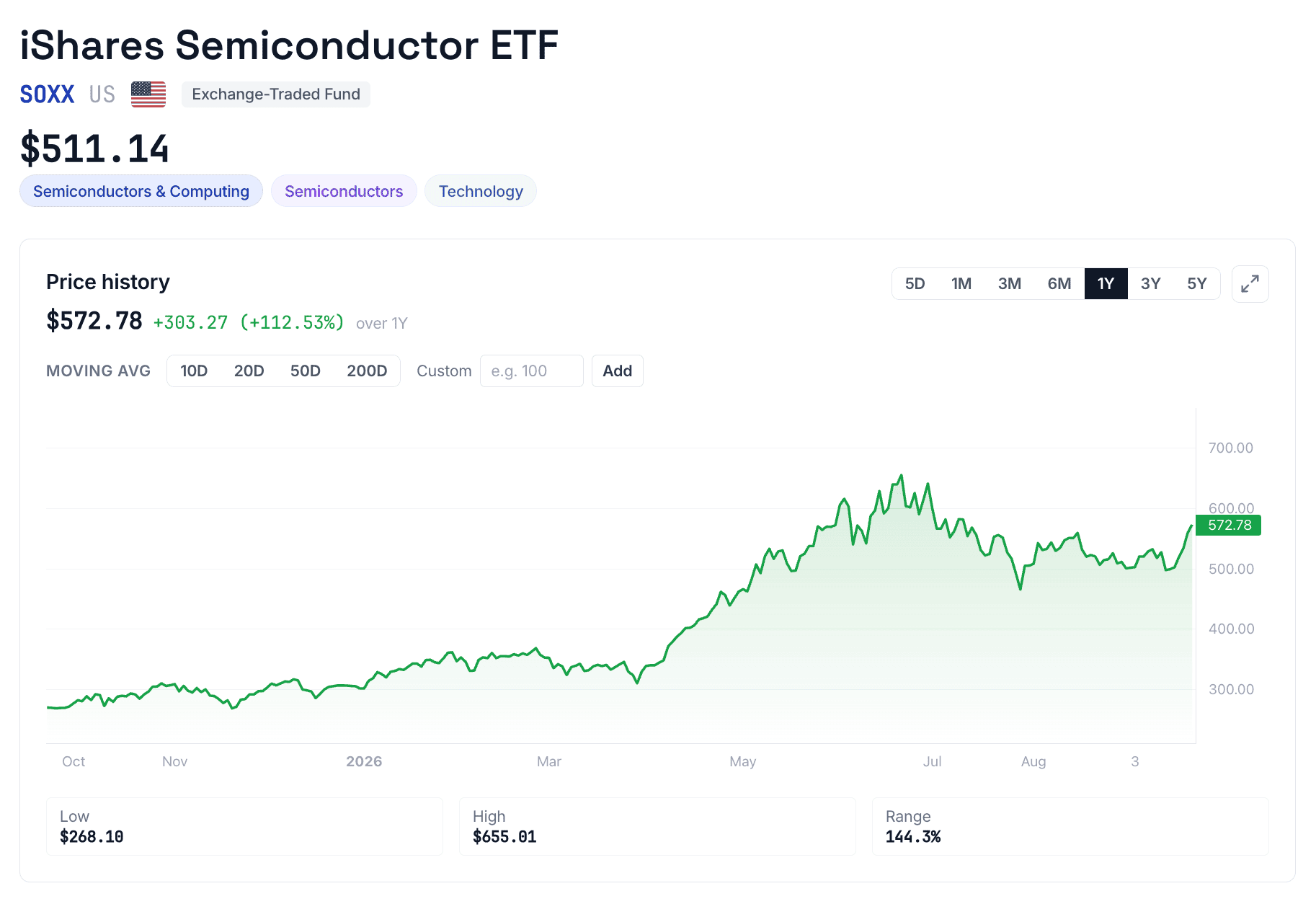
The more concentrated the fund is in semiconductors, the stronger its response to the latest AI rally.
Meta Changes the AI Debate
Much of the AI equity trade has been built around infrastructure spending: Nvidia accelerators, AMD processors, memory chips and data-centre capacity.
Muse gives investors a clearer example of how that infrastructure might eventually produce consumer revenue. Reuters reported subscription tiers at $20 and $100 per month, while analysts are beginning to model revenue from subscriptions, transactions and commercial integrations.
That helps explain why the rally has spread beyond chipmakers. AI monetization at companies such as Meta supports the demand case for the hardware underneath it.
Semiconductor demand data remain strong as well. South Korean semiconductor exports jumped 259.4% year on year in the first 20 days of September, according to figures cited by Reuters.
The Same Trade Is Appearing on ADX
The GCC connection comes through the Lunate S&P US Shariah Growth ETF (USGRWTH) on the Abu Dhabi Securities Exchange.
USGRWTH does not track the Nasdaq and it does not hold the same semiconductor concentration as SMH or SOXX. Its portfolio instead combines Shariah-compliant U.S. growth companies across technology, communications and consumer sectors.
Lunate reported that the fund gained 3.3% in August, ending the month with AED25.3 million in assets. Its underlying index traded at a P/E of 47.76 times.
By September 22, Nukoud data showed AUM at AED27.14 million and the ETF up 12.92% year to date.
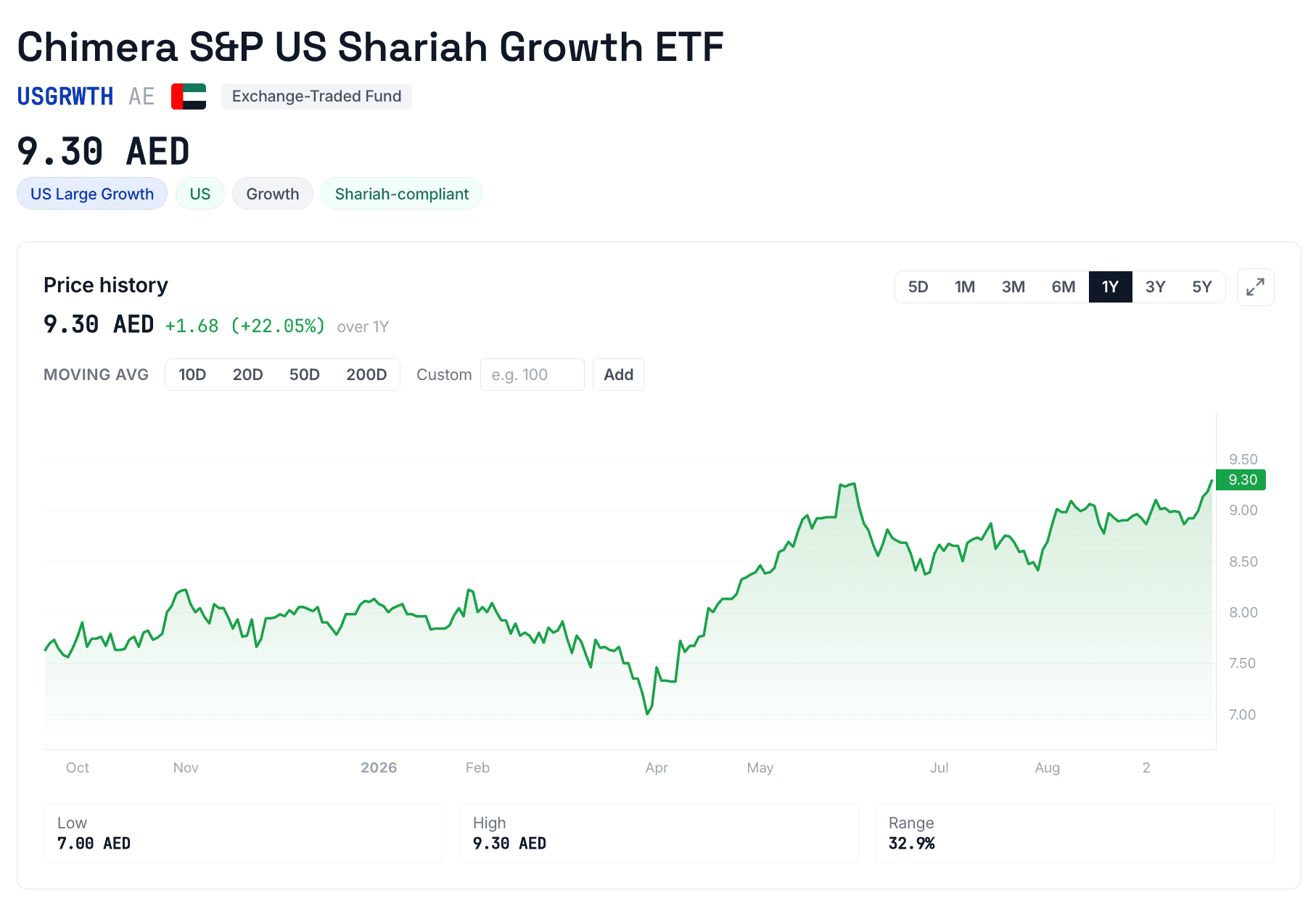
The trading activity has been equally interesting. On September 17, USGRWTH traded AED1.93 million, nearly 59 times its seven-day average volume. By September 22, the fund had risen another 1.31% and carried AED2.06 million of net weekly buying pressure, the strongest reading on the ADX ETF board.
That does not mean ADX investors are simply replicating the Nasdaq trade. USGRWTH uses a Shariah screen and holds only 30 U.S. growth companies. Still, its exposure to Nvidia, Meta, Microsoft, Amazon, Broadcom and Micron gives UAE investors a locally traded route into many of the same companies driving U.S. technology markets.
One Rally, Different ETF Exposures
The current move shows why ETF selection matters even when the headline theme is the same.
QQQ captures the broad Nasdaq growth trade. SMH concentrates much more heavily on large semiconductor leaders, while SOXX spreads exposure more evenly across chipmakers. USGRWTH offers a smaller, Shariah-compliant route through ADX with a different weighting system and local trading hours.
The near-term risk is valuation. Semiconductor funds have already delivered exceptional gains this year, while USGRWTH's underlying portfolio traded close to 48 times earnings at the end of August. Any slowdown in AI spending, weaker semiconductor demand or disappointment around new AI revenue streams could produce a sharper reversal in the funds that have benefited most.
For now, however, the latest Nasdaq record is being expressed through several different ETF channels. QQQ shows the broad technology rally, SMH and SOXX show how aggressively investors are pricing the chip cycle, and USGRWTH shows that the same theme is increasingly visible on a GCC exchange.