

May proved to be a breakout month for quantum computing stocks as government support, investor enthusiasm, and a major public offering combined to reignite one of the market’s most speculative technology themes.
The catalyst arrived when the U.S. government announced plans to invest approximately $2 billion across nine quantum computing companies, including IBM-backed initiatives, D-Wave, Rigetti Computing, Infleqtion, and several private firms. In a notable shift from traditional research grants, the government plans to take equity stakes in many of the recipients, signaling a growing belief that quantum computing is becoming a strategic technology alongside semiconductors and artificial intelligence.
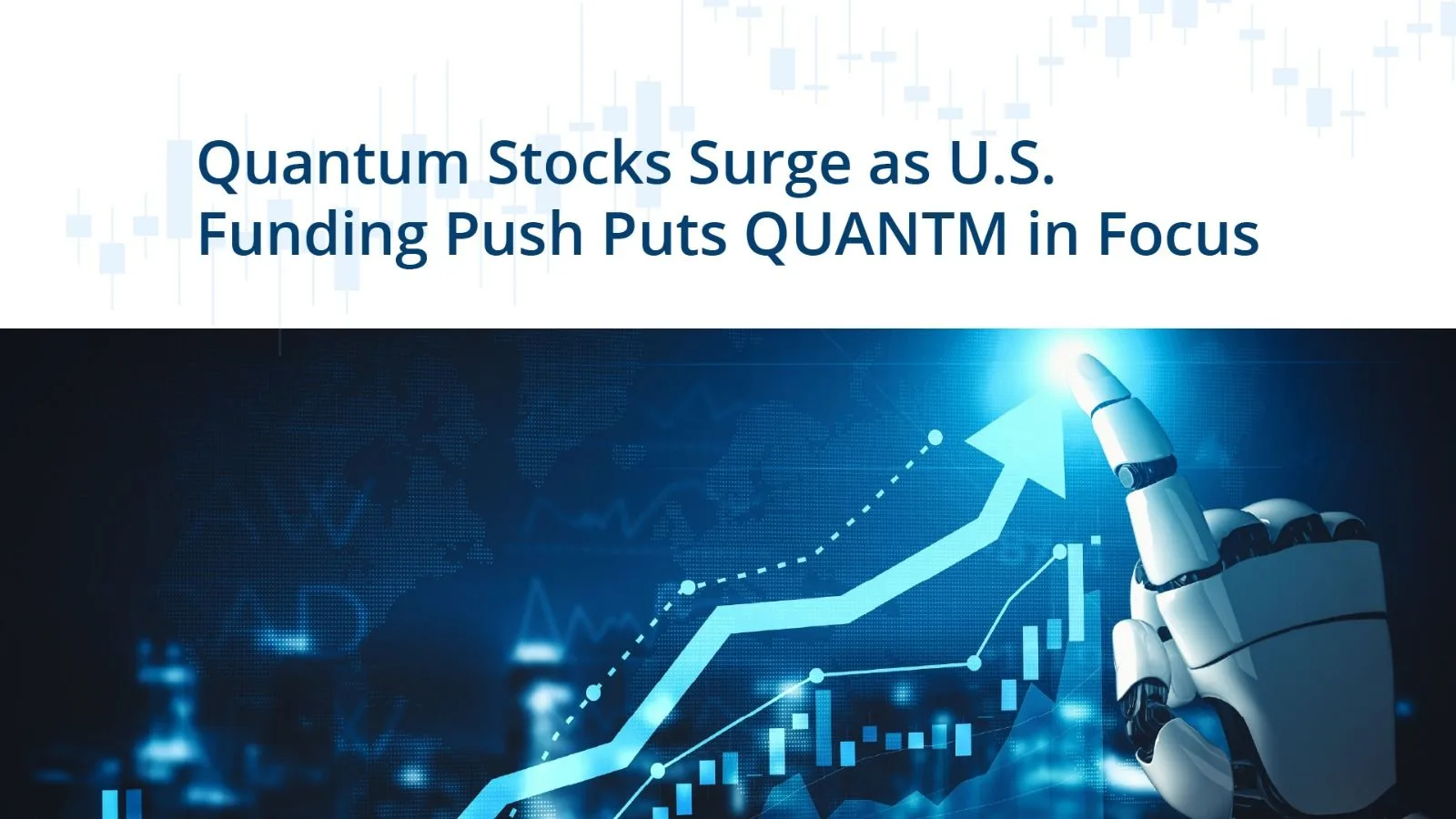
The announcement triggered a sharp rally across the sector. Shares of several publicly traded quantum companies jumped double digits following the news, while investors began reassessing the long-term commercial potential of quantum computing.
Momentum accelerated further with the highly anticipated IPO of Quantinuum, widely regarded as one of the industry’s leading players. The Honeywell-backed company raised $1.68 billion, pricing above its initial range and debuting strongly on Nasdaq with shares rising more than 13% on its first trading day. The IPO valued the company at roughly $17.6 billion, making it one of the largest pure-play quantum companies in public markets.
The rally has also benefited the QUANTM ETF, listed on the Abu Dhabi Securities Exchange (ADX), which offers investors diversified exposure to the global quantum computing ecosystem. The ETF tracks companies involved in quantum hardware, software, cybersecurity, semiconductors, and enabling technologies.
Among its largest holdings are companies such as IonQ, D-Wave Quantum, Rigetti Computing, SEALSQ, and Quantum Computing Inc., many of which were among the strongest performers following the U.S. funding announcement.
Still, investors should be careful when comparing today’s quantum enthusiasm to the early days of artificial intelligence. Unlike AI, which has already generated significant commercial revenues, quantum computing remains largely in the research and development phase. Most companies in the sector remain unprofitable, and widespread commercial adoption may still be years away.
However, the investment case is becoming increasingly difficult to ignore. Governments view quantum computing as strategically important for national security, cryptography, advanced manufacturing, drug discovery, and financial modeling. The combination of public funding, private capital, and growing corporate investment is creating a powerful tailwind for the industry.
Whether quantum computing ultimately follows the trajectory of AI remains uncertain. But after years of being viewed as a distant technology, May may be remembered as the month quantum investing began moving from the laboratory into the mainstream.