


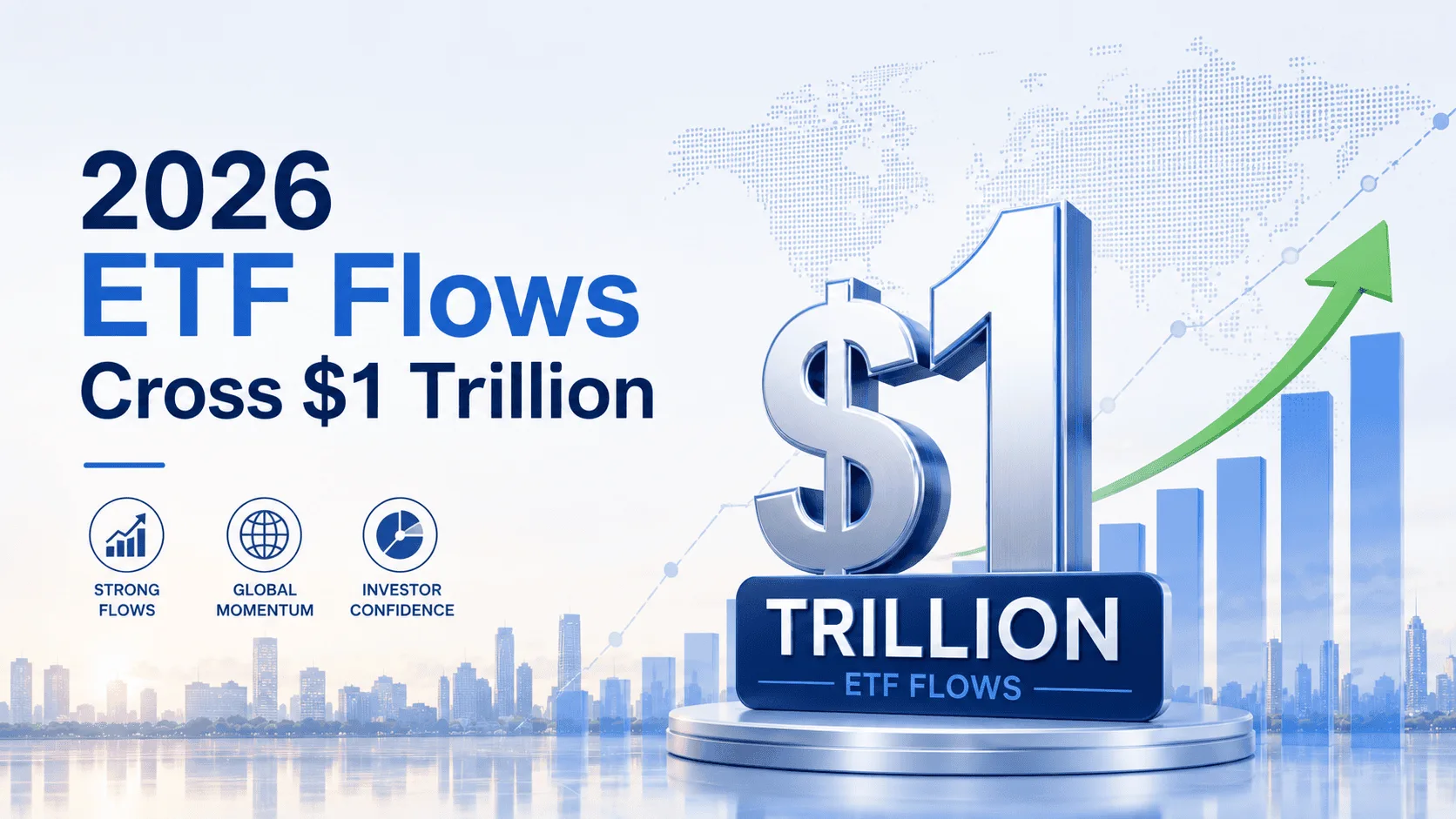
Year-to-date net inflows into US-listed ETFs surpassed the $1 trillion mark on June 17, 2026, reaching approximately $1.005 trillion according to Bloomberg data. This follows back-to-back record years: the ETF industry gathered $2.37 trillion in net inflows in 2025, surpassing the prior record of $1.88 trillion set in 2024. Global ETF assets reached approximately $19.85 trillion at year-end 2025, according to industry estimates, representing a 33.7% year-on-year expansion in total assets.
If current trends continue, 2026 could challenge or even exceed the ETF industry's previous annual inflow records, reinforcing the sector's role as the preferred investment vehicle for both institutions and retail investors. He noted that the seasonally strong Q4 typically adds another leg to annual flows, making 2026 a potential record-breaker.
Which ETFs Are Attracting the Most Investor Capital?
Market leadership remains concentrated. The ten largest ETFs by year-to-date inflows account for a substantial portion of the industry's $1 trillion milestone, spanning passive broad-market equity, short-duration bonds, and emerging thematic strategies.
Vanguard's VOO alone captured more than $120 billion in net inflows, accounting for roughly 12% of all ETF inflows recorded through June 17. Three structural themes dominate: (1) low-cost passive accumulation, (2) money-market/short-duration hedging via SGOV and IQMM, and (3) emerging thematic disruptors such as Roundhill's DRAM, which gathered nearly $14 billion in the weeks following its April 2026 launch.
How Are ETF Flows Reshaping Industry Leadership
The concentration of inflows into Vanguard's flagship products has also reshaped the competitive landscape. During 2026, Vanguard overtook BlackRock as the largest U.S. ETF issuer by assets, driven largely by continued demand for low-cost core equity products such as VOO and VTI. The shift underscores how scale, cost efficiency, and broad-market exposure continue to dominate investor preferences even as thematic and active strategies gain momentum.
Why Are Fixed-Income ETFs Quietly Becoming Major Winners?
While equity ETFs dominate headlines, fixed-income products have become one of the strongest sources of inflows in 2026. SGOV and BND both rank among the year's largest asset gatherers as investors seek income, liquidity, and lower volatility. This trend is directly relevant to GCC investors, where demand for Sukuk ETFs and income-generating strategies is gradually rising. Products such as the Chimera JPMorgan Global Sukuk UCITS ETF and other regional fixed-income offerings illustrate how GCC investors are increasingly accessing income through exchange-traded vehicles. As regional exchanges deepen their fixed-income ETF listings, global inflow patterns offer a useful template for where regional demand may travel next.
What Is Driving the Record Growth of Active ETFs?
While passive strategies anchor the top-10 list, actively managed ETFs are accelerating at a faster clip. Q1 2026 active ETF inflows reached $245 billion, a 70% increase over the prior quarterly record of $144.5 billion set in 2025. Active ETFs continue to gain market share within the broader ETF industry, particularly in fixed income, income-oriented strategies, and thematic investing, as institutional and retail investors seek alpha layered onto passive core allocations.
For GCC investors, this shift is particularly relevant. Several ADX-listed ETFs carry active or semi-active mandates, including the Lunate Capital AIPOWR ETF and the KraneShares Artificial Intelligence & Technology ETF (AGIX), where portfolio construction goes beyond simple index replication.
Bottom Line
The ETF industry's rapid journey to $1 trillion in inflows before summer highlights the continued migration toward exchange-traded investing. While the United States remains the epicentre of ETF growth, the same structural drivers, low costs, transparency, diversification, and thematic innovation are increasingly visible across GCC markets. Although the region's ETF ecosystem remains small relative to global peers, expanding product ranges, cross-border trading initiatives, and growing institutional participation suggest that the GCC may be entering its own next phase of ETF growth. The scale gap remains substantial: VOO alone manages more than $1 trillion in assets, underscoring both how early the GCC ETF market remains and how significant its long-term growth opportunity could be.