

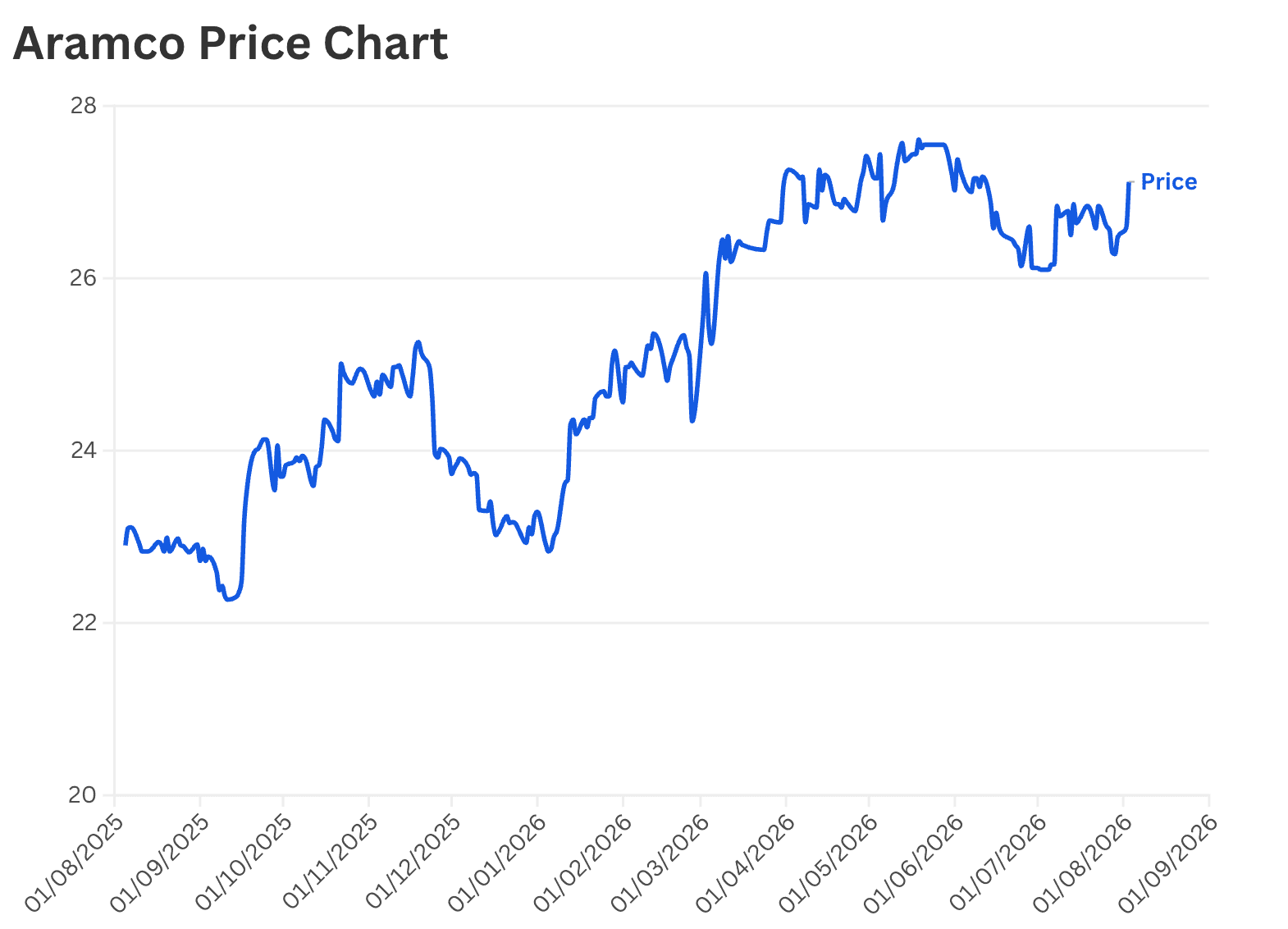
Saudi Aramco emerged from the second quarter with higher earnings despite severe disruption to Gulf energy flows. Reported net income reached $32.69 billion, or SAR122.6 billion, for the three months ended June 30, up 44% from SAR85 billion a year earlier. On Aramco’s adjusted measure, net income reached $33.4 billion, a 33% year-on-year increase. The distinction matters because the adjusted figure removes replacement-cost effects and identified items. Aramco’s realized crude price averaged $108.10 a barrel during the quarter, compared with $66.70 a year earlier, allowing higher prices to compensate for sharply lower production volumes.
Cashflow trails the profit surge
Cash generation remained substantial, though weaker than earnings alone suggest. Aramco reported $25.4 billion of operating cash flow and $12.3 billion of free cash flow for the quarter, while its base dividend totaled $21.9 billion. Across the first half of 2026, adjusted net income reached $67.2 billion, operating cash flow totaled $56.2 billion and free cash flow came to $30.9 billion. Gearing stood at 6.2% at June 30, leaving the balance sheet relatively lightly leveraged even after months of disruption.
East-West Pipeline Cushions the Hormuz Shock
Saudi Arabia’s earlier investment in alternative export infrastructure helped protect those earnings. Aramco’s 1,200-kilometre East-West Pipeline reached its maximum capacity of 7 million barrels per day during the first quarter, moving crude from the Eastern Province to Yanbu and reducing reliance on the Strait of Hormuz. Total hydrocarbon production still averaged 9.5 million barrels per day in the second quarter, down from 12.8 million a year earlier, but higher realized prices and stronger refining margins offset much of the volume loss. The risk has since spread toward Red Sea routes as Houthi threats put more attention on Bab el-Mandeb and Saudi export infrastructure.
ETF Routes to Aramco Exposure
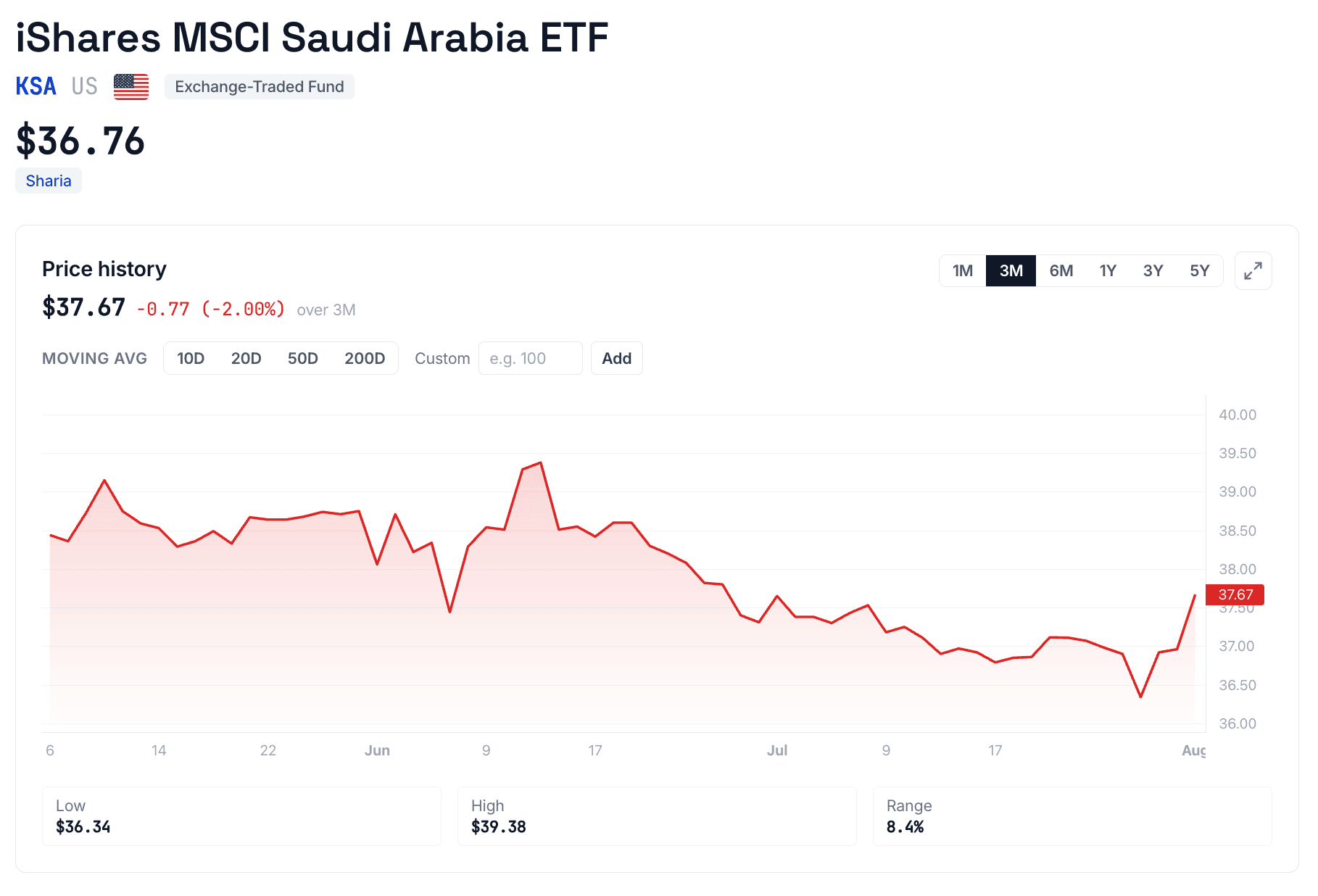
ETF investors can access Aramco through broader Saudi equity portfolios. The U.S.-domiciled iShares MSCI Saudi Arabia ETF, KSA, had $625.3 million in net assets as of July 27 and charges a 0.75% expense ratio. The fund tracks the MSCI Saudi Arabia IMI 25/50 Index, so Aramco exposure sits alongside a large allocation to Saudi financial companies rather than functioning as a direct oil trade.
Saudi investors seeking a locally listed Shariah-compliant vehicle can use the Albilad MSCI Saudi Equity ETF, ticker 9412. Albilad Capital reported SAR294.3 million in assets as of July 16, with Aramco among the fund’s principal basket constituents. The fund tracks the MSCI Saudi Arabia Domestic Total Market Islamic M-Series Index and trades on Tadawul. For international investors preferring an Irish Undertakings for Collective Investment in Transferable Securities structure, the Franklin FTSE Saudi Arabia UCITS ETF, FLXS, charged a 0.39% total expense ratio and held $6.05 million in assets as of July 23.
Aramco’s third-quarter numbers will show whether $100-plus realized crude prices can continue compensating for lower volumes as pressure shifts between Hormuz and the Red Sea.