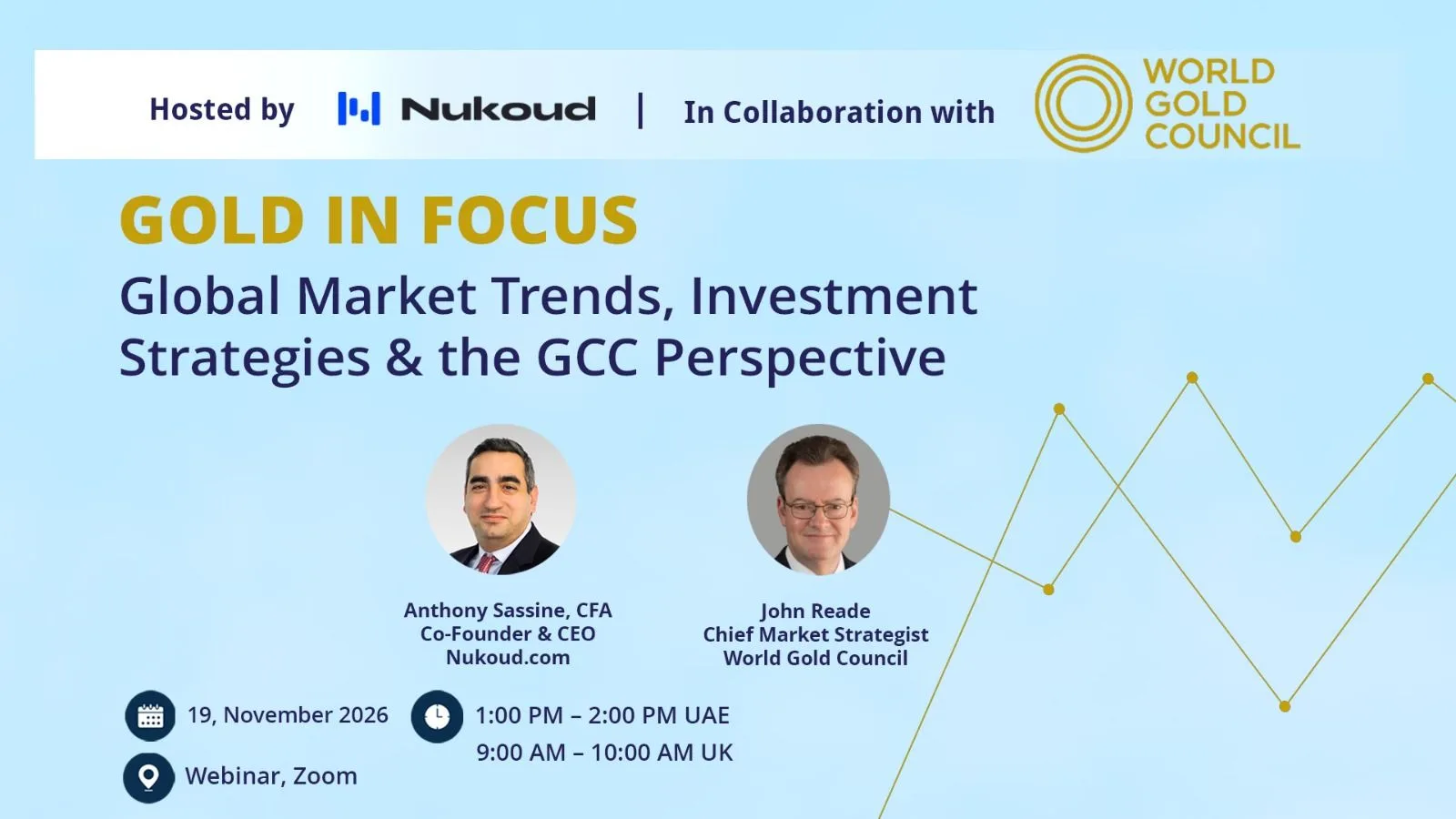
Join the Nukoud Gold Webinar with the Gold Council to discuss their latest report on Gold.
Global gold demand reached 1,369 tonnes in the third quarter of 2026, declining just 1% year on year, while its value increased 22% to a record US$188 billion.
According to the World Gold Council's Gold Demand Trends Q3 2026 report, published November 3, investment demand remained a major source of support despite weaker consumer purchases.
Gold ETFs attracted a record US$31 billion in quarterly inflows, central banks purchased 321 tonnes, and jewellery consumption declined to its lowest third-quarter level since records began in 2000.
The figures highlight an increasingly important distinction: financial institutions are accumulating gold for portfolio diversification and risk management, while traditional consumers are purchasing smaller quantities as prices remain historically elevated.
Gold ETFs Attract Record $31 Billion in Q3
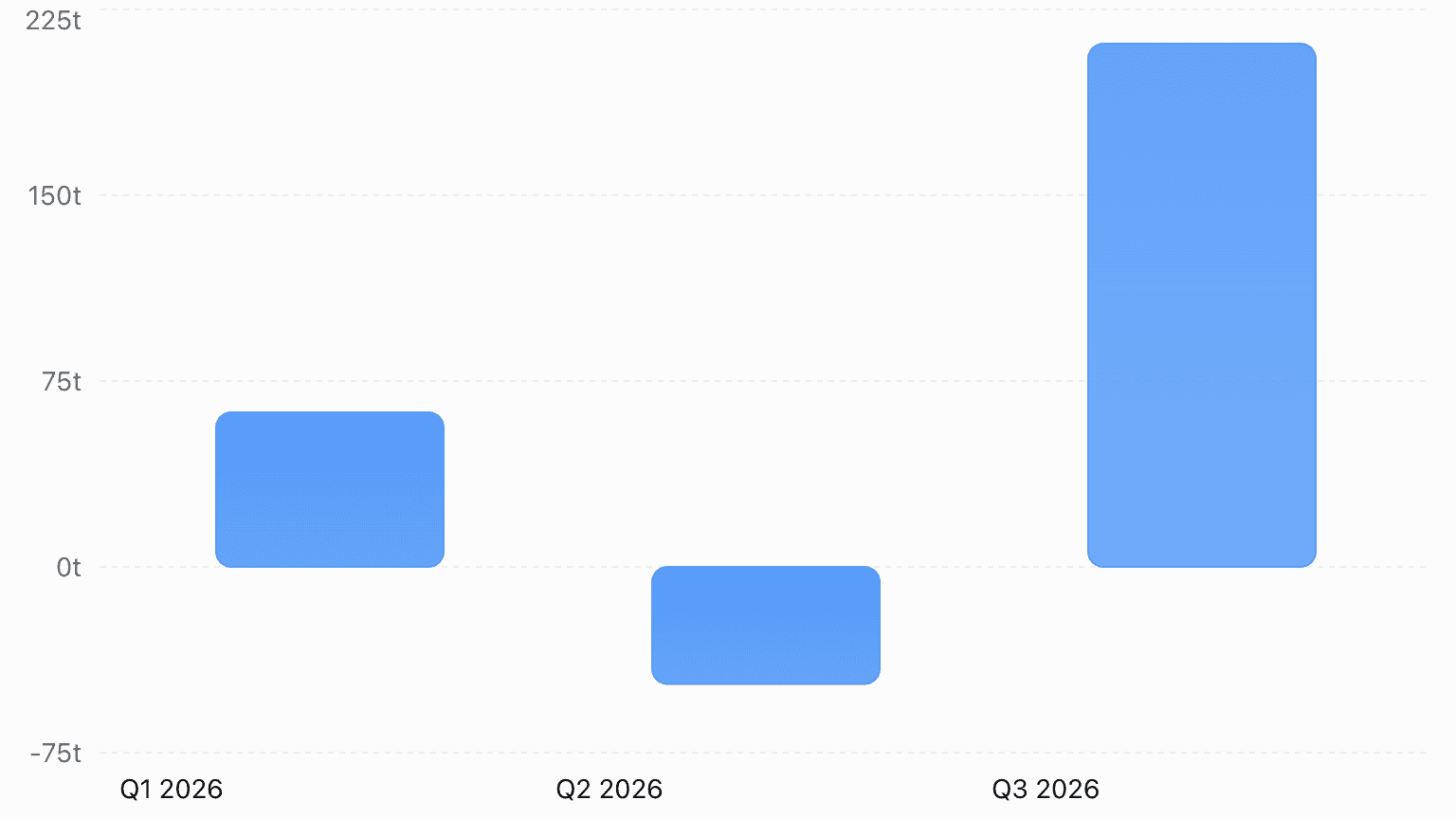
Physically backed gold ETFs recorded 211 tonnes of net inflows, reversing the 47-tonne outflow registered in the second quarter.
Global ETF holdings consequently reached a record 4,256 tonnes, while assets under management increased 9% quarter on quarter.
The recovery accelerated throughout the period. ETF holdings rose 23 tonnes in July before jumping by 120 tonnes in August, with further inflows continuing into September.
The ETF reversal
The rebound was particularly notable because gold faced several traditional macroeconomic headwinds, including elevated government bond yields, a stronger US dollar and expectations that interest rates would remain higher for longer.
Normally, these conditions increase the opportunity cost of holding a non-yielding asset such as gold.
However, concerns about government debt sustainability, persistent inflation, geopolitical uncertainty and equity valuations appear to have strengthened demand for portfolio diversification.
Importantly, the US$31 billion inflow represents new investment into physically backed ETFs, not the total increase in the market value of existing holdings.
Europe Leads the Global Gold ETF Recovery
European-listed ETFs attracted 92 tonnes, making the region the largest contributor to quarterly inflows.
UK-listed funds accounted for 53 tonnes, followed by France with 16 tonnes and Germany with approximately 13 tonnes.
North American funds added 81 tonnes, reversing earlier weakness as investors reassessed inflation risks, sovereign debt concerns and equity-market valuations.
Asian funds recorded their third consecutive quarter of inflows, accumulating another 34 tonnes.
China remained a major contributor, supported by weaker domestic equities and declining government bond yields. Indian gold ETFs also attracted approximately 6 tonnes.
Where the ETF inflows came from
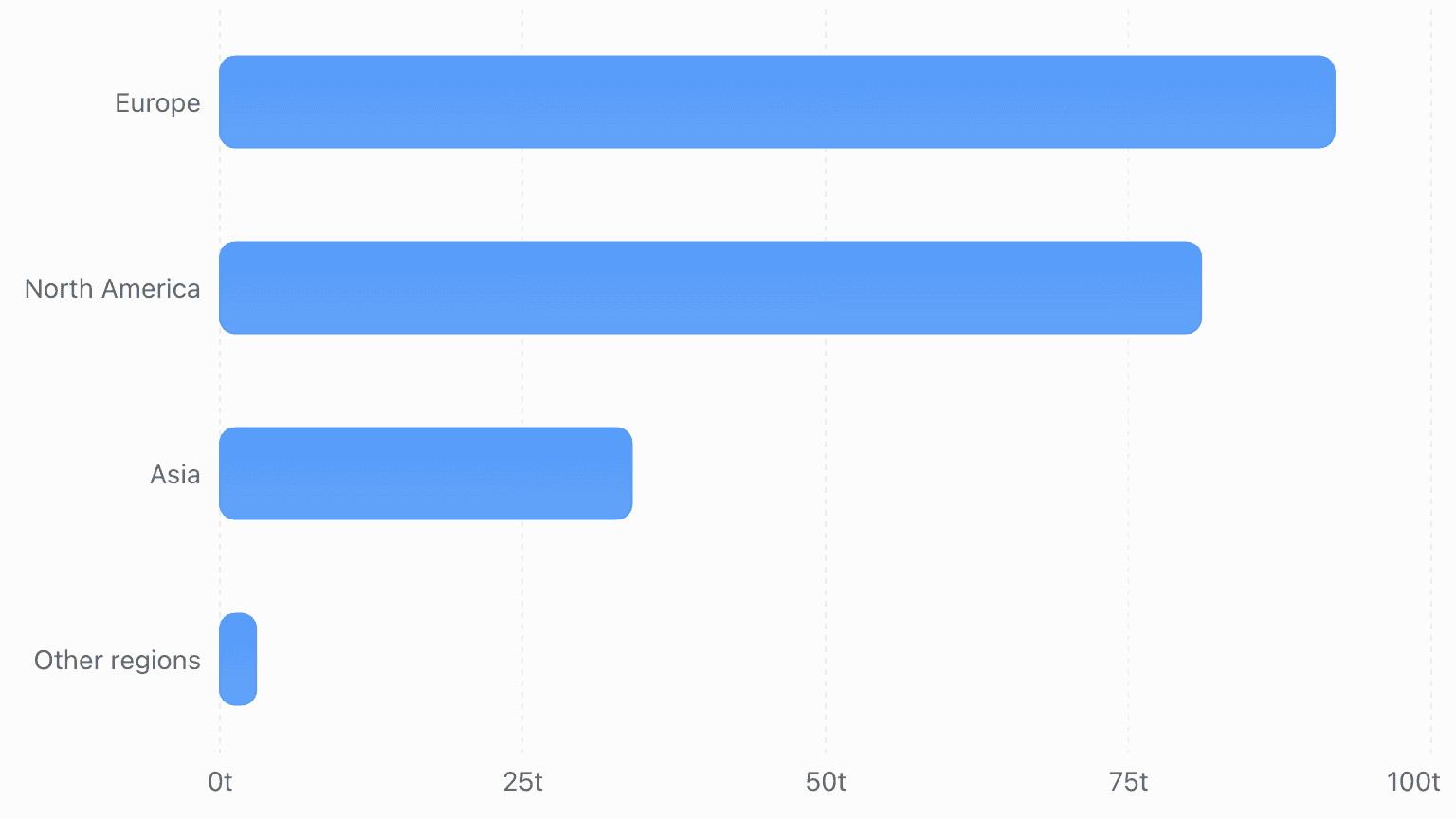
The geographical distribution suggests that institutional gold demand is no longer dependent on a single market.
Different regional conditions, including fiscal uncertainty in Europe and weaker alternative investments in Asia, are encouraging investors to use gold for different portfolio objectives.
Central Banks Accelerate Gold Purchases by 42%
Central banks and other official institutions purchased 321 tonnes during Q3, representing a 42% increase from the same period in 2025.
The latest purchases brought year-to-date accumulation to 675 tonnes, exceeding the corresponding 2025 period by 6%. China and Poland led disclosed purchases, adding approximately 63 and 40 tonnes, respectively.
However, reported central bank transactions accounted for only 120 tonnes of the estimated quarterly total. Approximately 63% of central bank demand was therefore not reflected in available country-level disclosures, highlighting the limitations of tracking official reserve accumulation through published statistics alone.
Central banks versus ETF demand
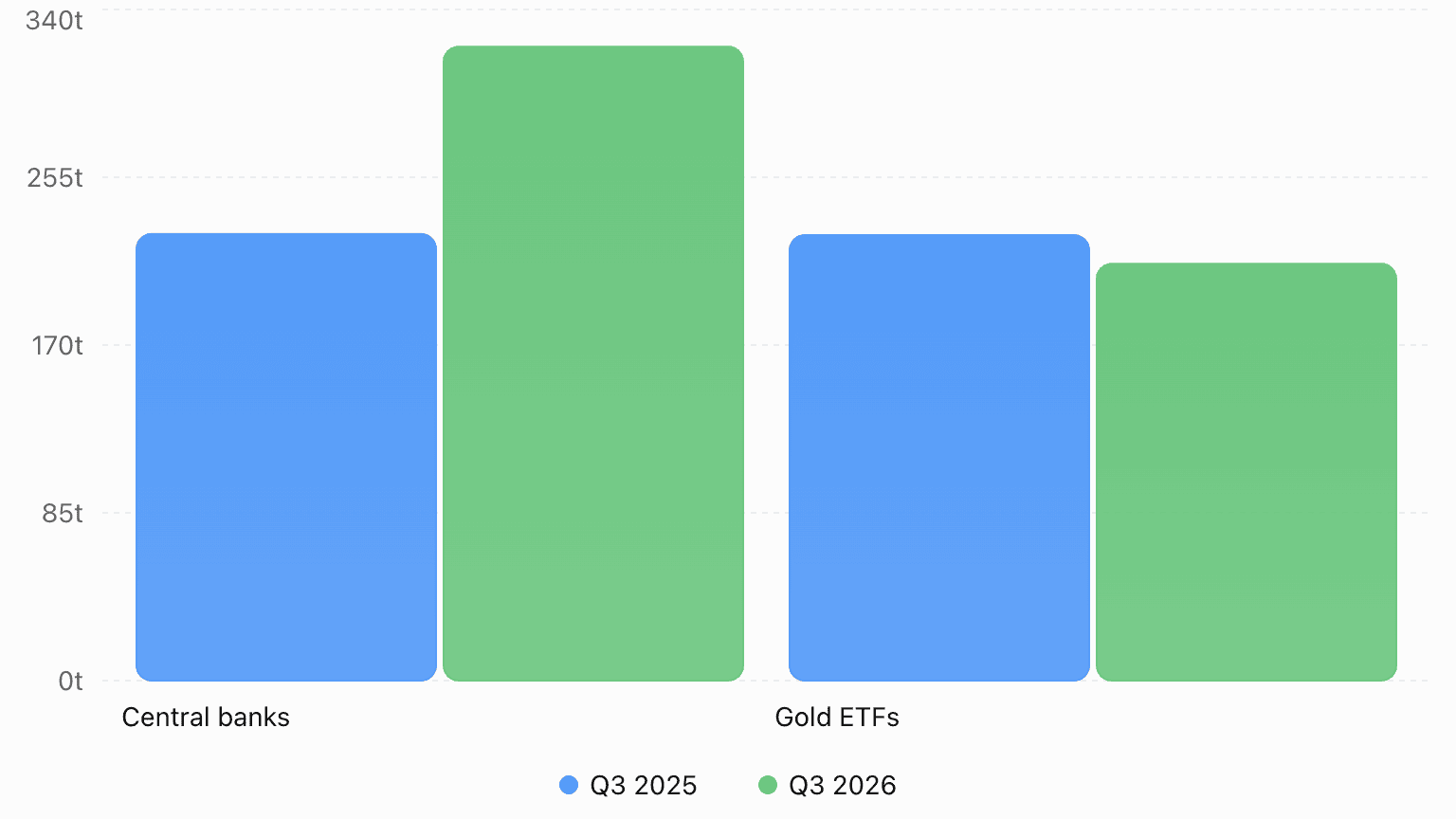
Unlike ETF investors, central banks generally accumulate gold as a strategic reserve asset rather than seeking short-term investment returns.
Their purchases can therefore provide a relatively persistent source of demand, although reserve policies and buying patterns can change.
Gold Jewellery Demand Falls to Historic Q3 Low
While financial investors increased their exposure, physical consumers pulled back.
Global jewellery consumption declined 17% year on year to 313 tonnes, the weakest third-quarter reading in the World Gold Council's historical series.
Nevertheless, the value of jewellery purchases increased 2% to US$43 billion.
This divergence reflects the impact of higher gold prices: consumers are spending similar or greater amounts while purchasing less gold by weight.
The quarterly average LBMA gold price reached US$4,262 per ounce, approximately 23% above the same period last year.
The pressure was especially pronounced in India and China, where jewellery demand fell 20% and 22%, respectively.
Consumers increasingly favoured lighter jewellery, lower-carat products and smaller purchases to manage affordability.
UAE Gold Demand Drops 29%, Saudi Arabia Falls 12%
The GCC experienced similar weakness.
UAE jewellery demand declined 29% year on year to approximately 4 tonnes, while Saudi Arabia recorded a 12% decline to around 8 tonnes.
Physical investment also weakened.
UAE bar and coin demand fell 15% year on year to 2.9 tonnes, including a particularly sharp 46% quarterly decline. Saudi bar and coin purchases decreased 9% to 4.1 tonnes, partly reflecting profit-taking and changing interest-rate expectations.
UAE, Saudi Arabia and Global Jewellery Demand
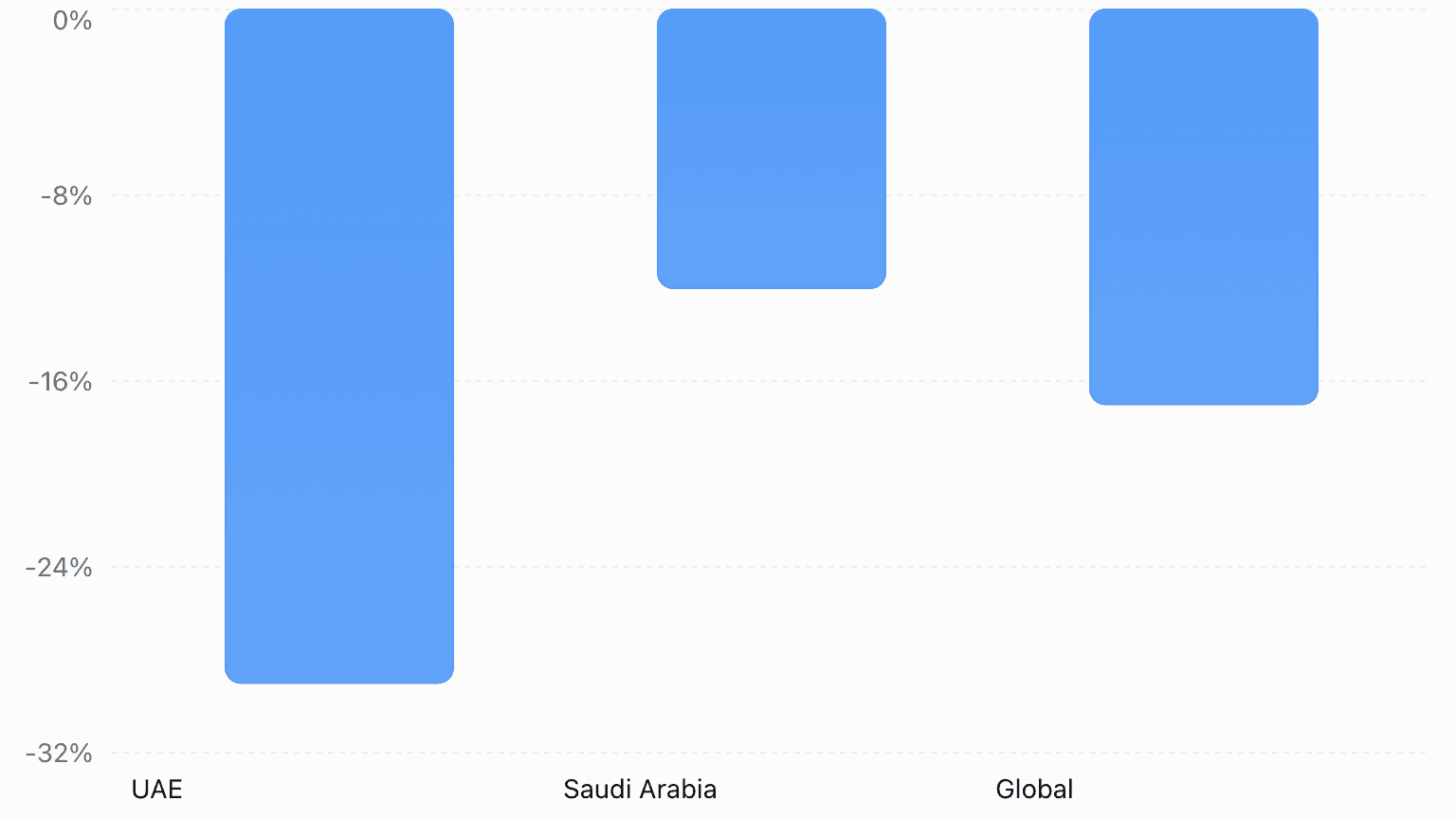
The figures suggest that high prices and regional uncertainty are discouraging discretionary gold purchases even as institutional investors worldwide increase their holdings.
However, weaker jewellery and physical bar demand should not be interpreted as declining overall investor interest in gold.
Demand is shifting between investment channels, with internationally listed financial products attracting capital while traditional retail segments experience pressure.
What Does This Mean for GCC Gold ETF Investors?
The World Gold Council's latest figures highlight a growing shift in how investors across the GCC can approach gold exposure. While physical jewellery and bullion purchases have weakened in the UAE and Saudi Arabia, exchange-traded products offer an alternative way to access the precious metal without the costs and logistics of physical ownership.
In Saudi Arabia, the Albilad Gold ETF (9405) provides investors with Shariah-compliant gold exposure through the Saudi Exchange. Investors seeking international alternatives can also consider products such as SPDR Gold Shares (GLD) and iShares Gold Trust (IAU), although trading access, fees and fund structures differ.
The contrast between declining GCC jewellery demand and record global ETF inflows is particularly relevant. It suggests that weakness in physical gold purchases does not necessarily indicate weaker investment demand, as investors increasingly have different channels through which to gain exposure.
For UAE and Saudi investors, the choice between physical bullion and gold ETFs involves considerations beyond price performance, including custody, liquidity, Shariah compliance, trading costs and currency exposure. Investors can compare available gold ETFs, their fees and investment structures before selecting a product.
Looking ahead, the key question for GCC investors is whether institutional accumulation and central bank purchases can continue supporting gold prices despite reduced physical demand in regional markets.