Gold is once again approaching the psychologically important $4,000-per-ounce level, leaving investors with a critical question: Is the precious metal heading for another leg lower, or could it recover toward its record high above $5,500?
After an extraordinary rally followed by a sharp correction, gold is struggling to regain momentum. On November 13, spot gold traded near $3,880 per ounce, following a selloff driven by rising expectations of further US Federal Reserve interest-rate hikes.
Yet despite recent weakness, several major investment banks continue to forecast higher gold prices over the coming year, supported by central-bank purchases, geopolitical uncertainty and investor demand for portfolio diversification.
What Are the Major Banks Forecasting for Gold?
Wall Street remains divided over the speed and strength of any recovery.
Sources: Published bank forecasts referenced in the article; target dates and forecast horizons differ and may change.
Goldman Sachs recently lowered its forecasts, citing the Federal Reserve’s more hawkish policy stance. Meanwhile, UBS maintains a more optimistic medium-term outlook, targeting $5,200 by June 2027. These forecasts demonstrate the considerable uncertainty surrounding gold, even as longer-term structural demand remains supportive.
What Is Driving Gold Prices?
Four major forces are likely to determine gold’s next move: US interest rates and real bond yields, the strength of the dollar, geopolitical and economic uncertainty, and investment demand through ETFs and institutional portfolios.
Higher interest rates generally pressure gold because the metal does not generate income. Conversely, falling real yields and a weaker dollar can support prices.
Gold can also benefit from geopolitical uncertainty and concerns over government debt. However, during periods of market stress, investors may initially sell gold to raise liquidity, contributing to short-term volatility.
Central Banks Continue Buying Gold
One of the strongest structural supports for gold remains central-bank demand.
According to the World Gold Council’s latest Gold Demand Trends report, central banks purchased an estimated 321 tonnes in the third quarter of 2026, an increase of 42% compared with the same period last year.
Central-bank purchases totaled 675 tonnes during the first nine months of 2026, up 6% year over year. Gold ETFs attracted 211 tonnes of net inflows in the third quarter.
China and Poland were among the largest disclosed central-bank buyers during the third quarter, reflecting a broader effort to diversify international reserves.
Where Does Gold Go From Here?
With gold trading below $4,000, investors face competing scenarios.
A continued rise in US interest rates, a stronger dollar and persistent inflation could extend the correction. However, a shift toward monetary easing, stronger ETF inflows or renewed geopolitical uncertainty could support a recovery toward previous highs.
The World Gold Council’s recent analysis suggests that gold’s longer-term fundamentals remain more supportive than during previous major downturns, even though the near-term outlook remains uncertain.
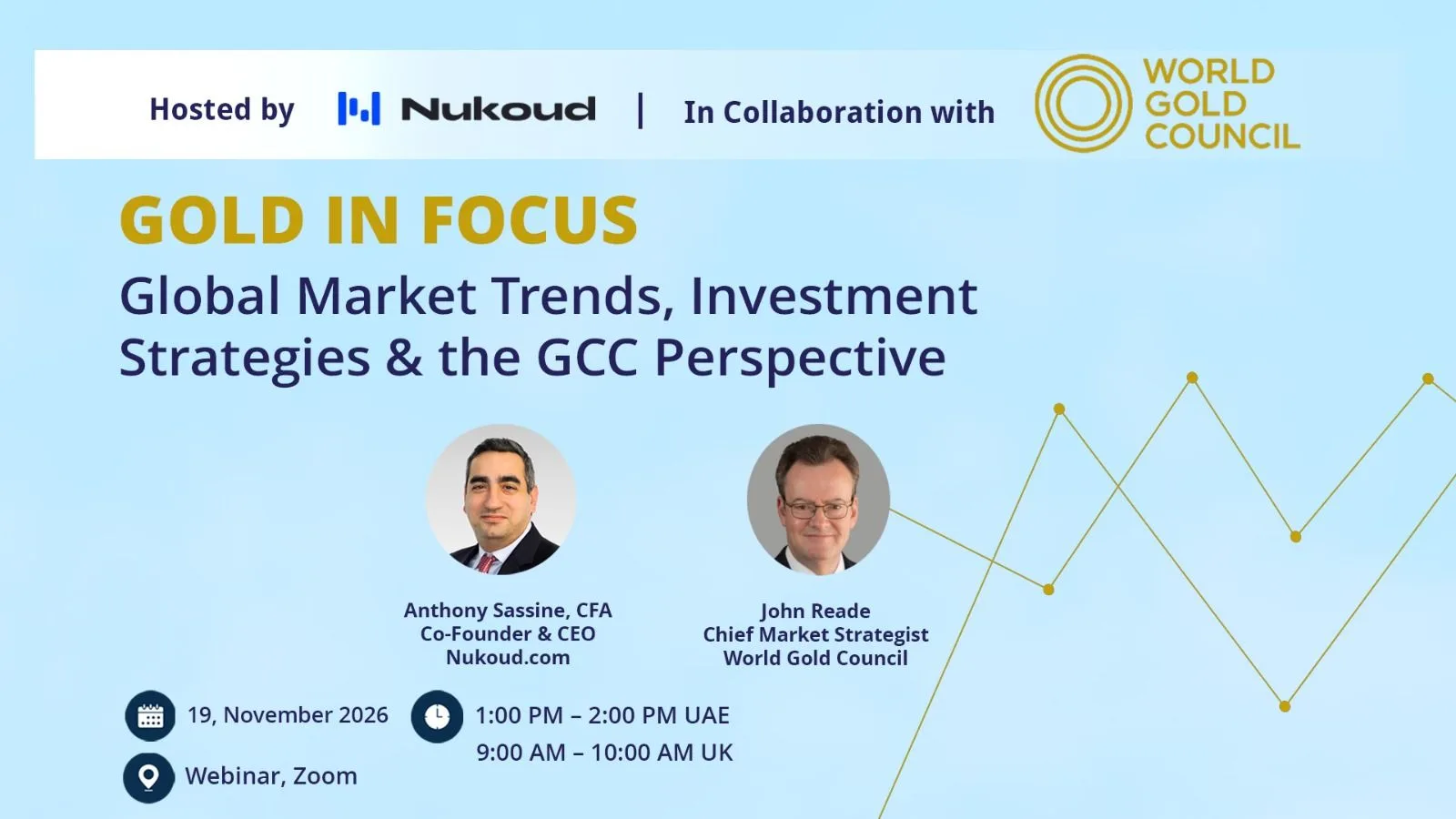
Join Nukoud and the World Gold Council on November 19
Gold in Focus: Market Trends, Portfolio Strategy and the GCC Investor Perspective
On November 19, 2026, Nukoud will host a special webinar with the World Gold Council, a leading global authority on gold market research and data.
The discussion will feature John Reade, Chief Market Strategist at the World Gold Council, moderated by Anthony Sassine, Founder of Nukoud.
We will explore gold’s recent volatility, central-bank buying, the forces driving prices, the role of gold ETFs, and what the outlook could mean for investors across the GCC.
Will gold reclaim $5,500, or is there more downside ahead?
Join the conversation and hear the latest insights from one of the world’s leading gold research organizations.
Register for the November 19 webinar. Registration link in the comments.
Market data and bank forecasts reflect reports available as of November 15, 2026. Forecasts are not guarantees of future performance.