
As the UAE Opens Retail Sukuk to Investors, How Big Is the Global Sukuk Opportunity?
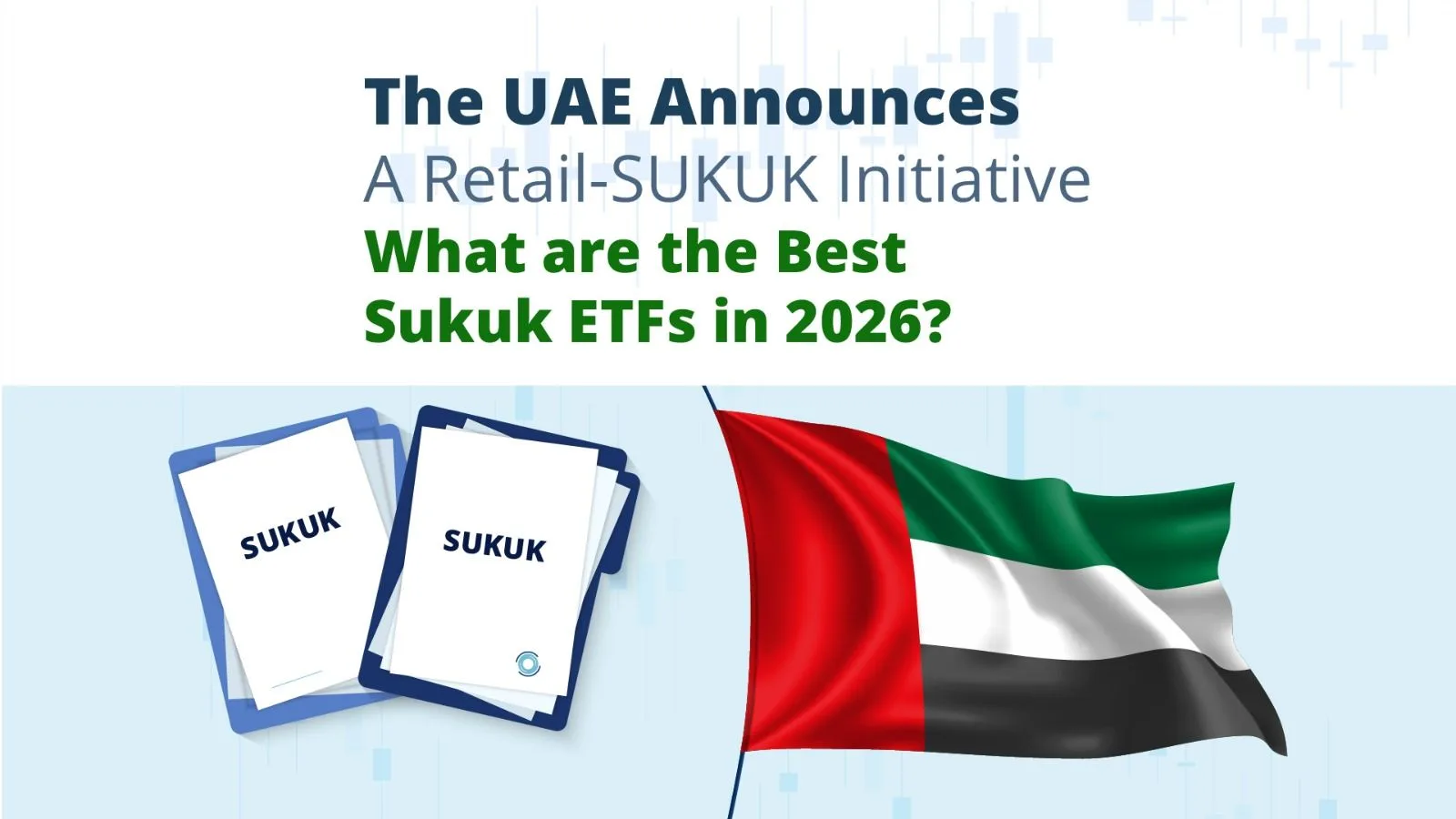
The UAE is making Shariah-compliant investing more accessible than ever. In October 2025, the Ministry of Finance launched the Retail Sukuk Initiative, enabling citizens and residents to invest in government-backed Treasury Sukuk from as little as AED 1,000 through participating banks. Previously available only to institutional investors, these sovereign sukuk can now be accessed by retail investors, marking a significant step towards broadening financial inclusion and expanding access to Islamic capital markets.
The initiative also highlights a broader trend: the rapid expansion of the global sukuk market. Sukuk Shariah-compliant securities representing ownership in tangible assets rather than debt obligations have grown from $763.7 billion in 2020 to $1.38 trillion in 2025, and are projected to reach $4.19 trillion by 2034, representing a compound annual growth rate (CAGR) of 12.51%.
For GCC investors, the opportunity extends well beyond investing in individual government sukuk. GCC countries already account for approximately 28.4% of the global sukuk market, with Saudi Arabia and the UAE continuing to deepen their capital markets through sovereign issuance and retail investment initiatives. Alongside direct investments such as the UAE's Retail Sukuk programme, investors can also gain diversified exposure through sukuk ETFs, which invest across multiple sovereign and corporate sukuk in a single exchange-traded fund.
The Global SUKUK Market is Expanding
This guide explores the best sukuk ETFs available to GCC investors in 2026, comparing their performance, yields, costs, liquidity, accessibility, and Shariah compliance to help investors identify the most suitable options for their portfolios.
What's Driving Sukuk Market Growth
Three structural forces are reshaping the Sukuk landscape through 2034:
- Saudi Vision 2030 issuance pipeline: Saudi Arabia continues to issue domestic Sukuk through the National Debt Management Centre (NDMC), supporting the development of the local fixed-income market. Meanwhile, the Kingdom's approximately $3 trillion Vision 2030 investment programme is expected to drive sustained corporate and quasi-sovereign Sukuk issuance from entities such as NEOM, PIF, and Aramco.
- Growing ETF innovation: Saudi Arabia's expanding fixed income market is also encouraging new ETF launches. In December 2024, State Street launched the SPDR J.P. Morgan Saudi Arabia Aggregate Bond UCITS ETF (KSAB), which tracks the J.P. Morgan Saudi Arabia Aggregate Index. The ETF provides diversified exposure to Saudi sovereign and quasi-sovereign fixed income, including SAR-denominated government sukuk alongside USD-denominated Saudi government and corporate bonds, reflecting increasing international investor demand for Saudi fixed income as the Kingdom's capital markets continue to mature.
- Green and ESG Sukuk convergence: Dubai Islamic Bank priced a $1 billion Sustainability-Linked Sukuk in November 2025 at 4.572% for 5 years, evidence that ESG mandates and Islamic finance are converging into a single instrument class, attracting European and Japanese institutional capital.
- Tokenised Sukuk innovation: The DFSA launched its Tokenisation Regulatory Sandbox in June 2025. UAE institutions have begun exploring digital and retail Sukuk distribution models, reflecting the growing role of tokenisation and financial technology in Islamic capital markets. These developments will materially reduce issuance costs and minimum investment thresholds.
Which Sukuk ETFs Are Available to Investors in 2026?
Seven sukuk ETFs are available to investors in 2026, ranging from Saudi sovereign sukuk funds to globally diversified USD-denominated portfolios tracking leading international sukuk benchmarks.
Which Sukuk ETFs Have Delivered the Best Returns, Yields?
The sukuk ETF market reflects the broader fixed income environment in mid-2026. Most globally diversified, USD-denominated funds have recorded modest negative price returns as elevated interest rates weighed on bond valuations, although income distributions have helped support overall investor returns. By contrast, the Albilad Saudi Sovereign Sukuk ETF (BILADETF AB) and the Alinma Saudi Government Sukuk ETF (ALINMETF AB) have delivered the strongest year-to-date price performance among the funds covered in this report.
The SP Funds Dow Jones Global Sukuk ETF (SPSK US) remains the largest sukuk ETF by assets under management, with $638.6 million in assets and $130.3 million in net inflows over the past month. Meanwhile, the iShares USD Sukuk UCITS ETF (SKUK NA) has recorded the strongest relative asset growth, attracting $74.4 million in year-to-date net inflows on an asset base of $177.4 million.
- Highest yield: The Hejaz Sukuk Active ETF (SKUK AU) offers the highest trailing yield in the peer group at 6.52%, reflecting its active management strategy and smaller asset base.
- Lowest TER: The Chimera J.P. Morgan Global Sukuk ETF (SUKUK UH), iShares USD Sukuk UCITS ETF (SKUK NA), and Xtrackers II Salam USD Global Aggregate Sukuk UCITS ETF (XASB LN) each charge a 0.40% total expense ratio, making them the most cost-efficient passive options.
- Best YTD performance: The Alinma Saudi Government Sukuk ETF (ALINMETF AB) and the Albilad Saudi Sovereign Sukuk ETF (BILADETF AB) have delivered the strongest year-to-date returns, gaining 0.58% and 0.23%, respectively.
- Largest fund: The SP Funds Dow Jones Global Sukuk ETF (SPSK US) is the largest fund in the peer group, with $638.6 million in assets under management and the deepest secondary-market liquidity.
- Newest entrant: The Xtrackers II Salam USD Global Aggregate Sukuk UCITS ETF (XASB LN), launched in October 2025, tracks one of the broadest global sukuk aggregate indices available.
Where Can GCC Investors Access Sukuk ETFs?
GCC investors have three main ways to access sukuk ETFs, depending on their investment objectives and preferred trading venue.
Saudi investors can buy the Albilad Saudi Sovereign Sukuk ETF (BILADETF AB) and Alinma Saudi Government Sukuk ETF (ALINMETF AB) directly on the Saudi Exchange (Tadawul) through local brokerage accounts. These funds provide exposure to domestic government sukuk, with the Alinma ETF managing the largest asset base among GCC-listed sukuk ETFs.
In the UAE, investors can access the Chimera J.P. Morgan Global Sukuk ETF (SUKUK UH) on the Abu Dhabi Securities Exchange (ADX). While listed locally, it invests in a globally diversified portfolio of sukuk, giving UAE investors international exposure through a regional exchange.
For the broadest global exposure and the deepest trading liquidity, investors can use an internationally enabled brokerage account to invest in the SP Funds Dow Jones Global Sukuk ETF (SPSK US) or the iShares USD Sukuk UCITS ETF (SKUK NA). These funds invest across sovereign and corporate sukuk markets worldwide and are generally better suited for larger portfolios or investors seeking greater geographic diversification.
Shariah Compliance Framework
All seven funds in this report invest in sukuk, which are inherently structured to comply with Shariah principles at the instrument level. However, fund-level Shariah certification varies between issuers.
The Albilad Saudi Sovereign Sukuk ETF (BILADETF AB), Alinma Saudi Government Sukuk ETF (ALINMETF AB), and Chimera J.P. Morgan Global Sukuk ETF (SUKUK UH) are approved under the relevant Shariah governance frameworks of their respective exchanges and regulators in Saudi Arabia and the UAE. The SP Funds Dow Jones Global Sukuk ETF (SPSK US), together with other SP Funds products such as the SP Funds S&P Global REIT Sharia ETF (HLAL US), is independently certified by the Accounting and Auditing Organization for Islamic Financial Institutions (AAOIFI) and Amanie Advisors. Meanwhile, the iShares USD Sukuk UCITS ETF (SKUK NA) tracks a Shariah-screened sukuk index. Investors seeking formal fund-level Shariah certification should review the fund documentation and consult their own Shariah advisers where appropriate.
While this guide focuses on sukuk ETFs, investors looking to build a diversified Shariah-compliant portfolio may also want to explore Shariah-screened equity, commodity, real estate, and other fixed income ETFs. Our Comprehensive Guide to the Best Shariah ETFs provides an overview of the broader Shariah ETF universe.
Bottomline
The global sukuk ETF market remains concentrated but is growing. SPSK US dominates by AUM and flow momentum, while the two Tadawul-listed Saudi funds offer GCC investors the most direct and tax-efficient route to domestic sukuk exposure. The yield range across the peer group (2.28% to 6.52%) reflects differences in portfolio composition, duration, credit quality, and active versus passive management.
For GCC investors evaluating fixed income allocations within a Shariah framework, the key selection criteria are: (1) currency of denomination, SAR vs. USD; (2) geographic scope, Saudi domestic vs. global sukuk; (3) cost, TERs range from 0.37% to 1.33%; and (4) liquidity. SP Funds Dow Jones Global Sukuk ETF (SPSK US) and iShares USD Sukuk UCITS ETF (SKUK NA) offer the deepest secondary market depth for USD allocations, while Alinma Saudi Government Sukuk ETF (ALINMETF AB) is the largest GCC-listed option.
As GCC fixed income markets deepen and sukuk issuance continues to grow, Saudi Arabia alone issued over SAR 120 billion in sovereign sukuk in 2025. The sukuk ETF shelf is likely to expand further, offering investors more precise tools for duration, geography, and yield management within a Shariah-compliant portfolio.