
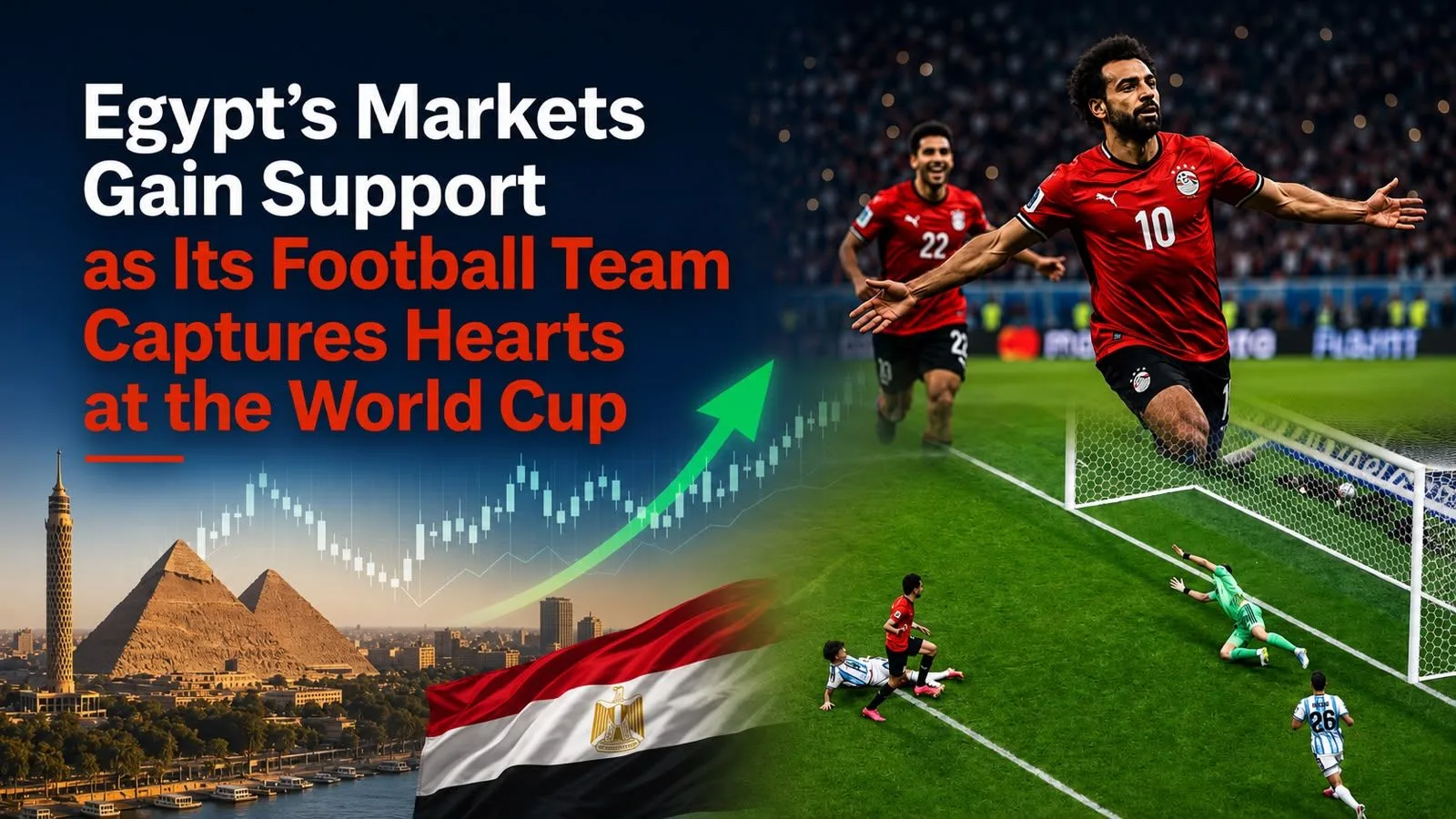
Egypt's economic reform program passed a key test in early July 2026, with the IMF reaching a staff-level agreement that unlocks fresh financing and reaffirms the country's fiscal trajectory. The timing coincided with Egypt's dramatic World Cup clash against Argentina, a match that, despite ending in defeat, showcased resilience under pressure. That same theme runs through Egypt's latest IMF review, where steady reform implementation is being tested by inflation, geopolitical tensions, and volatile capital flows.
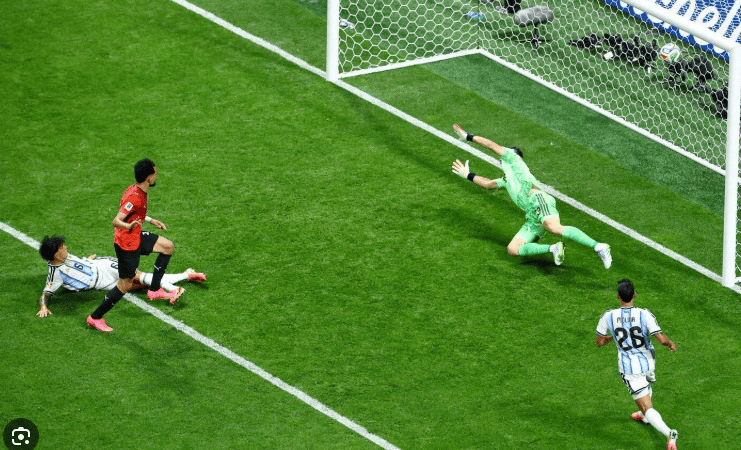
This comes on the heels of Egypt’s impressive World Cup performance against reigning champion Argentina. The Pharaohs left everything on the pitch, taking the lead and pushing one of the tournament favorites to the limit before conceding late in a narrow defeat. The defining moment came when Zizo scored a stunning goal, almost a replica of an earlier effort that had been ruled out, following a brilliant run and assist from Egypt’s No. 12, Haissem Hassan.
IMF Review Keeps Egypt's Reform Program on Track
The IMF and Egyptian authorities agreed on terms for the seventh review under the Extended Fund Facility (EFF) and the second review under the Resilience and Sustainability Facility (RSF). Subject to Executive Board approval, the agreement would unlock roughly $1.64 billion, bringing total IMF program disbursements to approximately SDR 5.3 billion (US$7.2 billion). Alongside the review, the IMF also raised its FY2026/27 real GDP growth forecast for Egypt to 4.6%, reinforcing confidence that the country's reform program is beginning to translate into stronger economic activity.
The IMF's updated forecasts present a mixed picture. While economic growth is expected to strengthen, inflation remains elevated. The upward revision in inflation reflects a combination of unfavorable base effects, higher energy prices, and pass-through from the exchange-rate depreciation seen at the onset of the regional conflict rather than a single factor in isolation. Together, these projections suggest that Egypt's recovery is gaining momentum, even as policymakers continue to balance growth with price stability.
Egypt Reform Dashboard
Note: Subject to IMF Executive Board approval, completion of the seventh EFF review and second RSF review would bring cumulative IMF program disbursements to approximately SDR 5.3 billion (US$7.2 billion).
Exchange-Rate Flexibility Remains Central to the Reform Agenda
Beyond the immediate disbursement, the IMF reiterated that exchange-rate flexibility remains Egypt's primary buffer against external shocks. Rather than defending a fixed currency level, policymakers are expected to let the pound absorb volatility while monetary policy focuses on containing inflation, a stance the Fund credited with keeping reserves broadly stable through the portfolio outflows of the past year. The Fund views exchange-rate flexibility as a key pillar of Egypt's macroeconomic adjustment strategy, allowing the currency to absorb external shocks while preserving foreign-exchange reserves.
Fiscal Discipline Continues to Support Reform Momentum
Egypt exceeded both primary balance and tax revenue targets by the end of March 2026. It is also widening its tax base from one of the lowest tax-to-GDP ratios among emerging markets, creating additional fiscal space while reducing reliance on debt-funded spending. On debt, the authorities aim to cut gross financing needs by roughly 10 percentage points of GDP over FY2025/26–FY2026/27, through longer debt maturities at issuance, voluntary liability management operations, and divestment proceeds.
The Fund also reiterated that structural reforms improving competition, governance, and the operating environment for private firms remain essential to sustaining higher long-term growth, alongside the June-published State Ownership Policy accelerating divestment in sectors where the state is reducing its footprint. The RSF review, meanwhile, advances Egypt's climate-finance agenda, including water resource management, disaster risk financing, and the mobilization of private climate investment.
Market Performance Reflects Egypt's Reform Progress
Bloomberg market data broadly align with the IMF's assessment that Egypt's reform programme is helping stabilize financial markets despite a challenging external environment. During the escalation of regional tensions in early 2026, the Egyptian pound weakened as portfolio outflows accelerated, while the benchmark EGX30 Index briefly retreated amid heightened investor uncertainty. As geopolitical risks eased and foreign capital returned, both the currency and equity markets recovered much of their earlier losses. The charts below illustrate how exchange-rate flexibility helped absorb external shocks while Egypt's stock market continued to reflect improving investor confidence as reforms advanced.
The chart below shows the Egyptian pound's performance against the US dollar during 2025-2026. After weakening sharply during the escalation of regional tensions in early 2026, the currency recovered as investor sentiment improved and portfolio inflows resumed. In conventional market terms, the exchange rate moved from around EGP 47.6 per US dollar in early January 2026 to approximately EGP 53.8 per US dollar in early April before strengthening to around EGP 49.5 per US dollar by July 9, 2026. This recovery is consistent with the IMF's assessment that renewed capital inflows, supported by easing geopolitical tensions and the US-Iran agreement, reversed much of the conflict-related depreciation.
EGX30 Recovery Signals Renewed Investor Confidence
Egypt's equity market tells a similar story. The benchmark EGX30 Index climbed from 30,060 in early January 2025 to an intraday high of around 52,900 in early June 2026. Although the index briefly fell to roughly 46,700 during the April market volatility, it recovered to 52,028 by July 8, 2026, representing a gain of nearly 73% over the previous 18 months. The recovery highlights improving investor confidence as macroeconomic reforms gained traction and geopolitical risks began to ease.
Global Investors and the IMF Grow More Positive on Egypt
The IMF itself struck a notably more upbeat tone in its latest review, raising its FY2026/27 real GDP growth forecast for Egypt to 4.6% and noting that both primary balance and tax revenue targets were exceeded by end-March 2026, even as the Fund reaffirmed the reform program's trajectory and unlocked a further $1.64 billion in financing. Global investors are drawing a similar conclusion. A July 9 Morgan Stanley note upgraded Egyptian and South African equities to overweight from equal-weight while cutting Saudi Arabia to equal-weight, citing signs of Middle East de-escalation. Egypt was named Morgan Stanley's preferred market within its CEEMEA/MENA coverage.
Why Should GCC Investors Care?
Egypt's importance to GCC investors extends well beyond portfolio flows. Saudi Arabia and the UAE remain among the country's largest foreign investors, while continued divestments under the State Ownership Policy could create additional opportunities for regional sovereign wealth funds and strategic investors. Egypt also remains a major tourism destination for GCC residents, several GCC-headquartered banks have significant operations in the country, and the government's privatization and IPO pipeline offers potential opportunities for regional asset managers. In the energy sector, Egypt's LNG infrastructure, regional gas trade, and growing role in Eastern Mediterranean energy partnerships further reinforce its strategic importance to Gulf economies.
A World Cup Performance That Echoed the Reform Story
Just days before the IMF announcement, Egypt drew global attention with an impressive World Cup performance against Argentina, pushing the reigning world champions to the limit before falling 3-2 in a dramatic finish. The match also prompted discussion over several difficult officiating and VAR decisions in a high-pressure knockout fixture.
Although the comparison is imperfect, both stories highlight how resilience is tested when pressure is highest. Egypt's reform programme, like its World Cup performance, suggests the country can remain competitive under pressure. For investors, however, the focus is less on how the story starts than on whether reform momentum can be sustained through the final stages.
Bottom Line
Egypt's latest IMF review reinforces the country's reform momentum at a time when regional geopolitical risks are beginning to ease. For GCC investors, the combination of fiscal discipline, exchange-rate flexibility, a growing privatization pipeline, renewed portfolio inflows, and an upgraded FY2026/27 GDP growth forecast of 4.6%strengthens the medium-term investment case. The key risks remain elevated inflation, external shocks, and the pace of reform implementation. Overall, Egypt's macroeconomic outlook appears stronger than at any stage since the IMF reform programme began in 2022, although sustained reform execution will remain the key determinant of long-term investor confidence.