
What does it really signal when a regional banking leader partners with a global asset management powerhouse?
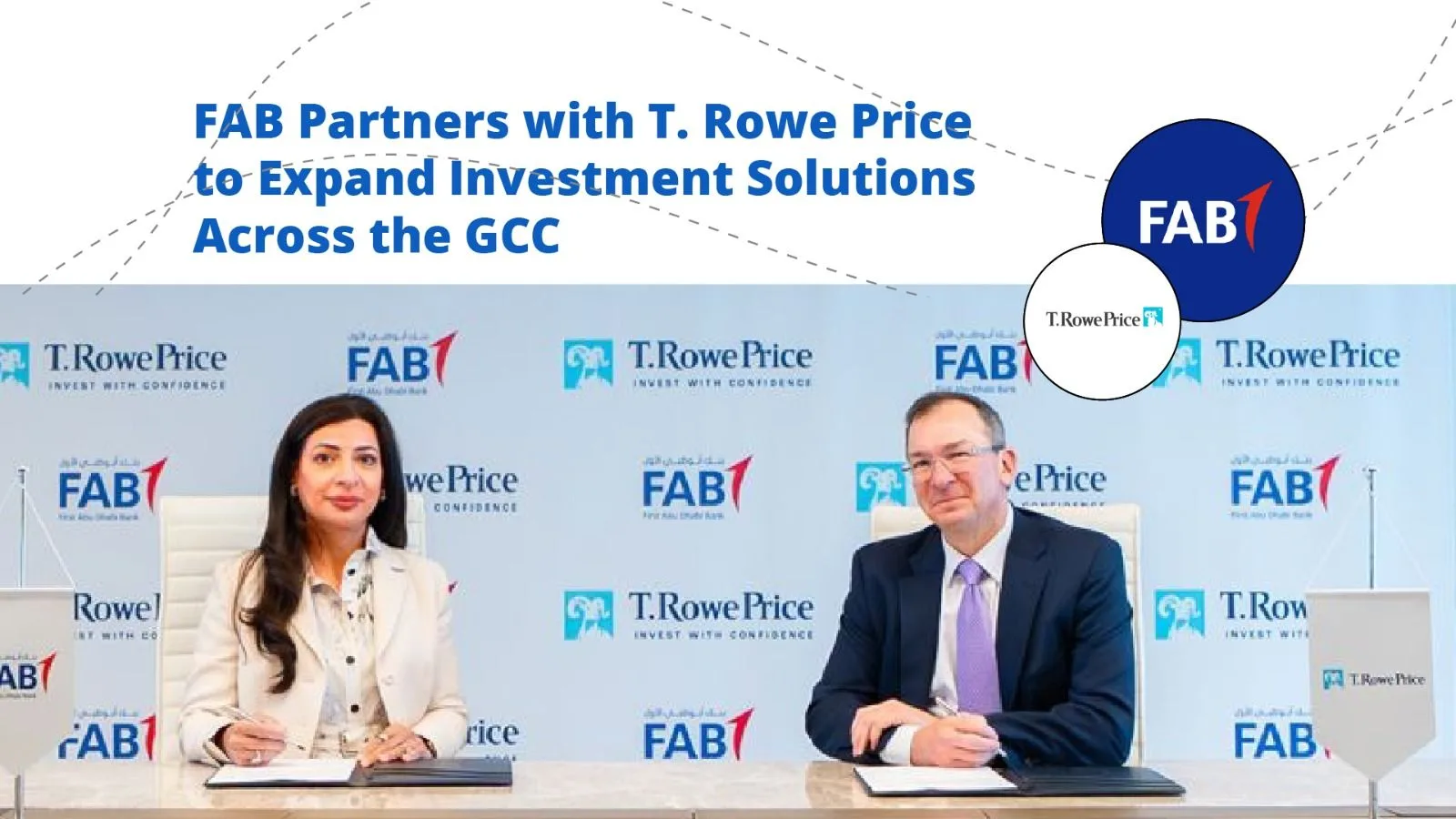
The announcement on January 12, 2026, that First Abu Dhabi Bank (FAB) has entered into a strategic partnership with T. Rowe Price goes well beyond a routine collaboration. While the release focuses on expanding investment solutions across equities, fixed income, alternatives, and multi-asset strategies, the broader significance lies in what it says about the direction of GCC capital markets.
The partnership reflects a region moving steadily toward institutionalisation, global alignment, and scalable access. As global asset managers transition from opportunistic engagement to long-term structural commitment, the GCC is increasingly being positioned as a core destination within global investment frameworks rather than a peripheral allocation, a trend that aligns with how global resilience is redefining opportunity across GCC markets and ETFs.
Partnership details
The agreement positions T. Rowe Price as FAB’s strategic investment partner, leveraging the firm’s $1.79 trillion in assets under management as of November 2025 to enhance FAB’s investment offering across client segments. FAB, which reported AED 1.38 trillion ($376 billion) in assets as of September 2025, is seeking to elevate its wealth and investment management capabilities amid rising regional demand for globally aligned, professionally managed solutions.
Senior leadership from both institutions emphasised this strategic intent. FAB Group CEO Hana Al Rostamani highlighted the goal of expanding investment depth and improving client outcomes, while T. Rowe Price CEO Rob Sharps underscored the focus on customised solutions designed specifically for GCC investors and the firm’s long-term commitment to the region. Together, the messaging points to an upgrade in investment architecture rather than a narrow product expansion.
GCC investment impact
The partnership arrives at a pivotal moment for the GCC’s asset management ecosystem. Investor demand is shifting away from concentrated, bank-balance-sheet-driven exposures toward diversified, benchmark-aware portfolios that emphasise transparency, governance, and consistency of outcomes. Sovereign allocators, insurers, family offices, and an expanding mass-affluent segment are all contributing to this transition.
Introducing global asset management expertise through a leading regional bank directly supports this evolution. It aligns with broader efforts to raise market standards, deepen liquidity, and expand the range of investable solutions available to local and international investors. Importantly, these developments increasingly express themselves not only through advisory mandates but also through listed market instruments.
Could this partnership accelerate ETF listings in the GCC?
A natural question emerging from the FAB–T. Rowe Price’s partnership is whether it could translate into a broader ETF presence in the region. Historically, T. Rowe Price has been best known for its mutual fund franchise. However, over the past two years, the firm has meaningfully accelerated its shift toward ETFs, reflecting a wider global industry move toward scalable, transparent, and model-friendly investment vehicles.
T. Rowe Price’s expanding ETF footprint.
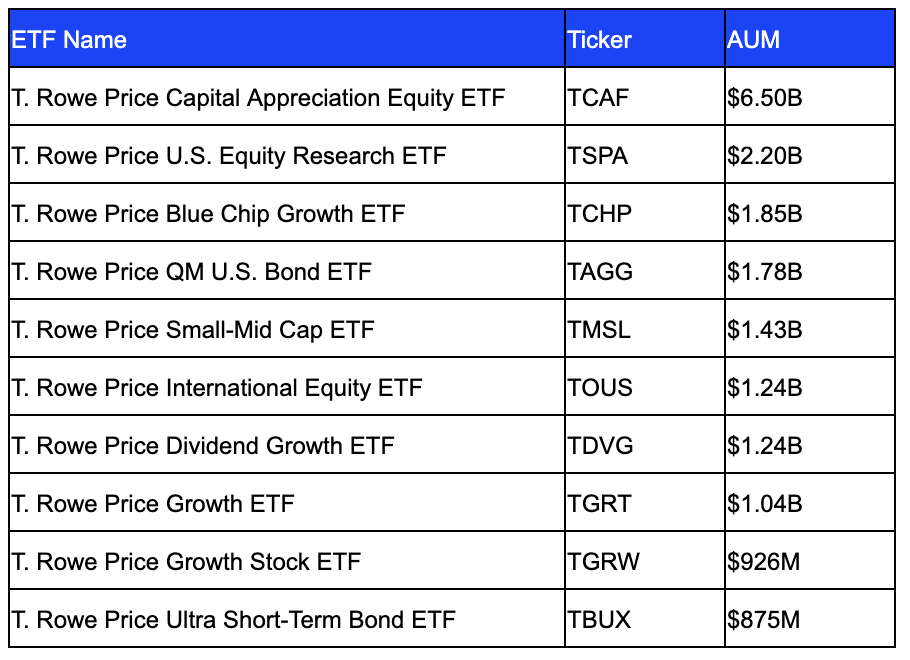
This evolution is particularly relevant in the context of the GCC. T. Rowe Price has launched a growing lineup of active ETFs across growth equities, fixed income, and thematic strategies, including four new fixed income ETFs in November 2025 and an Innovation Leaders ETF in January 2026. Today, the firm manages 30 ETFs with total assets of $22.62 billion, underscoring a clear strategic commitment to listed vehicles alongside its traditional mutual fund business.
With ETF cross-listings now established in the region, such as the recent listings of KWEB and KRBN on ADX, the operational and regulatory groundwork for replication already exists. In that context, a partnership with a leading regional bank like FAB could provide a natural distribution and structuring platform should T. Rowe Price choose to bring selected ETF strategies to GCC exchanges.
Its largest ETFs by assets under management include:
ETF infrastructure is already falling into place
This structural shift is unfolding alongside growing momentum in ETF accessibility and cross-listings across the region. In December 2025, the cross-listing of KraneShares CSI China Internet ETF (KWEB) and KraneShares Global Carbon Strategy ETF (KRBN) on the Abu Dhabi Securities Exchange (ADX) added approximately $10 billion in AUM to the local ETF ecosystem and increased the total number of ETFs listed on ADX to 20, according to Abu Dhabi Media Office / ADX announcement, December 2025
At the same time, locally listed GCC ETFssuch as Chimera’s UAE and KSA Sharia-focused productshave continued to gain traction, with assets ranging from $3 million to $82 million based on recent data. Together, these trends point to a market infrastructure that is increasingly capable of supporting both domestic ETF development and international cross-listed products, reflecting the broader maturation of GCC stock exchanges and regional capital markets.
Why global managers increasingly turn to ETFs
As global asset managers expand their regional presence, a recurring challenge emerges: how to deliver consistent, transparent, and well-controlled exposure across a large number of portfolios at scale. Bespoke mandates alone rarely solve this efficiently.
ETFs address this gap by offering standardised exposures aligned with global investment processes, deployable across retail, private banking, and institutional portfolios, and housed within listed, transparent structures that support governance and liquidity. As portfolio construction becomes more model-driven and benchmark-aware, ETFs have increasingly become essential tools for risk discipline and implementation efficiency.
Against this backdrop, the FAB–T. Rowe Price partnership, while not explicitly focused on ETFs, naturally sits within a market environment where ETFs are playing a growing role in how investment strategies are delivered and accessed.
Bottom line
The FAB–T. Rowe Price partnership underscores a broader shift underway in the GCC. The region is moving beyond episodic capital flows toward a more structural role in global portfolio construction, supported by institutional depth, global investment expertise, and increasingly mature market infrastructure.
Will this strategic alliance ultimately lead to ETF launches from FAB and T. Rowe Price in the GCC, especially now that cross-listed products like KWEB and KRBN are available on ADX?
It is not a question of what the partnership promises today, but of what the region’s evolving capital markets are increasingly positioned to support.