



Rate differentials and energy costs kept the carry trade alive
The yen approached ¥164 per dollar in late July, its weakest level in four decades, after Japan’s policy rate remained at 1% while the Federal Reserve held its target range at 3.50% to 3.75%. That gap encouraged investors to borrow in yen and hold higher-yielding dollar assets, preserving the economics of the yen carry trade.
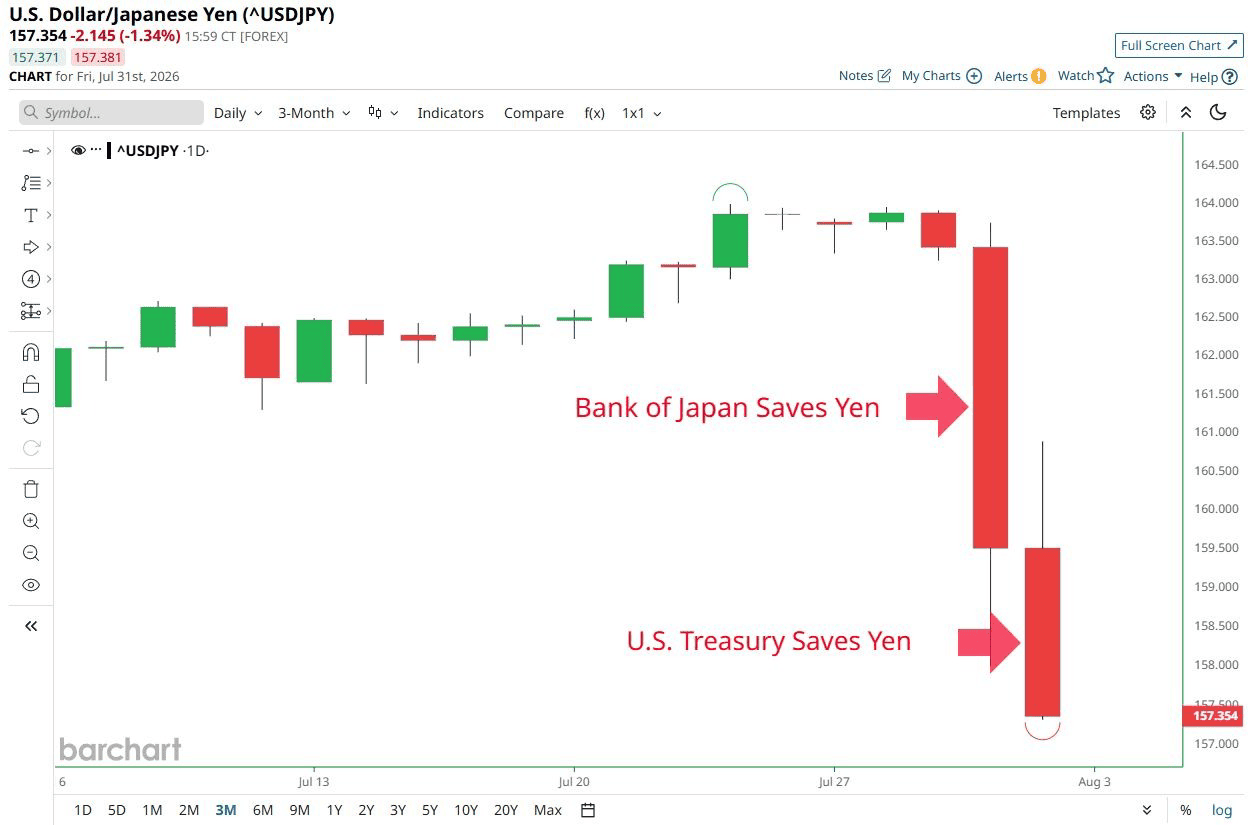
Japan’s dependence on imported energy added another source of pressure. Higher oil prices increased the country’s import bill and demand for dollars, while concerns over fiscal stimulus raised questions about how quickly the Bank of Japan could tighten monetary policy. Earlier intervention had delivered only temporary relief: Tokyo spent a record ¥11.73 trillion during the period beginning in late April, yet the currency resumed its decline once the immediate buying stopped.
Tokyo and Washington Escalate
Two days of yen buying changed the calculation for short sellers
Japanese authorities returned to the market on July 30. Bank of Japan account data indicated that the first operation may have reached US$58.97 billion, although the official figure will remain uncertain until the Ministry of Finance publishes its monthly intervention report. The ministry directs currency intervention, while the BOJ conducts the transactions as its agent.
Finance Minister Satsuki Katayama then confirmed another operation on July 31. Bloomberg’s analysis of central-bank accounts estimated that Japan used approximately ¥5.33 trillion, or US$34 billion, on the second day. A separate Reuters calculation based on BOJ projections placed the possible amount at as much as US$36.58 billion.
The U.S. Treasury joined the Friday operation by purchasing yen through the Federal Reserve Bank of New York. Washington’s involvement marked its first direct yen-buying action alongside Japan in more than a decade and strengthened the signal that further one-way depreciation would face coordinated resistance. Treasury Secretary Scott Bessent said the United States would consider acting again.
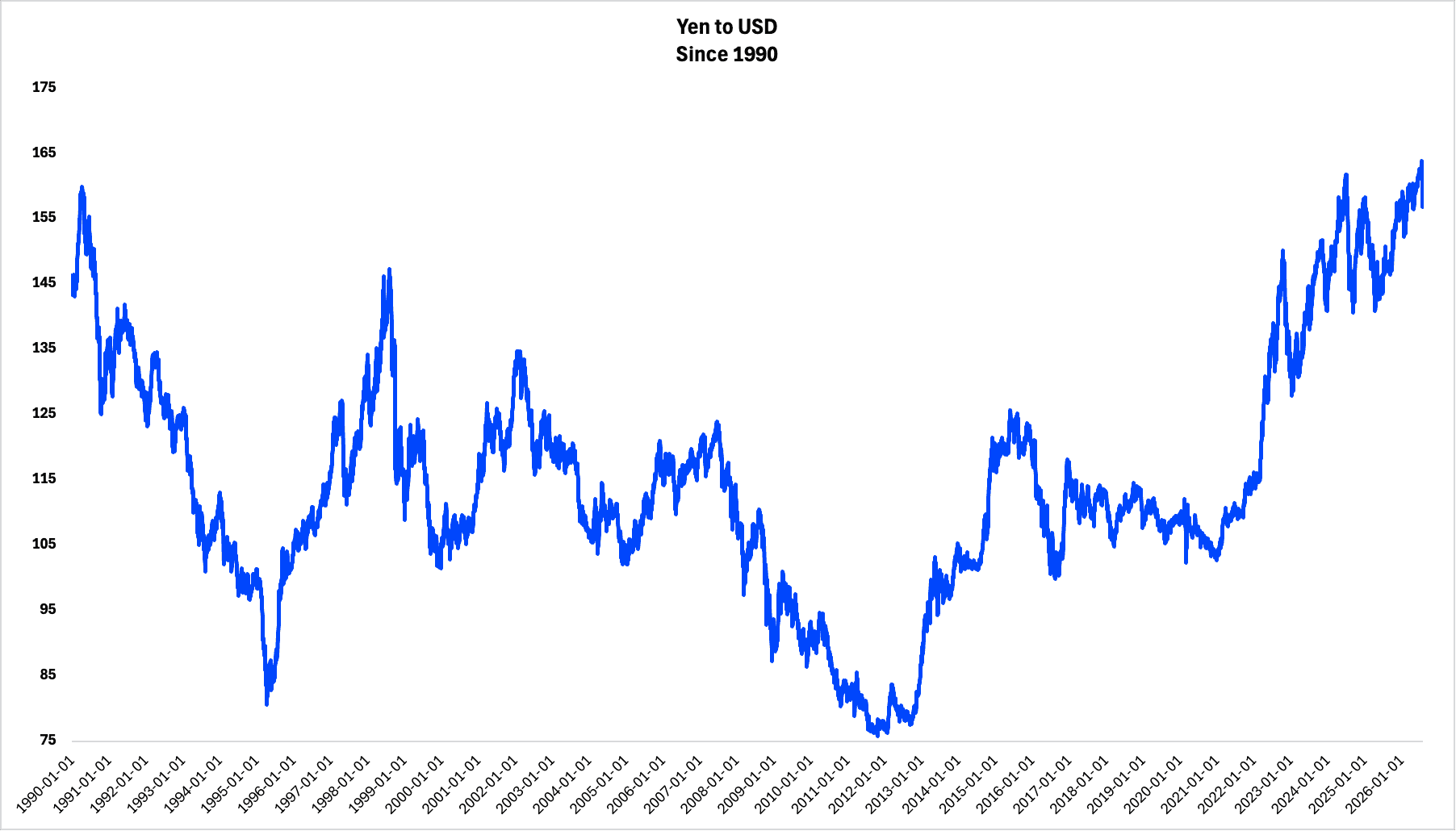
The yen strengthened in two distinct waves, first after Japan’s intervention and again as U.S. participation became clear. It reached roughly ¥155.23 on Monday morning before easing towards ¥156.92 later in Tokyo, suggesting that official buying had changed positioning without eliminating doubts about the currency’s longer-term direction.
Global Markets Dipped, Then Recovered
Japanese shares weakened as the yen rose because exporters convert substantial overseas revenue back into the domestic currency. A stronger yen can reduce translated earnings and make Japanese products more expensive abroad, placing automotive, machinery and electronics groups under pressure.
The Nikkei fell about 1% on Monday, but the intervention did not produce a lasting global risk-off move. European equities advanced, U.S. futures rose and lower oil prices supported sentiment outside Asia. South Korea recorded a steeper decline, although that move followed extreme volatility in its own semiconductor-heavy market.
The sequence therefore included two clear yen rallies and two periods of market anxiety, rather than two sustained global equity selloffs. Prices stabilised as investors concluded that the intervention was aimed at slowing a disorderly currency move, not withdrawing liquidity from the international financial system.
A more damaging outcome would require a prolonged yen appreciation that forced leveraged investors to unwind yen-funded positions across equities, credit and government bonds. That broader carry-trade reversal has yet to emerge at scale.
Japan ETFs Face Opposing Currency Effects
Japan ETFs sit directly in the path of the intervention trade. A stronger yen can weigh on export-heavy indices while increasing the dollar or dirham value of unhedged Japanese assets. Currency-hedged ETFs remove much of that translation benefit, creating the possibility of a wide performance gap between funds holding similar shares.
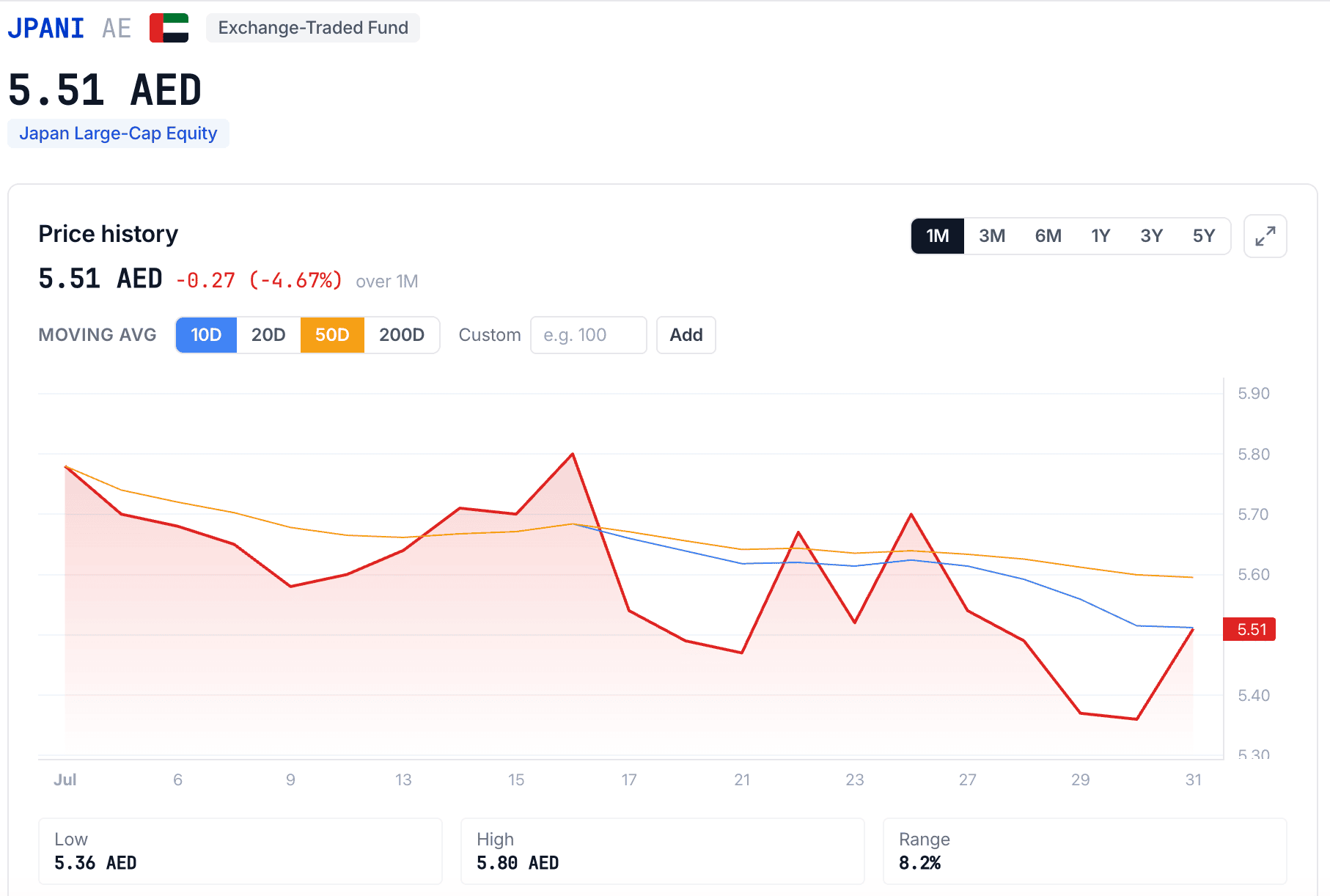
The Lunate S&P Japan UCITS ETF, JPANI, gives UAE investors ADX-listed access to the S&P Japan BMI Liquid 35/20 Capped Index. The benchmark contains 30 liquid Tokyo-listed companies and limits concentration through a 35% cap on the largest constituent and 20% on other holdings. Its relatively narrow portfolio leaves performance sensitive to large exporters and financial groups.
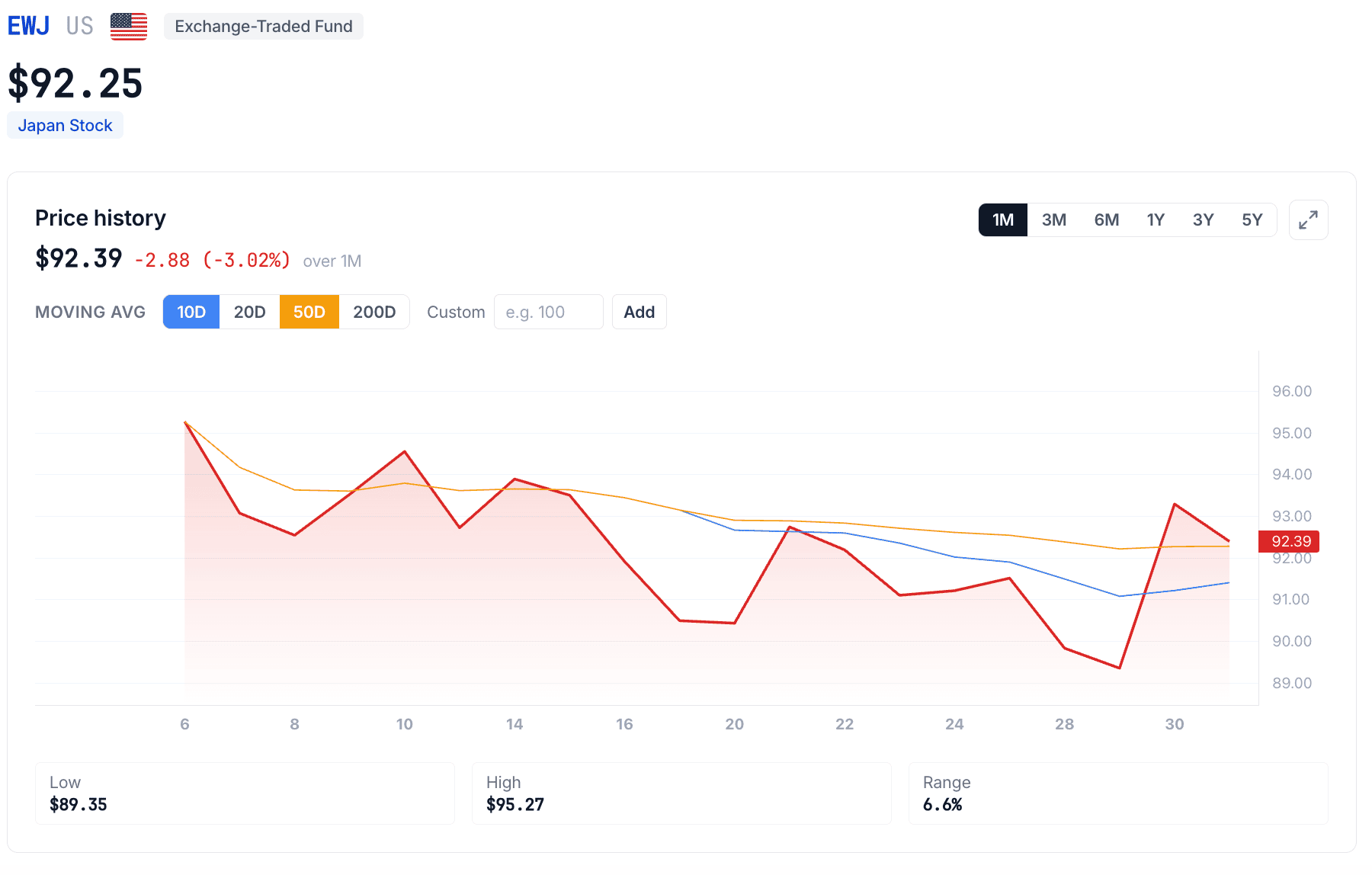
The iShares MSCI Japan ETF, EWJ, offers broad exposure to Japanese large- and mid-cap equities through an MSCI Japan benchmark. BlackRock reported 168 holdings as of July 31, 2026, and an expense ratio of 0.49%. EWJ is a U.S.-domiciled ETF listed on NYSE Arca. GCC institutions seeking an Irish UCITS wrapper could instead consider iShares MSCI Japan UCITS ETF share classes such as IJPN or CSJP, which carried a 0.12% total expense ratio. The trading currency of a listing or share class does not by itself remove the portfolio’s underlying yen exposure.
Intervention Buys Time
Monetary policy will determine whether the rebound lasts
Coordinated action pushed the yen away from ¥164 and raised the cost of maintaining short positions. Its partial retreat from Monday’s strongest level shows that intervention can interrupt momentum without resolving the interest-rate differential that created the trade.
Attention now turns to the BOJ’s next policy decisions. Higher Japanese rates or lower U.S. rates would give the currency move monetary support. Without that shift, Tokyo and Washington may find themselves defending the yen against the same yield gap that drew investors into short-yen positions in the first place.