

On September 16, the Federal Open Market Committee voted 12-0 to raise the federal funds target by 25 basis points to 3.75%-4.00%. The Fed also raised the interest rate on reserve balances to 3.90%.
The Central Bank of the UAE followed by raising its Base Rate from 3.65% to 3.90%. Saudi Arabia increased its repo rate from 4.25% to 4.50% and reverse repo from 3.75% to 4.00%, while Bahrain and Oman also tightened by 25 basis points.
How the Fed Hike Reached the Gulf
Sources: Federal Reserve and GCC central banks, September 16-17, 2026.
Why the Fed Changed Course
Compared with June, policymakers now expect slightly faster economic growth, lower unemployment, higher inflation and considerably higher interest rates. The median end-2026 policy-rate projection rose from 3.8% to 4.1%, while the 2027 projection jumped from 3.6% to 4.1%.
Source: Federal Reserve Summary of Economic Projections, September 16, 2026.
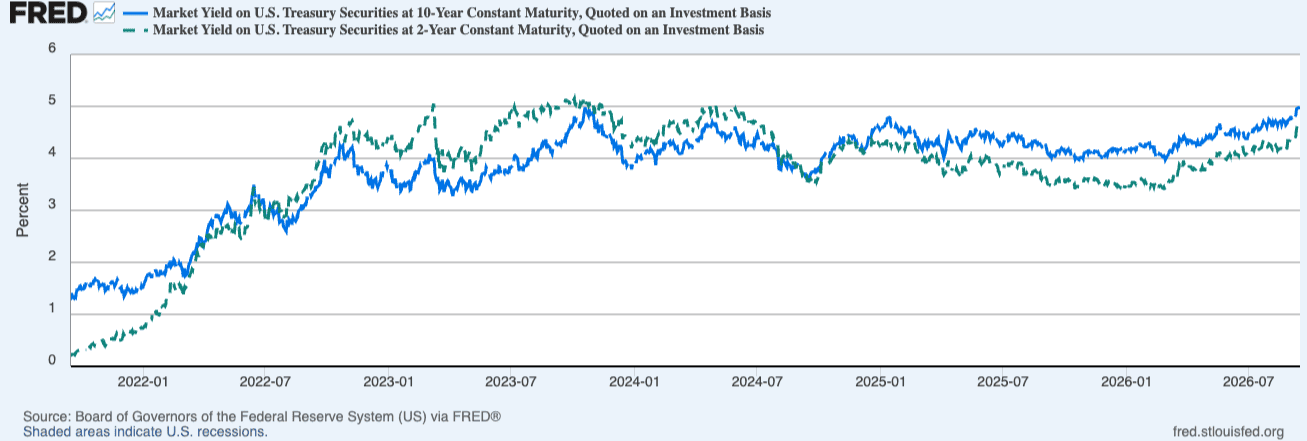
The bond market reinforced that message. Following the decision, the U.S. two-year Treasury yield rose to 4.738%, while the 10-year reached 5.00%. The dollar index gained 0.63% to 100.31.
Why It Matters for the UAE
The dirham's dollar peg means UAE monetary conditions remain closely connected to U.S. policy. When the Fed moves, the CBUAE generally adjusts its Base Rate accordingly to preserve monetary alignment.
That transmission eventually reaches EIBOR, mortgages and corporate borrowing, although individual loans reprice according to their benchmark, margin and reset schedule.
For illustration, an AED2 million mortgage with 20 years remaining would see its monthly payment rise from roughly AED13,200 at 5.0% to about AED13,475 at 5.25%, assuming the full 25-basis-point increase passes through. An AED100 million floating-rate corporate loan would incur approximately AED250,000 of additional annual interest expense, before hedging or other contractual effects.
Equities and Sukuk Face Different Effects
Higher rates increase the return available from cash and fixed income while raising the discount rate applied to future corporate earnings.
For banks, higher lending rates can support net interest margins if asset yields reprice faster than funding costs. Property companies face greater pressure because financing becomes more expensive for developers and buyers.
Regional equities did not react uniformly. On September 16, the ADX General Index fell 0.2% to 10,114, while the DFM General Index gained 0.7% to 5,967, showing that rates remain only one influence alongside earnings, oil prices and sector composition.
Sukuk investors face a different equation. Rising Treasury yields can push existing fixed-rate securities lower, particularly at longer maturities. Yet higher yields also allow portfolios to reinvest coupons and maturities at more attractive rates.
The Fed-to-GCC Transmission
The Bigger Number Is 4.1%
The September hike changed current rates by 25 basis points, but the Fed's projections changed the medium-term outlook by considerably more.
In June, policymakers expected the policy rate to fall to 3.6% by the end of 2027. Three months later, that projection is 4.1%, a 50-basis-point upward revision.
The next Fed meetings are scheduled for October 27-28 and December 8-9.
For GCC investors, those meetings now matter directly to the outlook for EIBOR, Saudi funding costs, sukuk yields, property financing and regional equity valuations. The 25-basis-point hike is already reflected in Gulf policy rates. How long U.S. rates remain around these levels is the bigger question for regional markets.